How To Toast Bagels In Air Fryer Vs Toaster Compared
Toasting a bagel in an air fryer produces a superior texture compared to a standard toaster, offering a crisp, golden exterior while keeping the center soft and chewy. Because air fryers circulate high-velocity hot air, they provide an even heat distribution that eliminates the soggy patches or uneven browning often found with traditional pop-up toasters. This method works for fresh, day-old, or even frozen bagels with just a few minutes of active attention.
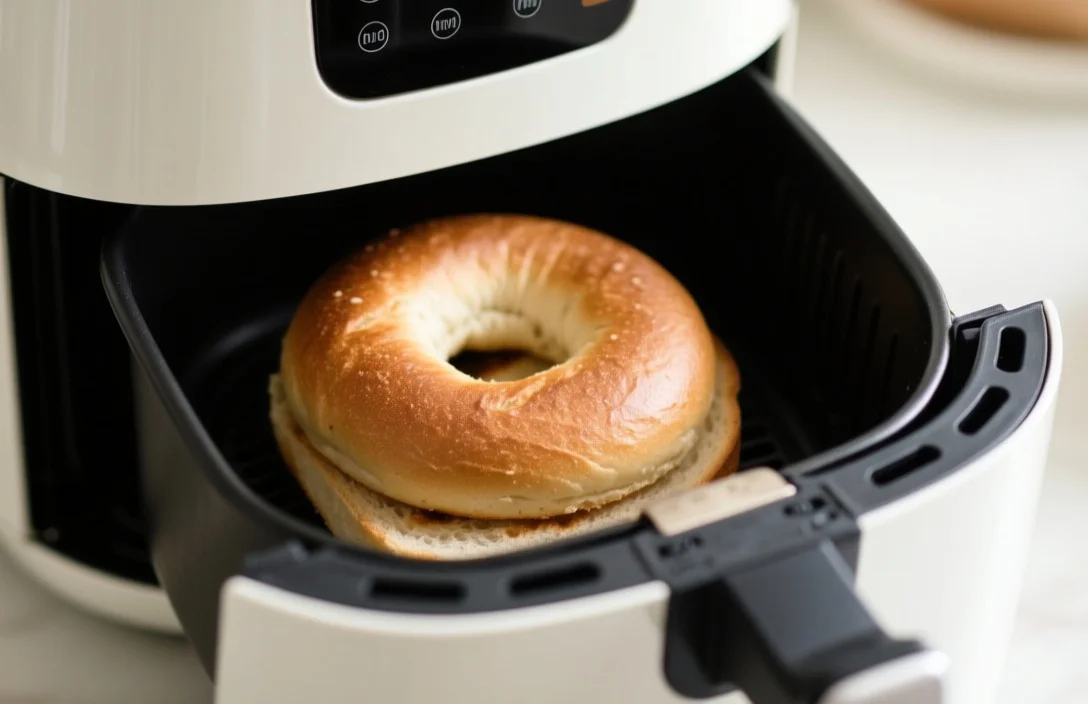
Air fryers toast bagels perfectly in 3 to 5 minutes at 350°F to 375°F. You should place the bagel halves cut-side up in the basket to ensure the interior reaches the ideal crunch while the back remains warm but not overly charred. If you prefer a sturdier, crunchier bite, a quick brush of oil or butter on the cut surface before cooking accelerates the browning process significantly.
Key Takeaways
- Ideal heat setting. Set your air fryer to 350°F for a gentle, even toast that prevents the edges from burning prematurely.
- Perfect timing window. Most fresh bagels require 3 to 4 minutes, while frozen varieties need an extra 2 minutes to thaw and toast.
- Placement matters. Always lay the bagel halves flat, cut-side facing up, to maximize airflow across the porous, soft interior.
- Butter timing. Apply butter or cream cheese after the toasting process to prevent the fat from melting away and causing a mess.
- Watch the edges. Check your bagels at the 3-minute mark, as the thin edges of the bagel often brown faster than the center.
How to Toast Bagels in Air Fryer for Perfect Crunch
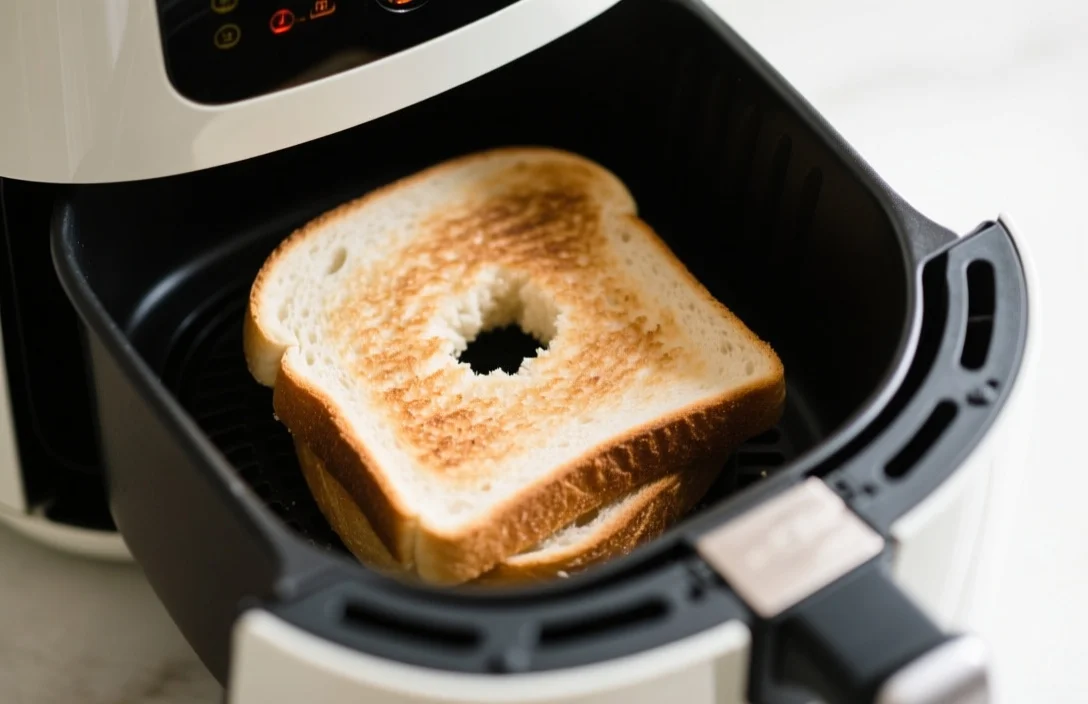
Achieving the perfect crunch requires managing the balance between the moisture content of the dough and the intensity of the heat. Unlike a toaster that uses direct radiant heat from coils, an air fryer uses convection. This means the hot air hits the entire surface of the bagel simultaneously, which is why you must avoid stacking the halves.
Start by preheating your air fryer for two minutes if your specific model requires it, though most modern units reach temperature quickly enough that this step is optional. Place your bagel halves on the rack or in the basket, ensuring they do not overlap. If you have a small basket, toast one bagel at a time to keep the air circulation efficient.
Ideal Temperature and Time for Air Fried Bagels
The sweet spot for most bagels is 350°F for exactly 4 minutes. If you enjoy a very dark, deeply crunchy surface, you can push the temperature to 375°F, but you must reduce the time to 3 minutes to avoid turning the bagel into a crouton.
Variables such as the density of the bagel and the wattage of your air fryer will change these numbers slightly. A dense, New York-style bagel often requires the full 4 minutes, while a lighter, fluffier grocery store variety may be ready in 3. Always start on the lower end of the time spectrum and add 30-second increments if the color isn’t quite deep enough for your preference.
Air Frying Frozen Bagels Without Thawing
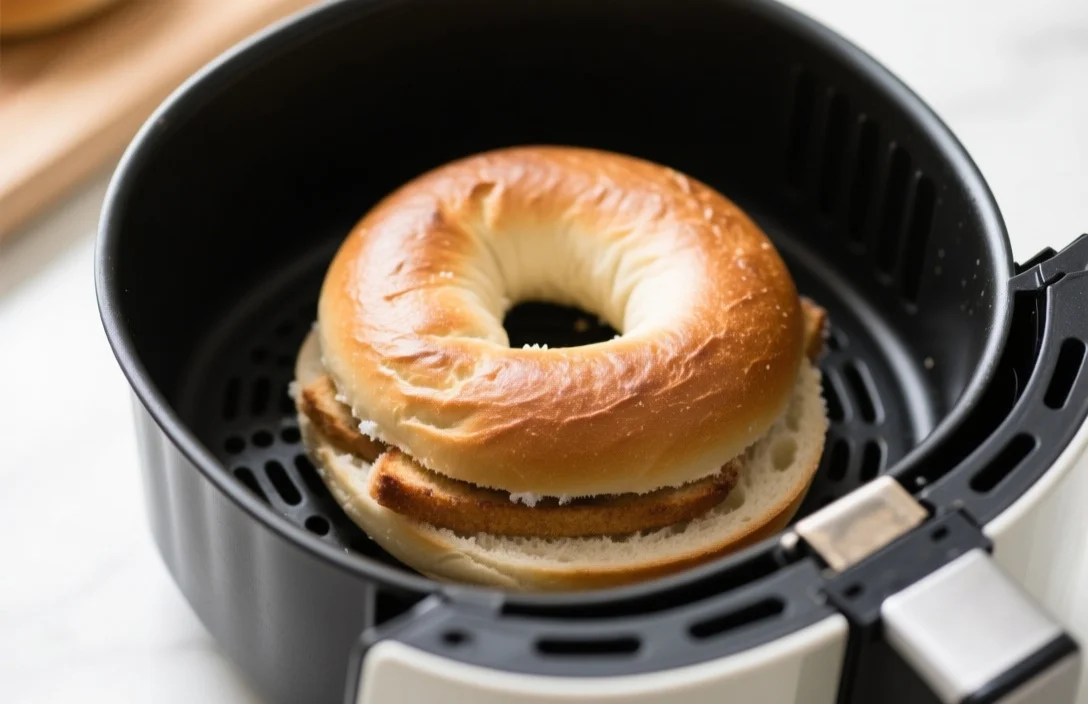
Frozen bagels are one of the best use cases for an air fryer because the device handles the defrosting and browning phases simultaneously. You do not need to thaw the bagel on the counter; simply place it directly from the freezer into the basket.
Because the bagel is frozen, you should lower the temperature to 325°F and increase the total cook time to 6 or 7 minutes. This lower heat allows the center to thaw completely before the exterior becomes too dark. If you use a higher heat, you risk ending up with a burnt, rock-hard exterior and an icy, doughy middle.
Preventing Burnt Edges and Dry Bagels
Burnt edges occur when the air circulation is too aggressive or the bagel is positioned too close to the heating element at the top of the basket. If you notice your bagels are browning too quickly on the perimeter, try lowering the temperature by 25 degrees and extending the time by one minute.
Dryness is usually a result of overcooking, which strips the bagel of its essential moisture. To keep the interior soft, try spritzing the air fryer basket with a tiny amount of water or placing a small, heat-safe dish with a teaspoon of water at the bottom of the air fryer. The steam generated during the first minute of cooking prevents the dough from hardening into a dry crust, keeping the texture closer to a fresh-baked bagel.
Air Fryer vs Traditional Toaster for Bagels
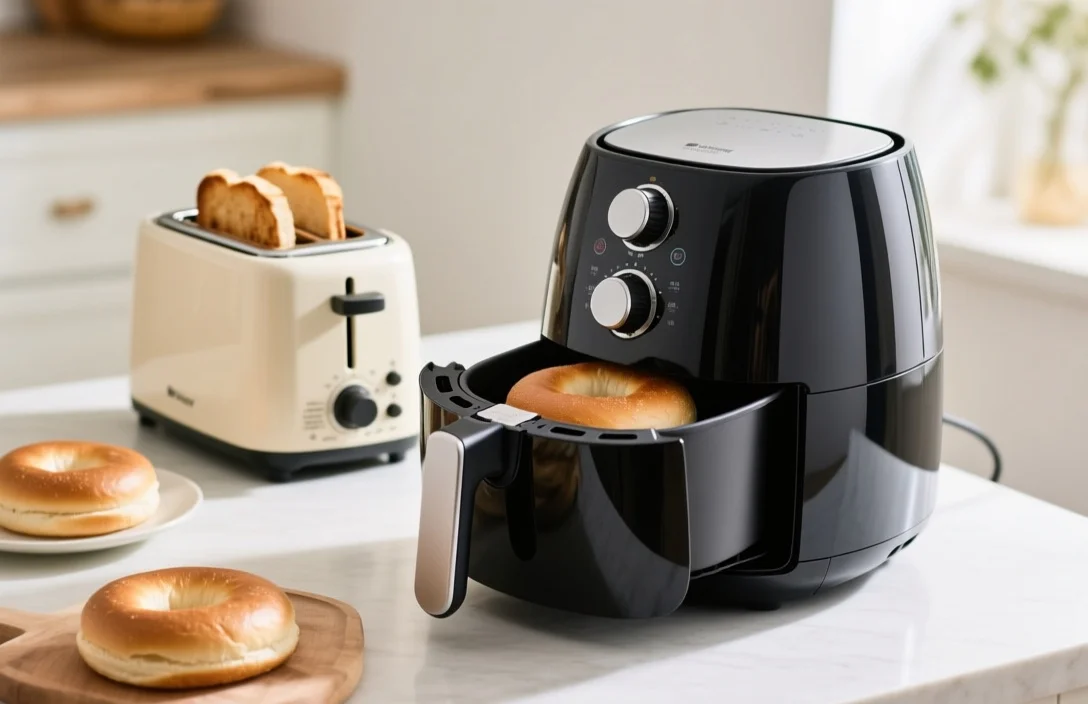
Air fryers provide a more uniform finish, whereas traditional toasters often leave the bottom half of the bagel pale while burning the top. The primary trade-off is time and convenience. A toaster is a “set it and forget it” tool that takes roughly 2 minutes, while an air fryer is a more deliberate cooking process that typically takes 4 minutes plus a potential preheat.
You should choose the air fryer if you are toasting bagels with toppings like cheese, garlic, or seeds that would fall into the wires of a vertical toaster and create a fire hazard or a mess. If you are just looking for a quick, plain slice of bread, the traditional toaster is faster. However, for a high-quality, evenly browned result, the air fryer is the clear winner for bagel enthusiasts.
| Feature | Air Fryer | Traditional Toaster |
|---|---|---|
| Evenness | Excellent | Poor (often uneven) |
| Speed | 3-5 Minutes | 1-2 Minutes |
| Topping Safety | High (safe for toppings) | Low (fire hazard) |
| Texture | Crispy outside, soft inside | Can be dry or burnt |
Adding Butter and Toppings for Extra Flavor
Applying toppings like butter, garlic, or shredded cheese is safer and more effective in an air fryer than in any other appliance. If you want to toast a bagel with cheese, wait until the bagel is 90 percent done – about 3 minutes in – then pause the fryer, sprinkle the cheese on, and finish for the final minute.
For butter, wait until the bagel is finished toasting and remove it from the air fryer before spreading. If you apply butter before the process, it will melt into the bread rather than sitting on top, which can result in a greasy, soggy texture. You can also experiment with savory toppings like everything bagel seasoning or thin slices of tomato, which heat beautifully without burning if kept away from the direct path of the fan.
Air Frying Different Bagel Types and Sizes
Bagels vary significantly in density, ranging from the massive, doughy varieties found in bakeries to the smaller, thinner versions sold in bulk packs. Thinner bagels have less mass to heat, so they will be ready in as little as 2.5 minutes. Conversely, large, sourdough-based bagels may need the full 5 minutes at 350°F to get through the thick crust and dough.
If you are dealing with gluten-free or keto-friendly bagels, be extremely cautious with timing. These alternatives often contain different binders or flours that can burn faster than traditional wheat-based dough. Always check your bagels at the 2-minute mark if you are working with a new brand or recipe to establish a baseline for your specific air fryer.
FAQ
Can I toast a bagel with cream cheese already on it?
No, you should never place a bagel with cream cheese into an air fryer. The heat will cause the cream cheese to melt, bubble, and slide off the bagel, creating a significant mess that is difficult to clean and may cause smoke if it drips onto the heating element. Always toast the bagel first and apply the cream cheese afterward.
Why did my bagel turn out like a cracker?
Over-toasting is the most common cause of a cracker-like texture. If your bagel is too hard, you likely used a temperature that was too high or left it in the basket for too long. Try reducing the heat to 325°F next time and pulling the bagel out as soon as the surface turns a light golden brown.
Do I need to flip the bagel halfway through?
Flipping is generally unnecessary because the air fryer relies on convection, which cooks the top and sides of the bagel simultaneously. However, if you find your air fryer has a “hot spot” where one side of the basket browns faster, you can flip the halves at the halfway point to ensure perfectly consistent browning.
Is it safe to use aluminum foil in the air fryer?
Using a small piece of aluminum foil at the bottom of the basket is safe for catching crumbs, but do not wrap the bagel in it. The foil prevents the hot air from circulating around the bagel, which defeats the purpose of air frying and results in a soft, non-toasted finish. Ensure the foil is weighted down so the fan does not blow it into the heating element.
How do I clean my air fryer after toasting bagels?
Most bagel crumbs can be removed by simply shaking the basket over a trash can once it has cooled. If cheese or butter has dripped onto the basket, soak the tray in warm, soapy water for 10 minutes to loosen the residue. Avoid using metal utensils to scrape the basket, as this will damage the non-stick coating.
To get the best results, start with the 350°F setting for 4 minutes and adjust based on your specific appliance’s performance. Keep an eye on the color of the crust and pull the bagels out as soon as they reach your desired level of golden brown.