

Why Does Lazy Susan Get Stuck In Cabinet
A lazy Susan gets stuck most often because something is misaligned, rubbing, or overloaded. The turntable may be off-center, the cabinet may be out of square, or the rollers and bearing surfaces may be dirty or worn. If it sticks only at one point, look for an obstruction or rubbing edge. If it sticks randomly or gets worse over time, suspect dirt, a tilted cabinet, loose mounting hardware, or failing rollers.
Start by emptying the cabinet, checking for wobble and rub marks, and testing the turntable without any weight. Clean the moving parts before adding lubricant, then tighten or realign the mounting hardware. If the rollers or bearings are seized or pitted, replacement is usually more effective than lubrication.
Key Takeaways
- Check the rubbing point - The exact edge that scrapes can show whether the tray is off-center or the track is bent.
- Check level and alignment - A small tilt can make the wheels or bearing bind, especially under a heavy load.
- Reduce the load - Overpacked cabinets increase friction and can force the turntable into the frame.
- Clean before lubricating - Dirt and grease form a paste that can make the mechanism stickier.
- Inspect the hardware - Loose screws and shifted mounts change the alignment over time.
- Replace damaged parts - Lubrication may help briefly, but it will not fix pitted or seized rollers and bearings.
Why a Lazy Susan Gets Stuck

A lazy Susan uses rollers, a bearing, or a low-friction track to rotate a platform inside the cabinet. When it sticks, one part of that system is usually meeting extra resistance rather than failing completely.
A bent lip, swollen or warped shelf, shifted cabinet, or slightly out-of-round turntable can create a single binding point. Items can also wedge against the turntable edge, especially when the cabinet is crowded. Even a small obstruction may slow the platform or stop it altogether.
Common Causes of a Stuck Lazy Susan
If the turntable spins and then locks, check for misalignment, debris, or an uneven load. Notice when the sticking occurs. A bind at the same angle every time usually indicates a specific rubbing point. Random sticking is more consistent with dirt, an uneven cabinet, or worn rollers.
Check these causes in order:
- Off-center turntable - The center pin or support may have shifted, allowing the tray to touch the frame.
- Dirty bearings or wheels - Grease, dust, and food residue can create rough, gritty movement.
- Bent track or warped shelf - A damaged section can force the rollers to climb and bind.
- Loose mounting screws - Hardware can shift after repeated use and change the geometry.
- Uneven cabinet or floor - A small tilt can pull the load toward the same binding area.
- Excess weight or oversized items - Heavy containers put more pressure on contact points, while thick or tall items may wedge against the cabinet.
How to Fix a Lazy Susan That Binds
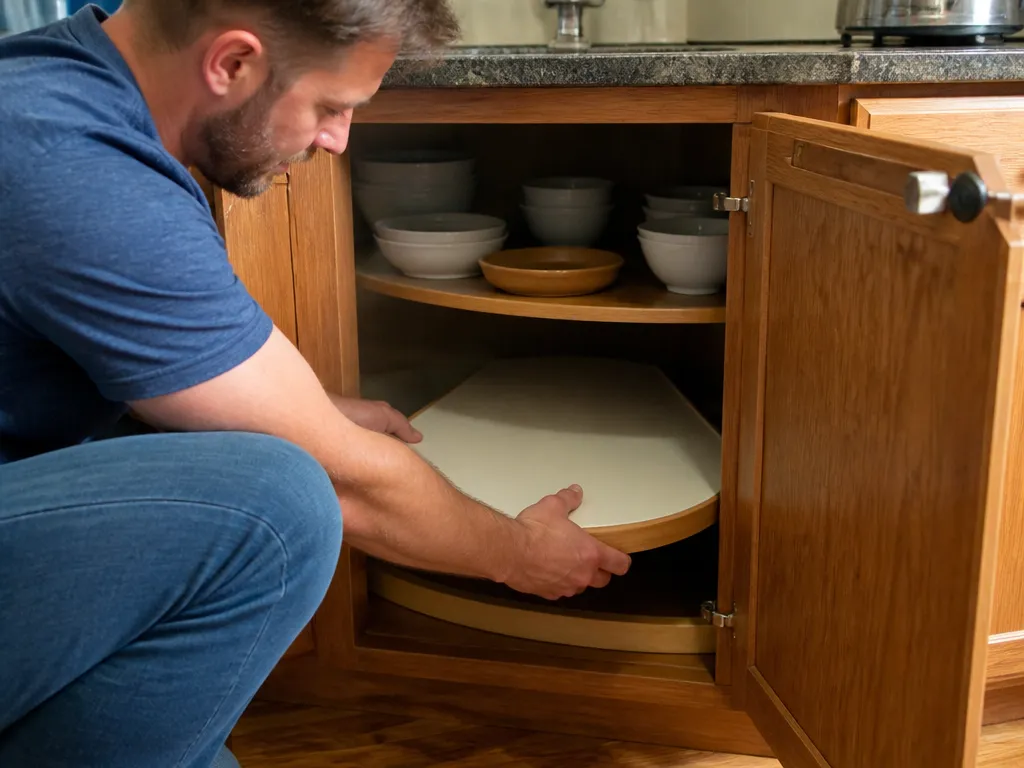
Use a controlled process
- Empty the cabinet and remove the turntable if the design allows it. If it cannot be removed, clear away anything that might wedge against the edge.
- Test the rotation by hand with no load. If it still binds, focus on alignment, rubbing, or worn components. If it spins freely, the problem is probably an obstruction or excessive load.
- Find the rub point. Rotate the tray slowly and watch for contact with the cabinet frame. Scuffs, shiny wear marks, or dust lines can reveal the problem area.
- Check the center pivot and mounting screws. Tighten loose screws. If the center pin or bracket has shifted, re-seat it so it sits squarely.
- Clean the track, rollers, or bearing surfaces. Use a rag and a degreaser-safe cleaner for greasy grime. Let the parts dry completely.
- Apply the correct lubricant. Use a small amount of dry lubricant on a low-friction track, or manufacturer-approved light grease on metal bearings. Avoid flooding the area because excess lubricant attracts dirt.
- Correct the level and spacing. If the turntable sits unevenly or the cabinet has a visible twist, carefully shim the mount points or reattach the support bracket so it sits squarely.
- Replace seized or pitted rollers and bearings. Lubricant cannot restore smooth motion when the rolling surfaces are worn down to rough metal.
Avoid Forcing the Turn
Do not force a badly binding lazy Susan. Brute force can bend the track or snap a plastic wheel when the parts are misaligned. Apply gentle pressure, locate the contact point, and correct the obstruction or alignment problem instead.
Why Fixing the Binding Matters
A smoothly rotating lazy Susan puts less strain on the cabinet frame and moving parts, which can help the unit last longer. It also makes the storage space easier to use: containers in the back corner remain accessible without repeatedly rearranging everything.
Fixing the cause can prevent the problem from returning. Alignment can drift, and friction can build quickly if you keep forcing the turntable. Ignoring the binding may turn a loose screw or dirty track into a damaged roller, bearing, or bent track.
Repair or Replace: Choosing the Right Fix
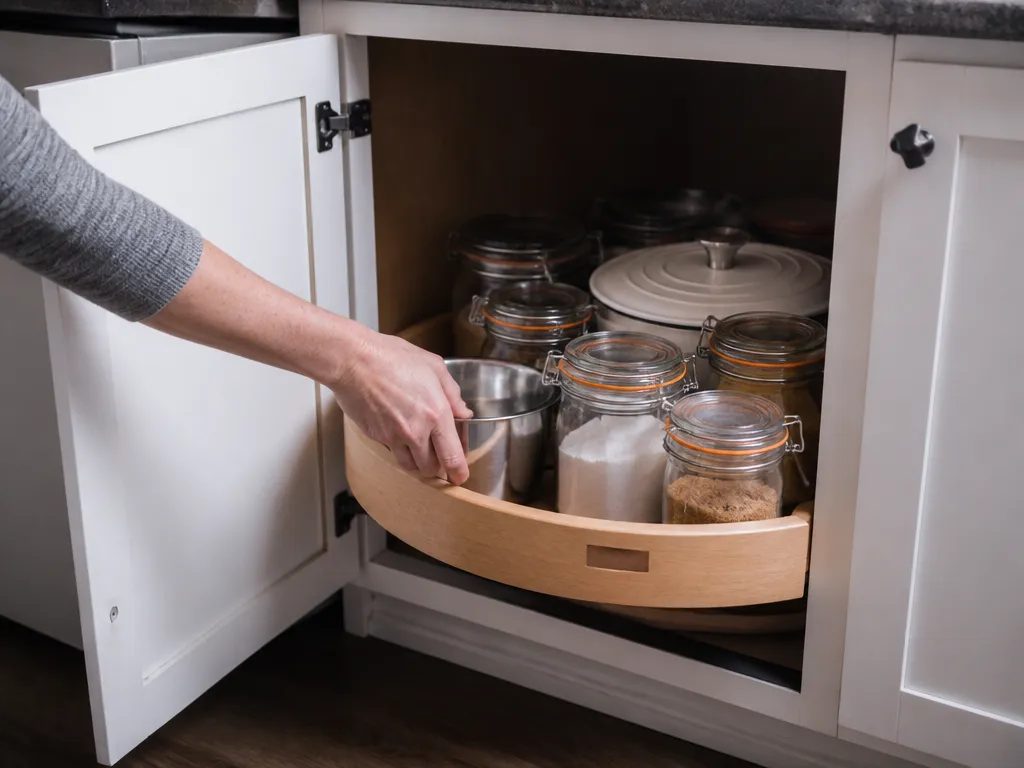
The right repair depends on what the inspection reveals. Rubbing marks, wobble, dirty rollers, and worn bearings each point to a different solution.
Fixes From Simplest to Most Involved
- Clean and re-lubricate - Best when the mechanism feels gritty or rough but the parts remain intact.
- Tighten and re-seat the hardware - Best when the tray wobbles or the alignment has shifted.
- Adjust spacing and mounting - Best when the tray rubs against one edge at the same point each time.
- Replace rollers or bearing components - Best when rollers are pitted, cracked, seized, or rough.
- Replace the entire lazy Susan assembly - Best when the shelf or turntable is warped or the track is bent beyond adjustment.
Diagnosing the Sticking Pattern
Reproduce the problem with controlled variables. Empty the cabinet, rotate the platform at different speeds, and note whether the bind occurs at the same angle each time.
An angle-specific bind usually indicates a mechanical alignment problem, such as track damage, an off-center pivot, or a shifted mounting bracket. Random sticking or gradually worsening resistance points more toward dirty rollers, packed-on grease, or bearing surfaces that are starting to seize.
Common Lazy Susan Sticking Scenarios
A lazy Susan that catches at the 2 o'clock position every time likely has an off-center pivot or a rub mark where one edge of the tray touches the frame. Inspect that area for scuffs, shiny spots, and shifted mounting hardware.
A tray that feels fine when empty but jams when full usually has a clearance or load problem. A tall bottle or large container may press against the turntable lip as it rotates. Move tall items away from the edge, reorganize containers by height and footprint, or adjust the spacing around the tray.
Heavy cookware can push an already marginal mechanism past its friction limit. Added weight increases pressure on the rollers and bearings, so cleaning the mechanism and replacing worn wheels may restore smooth movement.
A lazy Susan that starts sticking within days of a cabinet remodel or reinstallation likely has an alignment or leveling problem rather than normal wear. Tightening screws, re-seating the mounting bracket, and centering the turntable often corrects it.
FAQ
Why does my lazy Susan get stuck only when it’s full?
A full cabinet increases pressure and friction at the contact points, turning a small alignment issue into a jam. Empty the cabinet and spin the turntable by hand. If it rotates freely when empty, check for tall items near the edge that can wedge against the cabinet as the tray turns.
How do I fix a lazy Susan that won’t rotate at all?
Remove the contents and try rotating the tray slowly by hand. Look for a rubbing point, scuff marks, and loose mounting screws. Clean the track and roller or bearing areas, then tighten and re-seat the pivot and bracket. Replace rollers or the bearing assembly if they feel seized or rough.
What lubricant should I use for a stuck lazy Susan?
Use a light, dry lubricant or a product the manufacturer approves for the roller or bearing material. Apply lubricant sparingly to the rolling surfaces, and avoid flooding the track.
Can a lazy Susan get stuck because of cabinet level or mounting?
Yes. An out-of-square cabinet or uneven mounting points can pull the load toward the same contact area on each rotation. Wobble, uneven tray spacing, and scuffs along one edge are common clues. Tighten the mounts first, then adjust or shim the bracket so the turntable sits centered.
How much does it cost to repair or replace a stuck lazy Susan?
DIY cleaning and tightening cost essentially nothing beyond cleaning supplies. Replacement pricing varies widely depending on whether you replace only the rollers or bearings or the entire assembly. Exact costs vary by the parts and mounting style, so measure the turntable and compare a replacement kit with the price of a full unit.






Comments are closed.