How To Dry Figs In Air Fryer: 6 Steps For Perfect Texture
Drying figs at home keeps their honeyed sweetness without added sugar, and an air fryer cuts the usual 12-24 hour dehydrator time in half. You’ll need ripe figs, a sharp knife, and 6-8 hours of low heat – no pre-treatment or special racks required.
Drying figs in an air fryer takes 6-8 hours at 135 °F (57 °C). Slice figs into ¼-inch thick rounds, arrange in a single layer without overlapping, and check every 2 hours. They’re done when leathery but still pliable, with no visible moisture inside. Store in an airtight container for up to 6 months.
Key Takeaways
- Best temperature: 135 °F (57 °C) dries figs evenly without burning.
- Slice thickness: ¼-inch rounds dry in 6-8 hours; thicker slices take longer.
- Single layer only: Overlapping figs steam instead of dehydrate.
- Check every 2 hours: Rotate trays and remove finished pieces to prevent over-drying.
- Doneness test: Press a cooled slice – it should feel leathery, not sticky.
- Storage life: 6 months in an airtight container; refrigerate for up to 1 year.
How to Dry Figs in Air Fryer Models Efficiently
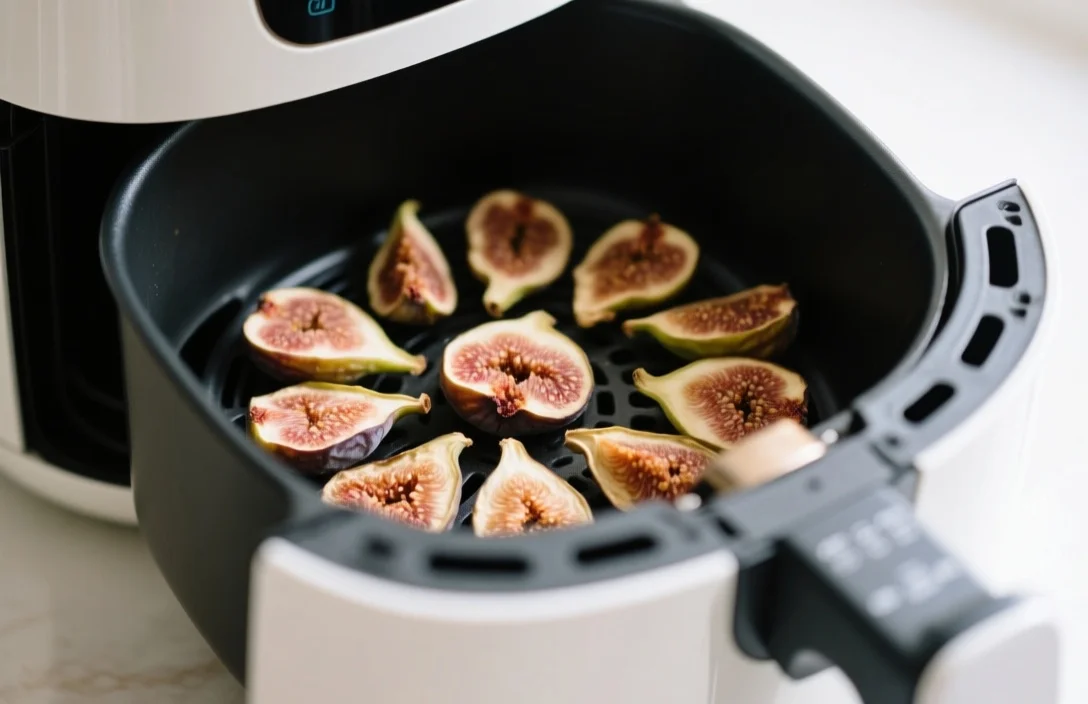
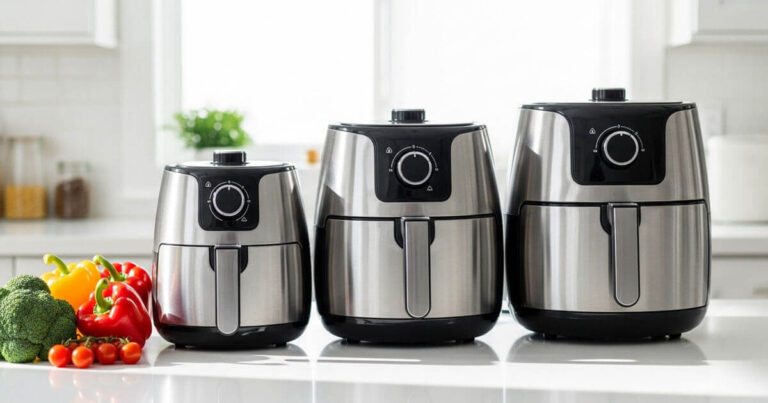
Most air fryers with a dehydrate setting or adjustable temperature down to 135 °F work. Basket-style models (like Ninja Foodi or Cosori) fit 12-15 fig halves per batch; tray-style (like Instant Vortex) hold 20-25. If your model lacks a dehydrate preset, set it to the lowest temperature (usually 170-200 °F) and prop the door open ½ inch with a wooden spoon to vent moisture.
Preheat for 5 minutes to stabilize the temperature. Arrange fig slices in a single layer, leaving ¼ inch between pieces for airflow. If your air fryer has multiple racks, rotate them top-to-bottom every 2 hours to ensure even drying. Models with rear fans (like Breville Smart Oven Air) dry faster – check figs at 4 hours instead of 6.
Selecting Ripe Varieties for Optimal Sweetness
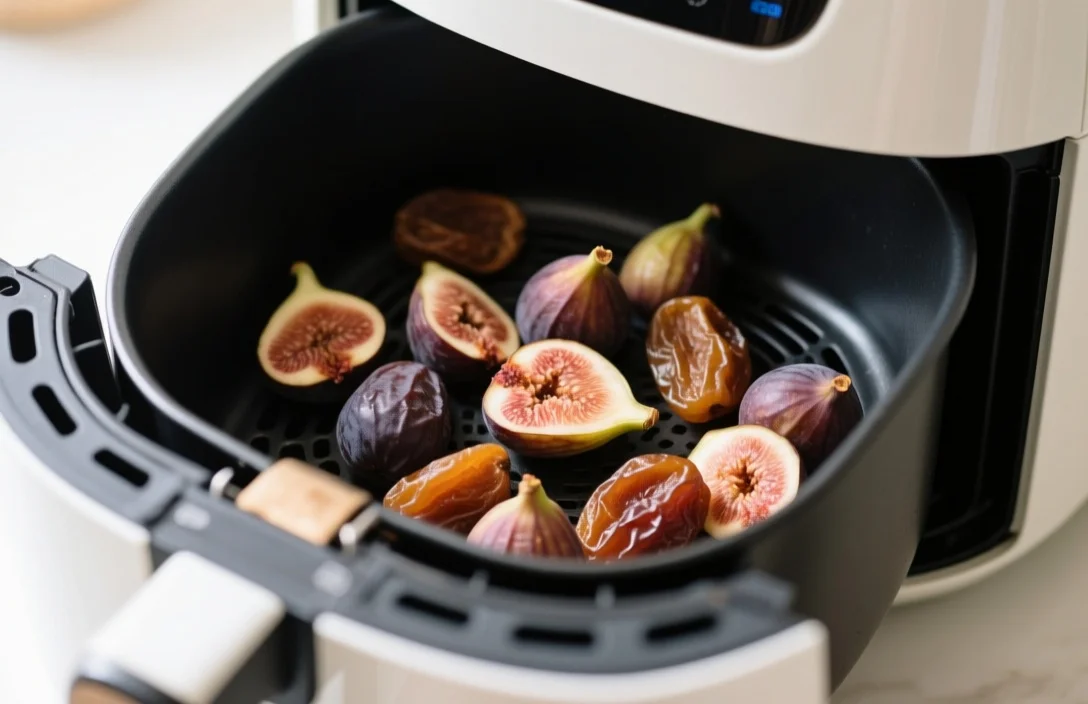
Choose figs that are plump, slightly soft at the stem end, and free of bruises or splits. Black Mission figs dry into deep, jammy sweetness; Brown Turkey yields milder, honeyed notes. Kadota figs, with their pale green skin, stay lighter in color and have a delicate flavor. Avoid figs with a sour smell or sticky sap – these are overripe and will turn mushy when dried.
Buy figs the day you plan to dry them. If you must store them, refrigerate unwashed in a single layer on a paper towel for up to 2 days. Ripe figs yield to gentle pressure but shouldn’t feel squishy; if they do, use them immediately or they’ll ferment during drying.
Washing and Slicing Techniques for Uniform Dehydration
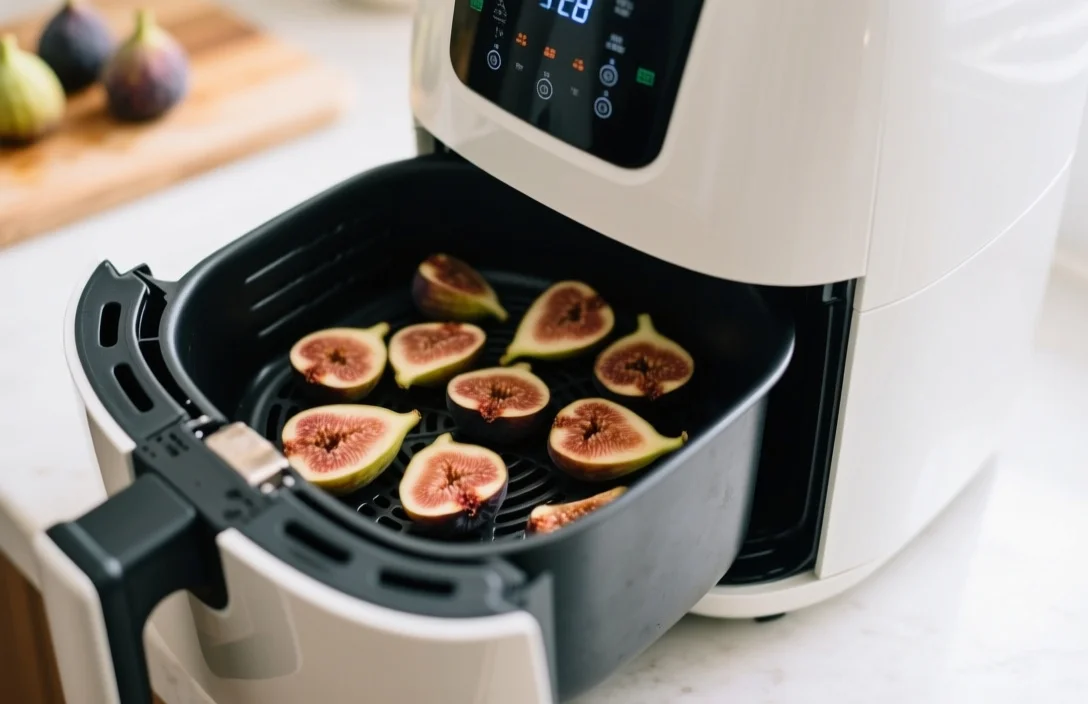
Rinse figs under cool water and pat dry with a clean kitchen towel. Trim the stems with a paring knife, then slice into ¼-inch thick rounds from stem to blossom end. For halves, cut lengthwise through the stem. Uniform thickness ensures even drying – thicker pieces stay moist inside while thinner ones dry out.
If figs are very juicy, blot the cut sides with a paper towel to remove excess moisture. This prevents sticking and speeds up dehydration. For a chewier texture, leave the skin on; for a softer bite, peel figs before slicing (use a vegetable peeler or small knife).
Optimal Air Fryer Temperature and Time Settings
Set your air fryer to 135 °F (57 °C) and preheat for 5 minutes. Arrange fig slices in a single layer, leaving space between pieces for airflow. Dry for 6-8 hours, checking every 2 hours. If your air fryer’s lowest setting is 170 °F (77 °C), prop the door open ½ inch with a wooden spoon to lower the temperature – this adds 1-2 hours to the total time.
Drying time varies by fig variety and moisture content. Black Mission figs, which are denser, may take the full 8 hours; Brown Turkey figs often finish in 6. If slices are still sticky after 8 hours, continue drying in 1-hour increments until they pass the doneness test.
Monitoring the Dehydration Process for Desired Texture
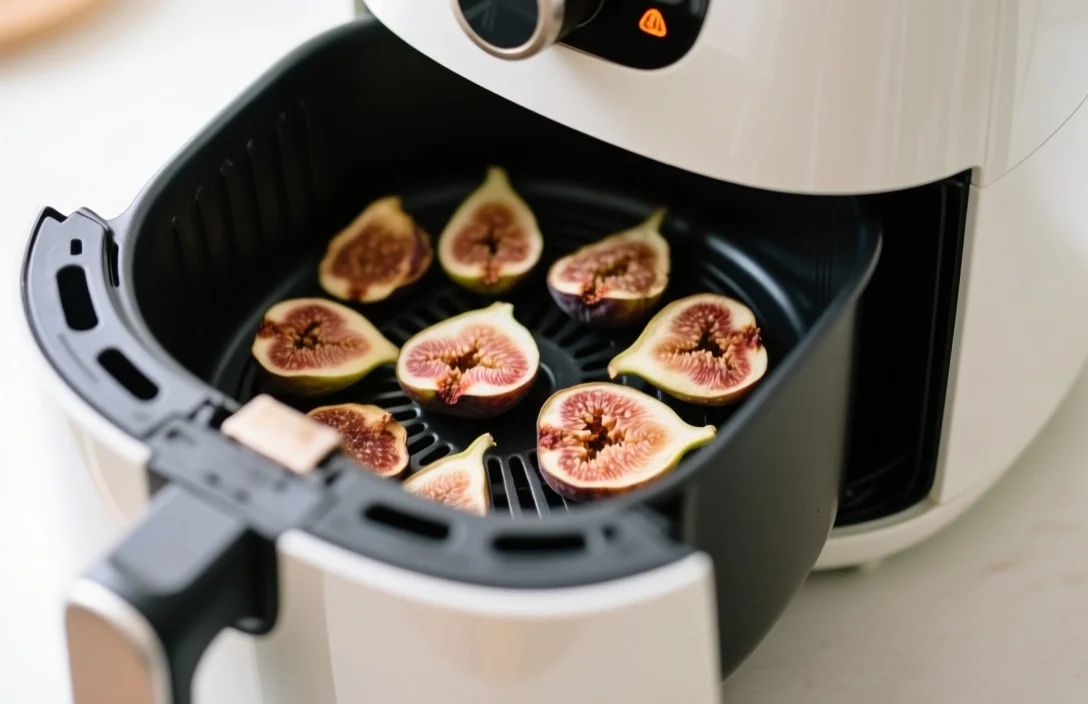
Check figs every 2 hours by removing a slice and letting it cool for 1 minute. Press it between your fingers – it should feel leathery but not brittle. If it sticks to your fingers or leaves moisture, return it to the air fryer. Over-dried figs turn hard and lose their chewy texture; under-dried ones spoil quickly.
Rotate trays top-to-bottom and front-to-back every 2 hours to ensure even drying. Remove finished pieces to prevent over-drying while the rest catch up. If slices near the fan dry faster, move them to the center of the tray and shift slower-drying pieces outward.
Proper Storage Methods to Preserve Dried Figs
Cool dried figs completely before storing – any residual heat creates condensation, which leads to mold. Pack them in airtight containers (glass jars or vacuum-sealed bags work best) and store in a cool, dark place. For long-term storage, refrigerate for up to 1 year or freeze for up to 18 months.
Check stored figs weekly for moisture or mold. If condensation appears, return the figs to the air fryer for 1-2 hours at 135 °F to remove excess moisture. To revive slightly hardened figs, steam them for 30 seconds or soak in warm water for 5 minutes before using.
FAQ
Can I dry whole figs in an air fryer?
Yes, but they take 10-12 hours and may dry unevenly. Slice figs into halves or quarters for faster, more consistent results.
Why are my dried figs sticky?
Sticky figs haven’t dried long enough. Return them to the air fryer at 135 °F for 1-2 more hours, checking every 30 minutes.
Can I use frozen figs?
Yes, but thaw them completely and pat dry before slicing. Frozen figs release more moisture, so add 1-2 hours to the drying time.
Do I need to pre-treat figs before drying?
No pre-treatment is needed, but dipping slices in lemon water (1 tablespoon lemon juice per cup of water) prevents browning and adds a subtle tang.
Can I dry figs at a higher temperature to save time?
Higher temperatures (above 160 °F) cook figs instead of dehydrating them, resulting in a tough, leathery texture. Stick to 135 °F for best results.