When To Use Air Fryer Silicone Liners
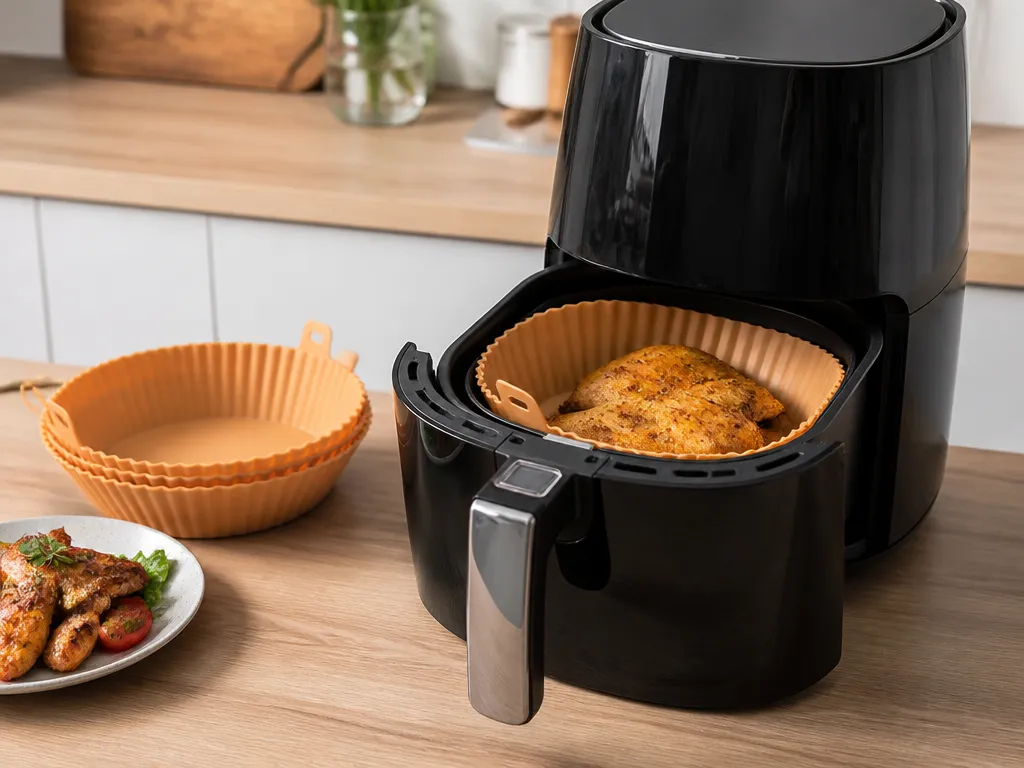
Air fryer silicone liners make cleanup easier and help delicate or sticky foods release from the basket. They can also block airflow, trap moisture, and reduce browning. Use one for sauced bites, dumplings, pastries, and other foods that may stick or tear. Skip it when you want maximum crisping from fries, wings, roasted vegetables, or breaded cutlets.
Check that the liner fits your air fryer, has a stated maximum temperature, and stays away from the heating element and fan intake. If your model supports preheating, use it only when the liner’s instructions allow it.
When to Use an Air Fryer Silicone Liner
A silicone liner works best when release matters more than peak crispness. Use one for foods that contain glaze, honey, sauce, jam, or melted cheese – especially if they tend to stick to the basket or fall apart when lifted.
Good candidates include:
- Small dumplings
- Hand pies and turnovers
- Cinnamon rolls
- Saucy meatballs
- Glazed chicken bites
- Delicate pastries
- Small baked goods with soft or sticky edges
Silicone gives these foods a smoother surface to cook on, so you can lift them without tearing the underside. It also catches sauce and melted ingredients that would otherwise bake onto the basket.
Use a liner for smaller portions rather than a packed basket. Air fryers need space around the food, and silicone can slow moisture escape. Overloading the basket turns the food steamy instead of crisp.
When to Skip the Liner
A liner can keep the underside wetter by slowing evaporation. That is especially noticeable with foods that depend on a dry crust or deep browning. If sticking is your main concern, lightly oil the food, preheat the basket if your air fryer allows it, and shake or flip the food once halfway through cooking.
Avoid using a flat silicone liner for foods that need strong airflow on all sides unless the liner has a vented design and your air fryer manufacturer allows it.
How to Use a Silicone Liner Successfully
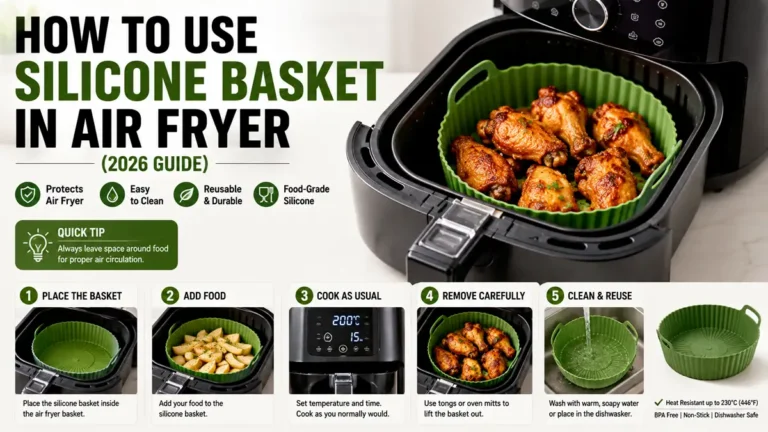
- Check the liner first. Confirm that it is made for your air fryer type and review its stated maximum temperature. Basket liners and tray liners are not always interchangeable.
- Fit it flat. The liner should sit inside the basket without rising into vent areas or touching the heating element.
- Keep airflow paths open. Do not cover vents or let the liner drape up the sides of the basket.
- Add a light coat of oil if needed. Silicone is naturally nonstick, but a thin layer can help with caramelized sauces and sticky glazes. Avoid soaking it with cooking spray.
- Leave space between pieces. Crowding traps moisture and makes the liner’s effect on crisping worse.
- Preheat only when appropriate. Preheating can help a sticky coating set quickly, but follow the liner’s instructions and watch delicate foods closely.
- Check doneness by more than color. Silicone can make browning look slower or less even, particularly underneath. Use internal temperature for meats and cut into dense foods such as stuffed pastries or dumplings to check the center.
If the liner is new, follow its instructions for first use. Some liners can produce an odor during their first heating cycle, so testing it before cooking a full recipe can prevent surprises.
Cooking
Sticky chicken bites
Use a liner when the chicken is coated with a glaze that may bond to the basket. Cook at moderate heat until the pieces are cooked through. Let them rest for 1 minute after cooking so the sauce can set instead of smearing when you move them.
For better browning, add the glaze near the end rather than coating the chicken heavily from the start. A thick sauce applied early creates more steam and can leave the surface softer.
Cinnamon rolls, hand pies, and turnovers
Silicone works well for these pastries because it helps the bottoms release without tearing. Space the pieces apart so air can circulate, and start checking slightly earlier than the recipe’s full cook time because the liner can change how moisture escapes.
The center should be cooked through, not doughy. For filled pastries, check the thickest area if the outside browns before the filling heats fully.
Dumplings
A liner reduces sticking and makes delicate dumplings easier to remove. Keep the pieces in a single layer with room between them. Check the centers rather than relying only on surface color, since the liner may slow browning underneath.
Sauced meatballs or burgers
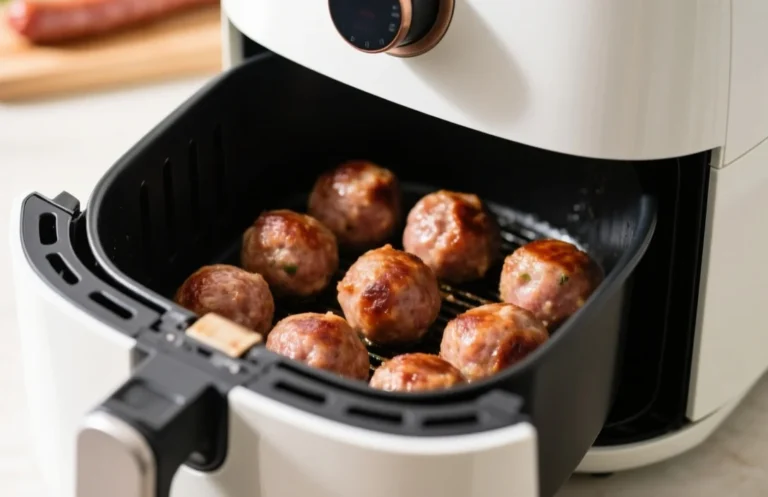
A liner is useful when you brush sauce on near the end of cooking. Adding a heavy sauce at the beginning increases steaming and reduces browning. For a darker exterior, finish with a short pass using a lighter coating rather than a thick layer of glaze.
Frozen fries and roasted vegetables
Toss the food with a light amount of oil, spread it out in the basket, and shake or flip once halfway through.
Silicone Liners, Parchment, and Other Options
| Option | Best For | Trade-off |
|---|---|---|
| No liner | Fries, wings, and breaded cutlets that need maximum crisp | More cleanup and a higher risk of sticking |
| Perforated air fryer parchment | Saucy bites and small baked items where you still want airflow | Needs correct sizing and can move if it is too loose |
| Air fryer basket rack or inserts | Crisp foods that need more airflow and less basket contact | Not all inserts fit all baskets |
| Light oil and careful placement | Most recipes that do not need spill protection | Less sticking, but the basket still needs cleaning |
| Aluminum foil tent for drips | Catching drips without covering the vents | Can reduce airflow if used too broadly |
| Vented silicone mat | Sticky foods when you still want some airflow | May still reduce crisping compared with no liner |
Perforated parchment is the closest substitute when you want some release without covering the entire cooking surface. Size it correctly, keep it away from the heating element, and do not use it loose in an empty preheating basket.
If you cannot find a maximum temperature for a silicone liner, use lower temperatures and shorter cook times rather than guessing. The product label takes priority because heat ratings vary by brand and material blend.
Doneness and Safety Checks
A liner should never touch the heating element or interfere with the fan intake. In models with exposed heating around the sides, a liner that folds or drapes upward can contact hot metal.
Do not cut a liner unless the manufacturer’s instructions allow it. Altering its shape can change how it sits near vents and hot surfaces.
Use internal temperature for meat and poultry, and check the center of dense foods such as dumplings, stuffed pastries, and hand pies. A pale underside does not always mean the food is undercooked, while a browned top does not guarantee that the center is done.
FAQ
Are air fryer silicone liners worth it for everyday cooking?
They are useful when you often cook sticky or delicate foods such as glazed meat bites, dumplings, and pastries. For mixed cooking, use one only for recipes that tend to stick or tear.
What temperature should I use with an air fryer silicone liner?
Use the maximum temperature listed on your specific liner’s packaging. Heat tolerance varies by brand and material blend. If the packaging does not state a maximum temperature, choose lower temperatures and shorter cooking times, and keep the liner away from the heating element.
Do silicone liners affect air fryer cooking time?
Yes. They can change airflow and slow moisture escape, which may make some foods cook more slowly or brown less underneath. Follow the recipe time at first, then check early – particularly with dense centers such as dumplings or stuffed pastries. For meat, use internal doneness cues rather than timing alone.
Can I use parchment paper instead of a silicone liner?
Yes. Perforated air fryer parchment works for many sticky or delicate foods and may allow more airflow than a flat silicone liner. Make sure it fits the basket, does not cover vents, and cannot reach the heating element.
What is the most common mistake with silicone liners?
Use the correct size, keep the liner flat, and leave the air fryer’s intended airflow paths open.
Can I preheat an air fryer with a silicone liner inside?
Only if both the air fryer and the liner instructions allow it. Preheating can help sticky coatings set quickly, but an empty liner can shift or move toward a hot element in some models. When in doubt, add the food before heating or follow the liner’s specific directions.