How Long To Cook Frozen Turkey Burger In Air Fryer: 5 Tips
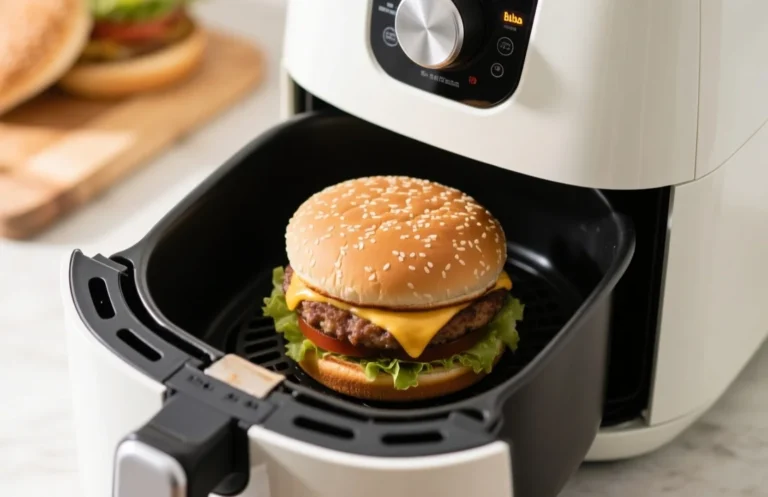
Cooking a frozen turkey burger in an air fryer takes between 14 and 18 minutes depending on the thickness of the patty and the wattage of your specific appliance. Because turkey is leaner than beef, it requires precise temperature control to avoid turning into a dry, flavorless disk. This method allows you to go from freezer to dinner plate in under 20 minutes without needing to thaw the meat beforehand.
Frozen turkey burgers reach a safe, juicy finish in the air fryer when cooked at 375 degrees Fahrenheit for approximately 15 to 16 minutes. You must always verify the internal temperature with a digital meat thermometer, ensuring the thickest part of the patty hits 165 degrees Fahrenheit to eliminate harmful bacteria. Using a light coating of oil or a quick spritz of non-stick spray helps the exterior brown properly while keeping the lean meat from sticking to the air fryer basket.
Key Takeaways
- Target cook time. Most frozen turkey burgers require 14 to 18 minutes of total air frying time at 375 degrees Fahrenheit.
- Safety threshold. You must cook turkey patties until they reach an internal temperature of 165 degrees Fahrenheit.
- Preheating benefits. Preheating your air fryer for 3 minutes ensures the burgers begin searing immediately upon contact.
- Avoid overcooking. Turkey dries out rapidly, so start checking for doneness at the 12-minute mark to prevent moisture loss.
- Flip for color. Turning the burgers halfway through the cooking cycle promotes even browning on both sides of the patty.
How long to cook frozen turkey burger in air fryer for safety
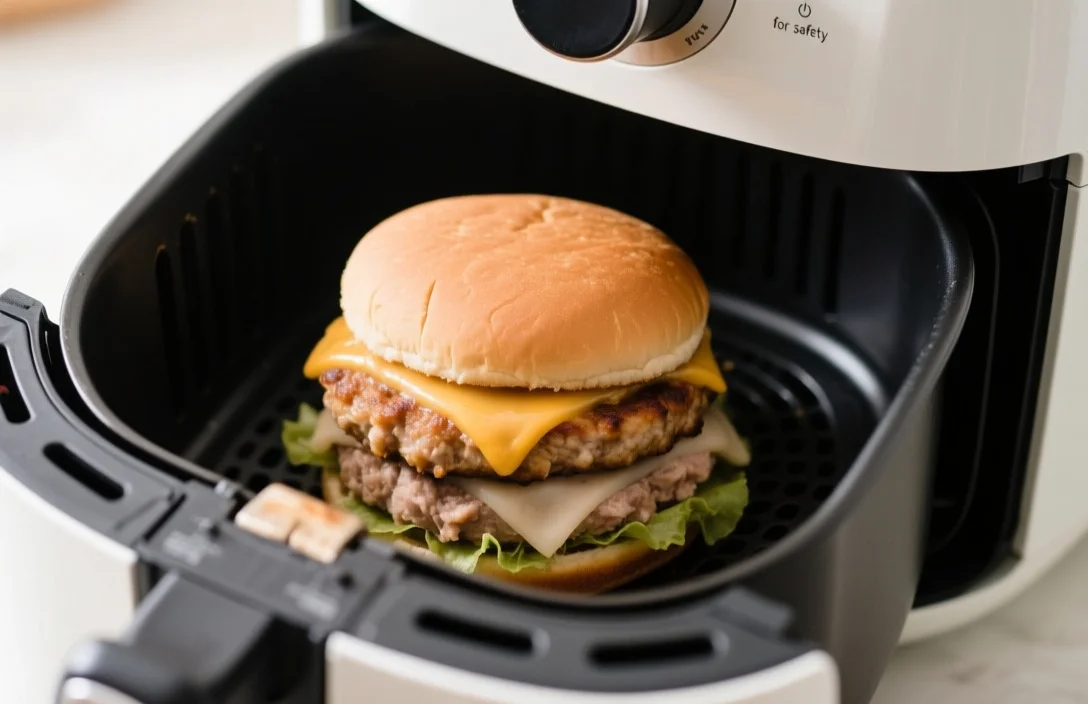
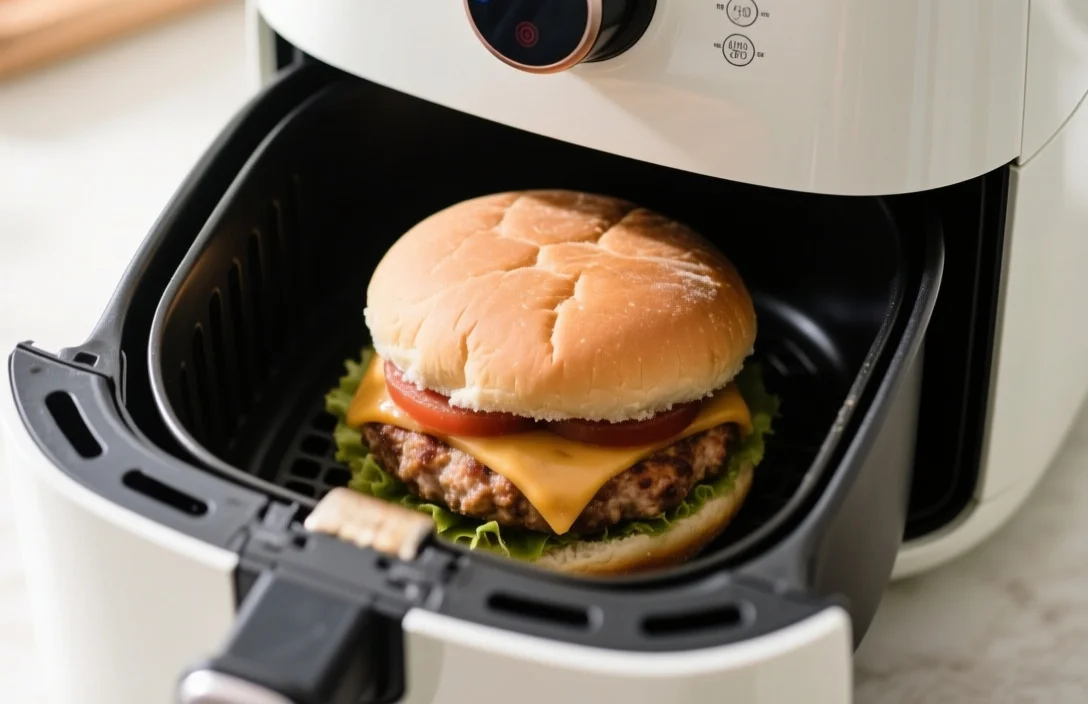
Safety depends entirely on the internal temperature rather than the clock, but you should expect a minimum of 14 minutes for standard-sized patties. If your burgers are exceptionally thick or your air fryer has a lower wattage, you might need up to 18 or 20 minutes to achieve the proper internal heat. Always place the burgers in a single layer to ensure the hot air can circulate around every side of the meat.
Crowding the basket is the most common reason for uneven cooking and potential safety hazards. If you stack the burgers, the center of the patties will remain cold while the outer edges become overcooked. Use a meat thermometer to confirm the reading in the center of the thickest burger before serving, as the visual appearance of cooked turkey can be misleading.
Ideal air fryer temperature settings for juicy turkey patties
The sweet spot for air frying turkey burgers is 375 degrees Fahrenheit. This temperature is high enough to create a slight crust on the outside of the patty, but low enough to cook the interior through without dehydrating the lean protein. Many home cooks make the mistake of using 400 degrees Fahrenheit, which often burns the outside of a frozen burger before the center has a chance to safely thaw and cook.
If your air fryer runs hot or uses a high-velocity fan, you can drop the temperature to 360 degrees Fahrenheit and add 2 minutes to the total time. This lower, slower approach is helpful if you find your burgers are consistently coming out charred on the edges but undercooked in the middle. Consistency is more important than speed when dealing with lean poultry products.
Internal temperature requirements for safe poultry consumption
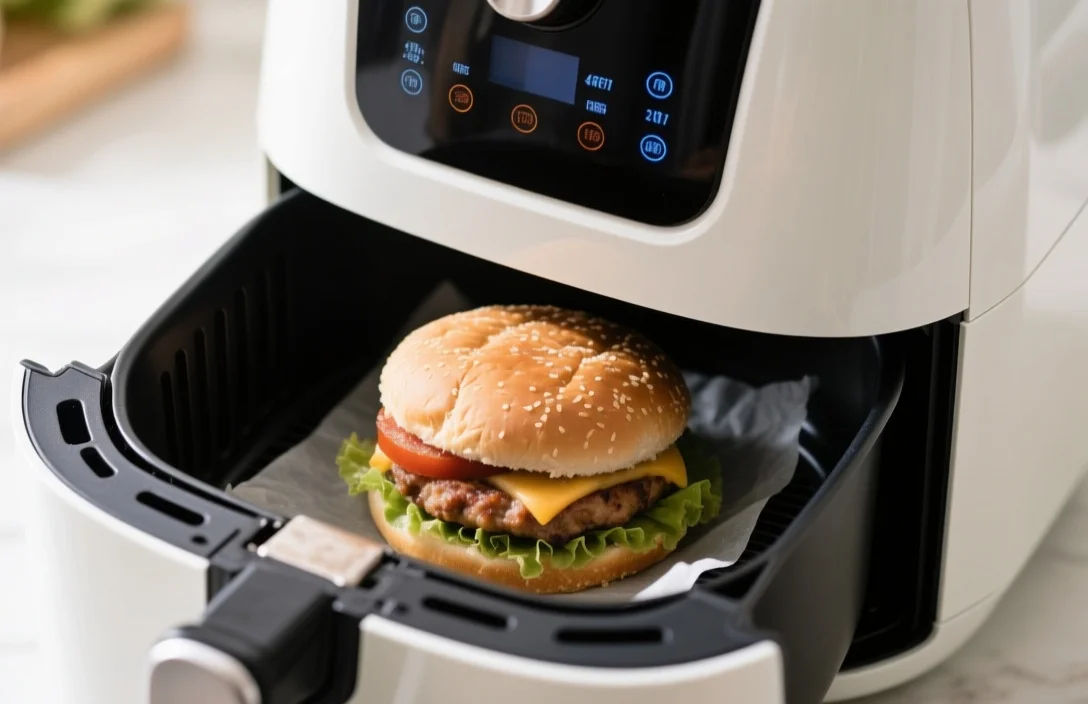
The United States Department of Agriculture mandates that all ground poultry products reach an internal temperature of 165 degrees Fahrenheit. This is the only reliable way to ensure that pathogens like Salmonella are destroyed during the cooking process. Because turkey lacks the fat content of beef, it does not have a large margin of error, meaning you should pull the burgers as soon as they hit this target.
Using an instant-read digital thermometer is the most accurate way to verify this number. Insert the probe into the side of the burger toward the center, rather than the top, to get the most precise reading of the thickest part. If you do not have a thermometer, you can check for clear juices and firm texture, but these visual cues are not as reliable as a temperature reading.
Steps to prevent frozen turkey burgers from drying out
Moisture retention starts with how you handle the burger during the first few minutes of the cooking cycle. Since the burger is frozen solid, the exterior will cook faster than the interior, which can lead to a crusty, dry shell. You can mitigate this by brushing a small amount of olive oil or avocado oil onto both sides of the patty before placing it in the air fryer.
Another effective technique is to add a small amount of liquid or a damp paper towel under the rack if your specific air fryer model allows for it, though this is rarely necessary with modern units. The most important rule for juicy burgers is to avoid pressing down on the patty with a spatula while it cooks. Pressing the burger forces the natural juices out, which is a one-way ticket to a dry, crumbly texture.
| Technique | Effect on Moisture |
|---|---|
| Brushing with Oil | Seals the surface and improves heat transfer |
| Avoiding the Spatula | Keeps internal juices trapped inside the meat |
| Using 375°F Setting | Prevents the exterior from drying before the center cooks |
| Resting for 2 Minutes | Allows juices to redistribute before the first bite |
Methods for flipping patties to ensure even browning
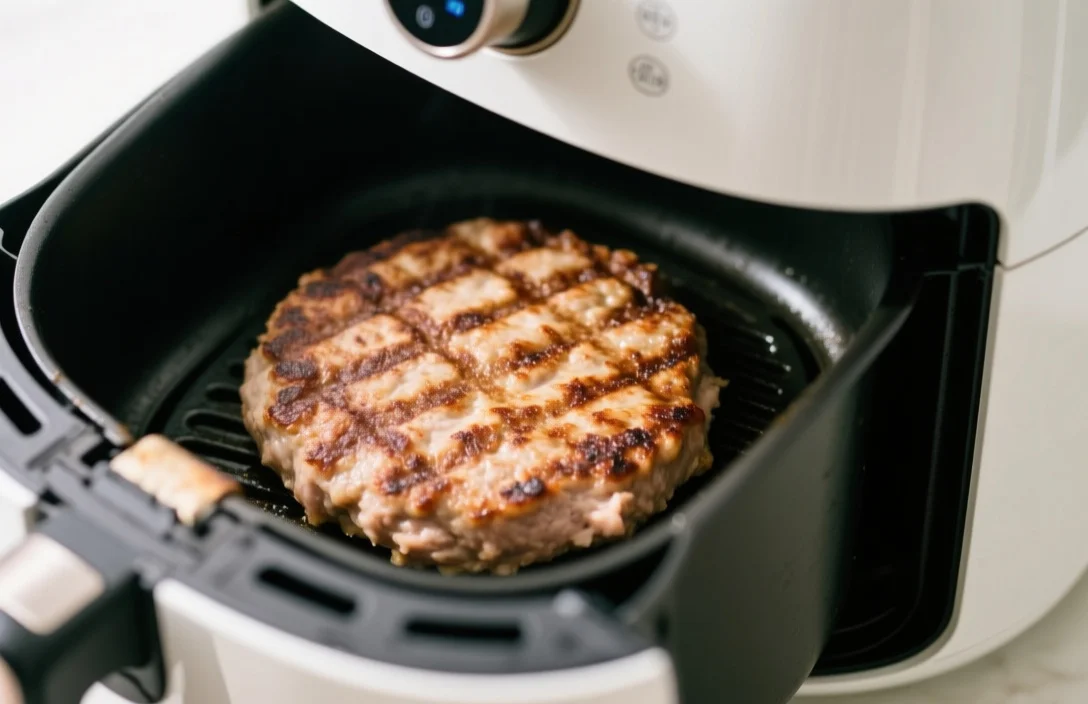
Flipping the burgers at the halfway point is essential for achieving a uniform sear on both sides. If you start your cook at 16 minutes, open the basket at the 8-minute mark to turn the patties. Using a pair of silicone-tipped tongs is the safest way to flip them without tearing the meat or damaging the non-stick coating of your air fryer basket.
If you notice that one side is browning significantly faster than the other, you may need to flip the burgers more frequently. However, avoid opening the basket too often, as this causes the air fryer to lose heat and extends the total cooking time. A single, clean flip at the halfway mark is usually sufficient for most frozen patties.
Seasoning and topping ideas for air fried turkey burgers
Turkey is a neutral canvas that benefits from bold, savory seasonings to elevate its flavor profile. Because the burgers are frozen, you cannot season them before they enter the air fryer unless the seasoning is already embedded in the patty. Once the burger has thawed and started to brown – usually around the 8-minute mark – you can lightly brush the surface with a bit of soy sauce, Worcestershire, or a dry spice rub.
For toppings, consider ingredients that provide moisture to contrast with the lean turkey. Creamy elements like avocado slices, garlic aioli, or a slice of Monterey Jack cheese work exceptionally well. If you want to add cheese, place it on top of the burger during the final minute of cooking so it melts without sliding off into the basket.
Pairing suggestions for a complete air fryer meal
A well-rounded meal balances the protein of the turkey burger with fresh textures and complementary sides. Since the air fryer is already occupied, many cooks choose to prepare sides that do not require heat, such as a crisp garden salad or a vinegar-based slaw. The acidity in the slaw cuts through the savory, lean meat and provides a refreshing contrast in every bite.
If you have a dual-basket air fryer or are willing to cook in batches, roasted vegetables are a natural pairing. Asparagus, bell peppers, or zucchini slices cook in roughly 8 to 10 minutes at the same 375-degree setting. For a classic experience, sweet potato fries are a popular choice, though they typically require a longer cook time and should be started before the burgers.
FAQ
Can I stack frozen turkey burgers to cook them faster?
No, you should never stack patties in an air fryer. Stacking prevents the hot air from circulating, which results in raw, cold centers and unevenly cooked, dry exteriors. Always arrange them in a single, even layer for the best results.
Do I need to preheat my air fryer for frozen burgers?
Preheating for 3 minutes is highly recommended. Starting with a hot chamber helps the burger begin searing immediately, which creates a better texture and helps lock in moisture compared to starting from a cold machine.
What should I do if my turkey burger is still pink inside?
If the center is still pink or the thermometer reads below 165 degrees Fahrenheit, return the burger to the air fryer for another 2 to 3 minutes. Never consume turkey that has not reached the 165-degree safety threshold, as ground poultry carries a higher risk of foodborne illness.
Is it necessary to add oil to a frozen turkey burger?
While not strictly required, a light coating of oil helps the burger brown and prevents it from sticking to the basket. Turkey is very lean, so the added fat also improves the mouthfeel and helps the exterior develop a more appetizing, golden-brown crust.
Can I cook different brands of turkey burgers together?
You can cook different brands together as long as the patties are similar in size and thickness. If one burger is significantly thicker than the other, it will take longer to reach the safe internal temperature, requiring you to remove the smaller ones first to avoid overcooking them.
Achieving a perfect frozen turkey burger in the air fryer is a matter of managing the temperature and respecting the 165-degree internal safety limit. By keeping your heat at 375 degrees Fahrenheit and resisting the urge to press down on the patties, you can ensure a result that is both safe and satisfying. Use a meat thermometer for every batch to confirm your success, and let the patties rest for two minutes before assembling your favorite toppings.