Why Do Air Fryer Silicone Liners Burn
Air fryer silicone liners burn when they get hotter than their rating allows or when oil, sugar, grease, or food residue scorches on the surface. The “burn” may be smoke from trapped debris rather than the silicone melting completely. Dark spots, a sharp plastic odor, warping, or smoke after only a few uses mean you should stop using the liner until you identify the cause.
Silicone liners are safe only within their temperature rating, and they need to stay clean and clear of the heating element. A liner rated for a lower temperature than your air fryer’s effective surface heat can discolor or burn, especially during preheating or when cooking sticky, sugary, or fatty foods.
Quick Diagnosis
- Check the temperature rating. Exceeding the liner’s maximum temperature is the most common cause of burning.
- Remove oil and sugar buildup. Residue scorches on the surface and creates smoke or black spots.
- Prevent contact with the heating element. A liner that curls or lifts can overheat rapidly.
- Skip preheating with the liner installed. An empty liner absorbs direct heat before food can buffer it.
- Keep vents clear. Crowding or blocking airflow can create hotter spots under the liner.
- Replace damaged liners. Melting, warping, rough patches, or a persistent odor means the liner is no longer worth using.
Why Air Fryer Silicone Liners Burn
Silicone liners burn when the material is exposed to more heat than it can tolerate or when food residue forms a scorched film on top. Four problems account for most cases:
- The air fryer runs hotter than the liner’s rating.
- The liner is left in place during preheating.
- The liner sits too close to the heating element.
- Sticky foods caramelize and char on the silicone.
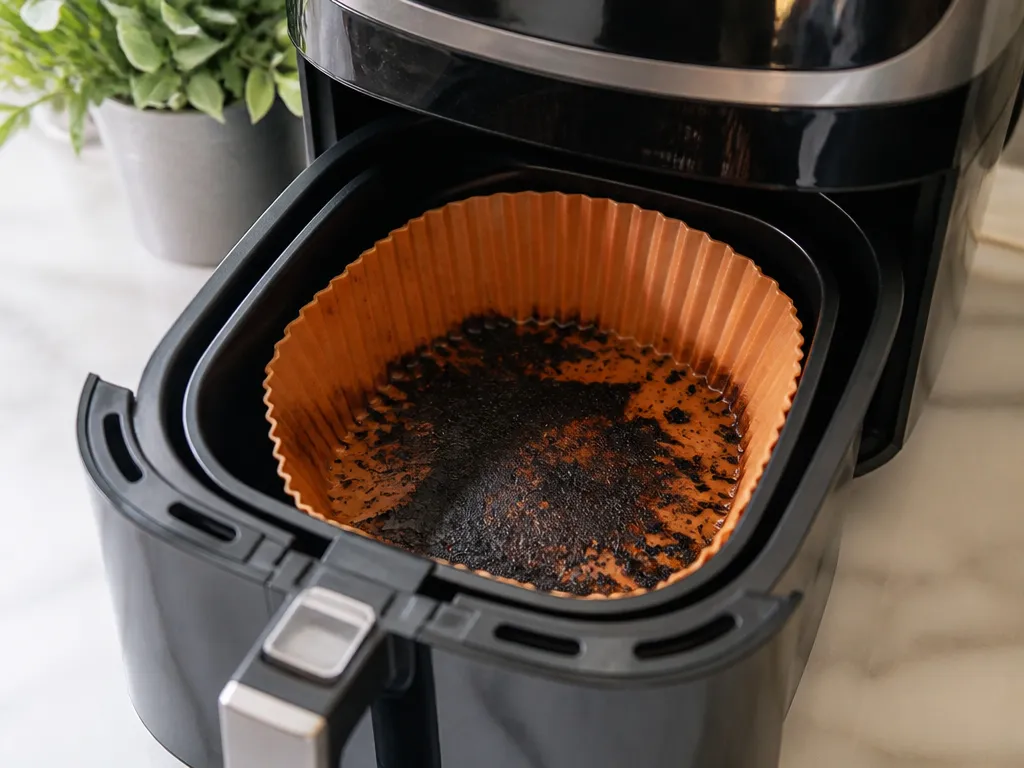
The appearance of the damage helps identify the cause. Brown or black speckles often come from scorched grease, crumbs, sauce, or cheese. A melted or warped shape, roughened surface, or strong chemical odor points to heat damage to the silicone itself. Stop using the liner in the second situation.
The Main Causes of Scorching
Temperature rating mismatch
Many silicone accessories marketed for air fryers still have a specific maximum temperature. That number matters because air fryers heat quickly and send hot air through concentrated jets near hot metal and the heating element.
A liner can burn even when the air fryer appears to be operating normally if the liner’s rating is too low for the setting you use. The risk increases during high-temperature cooking and preheating, when the empty liner receives direct heat without food covering or cooling the surface.
Sticky and sugary foods
Sauces, glaze, honey, melted cheese, and other sugary foods cling to silicone and bake onto it. The residue can char during the current cook or continue smoking during later cooks.
Frozen mozzarella sticks may leave melted cheese and breading on the liner. Honey-glazed salmon, sticky wings, and sauced foods can create dark scorch zones where the glaze repeatedly touches the silicone. A quick rinse may remove the visible grease while leaving behind a thin carbon film that smokes the next time you cook.
Preheating with the liner inside
An empty liner absorbs radiant and convection heat before the food is added. If it is already near its temperature limit, preheating can push it past that limit before cooking begins.
Run the air fryer without the liner during preheat, then add the liner when cooking starts. If the drawer is extremely hot, let it cool slightly first. The liner should go in with the food rather than sit empty in a hot basket.
Contact with the heating element
A liner that is too large, folded, curled, or poorly fitted can slump toward the heating element. The edge may scorch quickly, and direct contact can cause immediate damage.
Use only a liner that fits your specific basket. It should lie flat without reaching into the element area. Do not stack liners, fold them, or tuck the edges in a way that makes them curl upward.
Grease and debris underneath the liner
Oil, crumbs, and food particles trapped under or on the liner can cook into carbon. Carbon absorbs heat, so the contaminated area becomes hotter than the clean silicone around it. That creates small smoking or blackened spots even when the air fryer temperature seems reasonable.
Wash the liner thoroughly after each use, paying attention to the underside and any ridges. Dry it completely before putting it back in the basket.
How to Use a Silicone Liner Without Burning It
Match the liner to both the air fryer and the food. Check the liner’s temperature rating, confirm that it fits the basket, and keep the heat setting within that rating. A liner that fits one air fryer may not fit another safely if the basket shape, element position, or airflow pattern differs.
Skip the liner for foods that are especially sticky or sugary. Glazed chicken wings, pizza rolls with sauce, honey-coated foods, and thick marinades can char on silicone. Use air fryer parchment made for high-heat use or cook directly in a lightly greased basket instead.
Keep the liner flat and away from the heating element. Do not use a liner that lifts into the airflow path, curls at the edges, or blocks vents. Poor airflow can create hot spots and interfere with browning.
Clean the liner promptly after cooking. Scrub away dark, carbonized patches rather than leaving them for the next batch. If the dark areas are deeply baked in or the liner still smells burnt after washing and drying, replace it.
For a new liner or one that may be aging, begin with a moderate-temperature cook using non-sticky food such as plain vegetables. Watch for smoke or a strong odor. If either appears, stop using the liner instead of continuing to “push through” the problem.
When a Silicone Liner Helps
A silicone liner can make cleanup easier by keeping food from sticking directly to the metal basket. It is useful for smaller items such as chopped vegetables or frozen snacks that might otherwise fall through openings or leave bits behind.
A correctly sized liner also gives grease a predictable place to collect. That can reduce mess in the drawer and limit scrubbing when the food is relatively dry and non-sticky.
The liner is not automatically the best choice for every recipe. Burning, warping, or a persistent odor outweighs the cleanup benefit. For sugary, saucy, or very high-heat foods, parchment or direct cooking may be the better option.
Better Alternatives for Sticky or High-Heat Foods
| Option | Best For | Key Limitation |
|---|---|---|
| Air fryer parchment rounds | Sticky or sugary foods | Must be used without blocking airflow and should not touch the heating element |
| Cooking directly in the basket | Crispy foods, fries, wings | Requires more cleaning, and some foods will stick |
| Metal rack or divider, if your model has one | Better airflow and browning | Not every basket supports accessories |
| Aluminum foil, in portions | Drip control for fatty foods | Easy to over-block airflow if crimped incorrectly |
| Silicone liner with stricter heat control | Non-sticky everyday cooking | Only works if the liner rating truly fits your fryer and the fit is correct |
Use silicone for relatively dry, non-sticky foods when the liner fits correctly and the temperature stays within its rating. Choose parchment or cook directly in the basket for glazes, honey, sugary sauces, and foods that tend to caramelize.
When to Stop Using the Liner
A liner with brown or black food residue may be salvageable if thorough washing removes the buildup and the silicone remains smooth and odor-free. A liner with melting, warping, permanent discoloration from heat, a roughened surface, or a persistent chemical or burnt smell should be discarded.
Pay particular attention to damage that appears near the edge. That pattern often indicates the liner is lifting toward the heating element. Replacing it without correcting the fit can lead to the same problem with the next liner.
If the liner smokes after cleaning, do not keep testing it with different foods. Switch to parchment or cook directly in the basket for the next 1-2 recipes. A clean liner that still smokes may have suffered heat damage rather than simple residue buildup.
Troubleshooting Common Cooking Situations
Frozen mozzarella sticks leave black flecks
Melted cheese and breading residue may have scorched on the silicone. The residue can form a carbon film that continues smoking on later cooks. Wash and scrub the liner thoroughly, including the underside. Replace it if the black patches are baked in or the burnt smell remains.
Plain chicken smells burnt after preheating
If you preheat the air fryer with the silicone liner inside, the empty liner may have overheated before the chicken was added. Run the preheat without the liner, then add the liner and food when cooking begins. If the odor continues, stop using the liner and inspect it for warping or permanent damage.
Honey-glazed salmon or sticky wings darken the liner
Sugar and glaze can char where they touch the silicone. If the same areas darken across different batches, those are likely food-contact scorch zones rather than random aging. Skip the silicone liner for these recipes and use air fryer parchment made for high-heat use or cook directly in the basket.
The liner burns only at the highest setting
That pattern points to a temperature rating mismatch. Cook at a lower temperature for a longer time only if the recipe allows it and the liner remains within its rating. Otherwise, switch to parchment or cook directly in the basket for high-heat recipes.
The liner smokes even though the food looks fine
Smoke usually comes from grease, crumbs, or a thin sauce film scorching on the liner. Carbonized residue absorbs heat and can keep smoking even when the food itself is not burned. Persistent smoking after cleaning indicates that the liner should be replaced.
FAQ
Can silicone liners go in any air fryer temperature setting?
No. Silicone liners have a maximum temperature rating, and exceeding it can cause discoloration or warping. If the liner’s rating is lower than your usual air fryer setting, it may burn faster, especially during preheating or when cooking greasy, sticky foods. Check the label and stop using the liner if you see melting or smell a persistent burnt odor.
Why does my silicone liner smoke even when the food isn’t burned?
Smoke usually comes from residue scorching on the liner surface. Grease drips, crumbs, and thin sauce films can carbonize, and the carbon can heat quickly enough to produce smoke during later cooks. If it still smokes after thorough cleaning, replace it.
How long does it take for a silicone liner to burn?
One cook can cause visible damage if the liner overheats or touches the heating element. Residue buildup or a mild temperature mismatch may cause gradual darkening over multiple uses. Melting, warping, or a chemical odor after cleaning means you should stop using the liner immediately.
What is the safest replacement for nonstick cleanup?
Use air fryer parchment made for high-heat use or cook directly in the basket when making crisp foods. For sugary or saucy recipes, parchment is often more practical than silicone because you can replace it after each use. Do not use foil or parchment in a way that blocks airflow or folds into the heating element path.
What mistake causes silicone liners to burn most often?
Using a liner that is too large or installed incorrectly is a common cause. When the liner slumps toward the heating element, preheating and sticky foods can accelerate scorching. Choose the correct size, lay it flat, and keep it away from the element area.