
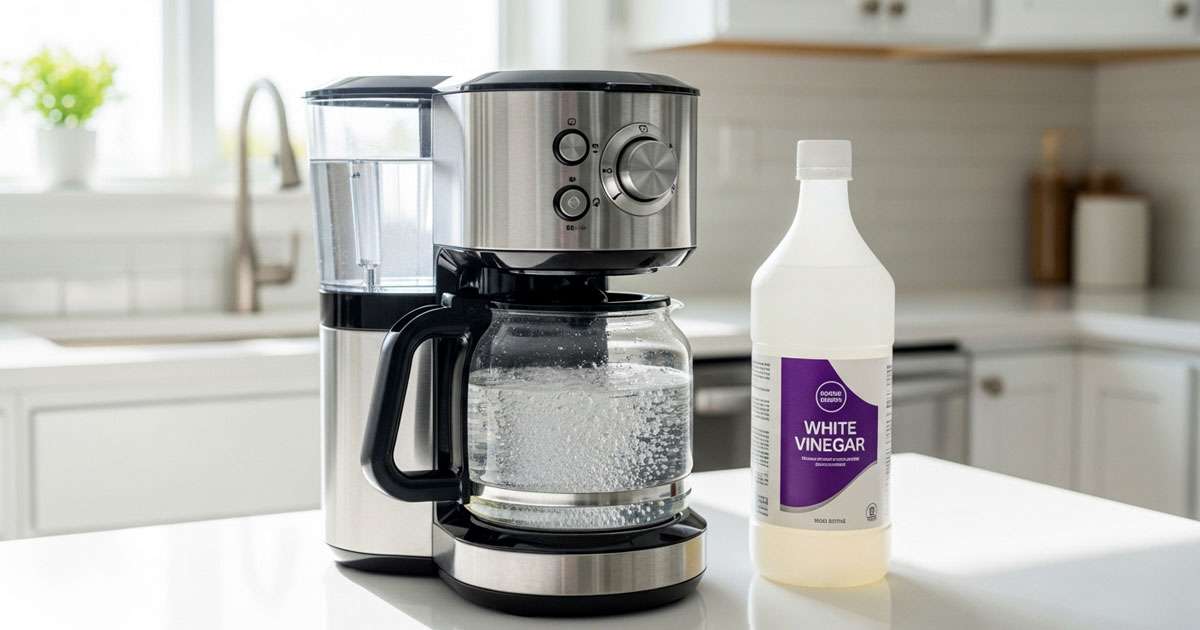
How to Descale a Coffee Maker (Easy Step-by-Step Guide)
I learned this lesson the hard way.
For months, I wondered why my morning coffee tasted… off. Slightly bitter. A little flat. I blamed the beans. I blamed the water. I even blamed myself for bad brewing technique.
Then a friend asked me: “When’s the last time you cleaned your coffee maker?”
I stared at her blankly.
Turns out, I’d never cleaned it. Ever. For two whole years.
Inside my coffee maker was a hidden layer of chalky white buildup called limescale. Minerals from my tap water had been slowly coating the inside of my machine . And it was ruining my coffee.
If your coffee tastes bitter, brews slowly, or makes weird gurgling noises, you probably have the same problem .
Here’s exactly how to descale a coffee maker – the right way. No guesswork. No fancy tools. Just clean coffee that tastes the way it should.
Quick Answer: How to Descale a Coffee Maker in 3 Steps
If you’re in a hurry, here’s the short version:
- Fill the reservoir with equal parts white vinegar and water (or use commercial descaler)
- Run a brewing cycle halfway, then let it sit for 30-60 minutes
- Finish the cycle and run 2-3 more cycles with fresh water to rinse
That’s it. Your coffee maker is now clean.
What’s the Difference Between Cleaning and Descaling?
Before we dive in, let’s be clear about what we’re actually doing .
Daily cleaning is what you do after each use. Wash the carafe. Rinse the filter basket. Wipe down the exterior. This removes coffee oils and residue.
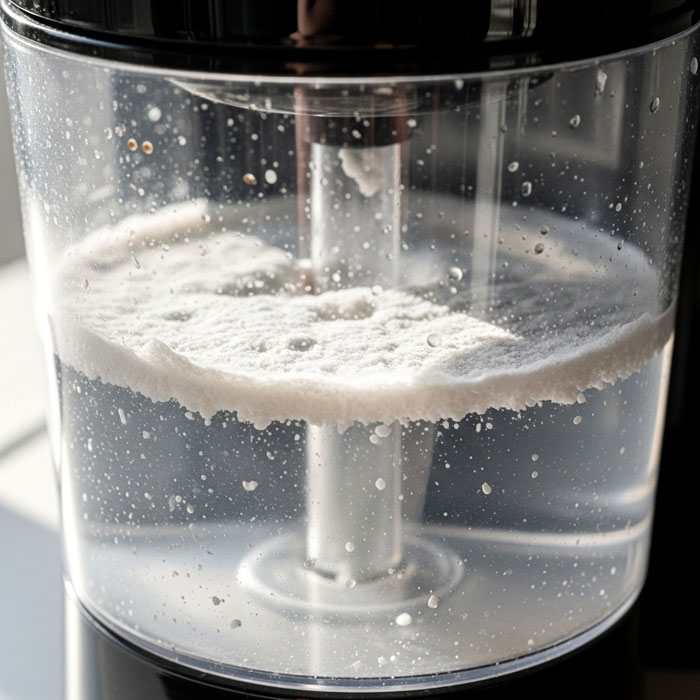
Descaling is what we’re doing today. It removes mineral buildup (limescale) from inside your machine where you can’t see it . These minerals come from your water and slowly accumulate over time.
Think of it like this: daily cleaning is brushing your teeth. Descaling is going to the dentist. Both are important, but they’re not the same thing.
What You’ll Need
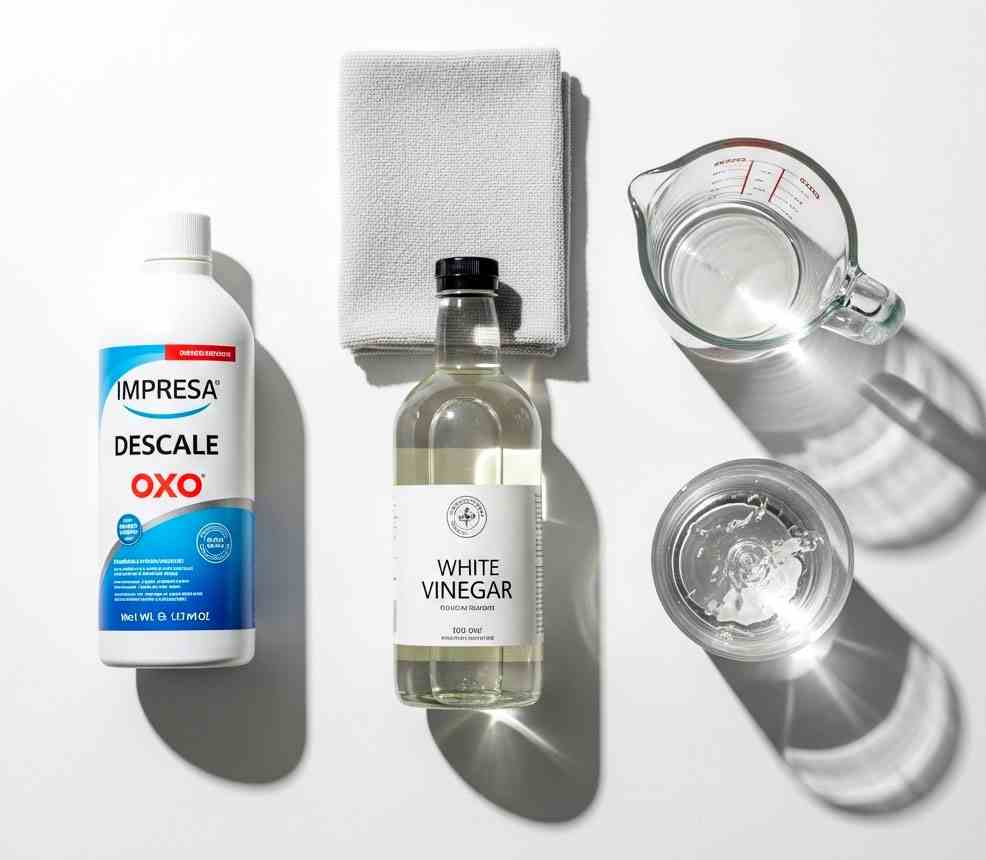
Gather these supplies before you start:
| Item | Purpose |
|---|---|
| White vinegar OR commercial descaler | The cleaning agent |
| Fresh water | For rinsing |
| Soft cloth or sponge | For wiping |
| Optional: Lemon juice | For deodorizing |
What NOT to use:
- ❌ Dish soap inside the machine (can leave residue)
- ❌ Abrasive scrubbers (scratch surfaces)
- ❌ Undiluted vinegar regularly (can damage seals over time)
Method 1: How to Descale with Vinegar (Budget-Friendly)
Vinegar is slightly acidic, which helps break down mineral deposits . It’s cheap, effective, and you probably already have it in your cabinet .
Step 1: Empty and Prepare
Remove any coffee grounds and filters. Empty the carafe completely .
Step 2: Make Your Solution
Mix equal parts white vinegar and water . How much? Enough to fill your water reservoir to its max capacity.
For heavy buildup, you can use undiluted vinegar once, but don’t make it a habit – it can wear down seals over time .
Step 3: Run a Half Cycle
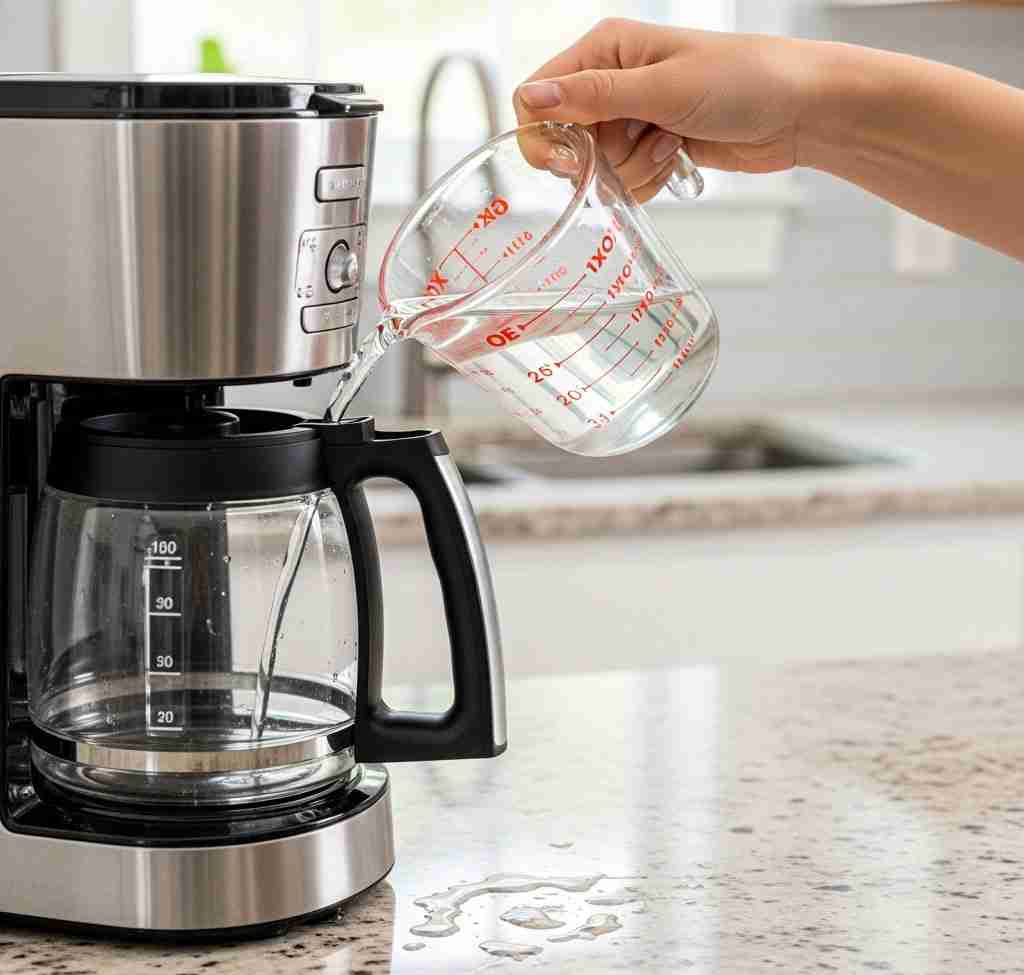
Pour the solution into the water reservoir. Start a brew cycle like you’re making coffee.
Here’s the trick: About halfway through, turn off the coffee maker. Let the vinegar solution sit inside for 30-60 minutes . This dwell time lets the acid really work on the buildup.
Step 4: Finish the Cycle
After the soak, turn the machine back on and let the cycle finish. The vinegar solution will drip into the carafe.
Step 5: Discard and Rinse
Empty the carafe. Now you need to rinse thoroughly .
Fill the reservoir with fresh water (no vinegar) and run a full brew cycle. Repeat this 2-3 times until you can’t smell any vinegar .
Step 6: Wash Removable Parts
Wash the carafe, filter basket, and any other removable parts with hot, soapy water. Rinse well and let dry .
Method 2: How to Descale with Commercial Descaler (No Smell)
If you hate the smell of vinegar or want something specifically formulated for coffee makers, commercial descalers are a great option .
Popular USA brands include:
- IMPresa Descaler – Made in USA, works with most machines
- OXO BREW All-Natural Descaling Solution – Phosphate-free, no odor
- De’Longhi EcoDecalk – Biodegradable, plant-based lactic acid
Steps for Commercial Descaler:
- Follow package directions – Each brand has specific ratios
- Pour solution into water reservoir (usually mixed with water)
- Run a brew cycle according to instructions
- Let it sit if recommended (varies by brand)
- Rinse thoroughly with 2-3 fresh water cycles
Most commercial descalers work faster than vinegar and leave no lingering smell .
How Often Should You Descale Your Coffee Maker?
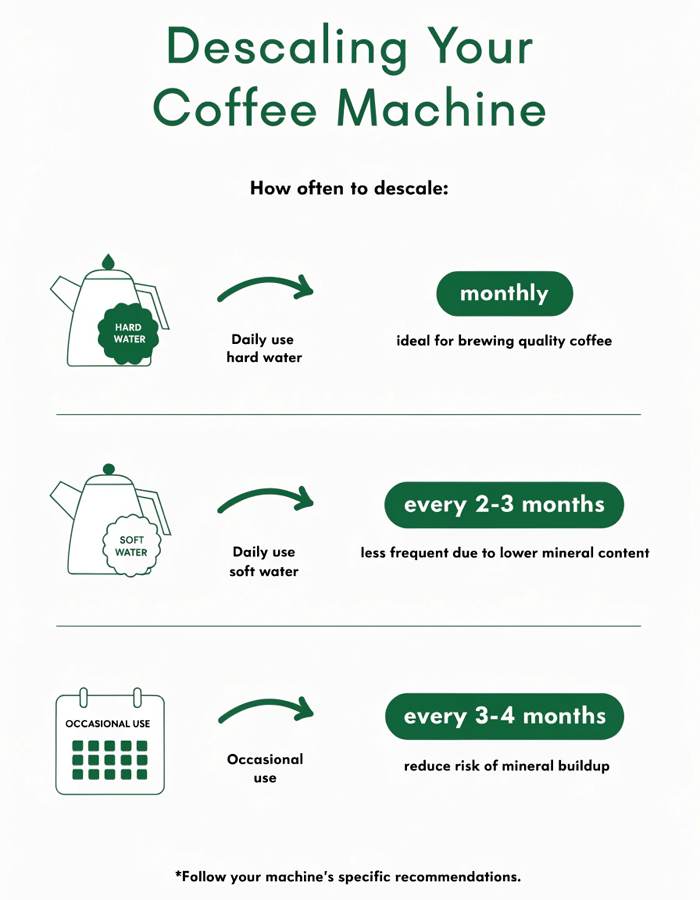
This depends on two things: how often you use your machine and how hard your water is .
| Usage | Recommended Frequency |
|---|---|
| Daily use, hard water | Once a month |
| Daily use, soft water | Every 2-3 months |
| Occasional use | Every 3-4 months |
| Light use | Twice a year |
Some coffee makers have a cleaning indicator light that tells you when it’s time . If yours has one, follow that signal.
Signs Your Coffee Maker Needs Descaling

Don’t wait for a calendar reminder. Your machine will tell you when it needs help :
- ☕ Coffee tastes bitter or “off”
- ⏱️ Brewing takes longer than usual
- 🔊 Loud gurgling or sputtering noises during brewing
- 💨 Excessive steam coming out
- White residue visible on the carafe or interior parts
- Water remains in the tank after brewing
- Cleaning light comes on (if your model has one)
If you notice ANY of these, it’s time to descale .
Daily Maintenance: Keep It Cleaner Longer
Once your machine is clean, here’s how to keep it that way :
- Rinse the carafe after each use – Don’t let coffee sit all day
- Wash removable parts weekly with warm, soapy water
- Leave the lid open after use so moisture can dry out
- Use filtered water to reduce mineral buildup
- Wipe the showerhead daily to remove coffee splashes
Frequently Asked Questions
Can I use apple cider vinegar instead of white vinegar?
Yes, but it may leave a stronger smell and require more rinsing . White vinegar is generally preferred because it has a neutral odor .
Can I descale with lemon juice?
Yes. Lemon juice contains citric acid, which also breaks down limescale . Mix 2 tablespoons of lemon juice per 2 cups of water . It leaves a fresh scent but is slightly less potent than vinegar for heavy buildup.
Will vinegar damage my coffee maker?
Diluted vinegar is safe for occasional use . However, frequent use of undiluted vinegar can wear down rubber seals and gaskets over time . Always rinse thoroughly.
How do I descale a Keurig or pod machine?
The process is similar, but check your manual first. Remove the water filter before descaling . Many pod machine manufacturers recommend their own descaling solutions due to smaller internal channels .
Can I use baking soda to descale?
Baking soda is better for light cleaning and deodorizing, not heavy descaling . For mineral buildup, vinegar or citric acid work better .
Why does my coffee still taste bad after descaling?
If you’ve descaled and rinsed thoroughly but coffee still tastes off, check:
- Your water filter (replace if old)
- Coffee bean freshness
- Cleanliness of removable parts (they may need deeper scrubbing)
When to Replace vs. When to Descale
| Situation | Action |
|---|---|
| Slow brewing, weird tastes | ✅ Descale first |
| Visible mineral buildup | ✅ Descale |
| Machine 5+ years old with ongoing issues | 🤔 Consider replacement |
| Heating element not working | 🔧 May need repair/replacement |
Descaling solves most performance issues. Only consider replacement if problems persist after a thorough cleaning.
Best Coffee Maker Descalers (USA)
| Product | Type | Best For | Price |
|---|---|---|---|
| IMPresa Coffee Machine Descaler | Liquid | Most machines, Made in USA | $$ |
| OXO BREW All-Natural Descaling Solution | Liquid | No odor, natural ingredients | $$ |
| De’Longhi EcoDecalk | Liquid | Eco-friendly, biodegradable | $$ |
| Coffee Machine Cleaner Tablets | Tablets | Bulk value, 24-count | $ |
| Urnex Dezcal | Powder | Professional barista use | $$ |
Prices and availability update automatically. Click any product for current Amazon details.
🔄 Related: Looking for a new coffee maker? Check out our Best Compact Coffee Makers for Small Counters guide.
🌍 Note: Product availability and prices are for the USA market. All recommended descalers are available on Amazon.com.
Final Take
A clean coffee maker makes better coffee. It’s really that simple.
The vinegar method costs pennies and works great. Commercial descalers cost a bit more but save you from vinegar smell. Both work.
Here’s your takeaway:
- Descale every 1-3 months depending on water hardness
- Watch for signs – slow brewing, funny noises, bad taste
- Rinse thoroughly – don’t let cleaning solution linger
- Clean daily – a quick rinse after each use prevents buildup
Set a reminder on your phone for the first of every month. When it goes off, run a descaling cycle. Your future self – and your taste buds – will thank you.

3 Comments