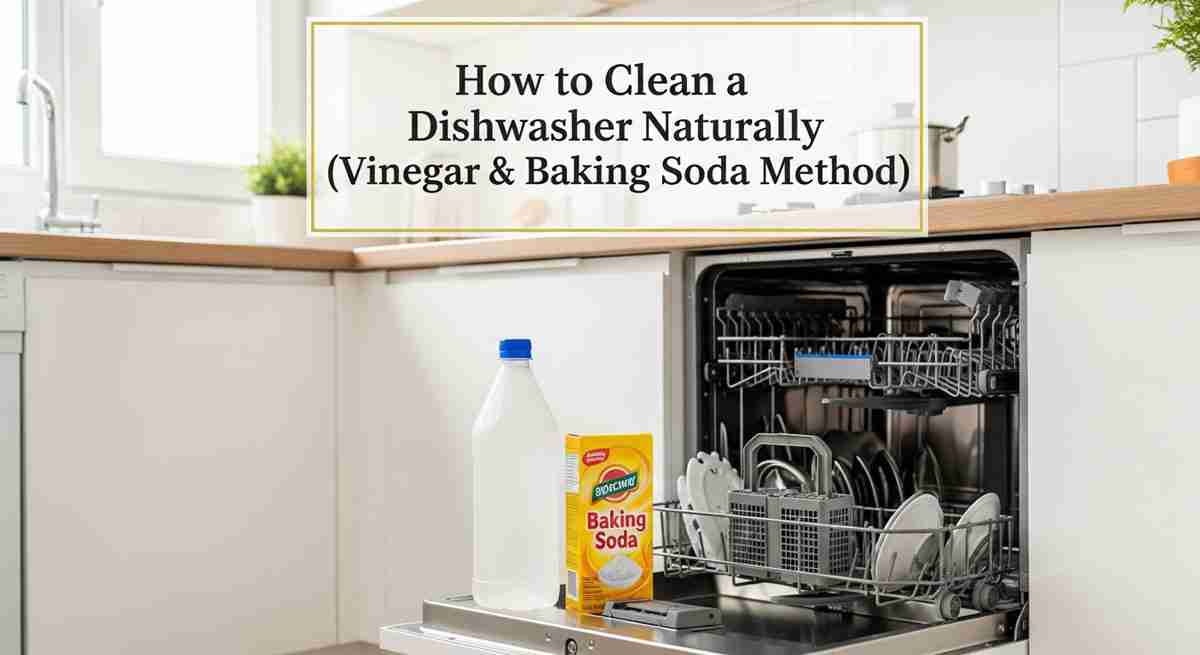
How to Clean a Dishwasher Naturally (2026 Guide)
Learning how to clean a dishwasher naturally saved me from buying a new appliance. Here’s what worked.
I thought my dishwasher was dying.
The dishes came out with white film. A weird smell came from the door. Nothing looked clean anymore.
I was ready to call a repairman.
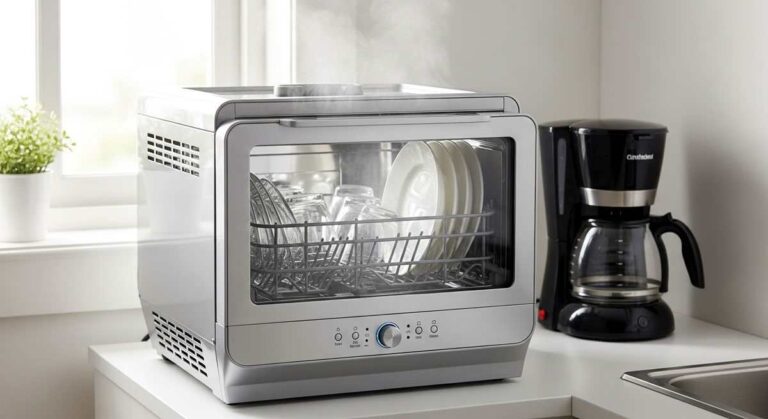
If your dishwasher needs replacing instead of cleaning, check out our best countertop dishwasher reviews for apartment-friendly options.
Then a friend asked me a simple question: “When’s the last time you cleaned your dishwasher?”
I stared at her. I didn’t know you had to.
Turns out, I’d never cleaned it. In two years.
Here’s the truth. Your dishwasher cleans your dishes. But it needs cleaning too. And you don’t need harsh chemicals to do it.
Here’s how to clean a dishwasher naturally with two ingredients you already have.
Last updated: April 25, 2026
Why You Need to Clean Your Dishwasher
Even though it washes dishes with soap, your dishwasher gets dirty.
Over time, food particles, grease, and soap scum build up. Hard water leaves mineral deposits. Mold and mildew grow in warm, damp corners.
Signs your dishwasher needs cleaning:
- Dishes come out with white film
- Musty or bad smell coming from inside
- Food particles stuck to dishes after a cycle
- Water doesn’t drain properly
- Cloudy glasses
You don’t need special cleaners. You don’t need harsh chemicals. You just need two things from your pantry.
What You’ll Need
The best part about learning how to clean a dishwasher naturally is that you probably already have the supplies in your pantry.
| Item | Purpose |
|---|---|
| White vinegar | Cuts grease, removes odors, dissolves mineral deposits |
| Baking soda | Gently scrubs, deodorizes, brightens |
| Soft cloth or sponge | Wiping interior surfaces |
| Old toothbrush | Scrubbing tight spots around the door seal |
That’s it. No expensive dishwasher cleaners. No bleach. No harsh chemicals.
Step-by-Step: How to Clean a Dishwasher Naturally
Step 1: Empty the Dishwasher
Take out all dishes, utensils, and racks. You want nothing inside.
Step 2: Check and Clean the Drain
Remove the bottom rack. Look at the drain area (usually covered by a filter or screen). Remove any large food particles by hand. Use an old toothbrush to scrub away buildup.
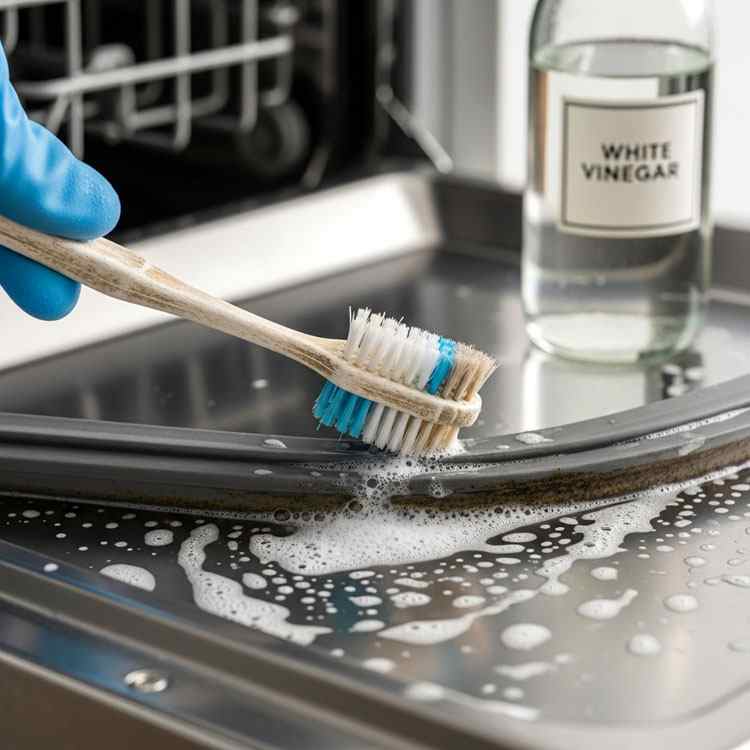
Step 3: Clean the Door Seal
The rubber seal around the door traps moisture. This is where mold and mildew grow.
Dip your toothbrush in white vinegar. Scrub the entire rubber seal. Pay attention to the bottom corners. Wipe with a damp cloth.
Step 4: Run a Vinegar Cycle
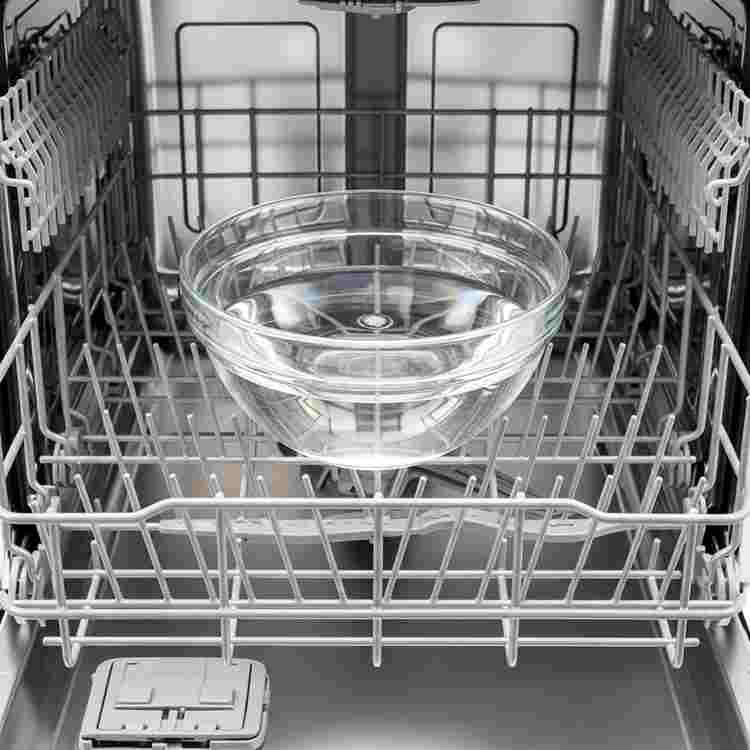
Pour 1 cup of white vinegar into a dishwasher-safe bowl or cup. Place it on the top rack. Run the hottest cycle you have.
Do not add detergent. The vinegar alone will clean.
The vinegar cuts through grease, removes soap scum, and dissolves mineral deposits.
Step 5: Sprinkle Baking Soda
After the vinegar cycle finishes, sprinkle 1 cup of baking soda across the bottom of the dishwasher. Run a short hot water cycle.
The baking soda deodorizes and brightens the interior.
Step 6: Wipe Down Surfaces
After the cycle finishes, open the door and let it air dry. Wipe down the interior walls with a soft cloth if needed.
How Often to Clean Your Dishwasher
| Frequency | What to Do |
|---|---|
| After every load | Remove food scraps from the filter. Wipe the door seal. |
| Weekly | Quick wipe of interior walls. Run a vinegar cycle once a month. |
| Monthly | Deep clean with vinegar and baking soda. |
| Every 3 months | Check spray arms for clogged holes. Use a toothpick to clear them. |
What About the Filter?
Most dishwashers have a filter that needs regular cleaning. Check your manual. It’s usually a cylindrical screen at the bottom.
How to clean it:
- Remove the bottom rack.
- Twist and lift the filter.
- Rinse under hot water.
- Use an old toothbrush to scrub away debris.
- Reinstall.
Clean this once a month for best results.
What NOT to Use
| Avoid | Why |
|---|---|
| Bleach | Harsh, can damage rubber seals |
| Lemon juice | Acidic, can damage seals over time |
| Commercial dishwasher cleaners | Expensive, often unnecessary |
| Abrasive scrubbers | Scratch stainless steel interiors |
Stick with vinegar and baking soda. They work without damaging your machine.
For more appliance safety tips, visit the Energy Star guide to dishwasher efficiency and maintenance.
Frequently Asked Questions
Q: Can I use apple cider vinegar instead of white vinegar?
A: White vinegar is better. It’s clearer, cheaper, and doesn’t stain. Apple cider vinegar can leave residue.
If you’re deciding between cleaning your current dishwasher or buying a new one, read our honest review on whether countertop dishwashers are worth it.
Q: Will vinegar damage my dishwasher?
A: No. White vinegar is mild and safe for dishwasher components. It’s actually recommended by many manufacturers.
Q: Why do my glasses have white film after washing?
A: That’s hard water mineral buildup. The vinegar cycle will dissolve it. Run a vinegar cycle once a month.
Q: Can I put vinegar in the detergent dispenser?
A: Put it in a bowl on the top rack, not in the dispenser. The dispenser can get clogged.
Q: How do I get rid of bad smells?
A: Most smells come from food debris in the filter or door seal. Clean both. Then run a vinegar cycle. The smell should go away.
For official safety guidelines, visit the FDA safe food handling guidelines.
Final Take
Your dishwasher works hard. It washes your dishes every day. But it needs help too.
Cleaning it with vinegar and baking soda is cheap, easy, and chemical-free.
No special products. No expensive repairs. Just two ingredients you already have.
Do this once a month. Your dishes will come out cleaner. Your dishwasher will last longer. And you won’t have to call a repairman.
Once you know how to clean a dishwasher naturally, you’ll never buy expensive dishwasher cleaners again.
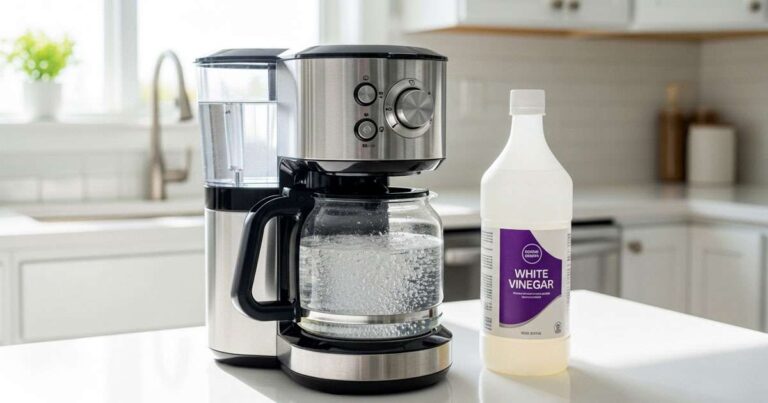
Need to clean other appliances? Learn how to descale a coffee maker naturally too.
As an Amazon Associate I earn from qualifying purchases. This means if you click on an affiliate link and make a purchase, I may receive a small commission at no extra cost to you. Product prices and availability are accurate as of the date/time indicated and are subject to change. All products featured in this guide were tested in real small kitchens. Thank you for supporting NookTool!