How To Fix A Dishwasher That Is Not Draining
A dishwasher that will not drain usually has a blockage in the filter, sump, drain hose, or air gap. If water remains in the bottom of the tub after a cycle, start there rather than guessing at replacement parts.
The quickest safe diagnosis is:
- Unplug the dishwasher.
- Remove and clean the filter and food trap.
- Clear visible debris from the sump.
- Inspect the drain hose, sink connection, and air gap.
- Run a short cycle and listen for the drain pump.
If the pump hums but water does not move, look for a blockage. If the pump stays silent, the pump, wiring, control board, or door-latch interlock may need testing.
Key Takeaways
- Start with safety. Unplug the dishwasher before reaching into the sump or drain area.
- Check for standing water. Water left after a cycle points to a blocked or failed drain path.
- Clean the filter and trap. Food buildup is a common cause of slow or failed draining.
- Inspect the hose and air gap. Kinks, clogs, and poor routing can stop water from leaving the dishwasher.
- Listen for the drain pump. A humming pump points toward a blockage; silence points toward an electrical or pump problem.
- Know when to stop. If cleaning and hose checks do not restore drainage, arrange pump or control repair.
How To Fix A Dishwasher That Is Not Draining
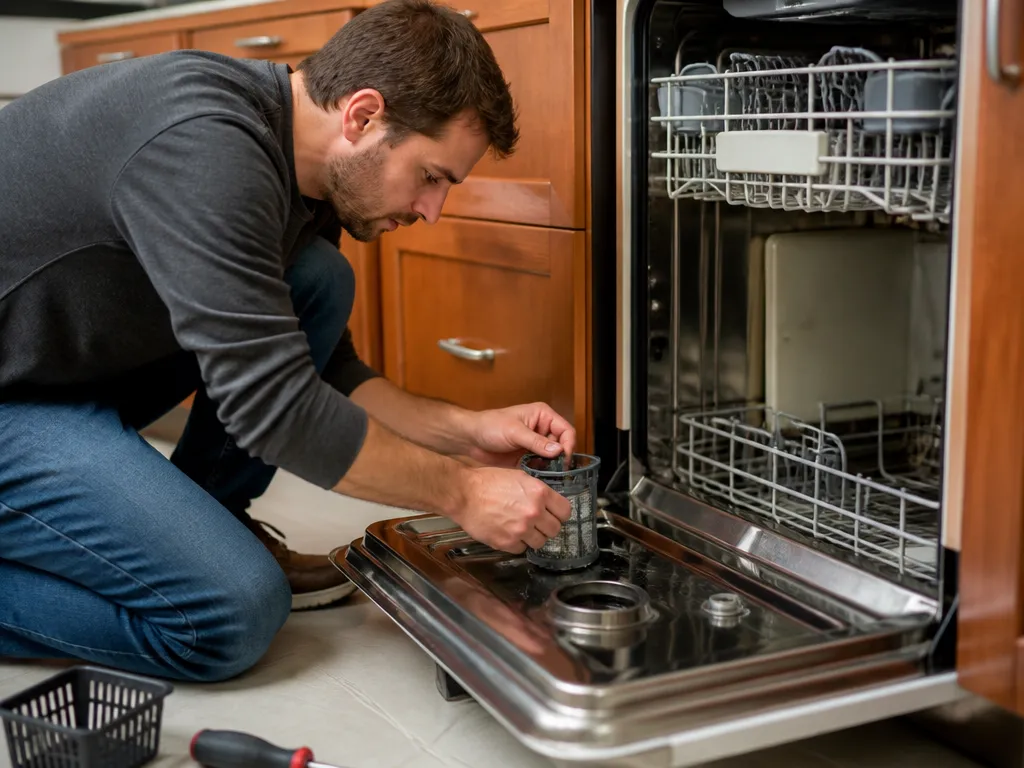
Standing water after a wash cycle means the dishwasher filled correctly but failed during the drain step. Water collects in the bottom sump, then the drain pump pushes it through the drain hose and into the sink drain or garbage disposal. A blockage or failed component anywhere along that route can leave the tub full.
Start with the least invasive checks. This order prevents you from replacing a pump when a small piece of food or grease is blocking the intake.
Trace the drain path from the filter to the hose
Dishwasher water leaves the tub through a simple sequence: it collects in the sump, passes through the pump, travels through the drain hose, and exits through the sink connection. The filter and food trap protect the pump from debris, but they can clog with food, grease, paper labels, and hard starchy residue.
Check those parts first. Then inspect the hose, air gap, and sink connection. If those sections are clear, listen for the drain pump. The pump’s sound helps separate a blockage from an electrical or mechanical failure.
Is the drain pump running and humming?
A humming drain pump usually means it is receiving power and trying to move water. Check the drain hose, air gap, sink connection, and pump intake for a blockage.
A silent pump during the drain portion of a cycle points toward a failed pump, damaged wiring, a failed control board, or a door-latch interlock problem. Clear the easy blockages before treating it as an electrical fault.
Start a short drain cycle or run a normal cycle, then listen near the bottom access area when the dishwasher should be draining. Some models allow access to the pump through the toe-kick panel. If you inspect that area, unplug the appliance first and look for debris around the pump intake. If the pump remains silent after the filter, sump, and hose are clear, stop guessing and arrange pump or control diagnostics.
Clean the filter and food trap
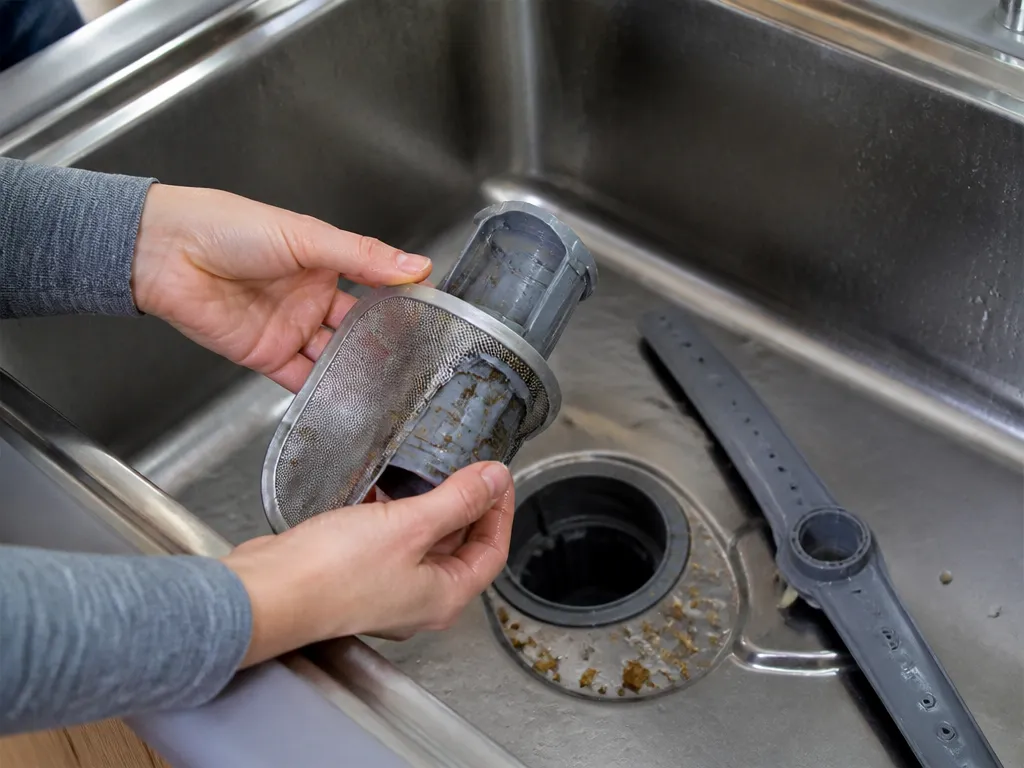
A clogged filter is a common reason a dishwasher ends a cycle with water in the tub. Food particles and grease can pack into the openings, restricting the flow into the sump and preventing the pump from pulling water effectively.
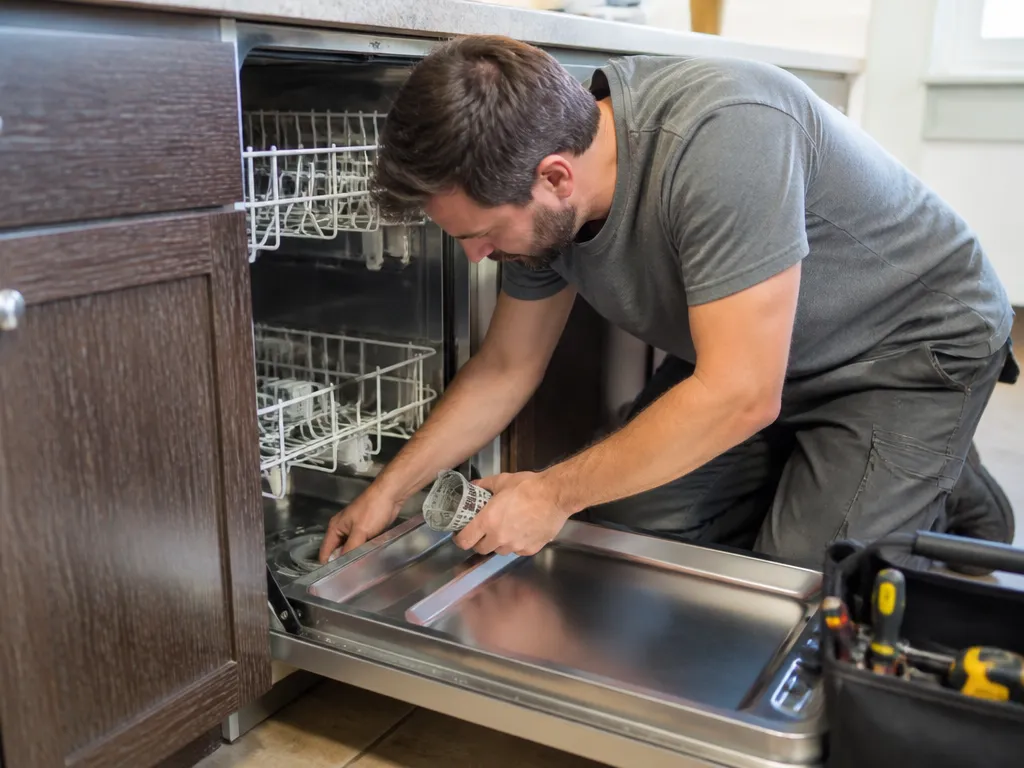
Wait for the dishwasher to cool, unplug it, and pull out the bottom rack. Remove the filter assembly – most filters twist or lift out – and rinse it under hot water. Use a soft brush to clear the mesh and edges. If a trap area sits under or around the filter, remove the debris by hand and flush the area until water can flow freely.
Clean the filter completely rather than stopping when it looks mostly clear. A small packed mass can still restrict the pump intake.
- Unplug before touching parts. Standing water and electrical components create a safety risk.
- Remove and rinse the filter. Use hot water and a soft brush on the mesh and edges.
- Clear the trap area. Remove packed food near the intake.
- Remove grease film. Grease can form a sticky barrier that restricts flow.
- Reassemble the filter tightly. A filter that is not seated correctly can cause poor drainage.
Check the drain hose and air gap
A blocked drain hose can prevent drainage even when the pump is humming. Look for a kinked hose, a crushed section, internal grease and food buildup, or a clogged connection at the sink drain or garbage disposal.
If the sink has an air gap – usually a small cylindrical fitting on the countertop – inspect it as well. An air gap can clog internally and cause slow or failed draining. Remove its cap according to the appliance or air-gap design and clear visible debris.
Check the high loop under the sink, too. This is the section of drain hose routed high beneath the countertop. A crushed or poorly routed hose can interfere with drainage and may allow dirty sink water to flow back toward the dishwasher.
Do not rely on an external inspection alone. A hose can look fine while debris blocks the inside or the connection point. If the pump hums but water does not move, the hose, air gap, and sink connection deserve a close inspection.
Clear the sump and pump intake
If the filter and trap are clean, inspect the sump where the pump draws water. Debris can collect behind the filter or around the pump intake and mimic a failed pump.
Unplug the dishwasher, then remove standing water with a cup or towel. Put on gloves and pull out visible debris from the bottom sump cavity. Use a small cup or turkey baster to flush the sump until water drains away normally.
Some dishwashers have a removable pump screen or cover. If yours does, remove and clean it according to the model’s design. A restricted screen can keep the pump from moving water even when the motor runs.
Reassemble every filter, screen, and cover securely, then run a short cycle. If water still remains after the cycle ends, move to pump confirmation rather than repeatedly cleaning the same area.
When to call for pump or control repair
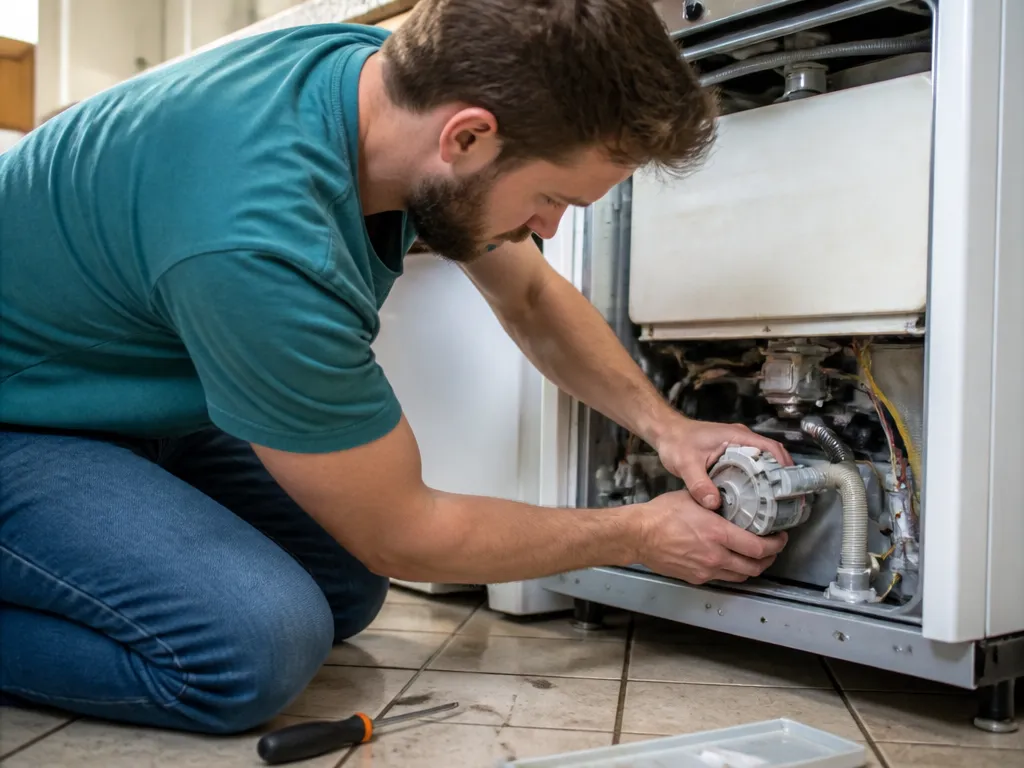
Arrange service after you have cleaned the filter, food trap, sump, and pump screen, then checked the drain hose, air gap, high loop, and sink connection. Continued standing water at that point may indicate a failed drain pump, wiring problem, or control board fault.
Stop DIY work if you find burned wiring, melted plastic around connectors, or cracked components in the access area. Also stop if the drain pump never hums during the drain portion of a cycle after the drain path is clear. A technician can test the pump’s power supply and determine whether the pump, wiring, control board, or door-latch interlock is at fault.
FAQ
What is the fastest safe way to diagnose a dishwasher that is not draining?
Unplug the dishwasher and check for standing water after a cycle. Remove the bottom rack, pull out the filter assembly, rinse it, and clear debris from the trap area. Then listen during the drain portion of a cycle to see whether the pump hums, and inspect the drain hose and air gap for kinks or clogs.
Can I fix a dishwasher that is not draining without replacing parts?
Yes. Many drainage problems come from blockages. Clean the filter and food trap thoroughly, then clear the sump near the pump intake. Check the drain hose connection under the sink and inspect the air gap if the dishwasher has one. Replace parts only after confirming that the drain path is clear and the pump either runs without moving water or does not run at all.
How long should I wait after cleaning before testing it again?
Run a short test cycle as soon as you reassemble the filter, sump area, and any pump cover you removed. No special drying period is needed, provided water is not sitting inside an electrical access area. If you removed substantial grime from the sump, a short cycle should show whether drainage improved within a single wash-drain cycle.
Is it safe to put my hand in the dishwasher to remove debris?
Only after unplugging the dishwasher. Standing water may be near the bottom, and broken glass or hard food pieces can cause cuts. Wear gloves and avoid forcing anything that feels stuck, since you could damage the pump intake screen or wiring. If you cannot reach the debris comfortably, remove the parts designed for access first.
What is the most common mistake when fixing a dishwasher that is not draining?
Cleaning only the visible filter and skipping the sump and trap intake area. Debris can collect behind the filter and continue blocking the pump even after the filter looks clean. Another common mistake is checking the hose without inspecting the air gap, sink connection, or high-loop routing.