How to Use an Electric Tea Kettle: Complete Guide
Plug in an electric tea kettle and you get fast heat with less babysitting than a stovetop pot. Use it incorrectly, though, and you can scorch the element, overflow boiling water, or trip a breaker. The basic process is simple: fill the kettle to the marked range, close the lid, place it on its base, switch it on, and pour carefully after it shuts off.
Most electric kettles require water between the minimum and maximum marks, often 0.25-0.5 L or more depending on the model. The kettle usually shuts off automatically when the water boils. Keep the handle in your hand, point the spout away from you, and keep your fingers out of the steam path.
Key Takeaways
- Stay within the fill range. Fill between the minimum and maximum level marks so the element heats safely.
- Close the lid fully. A loose lid can leak steam and interfere with stable heating.
- Use the included base. Electric kettles are designed to heat through their matching base, and most will not work reliably with another one.
- Pour carefully. Keep your hands away from the steam and pour with a steady wrist.
- Descale regularly. Mineral buildup reduces heating efficiency and can affect the taste of your tea.
- Never run the kettle empty. Dry heating can damage the element and create a safety hazard.
Set Up Your Electric Tea Kettle Safely
Before the first boil, unpack the kettle and confirm that you have the matching base and enough power-cord length for your counter. Electric kettles are designed for a specific base, so do not substitute another base. Avoid extension cords unless you have confirmed that the cord is rated for the kettle’s wattage.
Place the kettle on a dry, stable counter away from the edge. The outlet should be close enough that the cord does not pull across the counter or hang where someone could catch it.
Check that the lid closes properly, the handle and spout are clean, and the water-level indicator is visible and working. If the kettle has a removable filter or mesh strainer, reinstall it before filling.
Run one test boil with plain water, especially if the kettle is new or has a manufacturing odor. Once the water boils, discard it. Rinse the kettle if needed, and then it is ready for tea.
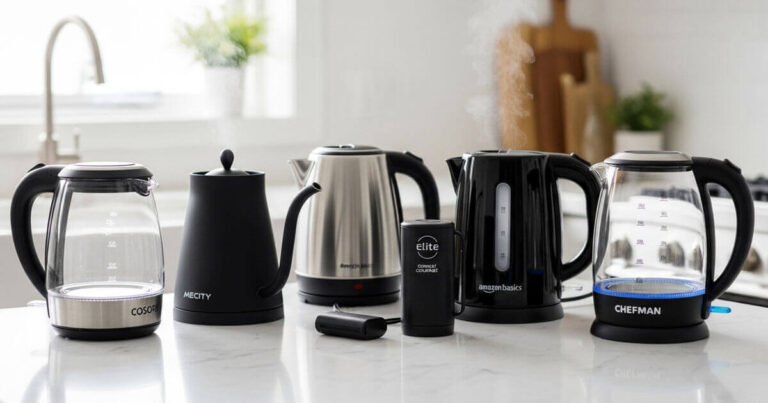
💡 This high-quality kettle features a design with no plastic contact with water, ensuring a safe and clean boiling experience for users. Cosori Electric Kettle, No Plastic Contact with Water, 1.7L, Black.
How an Electric Tea Kettle Works
An electric tea kettle heats water with a concealed element in the base and usually stops heating automatically when the water reaches a boil. Most models remain off until you press the switch again.
Some kettles add a keep-warm mode, temperature selection, or programmable timer. Keep-warm is convenient when making several cups close together, but it cycles the heater on again as the water cools. Use the same fill limits and cleaning routine whether the kettle boils once or holds water warm.
Let the kettle settle briefly after it shuts off. Keep the spout pointed away from your face, and never fill above the maximum line, where splashing and overflow become more likely.
Step-by-Step: Boil Water in an Electric Tea Kettle
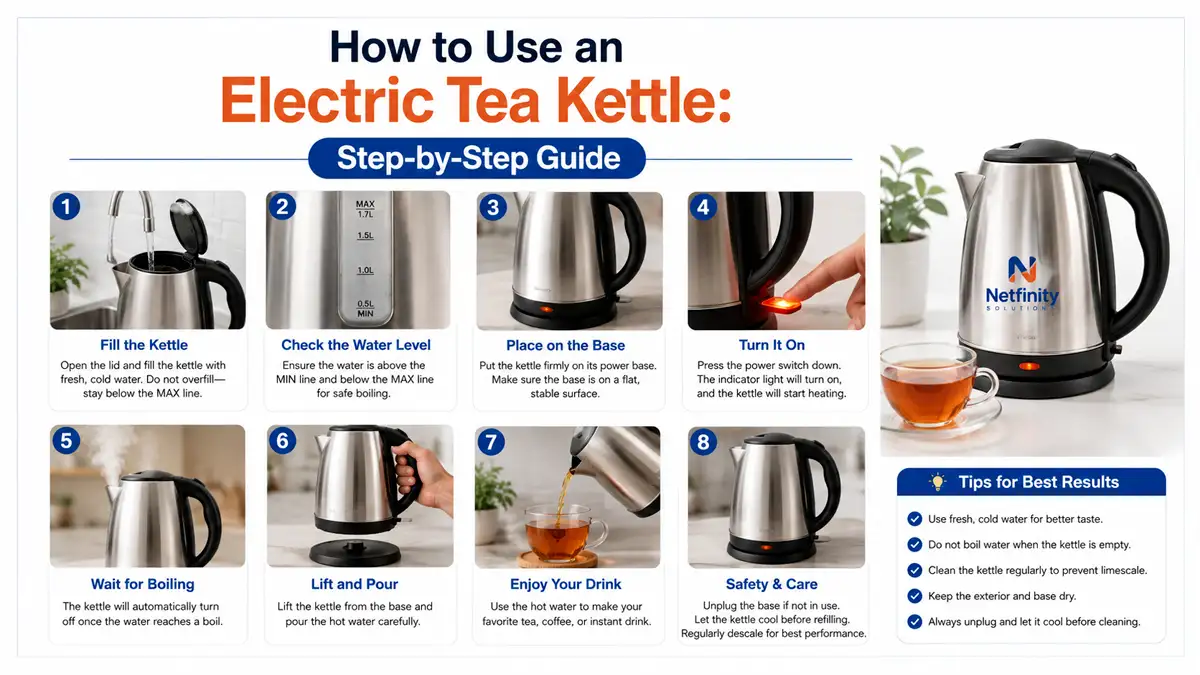
- Set the kettle on its base. Place it on the included base so the electrical contacts connect cleanly.
- Fill with cold water. Use the minimum and maximum level marks, and add only the amount you need.
- Close the lid until it latches. Seat it firmly so steam does not escape during heating.
- Plug the base into a wall outlet. Use a grounded outlet in the United States, and keep the cord away from the counter edge.
- Press the on/off button or select a temperature. If the kettle has temperature settings, choose the target temperature for your tea.
- Wait for the boil and automatic shutoff. Many kettles beep or switch off when the water reaches a boil.
- Pour carefully. Keep one hand on the handle and angle the spout away from your face and hands.
- Unplug the kettle when you are finished. If you will not use it again soon, unplugging prevents an accidental switch-on and keeps you from forgetting that it is connected.
Temperature control can improve tea consistency. Black tea is often brewed with boiling or near-boiling water, while delicate green and white teas usually taste better with cooler water. A temperature-controlled kettle is useful for that reason, but a basic kettle still works well if you adjust the steeping time.
A practical routine is fill, boil, brew, and discard the leftover water. Water left in the kettle for hours can taste flat, while repeated heating and mineral buildup gradually affect flavor.
Techniques for Better Boiling and Pouring
Do not lift the kettle or open the lid to check on it while it is heating. Moving it exposes you to steam and may interfere with a model that senses whether the lid is closed.
Match the water temperature to the tea when the kettle allows it. Start with hotter water for robust teas such as black and oolong, and cooler water for green and white teas. Without temperature controls, boiling water remains usable, but shorter steeping can help prevent delicate teas from tasting harsh.
Preheat your mug or teapot for long infusions. A quick rinse with hot water from the kettle helps the vessel hold its temperature and can improve the finished cup.
Pour with a controlled tilt instead of dumping the water quickly. Many kettles release a strong initial stream, which is when splashes are most likely. Start gently, then increase the angle once the flow is steady.

Helpful pick
CHEFMAN Electric Kettle – 1.2L 1500W Hot Water Tea Pot with Infuser, BPA Free, Auto Shut Off, Boil-Dry Protection, Removable Lid, LED Light, Cordless Glass Electric Tea Kettle – Stainless Steel
This kettle includes a removable infuser, allowing you to brew tea directly in the pot while maintaining perfect control over your water temperature.
Cleaning and Maintenance That Prevent Problems
Keep the exterior clean and dry. Wipe away splashes around the base, and never allow water to collect on the base contacts. Moisture around electrical contacts can cause faults and create a safety concern.
Let the kettle cool before cleaning it. The lid and handle may remain hot after boiling, and a quick wipe immediately afterward can still cause a burn.
Store the kettle dry. If condensation remains inside, leave the lid slightly open until the interior dries, then close it for storage. This helps prevent musty odors and residue buildup.

Helpful pick
Chefman Electric Kettle, 1.8L 1500W, Hot Water Boiler, Removable Lid for Easy Cleaning, Auto Shut Off, Boil-Dry Protection, Stainless Steel Filter, BPA Free, Borosilicate Glass Electric Tea Kettle
Featuring a removable lid, this kettle is exceptionally easy to clean and maintain, helping you prevent mineral buildup and keep your water fresh.
Mistakes That Can Damage an Electric Kettle
Do not ignore unusual smells or noises. If the kettle becomes much louder than usual, stops heating partway through, or smells burnt, stop using it and have it checked. Do not keep using a kettle with a possible heat or electrical fault.
Do not use an incompatible base or power adapter. Many kettles depend on a particular contact design and internal wiring. A mismatched setup can cause unreliable heating or overheating.
Do not pour while the lid is loose or open. Escaping steam increases the chance of splashes, and the kettle becomes harder to control.
Small Changes That Improve Tea and Kettle Use
Use the keep-warm function for a short window rather than all-day holding. It is convenient when making several cups in succession, but repeated cooling and reheating can affect the water’s taste.
Use the kettle for clean water. Brewing strong tea directly inside it allows tannins and oils to stick to the interior, where they are harder to remove than ordinary mineral scale.
Start with fresh water each day when possible. Water held for long periods can taste stale, particularly in kettles with porous plastic parts, old mineral residue, or frequent heating cycles.
Helpful pick
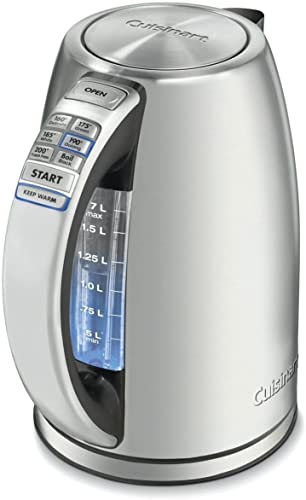
Cuisinart Electric Kettle, 1500W Fast Heating, 6 Temp Presets, 1.7L
With six temperature presets, this kettle allows you to optimize your brewing process, ensuring the perfect water temperature for every type of tea.
FAQ
How much water should I put in an electric tea kettle?
Use the marked fill range. If the kettle has no marks, check the manual for its safe fill range before using it.
Do electric tea kettles turn off automatically?
Most electric tea kettles have an automatic shutoff that stops heating when the water boils. Many also switch off after a set time if they overheat or detect an abnormal condition. Even with automatic shutoff, unplug the kettle or turn it off when you are finished to prevent accidental switching.
How long does it take to boil water in a kettle?
Boil time depends on the kettle’s wattage and the amount of water. A full kettle and colder starting water take longer, while a smaller amount and higher wattage heat faster. A noticeable slowdown compared with the kettle’s usual performance often points to scale buildup.
What is the best way to clean and descale an electric kettle?
Use a descaling method labeled safe for electric kettles, then rinse the interior thoroughly. Avoid abrasive scrubbing around the heating area because it can damage interior coatings. If the first rinse leaves a cleaner taste, rinse once more with plain water before making tea.
Is it safe to use an electric tea kettle with an extension cord?
Plugging the kettle directly into a properly grounded wall outlet is usually safest. Many kettles draw enough power to overheat an undersized or poor-quality extension cord. If you must use one, confirm that it is rated for the kettle’s wattage and the electrical load.