
Santoku Knife vs Chef’s Knife: Which One is Better for You?
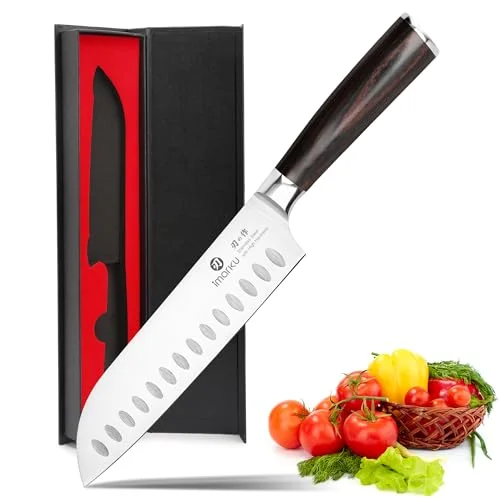
Deciding between a Santoku and a standard Chef’s knife is the first step toward upgrading your kitchen workflow. I see the imarku 7-inch Santoku as a precision-focused specialist, while the Victorinox Fibrox Pro 8-inch Chef’s Knife stands out as the ultimate kitchen workhorse. While both play vital roles in meal prep, they cater to different cutting styles. This breakdown looks at how each blade fits into your daily routine.
List of Santoku Knife Vs Chef’s Knife
⚡ Quick Verdict
For most home cooks, the Victorinox Fibrox Pro 8-inch Chef’s Knife is the superior all-rounder. It manages heavy lifting and fine work with equal ease. I suggest the imarku Santoku only if you specifically want a lighter, nimble blade for dedicated dicing.
Analysis: imarku 7 Inch Santoku
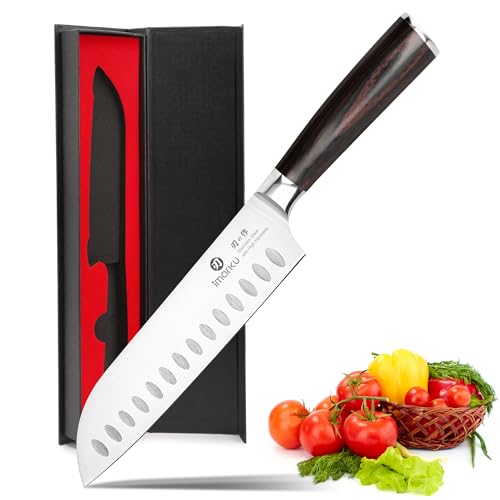
*The imarku 7-inch Santoku is built for the cook who loves precision and clean, uniform slices. Its weight and specific blade profile make it a fantastic partner for vegetable-heavy prep work, especially when you need to dice herbs or prep ingredients for a quick stir-fry.*
This Santoku uses high-carbon Japanese stainless steel that balances edge sharpness with rust resistance. The 7-inch length feels compact and highly maneuverable, which I find gives you extra control during detailed cutting. The hollow edge design is the real star here, creating tiny air pockets that stop food from clinging to the steel as you work.
Comfort is clearly a priority, as evidenced by the Pakkawood handle. It’s designed to stay stable over time, resisting the swelling or cracking you might see in cheaper woods. With a hand-polished 15-18 degree edge, it arrives ready to handle your daily kitchen tasks right out of the box.
Build Quality & Design
The use of high-carbon Japanese stainless steel gives this blade a reliable, sharp edge. I like the Pakkawood handle for its combination of a secure, sanitary grip and a more refined look. At 2.5mm thick, the blade feels sturdy enough for daily prep without being overly heavy.
Performance & Speed
This knife is built for speed, particularly when you’re dicing or mincing. The scalloped hollow edge really does minimize drag, letting you move through ingredients like onions or boneless protein without the blade sticking. It’s a responsive tool that makes repetitive cutting feel much less like a chore.
Features & Functionality
The hollow edge design is the main draw, serving as a functional gap between your food and the steel to keep slices from sticking. It also happens to come in a high-end box, which makes it a thoughtful gift for someone looking to upgrade their kitchen gear.
User Experience
The ergonomic Pakkawood handle is designed to prevent wrist strain during long cooking sessions. It feels balanced in the hand, which helps the knife move naturally through the food rather than requiring you to force the cut.
Value for Money
You are getting professional-grade steel at a price that won’t break the bank. The manufacturer also includes a one-year exchange warranty and a three-month refund policy, which provides a good safety net for your purchase.
✅ Advantages
❌ Disadvantages
Analysis: Victorinox Fibrox Pro 8 Inch

*The Victorinox Fibrox Pro 8-inch Chef’s Knife is a legend in the culinary world for a reason. It favors pure utility and reliability over flashy aesthetics, making it a go-to for both home cooks and busy professionals who need a tool that simply works every time.*
This knife features a high-quality stainless steel blade that is laser-tested for consistent sharpness. The 8-inch length offers enough reach for almost any cutting technique, from rock-chopping herbs to carving roasts. It’s built to withstand the constant wear and tear of a busy kitchen.
The Fibrox handle is made from non-slip thermoplastic elastomer, which is a massive win for safety. Even when your hands are wet or covered in oil, the grip remains secure. Plus, it’s dishwasher safe, which saves you a ton of time during cleanup.
Build Quality & Design
Made in Switzerland, this knife is a masterclass in functional design. The stainless steel is highly resilient, and the TPE handle is essentially indestructible, handling heat and humidity without losing its grip.
Performance & Speed
The 8-inch length gives you the leverage needed for clean rocking motions. Because the edge is laser-tested, it maintains a consistent level of sharpness that makes quick work of everything from delicate herbs to dense root vegetables.
Features & Functionality
The biggest win here is that the entire knife is dishwasher safe, which is rare for a professional-grade blade. It’s well-balanced, easy to handle, and backed by a lifetime warranty, offering serious peace of mind.
User Experience
The handle is all about safety. Its texture is designed to prevent slips, which is incredibly helpful when you’re working quickly. The weight feels balanced, so your wrist doesn’t tire out even if you’re working through a large pile of prep.
Value for Money
This is a professional tool that pays for itself over time. It’s arguably one of the most cost-effective knives you can buy, given that the combination of durability and a lifetime warranty means you likely won’t need to replace it for years.
✅ Advantages
❌ Disadvantages
Major Factors to Consider
When I look for a new kitchen knife, I focus on a few non-negotiables: how it feels, how it cuts, and how long it will last. Here are the main things I consider before adding a new blade to my collection.
Performance
This is all about edge retention and how easily the blade moves through food. I want a knife that requires very little pressure to slice, making the whole cooking process smoother.
Speed & Efficiency
A good knife should feel like an extension of your hand. It’s about the balance between weight and sharpness, allowing for fluid movements that don’t exhaust your wrist.
Price & Value
I look for a balance between price and longevity. A slightly higher upfront cost is worth it if the knife lasts for years, whereas a cheap blade that needs replacing in a few months isn’t actually a deal.
Build Quality
Check the materials. I prefer stainless steel that resists rust and handles that feel securely attached. A well-built knife should feel solid in your hand, not flimsy.
Design & Aesthetics
Design isn’t just about looks. While I appreciate a nice wooden handle, I also value functional features like non-slip grips or hollow edges that solve actual problems during prep.
Durability
Durability defines whether a knife is a one-time purchase or a recurring expense. I look for features like dishwasher safety and handle materials that won’t degrade over time.
Feature Comparison
Here is how the imarku Santoku and the Victorinox Fibrox Pro stack up side-by-side. I’ve broken down the key differences so you can see which one fits your specific cooking style better.
| Feature | imarku 7 Inch Santoku | Victorinox Fibrox Pro 8 Inch |
|---|---|---|
| High Carbon Steel | ✓ | ✓ |
| Hollow Edge Design | ✓ | ✗ |
| Dishwasher Safe | ✗ | ✓ |
| Ergonomic Handle | ✓ | ✓ |
| Lifetime Warranty | ✗ | ✓ |
| Gift Box Included | ✓ | ✗ |
| Non-Slip Grip | ✓ | ✓ |
| Professional Grade | ✓ | ✓ |
| Weight Balanced | ✓ | ✓ |
| Rust Resistant | ✓ | ✓ |
Specifications Comparison
Use this table to compare the physical specs. It’s useful to see how the length and materials differ so you can pick the one that fits your comfort level.
| Specification | imarku 7 Inch Santoku | Victorinox Fibrox Pro 8 Inch |
|---|---|---|
| Blade Length | 7 inches | 7.9 inches |
| Blade Material | High Carbon Japanese Steel | Stainless Steel |
| Handle Material | Pakkawood | Thermoplastic Elastomer |
| Dishwasher Safe | No | Yes |
| Edge Angle | 15-18 degrees | Not specified |
| Weight | Not specified | Not specified |
| Warranty | 1 Year | Lifetime |
| Primary Use | Dicing/Slicing | General Purpose |
🏆 Winner: Victorinox Fibrox Pro 8 Inch
Score Breakdown
9.2/10
9.0/10
8.5/10
9.5/10
9.0/10
9.5/10
The Victorinox Fibrox Pro takes the lead here. Its combination of dishwasher-safe convenience, professional-grade durability, and a lifetime warranty is hard to beat. While the imarku is a great precision tool for those who prefer a Santoku, the Victorinox is the workhorse that will handle everything you throw at it for years.
Choose imarku 7 Inch Santoku If…
Budget-Conscious Buyers
Choose the Victorinox if you want maximum value for every dollar spent. Its lifetime warranty and extreme durability mean you will never need to buy another primary chef’s knife. It is the most cost-effective professional-grade tool on the market, providing decades of reliable service for a very affordable initial price.
Specific Use Case
If you only want one knife on your counter to handle everything from prepping meat to chopping veggies, the 8-inch blade on this chef’s knife is the way to go.
Preference Scenario
If you prioritize low-maintenance kitchen tools, the Victorinox is the clear winner. Because it is dishwasher safe, you can clean it quickly alongside your other cookware. This convenience is ideal for busy parents or professionals who do not have the time to hand-wash and dry knives after every single use.
Value Seekers
Value seekers should opt for the Victorinox because of its proven track record in professional kitchens. It is a workhorse tool that prioritizes function over form. You get a high-quality, Swiss-made blade that performs consistently, backed by a lifetime guarantee that protects your investment for as long as you own it.
🎯 Final Recommendation
Go with the Victorinox Fibrox Pro if you want a reliable, low-maintenance workhorse. Pick the imarku Santoku if you prefer a nimble, specialized blade for precise vegetable dicing. Both are great, but the Victorinox offers more utility for most home kitchens.
Summary
- The Victorinox Fibrox Pro is the ultimate versatile workhorse for all types of kitchen tasks.
- The imarku Santoku features a hollow edge that’s perfect for dicing without ingredients sticking.
- Victorinox is dishwasher safe, which makes cleaning up quick and effortless.
- Imarku uses high-carbon Japanese steel that excels at keeping a sharp edge.
- The Fibrox Pro comes with a lifetime warranty, offering peace of mind for years.
- Choose the Victorinox for general kitchen use or the imarku if you focus heavily on precision veggie prep.
Frequently Asked Questions
Which product is better overall?
The Victorinox Fibrox Pro is generally the better choice due to its versatility and lifetime warranty. It’s more capable as an all-purpose knife than the specialized Santoku.
Is the price difference worth it?
Yes, the value offered by the Victorinox is significant when considering its long-term durability. While both are affordable, the lifetime warranty on the Victorinox protects your investment better than a standard exchange policy. You are paying for a proven professional tool that lasts for many years.
Which has better build quality?
The Victorinox is built for rugged, industrial use, while the imarku is a bit more refined and requires more careful maintenance due to its wooden handle.
Which is better for beginners?
The Victorinox is better for beginners because it is very forgiving and easy to maintain. Its non-slip grip provides extra safety for those still learning proper cutting techniques. The balanced weight also makes it easier to control during early practice sessions.
Which offers better value for money?
The Victorinox offers better value due to its dishwasher-safe nature and lifetime warranty. It is a one-time purchase that serves as the only knife most people need. The imarku offers good value for its price, but it lacks the same level of long-term utility.
What are the main differences?
The Santoku is shorter and specialized for dicing, whereas the Chef’s knife is longer and more versatile. Also, maintenance differs significantly, the Victorinox is dishwasher safe, but the imarku needs to be hand-washed.
By Lisa Jayce, founder of NookTool. I research kitchen tools to find the best ones for small spaces. My goal is to help you make smart buying decisions.
One Comment