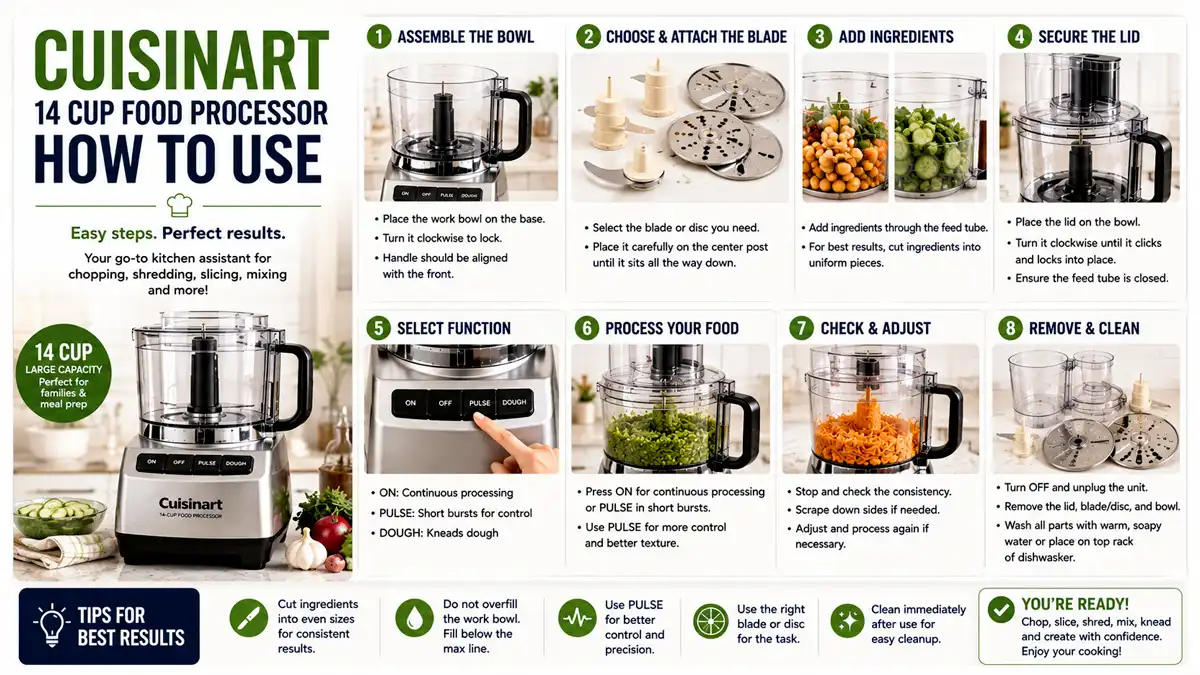
Cuisinart 14 Cup Food Processor How To Use
Cuisinart 14 Cup Food Processor How To Use is easier than it may seem. Start by assembling the work bowl and blade correctly, then lock the lid before adding your ingredients. Use short pulses when chopping or mixing, and adjust the processing time until you reach the texture you want.
A Cuisinart 14-cup food processor can help with chopping, mixing, shredding, slicing, and preparing dough. For better results, avoid overcrowding the bowl, use the correct blade or disc, and stop occasionally to scrape food from the sides. Keep liquids at a moderate level to help prevent leaks.
Key Takeaways
- Unplug before assembly. Install blades and discs only with the unit off to prevent accidental start-ups.
- Lock the lid fully. The processor will not run safely unless the lid is correctly aligned and locked.
- Pulse for control. Use short pulses for even chopping without turning food into paste.
- Scrape when needed. Stop the motor and scrape thick or sticky ingredients back under the blade.
- Use the feed tube correctly. Add ingredients gradually so the motor can handle the load without stalling.
- Match the tool to the task. Use the correct disc or blade for shredding, slicing, or kneading.
Set Up Your Cuisinart 14 Cup Food Processor
Most poor results come from incorrect assembly or overloading. The 14 cup Cuisinart food processor uses a work bowl, drive system, and interchangeable blades and discs, so make sure each part is seated and locked before processing.
Use a level countertop, the correct bowl and lid for your model, and clean, dry parts. Keep a spatula nearby.
For a first practice run, choose something forgiving, such as an onion or garlic clove. Process it chopped rather than pureed so you can learn how quickly the blade works and how pulse timing changes the texture.
Understand the Basic Workflow
The basic process is straightforward: assemble the machine, lock the bowl and lid, add food through the feed tube, and control the texture with pulses or continuous running. The blade or disc determines the result, while the load size and processing time determine how evenly the food breaks down.
Do not overfill the bowl. Ingredients sitting above the blade or stuck to the lid will produce uneven chopping, long strands instead of shreds, or a mixture that never becomes uniform.
Ingredient consistency and temperature also affect the result. Cold butter behaves differently from room-temperature butter when you make dough or pie crust. Nuts and bread should be dry because moisture makes them smear instead of chop cleanly.
💡 This 14-cup model is the industry standard for mastering the workflow, offering the capacity and power needed for all processing tasks. Cuisinart Food Processor 14-Cup Vegetable Chopper for Mincing, Dicing, Shredding, Puree & Kneading Dough, Black Stainless, DFP-14BKSY.
Step-by-Step: Use the Cuisinart 14 Cup Food Processor
Follow this order for more consistent results.
Step 1: Prepare the Parts and Workspace
Unplug the processor before assembling it or changing blades and discs. Set the work bowl on the base, then check that the drive shaft is clean so the blade can sit flat without wobbling.
If you are making salsa, place the chopping blade correctly and keep a spatula nearby. You may need to stop, scrape the bowl, and finish the mixture without over-processing it.
Step 2: Install the Correct Blade or Disc
Choose the attachment for the job:
- Chopping and mixing: Usually use the standard blade.
- Slicing and shredding: Use the appropriate disc. Pay attention to the disc’s direction as you mount it.
Press the blade or disc down until it seats correctly. Give it a small twist if your model requires alignment.
Step 3: Add Food in a Manageable Load
Cut large ingredients into pieces that fit the feed tube. Leave some headroom in the bowl so the blade or disc can move the food instead of pushing it upward.
For shredding cheese, guide pieces steadily through the feed tube. Jamming large chunks into the tube can produce a mixture of fine shreds and large scraps.
Step 4: Lock the Lid and Check Its Position
Place the lid on the work bowl and lock it. The lid interlock helps prevent the processor from running when the bowl or lid is out of position. If the lid is not aligned, the machine may not start or may stop when it detects the safety condition.
Try to move the locked lid gently. If it shifts, stop and re-seat it before pressing a button.
Step 5: Start with Pulse, Then Run Continuously if Needed
Use pulse mode when you need control over the texture. For onions, garlic, nuts, or herbs, press the pulse button in short bursts, check the food, and pulse again.
Run the processor continuously only when the recipe benefits from it. Emulsifying a dressing, for example, may require a short continuous run after enough liquid has been added.
Step 6: Scrape Down the Bowl
Stop the motor before scraping. Unplug the processor if your model requires it before changing tools or reaching near the blade. Use a spatula to move ingredients from the sides and lid back under the blade.
Scraping is especially important with thick doughs and sticky mixtures. A dough-like blend may look finished until you scrape the bowl and find dry flour that still needs to be incorporated.
Step 7: Stop Early and Adjust by Hand
Remove the bowl and finish the mixture by hand when necessary. Food processors handle bulk preparation well, but chunky salsa and chunky hummus often need only 10-20 seconds of careful finishing rather than 2 minutes of extra blending.
💡 This 14-cup model is the perfect companion for your guide, offering the exact capacity and features needed for consistent results. Cuisinart Food Processor 14-Cup Vegetable Chopper for Mincing, Dicing, Shredding, Puree & Kneading Dough, Light Gray Stainless Steel, DFP-14CGRY.
Techniques for Better Chopping, Slicing, and Mixing
Pulse timing has the biggest effect on chopped ingredients. Treat each pulse as a checkpoint instead of holding the button down. For onions and herbs, short pulses prevent the blade from turning the ingredients watery or paste-like.
Use the feed tube as a guide rather than forcing food through it. Gradual feeding keeps the blade loaded evenly, reduces clogging with carrots and potatoes, and gives the slicing or shredding disc time to work consistently.
Manage moisture carefully. For mayonnaise-style sauces, pesto, and creamy dips, add liquid gradually and pulse or run the processor briefly. Adding all the liquid at once can thin the mixture unevenly and leave pockets that never fully emulsify.
Thick mixtures need short runs and frequent scraping. Long continuous cycles can stall the motor or overwhelm the blade. Short cycles and small adjustments work better for dough and heavy blends.

Helpful pick
Cuisinart Food Processor, Extra-Large Feed Tube, 625 W, 11-Cup Capacity
This versatile 11-cup processor offers the consistent power and precision needed to master various chopping and slicing techniques with ease.
Choose the Right Tool for Each Task
Clean, dry parts and careful attachment changes produce more reliable results than running the machine longer. Use this checklist at the counter:
| Task | Best tool | Best motion | Common symptom if wrong |
|---|---|---|---|
| Chopping onions, garlic, herbs | Standard blade | Pulse in short bursts | Uneven chunks, watery edges |
| Shredding carrots or cheese | Shredding disc | Steady feed, light pressure | Mixed sizes, clogging |
| Slicing cucumbers or potatoes | Slicing disc | Consistent feed angle | Wavy slices, jams |
| Pie crust or biscuit dough | Dough blade or standard blade (recipe-dependent) | Pulse until just combined | Tough texture from overmixing |
| Hummus or pesto | Standard blade | Short pulses, scrape, brief run | Grainy top layer, dry streaks |
Stop when the food reaches the target texture instead of running the processor until the task feels finished. In many recipes, the difference between a good result and an overworked one is 20 seconds.
If the model is new to you, make one test recipe and record the pulse count. That simple note can make future batches of salsa, coleslaw, or nut mixtures easier to repeat.

Helpful pick
Cuisinart Food Processor, Dishwasher Safe 11-Cup Food Processor with Slicing & Shredding Discs, Cuisinart Pro Custom 11 Stainless Steel Electric Chopper & Kitchen Food Processor, Chrome, DLC-8SBCYP1
This versatile Cuisinart model offers the essential slicing and shredding discs needed to master every food processing task with professional precision.
Avoid These Cuisinart 14 Cup Processing Mistakes
Running the processor too long is the most common error. Continuous processing quickly turns chopped ingredients into minced paste, and you cannot restore the original texture.
Overfilling the work bowl creates another problem. When the bowl is packed, the blade cannot pull ingredients down evenly. Food collects around the sides while the center becomes processed more heavily.
Do not force tough pieces into the feed tube. Cut carrots, potatoes, and frozen chunks to size, then feed them steadily. Jamming can leave discs stuck and produce uneven slices.
Helpful pick
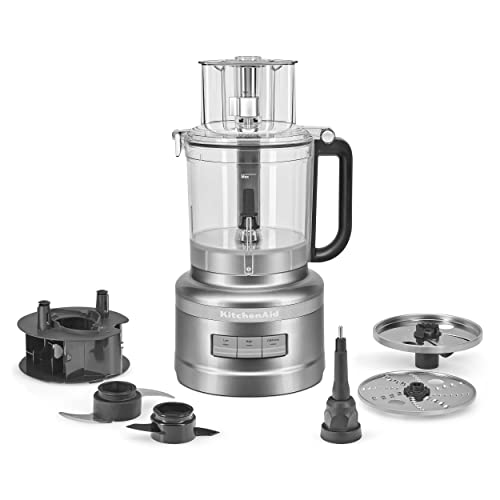
KitchenAid 13-Cup Food Processor, KFP1318, Contour Silver
If you find the 14-cup capacity difficult to manage, this slightly smaller model offers more intuitive controls for consistent results.
Faster Prep with Better Control
Batch planning reduces cleanup and keeps the workflow organized. Chop ingredients for one meal at a time, rinse the bowl between ingredient types, and process dry ingredients before adding liquids.
Use two-phase processing for controlled textures. First, pulse to break down large pieces. Then scrape the bowl and run the processor briefly only if needed. This approach produces evenly chopped nuts or herbs without turning them into butter.
For slicing and shredding, keep pieces consistent in size and orientation. Squaring off carrots, for example, helps them feed at a steady rate. Consistent feeding reduces disc skipping and uneven thickness.
For dough and other thick mixtures, mix only until the ingredients come together. Add flour according to the recipe, pulse to combine, scrape the bowl, and pulse again. Overmixing is a common cause of tough pie crust and chewy biscuits.
Rinse the parts soon after use. Blades and discs are easier to clean before cheese, nut butter, or sticky dough dries onto their edges.
FAQ
What should I do before using my Cuisinart 14 cup food processor for the first time?
Unplug the unit, wash the work bowl, lid, blade, and discs, then dry them fully. Assemble the processor with the blade seated flat on the drive shaft, and lock the lid so it cannot shift. Do a short empty check by turning it on briefly only if your model allows safe checks, then process a small soft item such as an onion.
Why won’t my Cuisinart 14 cup food processor start?
The lid or bowl may not be locked correctly, or the blade or disc may not be seated properly. Unplug the machine, re-seat the work bowl, install the blade or disc correctly, and lock the lid fully. Confirm that the outlet works by plugging in another small appliance.
How do I avoid over-processing when chopping with the processor?
Check the texture after a few short pulses. For herbs and onions, pulse several times and inspect the pieces until they are uniform. The blade keeps breaking down the food after it passes your target texture, so over-processing happens quickly.
Can I process dough in a 14 cup food processor?
Yes, but use short cycles. Add ingredients in the recipe order, pulse to combine, scrape the bowl, and pulse again until the dough just comes together. If the dough becomes warm or looks tough, you probably ran the processor too long or overloaded the bowl.
What’s the most common mistake people make with a food processor like this?
Food can climb the sides, especially in thick mixtures such as hummus, nut mixtures, and dough. The bottom may become smooth while the top remains coarse.
Pick a recipe you already make, such as salsa, pesto, or coleslaw, and use the tool choice and pulse timing above as your guide.