How To Use A Toaster Oven Vs Microwave
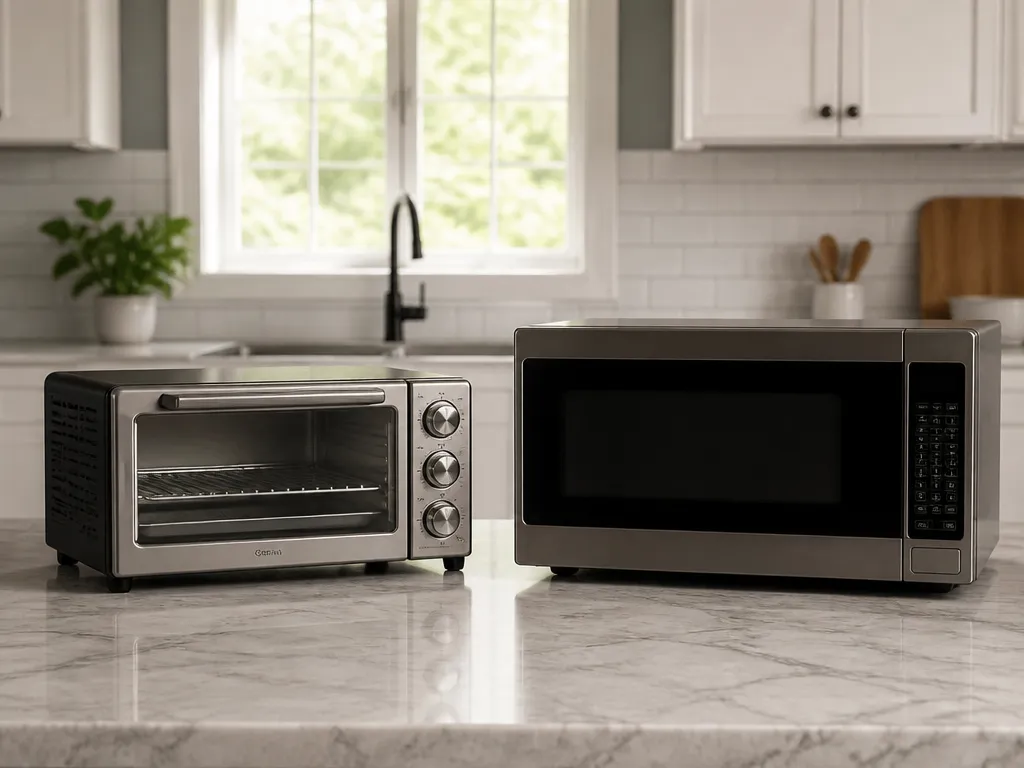
Microwaves and toaster ovens solve different reheating problems. Use a microwave when speed and moisture matter; use a toaster oven when you want browning, crisping, or an oven-like finish. A microwave uses energy absorbed by water molecules to heat food quickly, while a toaster oven uses dry heat that browns surfaces and drives off moisture.
For most microwave reheating, start with 30 to 60 seconds, then check and rotate or stir once. Toaster ovens usually take longer and often work best at a set temperature such as 325°F, 350°F, or 400°F. The payoff is better texture, especially for pizza, fries, wings, breaded foods, and baked items.
Key Takeaways
- Best overall rule: Use a microwave for fast reheating and a toaster oven for crisp results.
- Preheating: Toaster oven baking usually benefits from preheating, but many reheating jobs do not require it.
- Microwave timing: Stop every 30 to 60 seconds to check the food and prevent overcooking.
- Texture: Microwaves can soften crusts; toaster ovens can restore crispness.
- Food thickness: Toaster ovens handle thicker foods better when you want gradual, even heating.
- Choose by outcome: Pick the microwave for speed and the toaster oven for crunch.
How to Use a Toaster Oven vs. Microwave
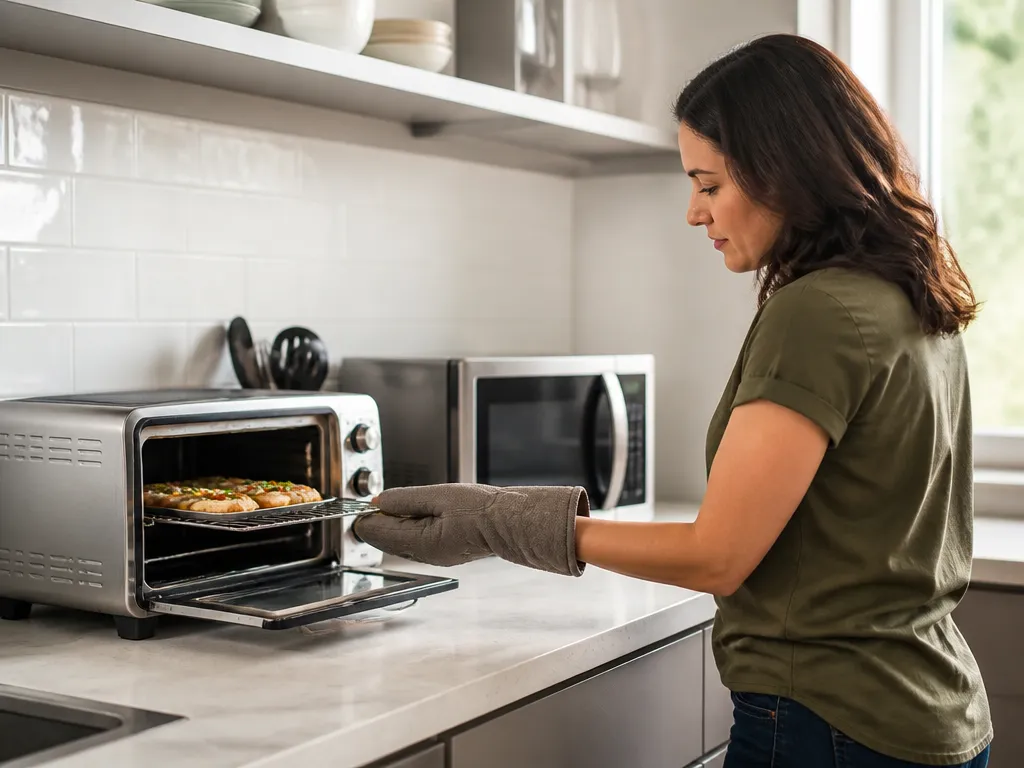
Treat them as different cooking tools. A microwave heats food quickly, including its center, but can make breading and crusts soft. A toaster oven uses dry heat to evaporate surface moisture, set coatings, and restore a more traditional texture.
Use this workflow:
- Decide what matters most: speed or crust.
- Choose the appliance.
- Use short microwave cycles or a steady toaster oven temperature.
- Check early and adjust rather than relying on one long cooking cycle.
What Each Appliance Does Best
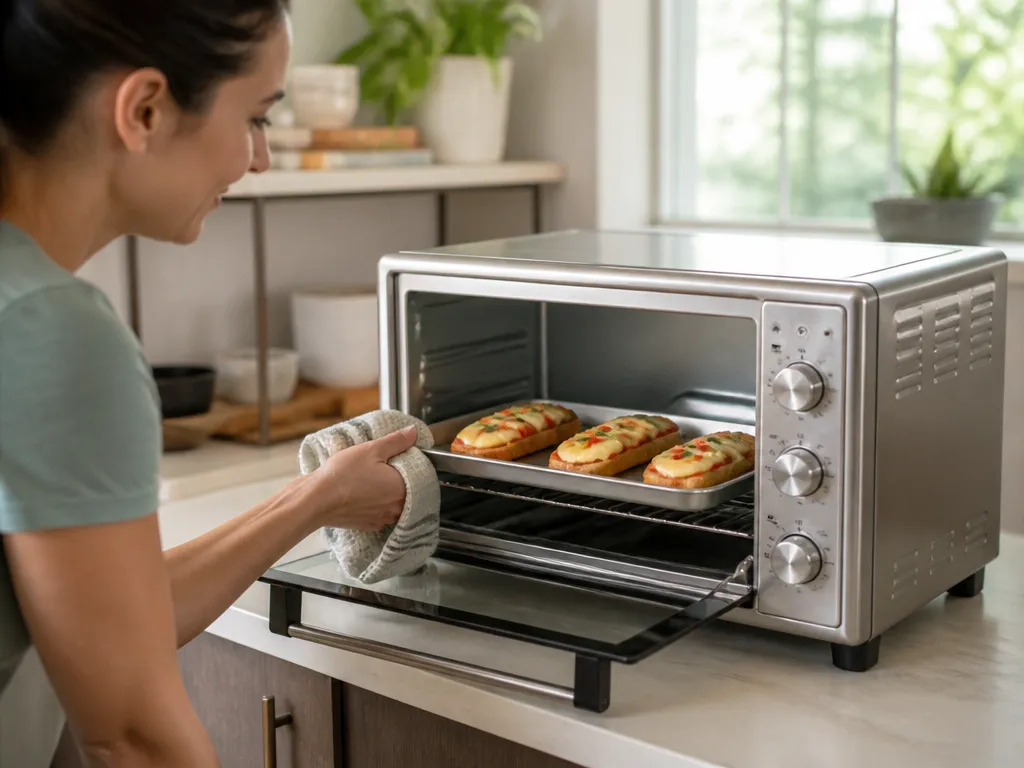
Microwaves work best when temperature matters more than browning. They are useful for reheating soup, steaming vegetables, warming rice, melting butter or cheese, and heating moist leftovers. They also help foods that dry out easily in dry heat, such as oatmeal, sauces, and many steamed vegetables.
Toaster ovens perform better when surface texture matters. They excel at toasting bread, crisping pizza slices, reheating fries and wings, and baking or roasting small portions. Foods with a coating or skin usually hold their texture better in a toaster oven than in a microwave.
Use this rule of thumb:
- If you are worried the outside will dry out, use the microwave.
- If you are worried the outside will go limp, use the toaster oven.
Quick Comparison: Pick by Outcome
| Appliance | Key Result You Get | Best For | Main Tradeoff |
|---|---|---|---|
| Microwave | Fast, center-focused heating | Soups, rice, leftovers, steamed vegetables | Softer crusts, less browning |
| Toaster oven | Browning and crisping | Pizza, fries, wings, small bakes | Needs time, often including preheat |
Temperature and Time Settings That Matter
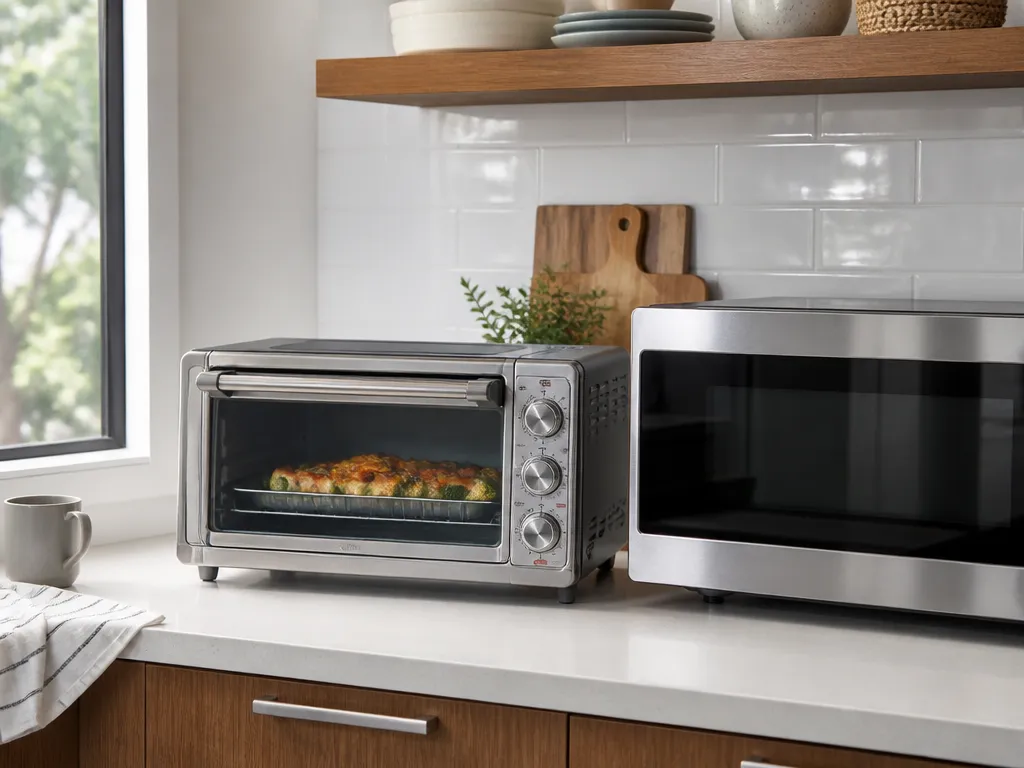
Microwaves generally do not use temperature settings like ovens do. You control power level and time instead. For most reheating, start with 30 to 60 seconds, stir or rotate the food if the microwave has hot spots, and continue with short bursts.
Power level affects texture. High power heats food faster but can produce uneven results, especially in thick portions. Lower power gives dense foods such as casseroles and other leftovers more time to warm through before the edges overcook.
Toaster ovens use actual temperatures and usually benefit from preheating when you want consistent baking or crisping. For simple reheating, you can often skip preheat. For baking or foods where surface texture matters, preheating helps the food cook and brown more evenly.
Typical settings include:
- 325°F: Gentle warming or softer bakes
- 350°F: Most reheating and roasting
- 400°F: Crisping and browning
The Set-and-Check Method
- Microwave: Heat in short intervals, stir or rotate once, and stop when the center is hot.
- Toaster oven: Choose a temperature based on the desired result, then check partway through to prevent over-browning.
Baking, Roasting, and Broiling in a Toaster Oven
Toaster ovens handle classic oven methods such as baking, roasting, and broiling. Baking uses steady heat from the top and bottom for foods such as cookies, muffins, small casseroles, and leftovers that benefit from gradual warming. Roasting uses heat and time to cook and brown meats and vegetables while driving off surface moisture.
Broiling uses intense heat from above. It works well for browning cheese, finishing the top of a casserole, or adding a quick char to thin cuts. Rack position matters because food can go from browned to burnt quickly under a toaster oven’s broiler.
Microwaves can cook some foods that people normally bake or roast, but they do not reproduce those methods. Microwave energy heats food through energy absorption rather than dry-air circulation, so it does not create the same crust or browned surface. For foods that depend on browning or drying, the toaster oven is the more reliable choice.
Take pizza as an example:
- Microwave alone: Heats the slice quickly but often makes the crust chewy.
- Toaster oven: Reheats the slice and re-crisps the crust, especially when you preheat and use a rack or pan that lets steam escape.
How Microwave Cooking Changes Texture and Moisture
Microwaves often soften surfaces because steam and moisture move through the food as it heats. Foods with more moisture warm quickly, which is why leftover pasta, oatmeal, and soup reheat well. The same moisture can make breaded foods and pizza lose their crisp edges.
Uneven heating is another common problem. One area can be piping hot while another remains cool, especially in thicker or mixed foods. Short intervals, stirring, and rotating the dish help distribute heat and reduce cold spots.
Reheating already-warmed food can also push proteins into an overcooked texture and cause sauces to separate. Heat the food until it is hot, then stop. A brief rest lets the heat equalize without exposing the food to another full cooking cycle.
How to Preserve Texture in the Microwave
- Cover lightly to retain some moisture, but do not fully seal foods with breading.
- Use short intervals and check early.
- Rest for 1 to 2 minutes so the center can catch up with the edges.
When to Choose a Toaster Oven
Pizza, fries, chicken wings, breaded cutlets, roasted vegetables, and baked snacks generally turn out better because dry heat removes surface moisture.
It also works better for thicker or layered foods that need gradual heating. Frozen lasagna slices, stuffed sandwiches, and foods with layers of sauce and cheese can warm through without becoming as gummy as they might in a microwave. The slower heating process can reduce the hot-edge, cool-center problem common with thicker microwave portions.
Toaster ovens also cook rather than simply reheat. Use one for cookies, toast, or roasted vegetables when you want the finished food to have a browned or crisp surface.
Good Toaster Oven Uses
- Crisp leftovers: Wings, fries, and reheated pizza
- Small bakes: Cookies and reheated pastries
- Broiling finishes: Melted cheese and browned tops
When to Choose a Microwave
It is the better tool for soup, noodles, rice, vegetables, chili, and most saucy leftovers. When the problem is “I don’t have time,” the microwave solves it directly.
Microwaves are also useful for foods that dry out in dry heat. Custards, reheated oatmeal, and many steamed vegetables can stay more tender in a microwave than in a toaster oven, which can brown and evaporate moisture quickly.
Use the microwave for small, uniform portions or foods you can stir and rest between heating cycles. It is also useful for individual tasks such as melting butter, softening cream cheese, or reheating sauce separately from the rest of a meal.
Microwave-Friendly Foods
- Soups and stews
- Rice and pasta
- Saucy leftovers
- Steamed vegetables
FAQ
Can a Microwave Replace a Toaster Oven for Cooking?
A microwave can reheat and cook many foods, but it cannot reliably replace browning and crisping. Use a toaster oven when you want a browned top, a crisp crust, or an oven-style texture. Use the microwave for speed and for heating moist foods with short intervals, stirring, and a brief rest.
How Long Should I Microwave Leftovers?
Start with 30 to 60 seconds, then check the food. Stir mixed dishes and rotate the container if your microwave has hot spots. Add 20 to 30 second bursts until the center is hot, then rest the food for 1 to 2 minutes so the heat can equalize.
What Is Safer for Reheating Food?
Both are safe when you heat food thoroughly and check the center. Microwaves can heat unevenly, so stir food and use short intervals. Toaster ovens heat more slowly and can warm thicker items more evenly, but you still need to check the center before eating.
How Do I Reheat Pizza Without Making It Soggy?
A toaster oven is the better choice. Preheat it, then reheat the pizza until the cheese is hot and the crust firms up. A microwave usually produces a softer crust, so you can microwave the slice just long enough to warm the toppings and finish it briefly in the toaster oven. Use a rack or pan that lets steam escape.
What Common Mistake Ruins Microwave or Toaster Oven Food?
The biggest microwave mistake is heating food too long in one cycle. The edges can overcook while the center is still warming. The biggest toaster oven mistake is failing to check food under the broiler or at high heat, when surfaces can burn quickly. In both appliances, checking early works better than guessing.