How To Fix A Refrigerator That Is Not Cooling
Refrigerators that stop cooling usually fail at one of three links in the cooling chain: power reaching the controls, air moving through the compartments, or the compressor and refrigerant system producing cooling. The fastest safe diagnosis is to check whether the refrigerator is running at all. That tells you where to spend your time.
Key Takeaways
- Check for signs of power first. Confirm whether the compressor or fans run, because a completely off refrigerator needs a different fix than one that runs without cooling.
- Verify the settings. Set the temperature colder and make sure an “off” or special mode is not enabled.
- Listen for both fans. A failed condenser or evaporator fan can stop cooling even when the compressor runs.
- Inspect the start relay. A bad relay or overload often causes a hum, click, or repeated failed attempts to start.
- Clean coils and vents. Dust-packed condenser coils and blocked interior vents can weaken or stop cooling.
- Know when to stop. Compressor failure, refrigerant leaks, and repeated electrical tripping require professional service.
How To Fix A Refrigerator That Is Not Cooling
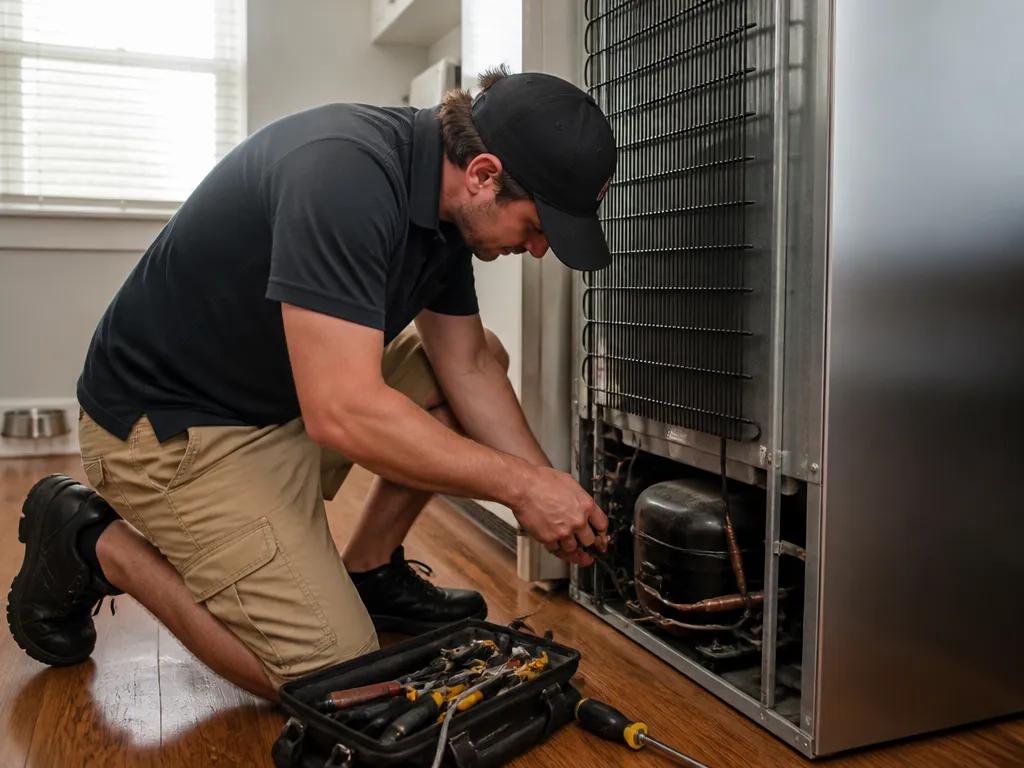
Start with the simplest question: is the refrigerator actually running? If it stays completely quiet for long stretches, suspect the controls, power supply, or compressor-start circuit. If you hear fans but the interior stays warm, focus on airflow, coil buildup, or a failing compressor.
Is the refrigerator running or completely off?
The interior light does not prove that the cooling components are operating. A completely silent refrigerator may have a power, control, or compressor-start problem.
Check it this way:
- Open the refrigerator and freezer doors. If the interior light is on, the compartment has power.
- Listen and feel for operation. Many models make fan sounds and cycle the compressor. If you never hear anything, the control board, mode setting, or compressor-start circuit may be at fault.
- Check the control panel for error codes or blinking indicators. Some models display an “off” state or a temperature-sensor fault.
If the display says “off,” the lights do not work, or the refrigerator is completely silent, do not start with the fans or compressor. Plug a lamp into the outlet to confirm it has power, check the breaker, and verify that the refrigerator is in a cooling mode rather than vacation, Sabbath, or “off” mode.
If the outlet works and the settings are correct but the refrigerator remains completely dead, service is often necessary. The fault may be in the control board, wiring harness, or compressor circuit.
Check the thermostat and temperature settings

A wrong setting can leave the refrigerator warm without any failed parts. The temperature may have changed during cleaning or a power event, or the unit may be in an “off” or cooling-disabled mode.
Check the controls in this order:
- Set the refrigerator to a known colder setting. For most homes, use “mid” or “3” to “4” on a typical scale, or the setting closest to 37 F / 3 C for the refrigerator compartment.
- Turn off special modes such as vacation, energy saver “high,” demo mode, or “off.”
- Wait 30 to 60 minutes after changing the setting. A refrigerator that has been warm may take time to resume normal cycling.
If the refrigerator starts running normally after you lower the setting, the control was the problem. If its behavior does not change, continue with airflow and fan checks. A faulty temperature sensor can also tell the control system that the compartment is already cold, preventing the refrigerator from calling for cooling.
Inspect the condenser fan and evaporator fan
The evaporator fan moves cold air through the refrigerator and freezer. The condenser fan helps release heat near the compressor. If either fan stops, the refrigerator may run without cooling properly.
Unplug the refrigerator before touching fan blades, wiring, or other components. Then check the fans:
- Evaporator fan: This fan is usually in the freezer area. With the freezer door closed, listen during a cooling cycle. Ice buildup on the evaporator cover or around the fan can indicate a defrost problem.
- Condenser fan: This fan is usually behind or underneath the refrigerator near the compressor. It should spin when the compressor is running. After unplugging the refrigerator, check whether debris is blocking the blades.
Remove dust and obstructions, then reassemble everything before reconnecting power. If a fan spins freely by hand while unplugged but does not run when the compressor calls for cooling, the motor or fan circuit may have failed. Replacing parts without identifying the correct fault is usually a poor bet, so get service if you cannot confirm the diagnosis.
Test the compressor start relay and overload
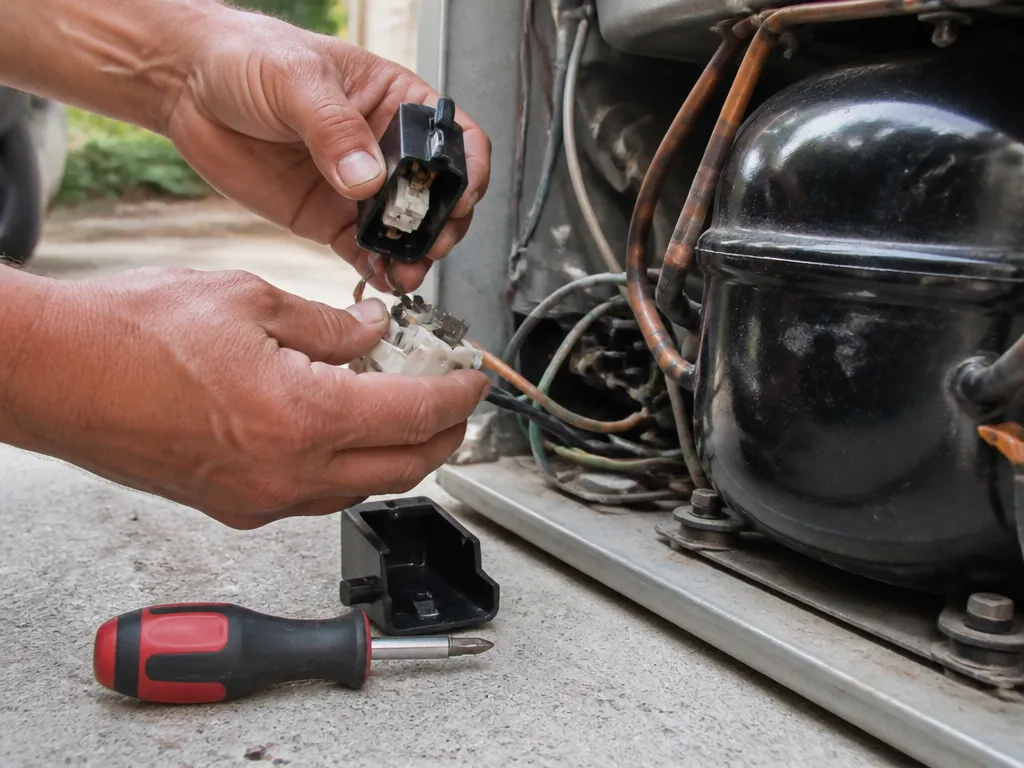
A compressor that cannot start may have a failed start relay, start device, or overload. Common symptoms include a click or hum followed by silence, or repeated attempts to start that never produce cooling.
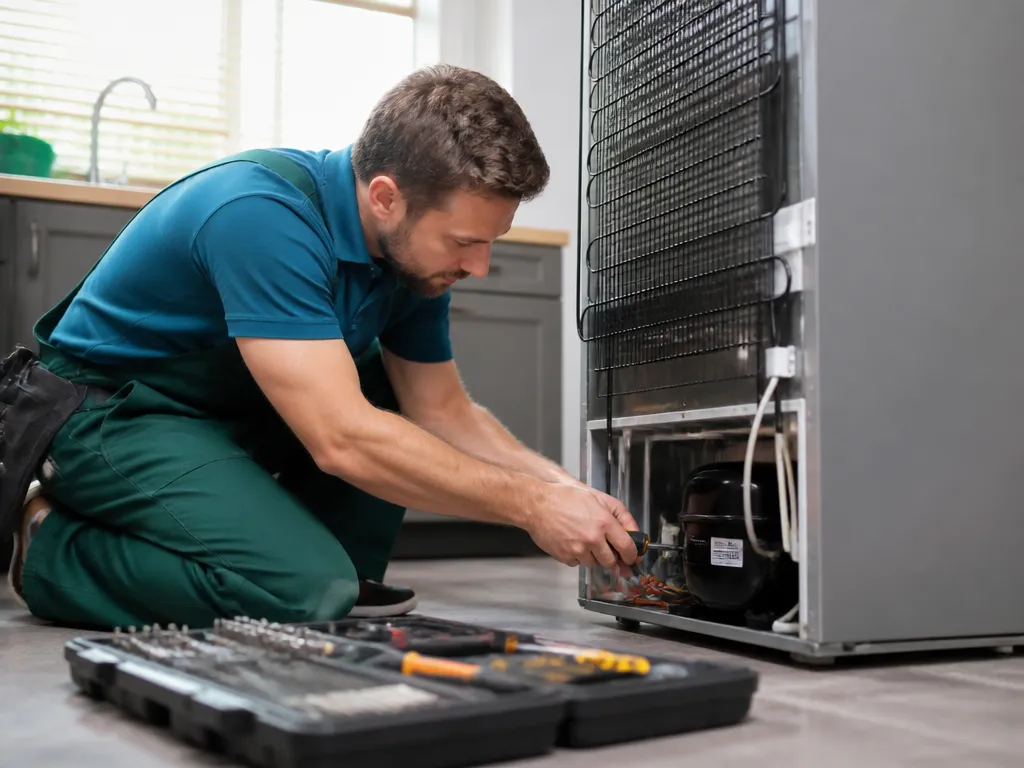
This check involves electrical components, so stop if you are not comfortable with basic electrical testing. If you can safely access the compressor compartment with the refrigerator unplugged:
- Locate the compressor. The start relay is usually mounted beside it or inside the compressor compartment housing.
- Look for burn marks, cracked plastic, melted insulation, or other visible damage around the relay and overload.
- If the refrigerator has a service-friendly access panel, check that the relay is seated and its connectors are tight.
A proper test usually requires a multimeter and the correct start-relay and overload specifications for the model. Even without a meter, the symptoms can narrow the problem: if the compressor never starts and the fans also fail to run consistently, the start relay or overload is a leading suspect.
If replacing those parts does not make the compressor run, the compressor itself may be failing. Stop DIY repairs at that point and arrange professional service.
Look for clogged coils or blocked airflow
Dust-covered condenser coils cannot release heat efficiently. The refrigerator may run continuously, cool weakly, or fail to stabilize at the correct temperature.
Clean the coils safely:
- Unplug the refrigerator.
- Pull it forward carefully and inspect the condenser coils, which are usually behind the unit or underneath it.
- Remove dust with a soft brush and vacuum attachment. Do not bend the coil fins.
- Check the clearance around the refrigerator. A unit pushed too close to a wall or cabinet may have restricted airflow, forcing the condenser fan to work harder.
Inspect the interior airflow paths as well:
- Keep food containers away from the vents in the refrigerator compartment.
- Look for ice blocking the air duct between the freezer and refrigerator.
- If the model has an air damper between the compartments, check that it moves freely. Heavy ice can jam it.
If cleaning the coils improves cooling within 24 hours, dirty coils or restricted airflow were likely the cause. If cooling does not improve, check the fans, temperature sensor, and compressor start or control system.
Check the door seal and condenser clearance
A damaged or dirty door gasket lets warm air enter. The compressor then runs longer to compensate, and heavy air leakage can resemble a cooling failure, especially when the condenser coils are dirty.
Test the gasket by closing a dollar bill or similar thin paper in the door and pulling it out. If it slides out easily around the entire seal, the gasket may be weak or dirty. Also look for:
- Gaps or tears
- Hardened rubber
- Food residue
- Anything preventing the door from closing fully
Clean the gasket with warm water and mild soap, then dry it. Dirt can keep the rubber from making a tight seal.
Check the condenser area again after cleaning the gasket. Coils packed with dust reduce heat rejection and can make the compressor run without reaching the proper temperature. Keep the condenser fan intake clear of storage bins, boxes, curtains, and other obstructions.
If the gasket is torn or permanently damaged, cleaning may provide only a temporary improvement. Replacing the gasket is generally simpler than repairing a sealed system and can restore normal temperature cycling.
When to stop troubleshooting and call for service
Stop DIY work if the refrigerator repeatedly trips the breaker, the compressor will not start after the start relay and overload are checked, or you suspect a refrigerant leak. Sealed-system repairs require specialized equipment, and compressor work involves electrical and pressurized components.
Also call a technician if the refrigerator is completely dead despite a working outlet and correct settings, or if the control board, wiring harness, or temperature-sensor circuit appears faulty. Visual checks and cleaning are reasonable household tasks; electrical testing and sealed-system repairs are not good guesswork projects.
FAQ
How do I know if my refrigerator is actually “off” or just not cooling?
If the interior light is on but the refrigerator never runs, it still has power, but the cooling system may not be starting. If the light is off too, test the outlet with a lamp, confirm that the refrigerator is not in an “off” or special mode, and check for a tripped breaker before inspecting the fans or compressor.
How long should I wait after changing the temperature setting?
After setting the refrigerator colder, wait 30 to 60 minutes before judging the result. If the refrigerator was recently warm because of new groceries or an open door, it may need longer to recover. If normal cycling has not resumed after an hour, move on to the fans and coil inspection.
Is it safe to troubleshoot fans and coils myself?
Visual inspection and cleaning are generally safe when the refrigerator is unplugged before you touch fan blades, wiring, or the compressor area. Stop if you lack experience with electrical testing of relays, overloads, or control boards. Those parts can involve capacitor and line-voltage hazards.
Why does my refrigerator run but not cool the freezer or fridge?
A refrigerator can run while failing to circulate air or transfer heat. Ice blocking airflow in the freezer, blocked vents, dust-packed condenser coils, and a compressor that is failing to start properly can all produce that symptom.
What’s the most common mistake when a fridge isn’t cooling?
People often replace components when the actual problem is a wrong mode setting, an outlet issue, a door left ajar, or coils so clogged that airflow and heat transfer cannot recover.