How To Clean An Induction Cooktop Surface
The best all-around routine uses a microfiber cloth and glass-cooktop cleaner for daily messes, followed by a single-edge razor scraper for hardened spills. Clean the surface while it is warm enough to soften grease but cool enough to touch safely. Avoid abrasive pads, steel wool, powdered cleansers, and heavy pressure.
| Cleaning option | Best for | Main advantage | Main trade-off |
|---|---|---|---|
| Microfiber cloth and cooktop-safe cleaner | Daily grease, splatters, and light residue | Safest everyday method | Will not remove thick, baked-on spills by itself |
| Single-edge razor scraper | Burnt food, dried sauces, sugar, and melted plastic | Lifts hard residue without abrasive scrubbing | Requires a low angle and a sharp, clean blade |
| Vinegar-based approach | Water spots and mineral deposits | Breaks down mineral film | Less effective on grease and burnt food |
| Damp microfiber cloth | Loose debris and final rinsing | Simple and gentle | Can spread grease if used alone |
| Abrasive pad or Magic Eraser | None on glass-ceramic | May remove residue quickly | Can permanently haze or scratch the surface |
Best for Daily Cleaning
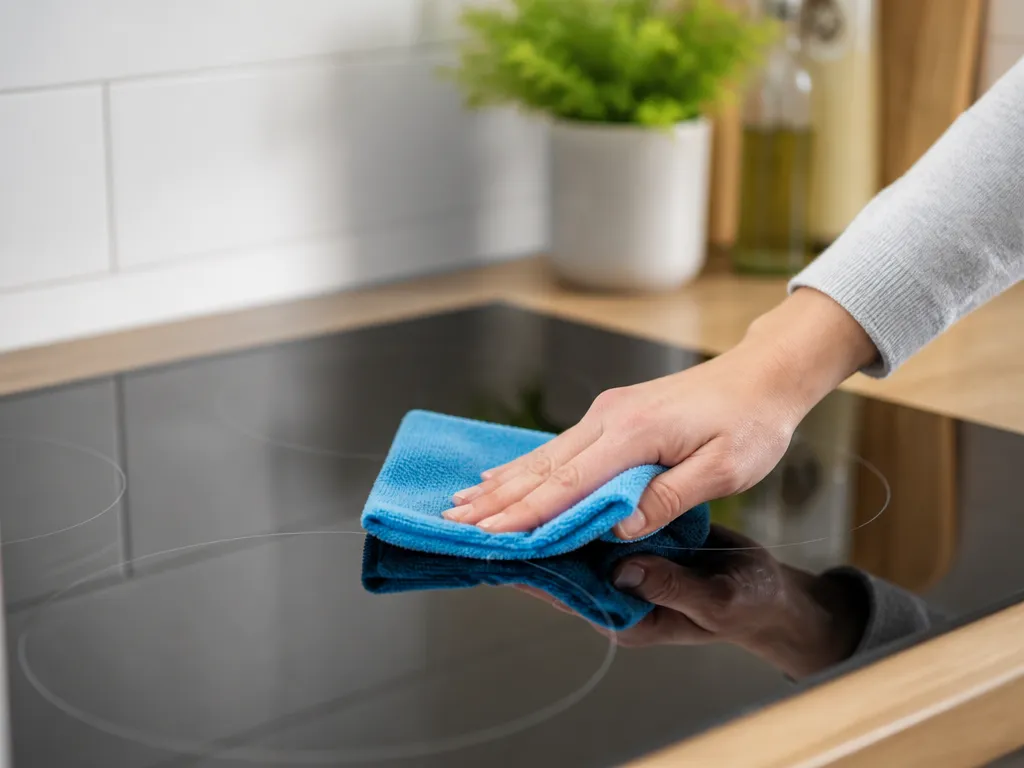
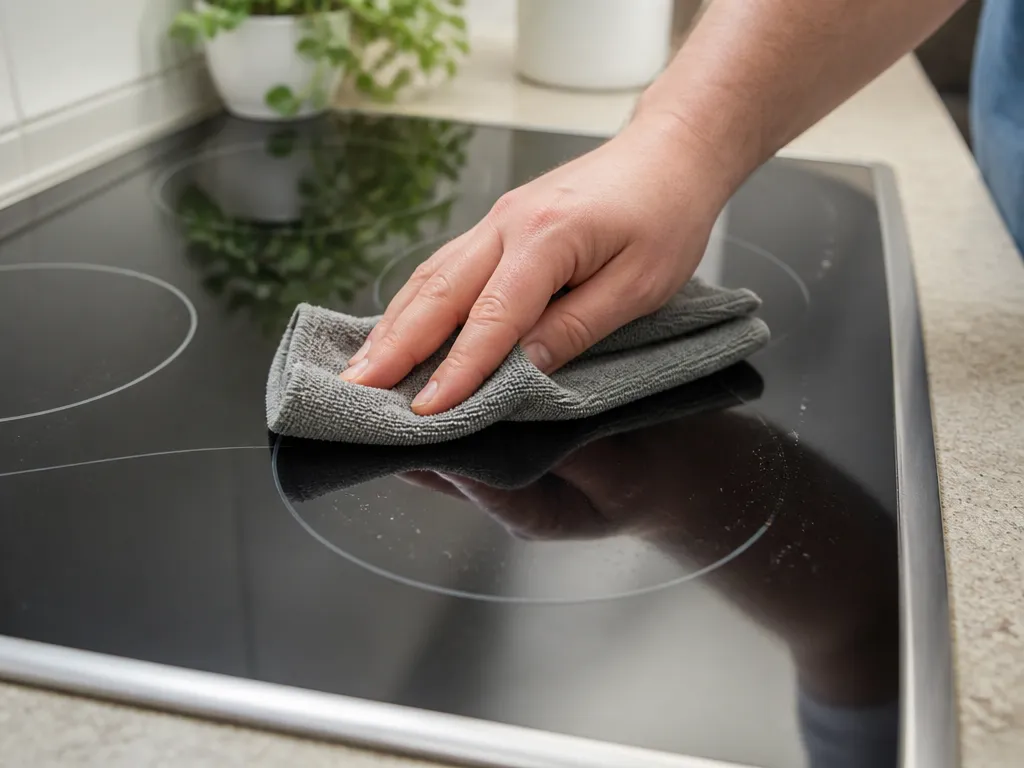
Wipe loose debris with a damp microfiber cloth, apply a thin layer of cleaner made for glass cooktops or glass-ceramic, and wipe again after it has had a moment to loosen the residue. Finish with a clean damp cloth and dry the surface completely.
Drying is part of the cleaning job. Cleaner residue can leave streaks that look like scratches, and a fresh microfiber produces a clearer finish without extra scrubbing. Do not apply so much liquid that it runs into seams or around the control bezel.
Best for Burnt-On Food
For hardened rice, dried sauces, burnt-on grease, sugar, and melted plastic, work in small passes from the edge of the spill toward the center.
The scraper should lift the residue rather than dig into the surface. If the blade catches or the spill does not move, stop and soften the area with cooktop cleaner. A dull blade requires more force and increases the chance of marring the surface, so replace it when necessary.
Best for Water Spots: Light Vinegar Treatment
A small amount of vinegar can dissolve mineral deposits that plain wiping leaves behind, especially in hard-water areas. Apply it lightly, let it sit briefly, then wipe with clean water and dry the surface.
Vinegar is a poor substitute for cooktop cleaner when the problem is grease or burnt food. Use it for mineral film, not as an all-purpose solution. If a rainbow sheen remains after cleaning, detergent residue is often the cause; wipe again with a damp cloth and dry.
The Fastest Safe Cleaning Routine
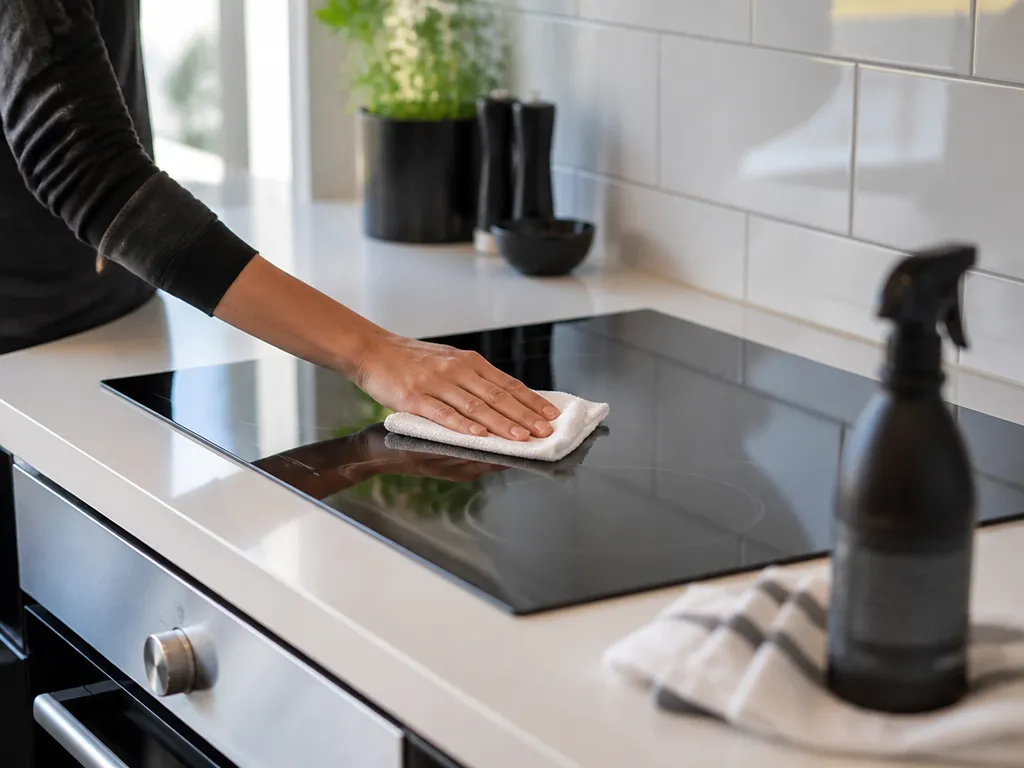
Induction cooktops look tough, but most use a thin glass-ceramic surface that can scratch or haze. The safest routine has two phases: remove loose messes first, then treat the residue that remains.
- Wait until the surface is safe to touch. Warm glass helps loosen oil and sugar, but a cooktop that is too hot can burn you or cause cleaner to behave unpredictably.
- Wipe away loose debris. Use a damp microfiber cloth so crumbs do not get dragged across the glass.
- Apply cooktop-safe cleaner. Use a product labeled for glass cooktops, glass-ceramic, or ceramic tops.
- Let the cleaner work briefly. A short dwell time softens residue and reduces the pressure you need to apply.
- Wipe and rinse. Use a clean damp cloth to remove cleaner residue.
- Dry completely. A dry microfiber prevents streaks and leaves the surface clear.
- Scrape only the remaining hardened spots. Use a razor scraper at a low angle rather than an abrasive sponge.
For safety, unplug the unit or turn off the breaker if you are using a scraper and are unsure about residual-heat settings. If the glass still feels warm, wear a light oven glove, particularly near the control panel edges.
Identify the Cooktop Surface Before Choosing a Cleaner
Most induction cooktops have glass-ceramic tops, but not every cooking surface uses the same finish. Check the frame or owner’s manual for terms such as “ceramic glass,” “glass-ceramic,” or “vitreous glass.” If the manual recommends glass-cooktop cleaner and a razor scraper, follow those instructions closely.
Glass-ceramic is smooth and slightly glossy, with faint reflections along the edges. It tolerates careful scraping but can develop micro-scratches from abrasive cleaners. Stainless steel and sealed metal surfaces use different cleaning methods; they may accept non-abrasive pads and polish, while a razor scraper could damage them unless the manual specifically approves it.
When the material is unclear, the manual is more reliable than appearance alone. Do not assume that every smooth induction surface can be treated like glass-ceramic.
How Often to Clean an Induction Cooktop
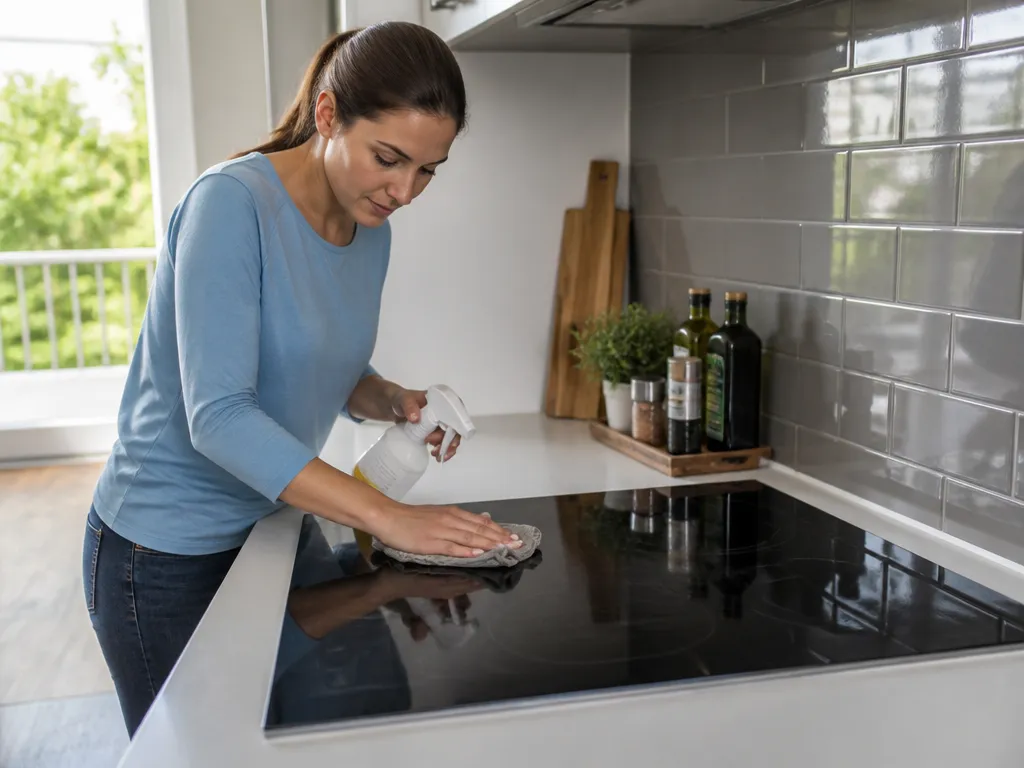
Clean ordinary splatters the same day you cook, and do a fuller cleaning when residue begins to build. Waiting allows grease, sauces, and sugar to harden, which leads to more pressure and more aggressive tools – the combination most likely to scratch the surface.
Use this schedule:
- After greasy meals such as stir-fry, bacon, or creamy sauces: wipe the surface after cooking.
- After sweet or sticky foods such as syrup, sugar, or caramel: remove spills immediately while warm.
- During general use: complete a full clean 1 to 3 times per week, or whenever the surface looks dull or feels tacky.
The control area and edges often collect grime first. Wipe around knobs or touch controls during each cleaning, but do not flood cleaner into seams. Use a damp cloth, then dry with microfiber so moisture does not creep under the trim.
How to Remove Burnt-On Food Without Scratching
Burnt-on food tempts people to reach for abrasive sponges, but scraping and softening are safer than grinding. Let the cooktop cool to warm before starting. If it is too hot to touch, wait; if it is fully cold, allow more time for the cleaner to loosen the residue.
- Hold a razor scraper at a low angle, nearly flat against the glass.
- Work in small passes from the edge of the spill toward the center.
- Stop if the blade catches rather than slides.
- Cover the residue with a thin layer of cooktop cleaner and wait a few minutes.
- Wipe the softened residue and repeat if necessary instead of forcing it.
Burnt rice and dried sauces often come off in layers. Sugar-based spills are more difficult because melted sugar can fuse to the glass. Treat them with cleaner and careful scraping rather than trying to scour away the mark.
Avoid these tools and techniques on glass-ceramic:
- Magic Eraser, steel wool, and scouring pads: They can leave permanent haze or scratches.
- Heavy pressure with a blade: More force does not make fused residue safer to remove.
- Strong solvents: Use them only when the product label specifically says they are safe for glass cooktops.
- Aggressive scraping across the whole top: Keep the scraper focused on hardened spots.
How to Remove Grease and Water Spots
Grease leaves a thin film that bonds lightly to smooth glass, so a quick dry wipe may spread it rather than remove it. Start with a cooktop-safe degreasing cleaner or the glass-cooktop cleaner you trust. Work gently with a microfiber cloth, wipe with a damp cloth, and dry immediately.
What to Do About Chips and Cracks
Stop using an induction cooktop normally if its glass-ceramic surface has a chip or crack. Heat cycling and mechanical stress can spread a hairline crack, while spills can seep into the damaged area.
Take these steps:
- Stop cooking on the damaged zone if you can.
- Do not scrape the cracked area with a razor blade.
- Wipe gently so residue does not get pushed into the crack.
- Arrange professional assessment or replacement if the damage is significant.
A crack that catches crumbs or feels like a raised step under your fingertips has likely moved enough to need service. Treat chips near the edge seriously too; repeated heating can turn a small defect into a larger failure. A damaged glass top is a safety issue, not merely a cosmetic one.
Final Recommendation
Use vinegar sparingly for water spots, and skip abrasive pads, steel wool, Magic Eraser, powdered cleansers, and heavy pressure. If the cooktop is chipped or cracked, stop using the damaged area and arrange service rather than trying to clean through the defect.
FAQ
What cleaner can I use on an induction cooktop glass surface?
Use a cleaner labeled safe for glass cooktops or glass-ceramic. Avoid abrasive cleaners such as powdered cleansers and scouring pads because they can leave permanent haze or scratches.
Can I use a razor scraper on an induction cooktop?
Yes, provided you use it gently and only on hardened spills. Replace the blade when it becomes dull, and soften residue first if it does not lift easily.
How long should I wait before cleaning after cooking?
Wipe spills when the surface is cool enough to touch comfortably but still warm enough to soften oil and sugar. If the cooktop is fully cold and the residue has baked on, the cleaner may need more dwell time.
What is the fastest way to clean burnt sugar or melted plastic?
Remove it while the glass is warm, not cold. Apply a cooktop-safe cleaner, let the residue soften, and wipe the surface after scraping. If a faint stain remains, repeat the cleaner-and-wipe step instead of using abrasives.
Is it safe to clean an induction cooktop with vinegar?
Vinegar can help remove water spots and mineral deposits when used lightly, then rinsed and dried. Do not soak the controls or let liquid run into seams. For grease and burnt-on food, a dedicated glass-cooktop cleaner usually works better than vinegar alone.