How To Clean A Blender After Making Smoothies
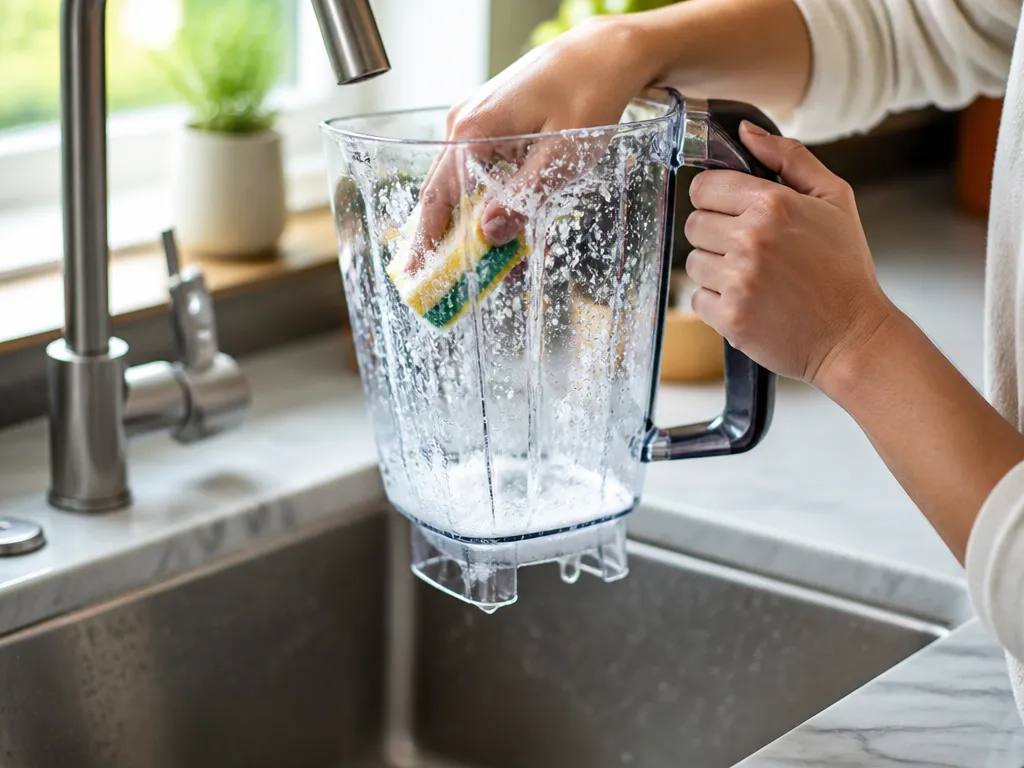
Smoothies leave sticky pulp, sugars, and fats that dry quickly around the blade assembly and lid. Rinse the blender while the residue is still wet to prevent odors, haze, and gummy buildup. The basic routine is simple: rinse soon, wash with warm soapy water, scrub the blades and base area, then dry every part completely.
For thick residue, use warm water and a soft brush rather than harsh abrasives. For lingering odors, a baking soda soak helps. Keep the motor base and power components dry throughout the process.
Key Takeaways
- Rinse right away. A quick rinse within minutes keeps smoothie pulp from drying inside the blade housing.
- Use warm soapy water. Dish soap breaks down smoothie fats and sugars better than water alone.
- Scrub the blade area. The blade gasket and underside can trap residue even when the jar looks clean.
- Soak for odors. Baking soda and warm water can reduce lingering smoothie smells.
- Dry thoroughly. Air-dry the lid parts and jar upside down until they are fully dry to prevent mold.
- Protect the electronics. Keep the motor base and power parts dry, and never submerge them.
How to Clean a Blender After Making Smoothies
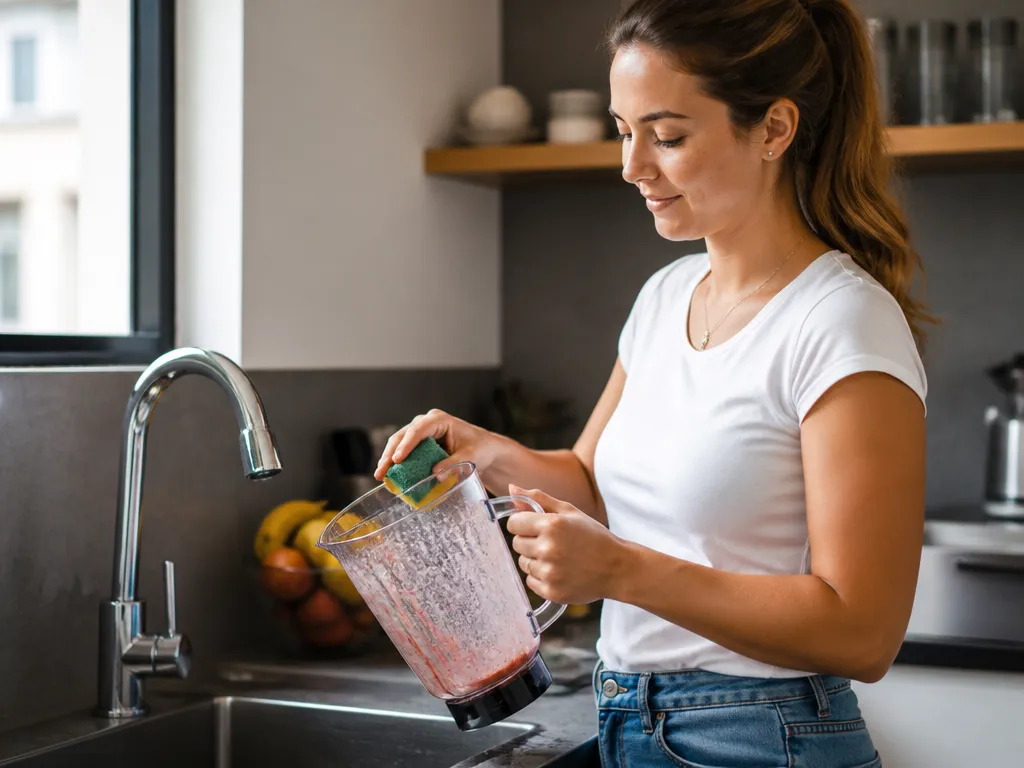
Clean the blender before smoothie residue dries. That keeps the jar smelling neutral the next day and prevents sticky buildup around the blades.
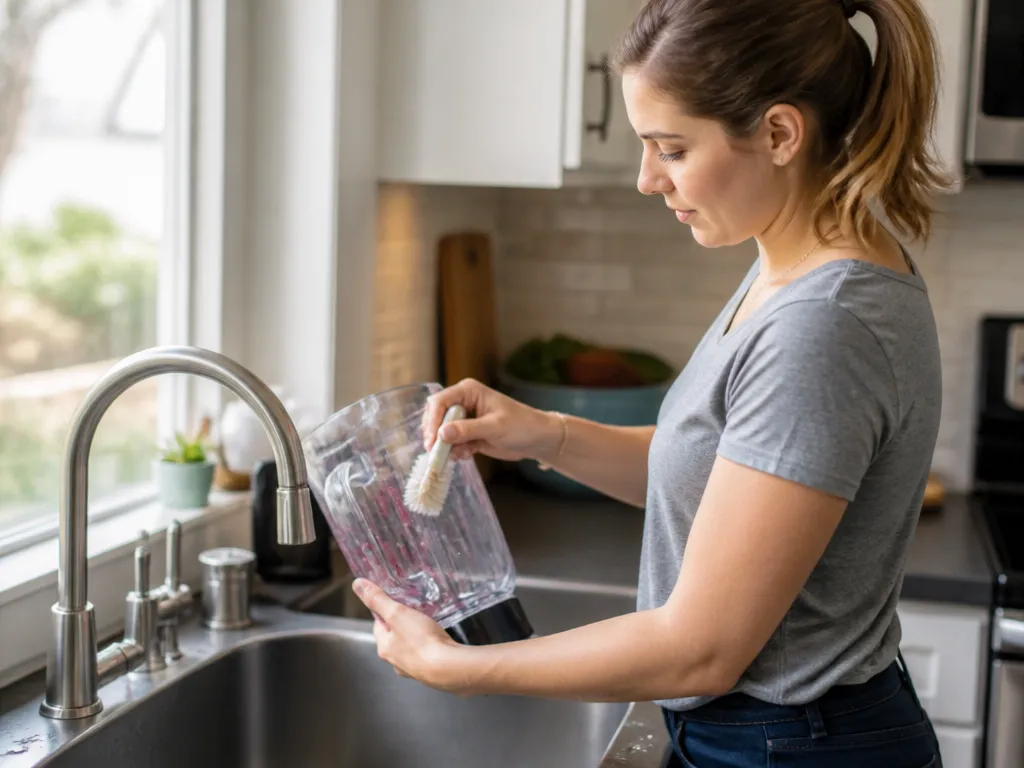
Gather dish soap, warm water, a soft sponge or dish brush, and a microfiber cloth for quick final drying. A small cleaning brush is useful for the blade assembly and gasket, where smoothie bits often hide. If your blender has a removable blade or gasket, handle those parts gently and note how they fit before removing them.
If you are cleaning immediately after blending, start with a quick rinse. Add a small amount of warm water to the jar, swirl it for 10-20 seconds, and pour it out. This loosens pulp before it has time to stick.
Should You Rinse Immediately or Deep Clean?
Rinse immediately whenever possible. Dried smoothie residue takes more scrubbing to remove and is more likely to smell. If the blender has been sitting for a few hours, you can still clean it, but soak the residue before scrubbing around the blades and gasket.
Use this timing rule:
- If it has been less than 30 minutes, rinse first, then wash normally.
- If it has been several hours or overnight, rinse it and add a short soak before washing.
For a deeper clean, let warm soapy water sit in the jar for 15-30 minutes. The soak softens sugars and fats so the residue wipes away instead of requiring hard scraping. Scrub the bottom edges and sides, then rinse well.
For example, if you blended berry smoothies and left the blender in a cabinet for 8 hours, do not simply wash and hope for the best. Rinse out what you can, soak the jar for 20 minutes with warm soapy water, and carefully scrub the underside of the blades.
How to Remove Thick Residue From the Blades
When residue is thick, focus on the blade assembly and gasket instead of spending extra time on the already-clean sides of the jar.
Wash the jar only in a way your model allows, and keep liquid away from the motor base. Use warm soapy water and a soft brush to reach the underside of the jar where pulp collects.
For stubborn buildup, use this brush-and-soak method:
- Add warm water and a few drops of dish soap.
- Let the mixture sit for 10-20 minutes.
- Scrub the blade area with a soft brush, rotating the jar as you work.
- Rinse until the water runs clear.
Avoid metal scrubbers on the jar or blade area. They can scratch the surface, giving future residue more places to collect. If the blade assembly is removable, take it out according to the manual, wash it in warm soapy water, rinse thoroughly, and reinstall it correctly.
If a cloudy film remains at the bottom after washing, it is usually a thin layer of fat. Soak the area again for 10-15 minutes with warm soapy water, scrub lightly, and rinse.
Which Cleaning Solution Is Safe for a Blender?
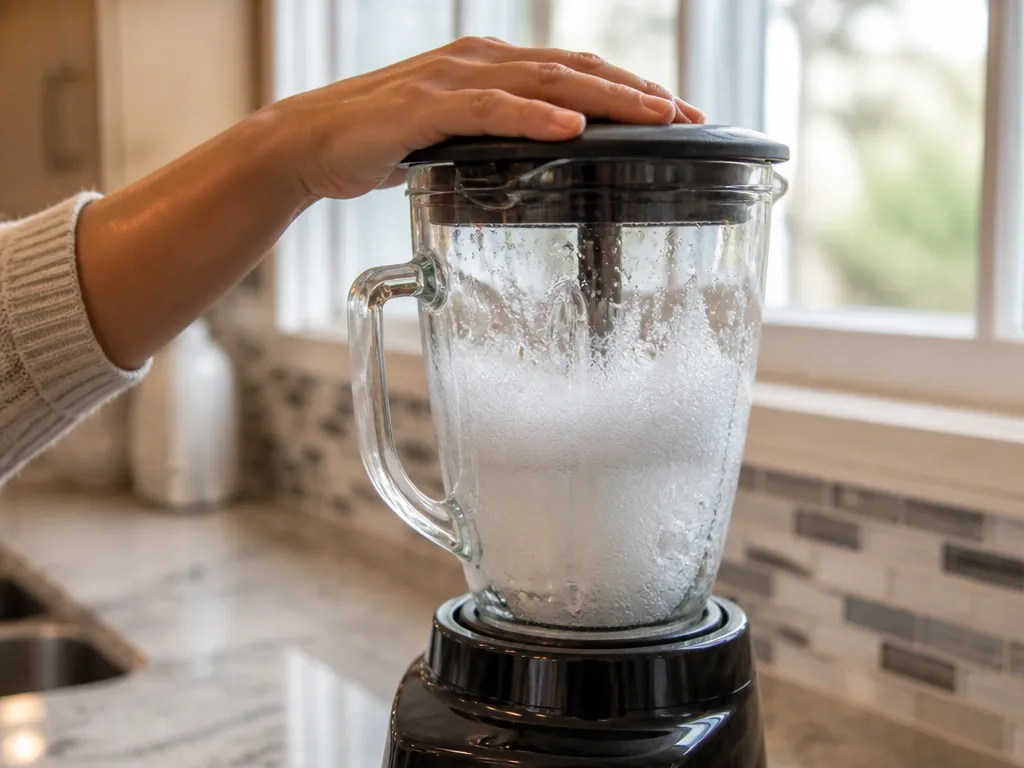
Warm water and dish soap are the safest default for smoothie residue. They break down common fats and sugars without the need for vinegar, bleach, or harsh degreasers.
Use dish soap on the jar, lid, and removable food-contact parts. Keep the motor base dry, and do not pour cleaning solution into the base or around seams that are not designed for wet cleaning.
For odors or light stains, use baking soda. Make a paste or mix baking soda with warm water for a soak, let it sit, then wash the part again with dish soap.
Avoid these cleaning methods:
- Do not use abrasive powders on clear plastic jars or nonstick-looking coatings.
- Do not use bleach for routine cleaning unless your specific blender manual says it is safe.
- Do not soak the motor base or immerse parts that connect to power.
Scratched blender jars hold onto residue more easily. If the jar is scratched, rinse it more often after smoothies and pay particular attention to the area around the blades.
How to Clean the Lid, Gasket, and Cap
The lid, gasket, and cap often hold the residue responsible for leaks and lingering smells. Thin smoothie film can hide in the underside of the lid, gasket folds, and vent cap even when the lid looks clean.
Remove the lid cap if your model allows it. Wash every removable lid part with warm soapy water, concentrating on grooves and the gasket. Use a small brush for seams and folds.
If goo is stuck in the gasket, soak the lid parts in warm soapy water for 10-20 minutes. Brush and rinse them afterward, turning the gasket as you work so the soap reaches every surface.
If you blend mango smoothies and the lid vent cap still feels sticky, soak the lid parts for 15 minutes. Scrub the vent area with a soft brush, rinse thoroughly, and dry the pieces right away.
How to Remove Smoothie Odors and Stains
If the jar still smells after a normal wash, use an odor-targeted soak instead of repeating a quick rinse.
Mix baking soda with warm water and let the blender parts soak for 15-30 minutes. Wash them again with dish soap and rinse thoroughly. Baking soda can help neutralize smells and lift a light film without aggressive scrubbing.
For berry or turmeric-like stains, soaking is safer than scrubbing harder. Warm water loosens the pigment, while dish soap removes remaining oily residue. Repeat the soak if necessary, since vigorous scrubbing can scratch plastic.
If the blender smells after overnight storage even though it was “washed,” incomplete drying is the likely cause. Let the jar, lid, gasket, and cap dry fully before reassembling or storing them.
How to Dry the Blender Completely
Complete drying prevents moldy smells and slimy buildup. Moisture trapped in a gasket fold or around the bottom of the jar gives residue a chance to linger.
Dry the parts in two stages. First, rinse away all soap. Then create airflow by placing the jar upside down and laying the lid parts out so water can drain from the gasket folds.
For faster drying, wipe accessible surfaces with a clean microfiber cloth and let the parts finish air-drying. Check the gasket carefully because water can remain trapped in its folds even after the rest of the lid feels dry.
Reassemble the blender only when no part feels tacky or wet. If your kitchen is humid, store the jar and lid components separately.
FAQ
How quickly should I rinse my blender after making smoothies?
Rinse within 10-30 minutes if possible, before residue dries around the blades and gasket. If you cannot wash the blender right away, fill the jar with warm water and leave it until you can clean it. Wash with dish soap and rinse fully afterward. Leaving it overnight without soaking makes odors and haze more likely.
Can I use the dishwasher to clean blender parts?
Many blender jars and removable components are dishwasher-safe, but check your manual first. If dishwasher cleaning is allowed, place the parts on the top rack and avoid harsh heat drying if the manual warns against it. Keep the motor base dry and never put it in the dishwasher. If haze or odor develops, switch to hand-washing the jar and lid.
What is the safest way to clean the blade without leaving residue?
Use warm soapy water, then scrub the blade area and underside where residue collects. If the buildup is thick, soak the jar with soapy water for 10-20 minutes before scrubbing gently with a soft brush. Rinse until the water runs clear. Avoid metal scrubbers, which can scratch the surface and encourage future buildup.
How do I remove a lingering smoothie smell?
Soak the blender parts in warm water with baking soda for 15-30 minutes. Wash again with dish soap and rinse thoroughly. If the smell returns quickly, improve the drying routine: air-dry the jar and lid parts completely, especially the gasket, and reassemble them only when they are dry.
Will vinegar or bleach damage my blender?
Vinegar may be safe for some jars, but it can leave a strong smell and may not suit every plastic or gasket. Bleach is more likely to be incompatible with blender materials unless the manual explicitly allows it, and it is unnecessary for routine smoothie cleanup. Use warm soapy water as the default and a baking soda soak for odors or stains. If you choose an alternative cleaner, test it on a small part first.