How To Descale A Coffee Maker With Vinegar
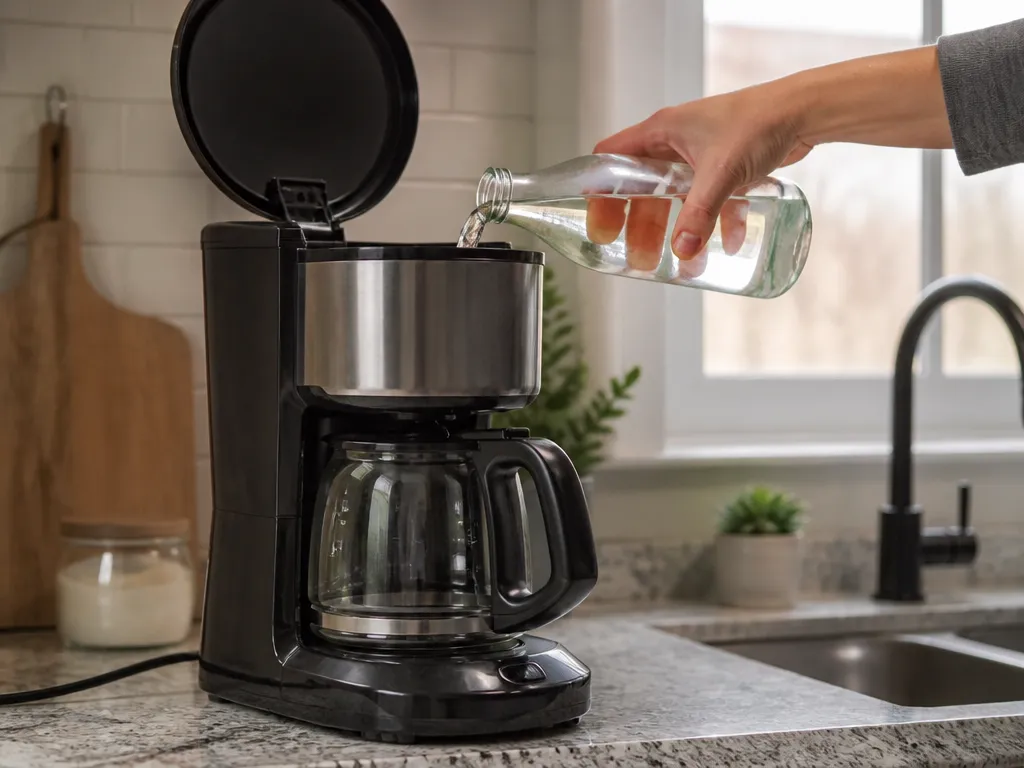
Vinegar can remove mineral buildup from a coffee maker’s heating element and internal water lines, which can improve slow brewing and off-tasting coffee. For most drip and pod machines, mix equal parts white vinegar and water, run the solution through the machine, let it sit for 1 hour when using a drip maker, then rinse with clean water until the vinegar smell disappears.
The full process takes about 2 hours to 2 hours 30 minutes, including the dwell time and rinsing.
Key Takeaways
- Expect bits in the water – Brown or white particles can appear as vinegar loosens deposits.
- Check the smell before brewing coffee – The machine is ready when no vinegar smell remains.
How to Descale a Coffee Maker With Vinegar
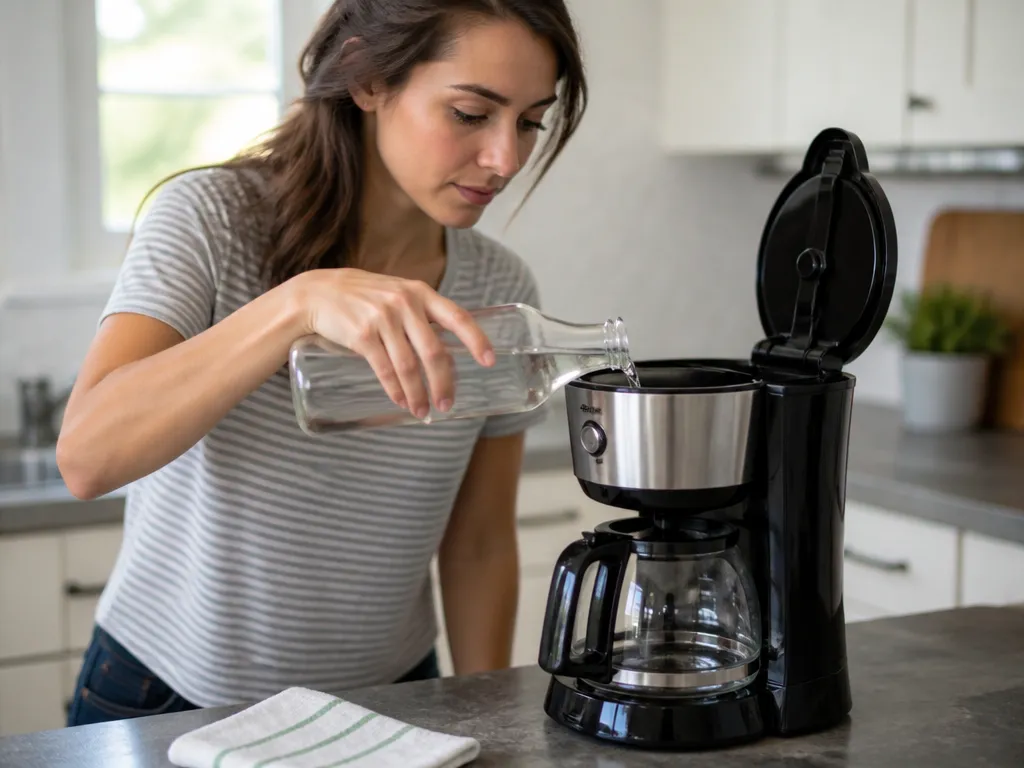
Remove the grounds and pour the prepared solution into the reservoir. For a drip coffee maker, stop after about half the solution has brewed and let it sit for 1 hour before finishing the cycle.
For a pod brewer, run the vinegar solution into a mug without inserting a pod. Discard each cup, then run additional water-only brews until the vinegar smell is gone.
Before handling the machine, make sure it is unplugged and cool. Keep the vinegar solution out of the coffee carafe or mug once the process is complete, and wash all removable parts before making coffee again.
Why Limescale Changes Brewing and Coffee Flavor
Limescale consists of mineral deposits, most often calcium carbonate, left behind when hard water is heated. The deposits collect on the heating element and inside the channels that carry water through the machine.
That buildup can restrict water flow and make heating less even. The result may be a slower brew, bitter or stale-tasting coffee, and visible mineral residue in the reservoir or carafe.
What You Need to Descale Safely With Vinegar
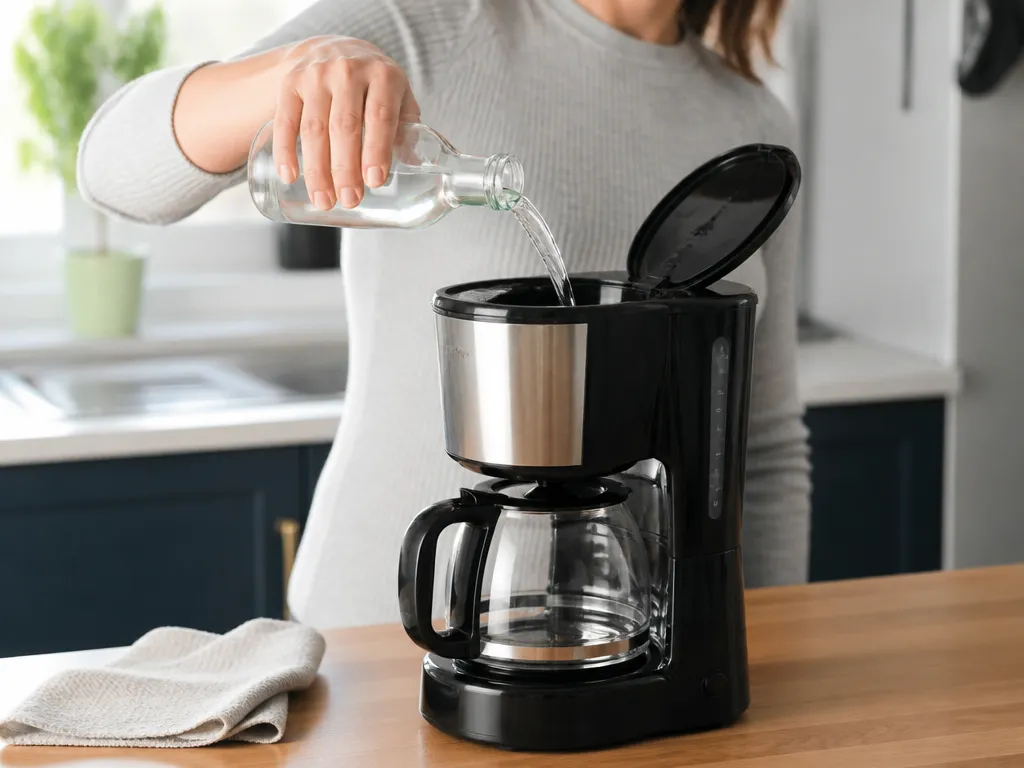
Gather these supplies before starting:
- White distilled vinegar
- Regular water
- A measuring cup
- A clean carafe or measuring jug
- A soft cloth
Prepare enough solution to run through the reservoir for at least one full brew cycle, then set aside enough clean water for the rinse cycles.
If the machine has a removable filter basket, wash it afterward with warm, soapy water. Remove any paper filter and used grounds before the vinegar cycle.
How Often to Descale a Drip or Pod Coffee Maker
A common maintenance schedule is to clean the machine at least once per month and descale it at least once every 6 months.
Use a shorter interval if you have hard water or notice slower brewing, unusual flavor, or mineral residue. The right schedule depends on your water hardness and how often you use the coffee maker.
Vinegar Descaling by Coffee Maker Type
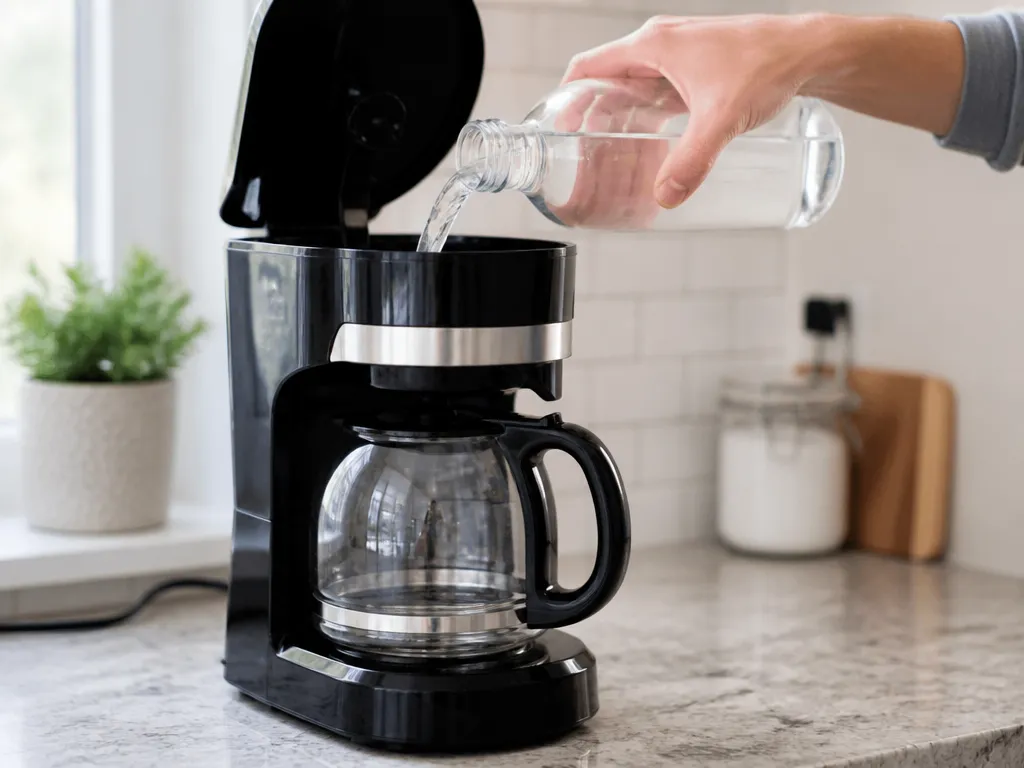
Drip and pod machines usually have simple water paths, so the same basic method works. Drip machines benefit from a 1-hour dwell midway through the cycle; pod machines are usually flushed through repeated cups instead.
| Machine type | Best match for vinegar method | How you’ll tell it’s working | Extra caution |
|---|---|---|---|
| Drip coffee maker (carafe) | Full vinegar brew cycle + 1 hour dwell | Brown or white bits appear in water | Make sure filter basket is out during vinegar run |
| Single-serve pod brewer (K-cup style) | Brew vinegar solution directly into a mug | Vinegar smell persists until rinsed | Discard brewed liquid after each cup |
| Pod machine with removable reservoir | Same as above, reservoir-based brewing | Scale loosens and gunk flushes out | Check for rinse cycles the manual recommends |
| Espresso machine (if applicable) | Vinegar can work, but follow manual tightly | Flow changes as scale breaks free | Many espresso makers prefer descaler over vinegar |
Drip Coffee Maker: Vinegar Descaling
- Empty the machine. Remove the grounds and discard the used paper filter, if applicable. Pour out any water left from the previous brew.
- Mix the solution. Combine equal parts water and white vinegar in a clean measuring jug or directly in the reservoir.
- Run half a cycle. Start the brew function and let about half of the vinegar solution flow into the carafe.
- Let it sit for 1 hour. Turn off or pause the machine after the halfway point. Leave the solution in the pot and machine for 1 hour.
- Finish the brew. Turn the brew function back on and let the rest of the solution run through.
- Rinse with clean water. Pour out the vinegar solution. Fill the reservoir with clean water and run 3 full brew cycles.
- Wash and wipe the parts. Clean the carafe and filter basket with warm water and soap. Wipe the outside and hot plate with a damp cloth.
Single-Serve Pod Brewer: Mug Method
- Clear the pod holder. Remove any used pod and loose grounds.
- Add the vinegar solution. Use equal parts white vinegar and water in the reservoir.
- Run the solution into a mug. Brew without inserting a pod.
- Repeat 3 to 5 times. Discard each mugful after brewing so the vinegar solution continues flushing the internal lines.
- Switch to clean water. Run additional water-only brews until the vinegar smell is gone.
- Wipe the brewer. Clean up drips and wipe the hot area with a soft cloth once the machine is cool.
If You Are Unsure About Your Model
Check the manual before using vinegar. Some machines specify a particular descaler, limit the solution concentration, or warn against vinegar entirely.
If the manual does not prohibit vinegar, follow the manufacturer’s instructions for the water path and rinse requirements.
Troubleshooting Vinegar Descaling Problems
A lingering vinegar taste usually means the machine needs more rinsing. Run additional clean-water brew cycles beyond the initial 3 cycles until the smell disappears.
Brown or white bits in the water are normal during descaling. Vinegar can loosen mineral deposits and residue that have collected inside the machine.
A coffee maker that runs unusually slowly during the vinegar cycle may have heavier scale buildup. On a drip machine, allow the solution to dwell before completing the cycle and rinsing thoroughly.
If the vinegar smell remains after rinsing, do not brew coffee yet. Keep running clean water through the machine until the smell is no longer present. Pod machines may need repeated water-only brews, while drip machines may need more than the initial 3 cycles.
How to Rinse and Confirm the Descale Is Complete
The rinse water should no longer smell like vinegar, and visible residue should stop appearing. If either problem remains, continue rinsing.
Wash the carafe and any removable parts after the final rinse. Let the machine cool for 30 minutes to 1 hour, then wipe the hot plate if needed. Reassemble the coffee maker and run one final plain-water test brew if you want extra confidence before making coffee.
FAQ
How much vinegar should I use to descale a coffee maker?
Use enough equal-parts solution to fill the reservoir for at least one full brew cycle. Follow the machine manual if it specifies a different concentration.
How long does vinegar descaling take?
Plan about 2 hours to 2 hours 30 minutes for the full process. The vinegar needs time to dwell, and the rinse cycles add time after the main brew cycle.
Can I use vinegar to descale a Keurig or other pod machine?
Yes, if the manual does not prohibit vinegar. Brew the solution directly into a mug 3 to 5 times, discarding each cup, and then use water-only brews to remove the smell.
Is descaling safe for all coffee makers?
Most drip and pod brewers handle vinegar when rinsed thoroughly afterward. Espresso machines and other specialized brewers may require a dedicated descaler. If the manual warns against vinegar or recommends a specific product, follow those instructions instead.
What is a common mistake during descaling?
Stopping after one vinegar cycle or failing to rinse enough can leave vinegar residue behind. That residue can give coffee a sharp or sour taste. Run clean-water cycles until the vinegar smell disappears, then wash the carafe and removable parts.