How To Use A Microwave Convection Oven
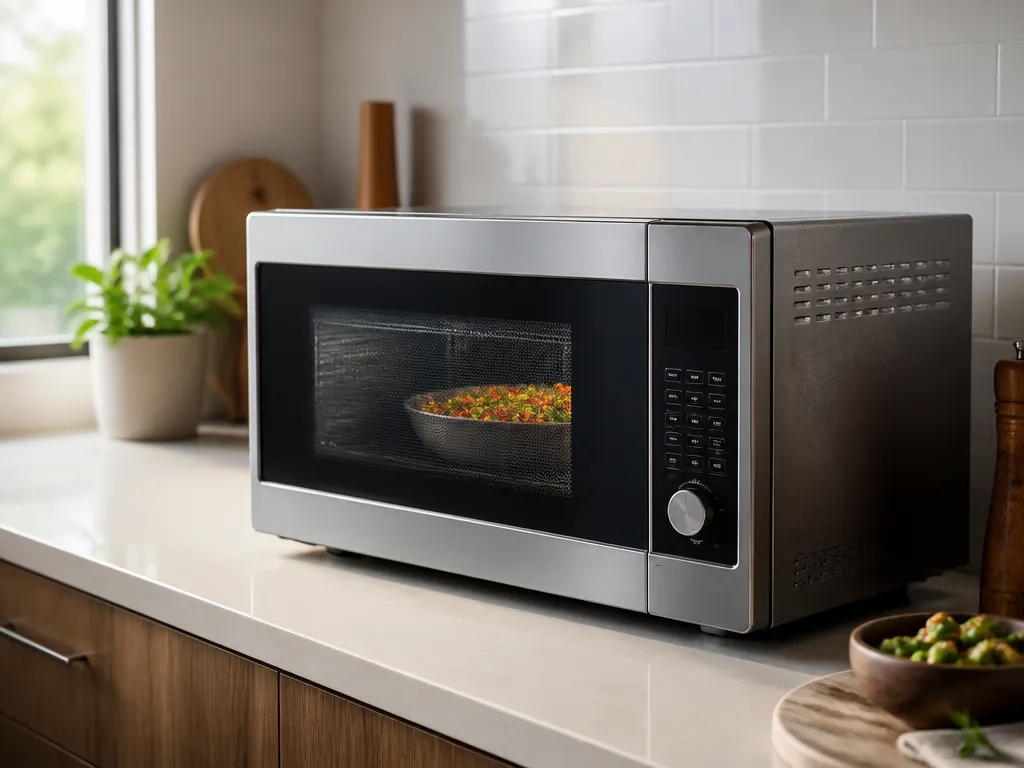
Microwave convection ovens combine microwave energy with circulating hot air, so they cook faster than a conventional oven while still browning and crisping the surface. Use the wrong mode, cookware, or temperature, though, and you can end up with rubbery edges, dry centers, or unevenly cooked food.
For most recipes, set a convection temperature, choose convection or combo mode, and use cookware rated for both microwave and oven heat. Start with a shorter cooking time than the recipe suggests, rotate or stir halfway through, and check doneness with a thermometer when possible. Poultry should reach 165 F in the thickest part.
Key Takeaways
- Keep the vents clear. Never block the fan intake or exhaust.
- Use microwave-safe, heat-safe cookware. Microwave-safe plastic may still melt or warp at convection temperatures.
- Preheat for browning. Preheating helps cookies, vegetables, fries, and other foods develop crisp, browned surfaces.
- Start with less time. Convection often finishes food faster than conventional baking.
- Use the middle rack when available. Rack position affects airflow and browning.
- Match the fix to the problem. Dry food usually needs less heat or time; undercooked food needs more time, smaller pieces, or a different power setting.
How to Use a Microwave Convection Oven Safely
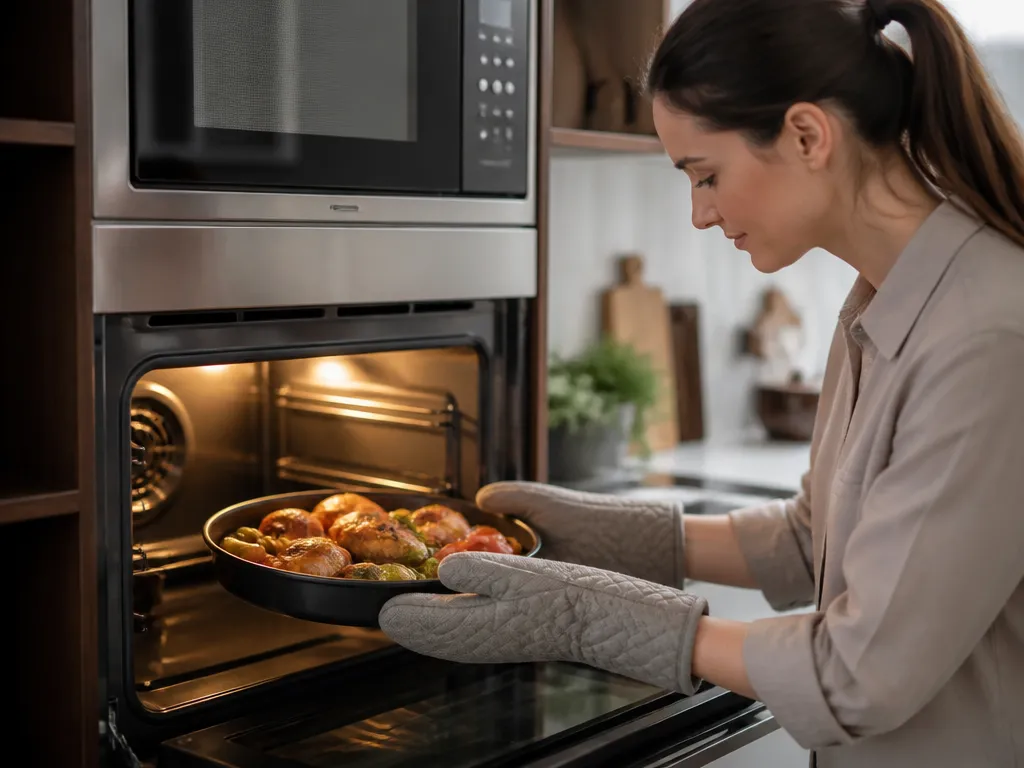
Treat a microwave convection oven like a countertop oven, with one additional requirement. Convection uses heating elements and moving hot air, so a container that works in microwave-only mode can warp, melt, crack, or release odors at higher temperatures.
Before cooking, make sure the glass turntable, if your model has one, sits correctly and rotates freely. If the oven uses racks instead, confirm that they are secure and positioned as the manual directs. Keep flammable items away from the exhaust area, including paper towels and food wrappers that could curl toward the airflow.
Use this workflow when you are learning the oven:
- Clear the oven cavity and vents.
- Place the food and cookware on the correct rack or tray.
- Choose the mode: convection-only for browning or combo for speed.
- Set the temperature and time conservatively.
- Use an oven mitt for hot racks, trays, and metal cookware.
Microwave energy can heat liquids unevenly. Stir sauces and thick liquids, then let them stand for a minute so the temperature can even out.
Which Modes Does a Microwave Convection Oven Offer?
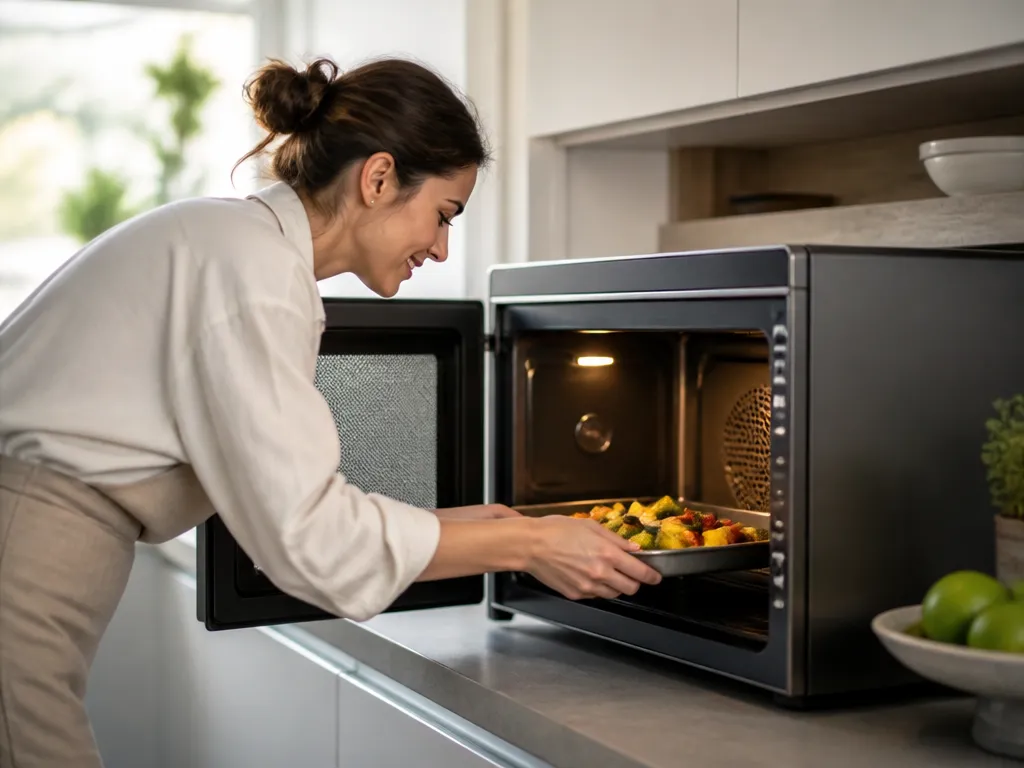
Most microwave convection ovens have three useful mode categories:
- Microwave-only: Uses microwave energy to heat the food.
- Convection-only: Uses a heating element and circulating hot air.
- Microwave-convection: Also called combo, mix, or micro + bake/broil; uses both microwave energy and hot air.
Use convection-only when you want a crisp or browned exterior, such as with roasted vegetables or wings. Choose microwave-convection when speed matters and you still want some color, such as when reheating leftovers with a crisp surface or cooking food that dries out easily in microwave-only mode.
Button names vary by brand, so follow the labels on your oven. Look for terms such as:
- Convection / Bake: Hot air
- Microwave / Power: Microwave energy
- Combo / Microwave + Convection: Both cooking methods
A temperature setting usually indicates that you are in convection or combo mode. If the controls offer only time and power, you are probably using microwave-only mode.
Use the preheat button when crisping or browning matters. The food’s surface needs time in hot air before the interior finishes cooking.
How to Preheat and Set the Convection Temperature
Preheat when you want browning. Circulating hot air needs to reach the target temperature before it can crisp the surface effectively. Cookies, roasted vegetables, breaded foods, and fries generally benefit from preheating.
Set the convection temperature to match the recipe’s baking temperature for your first attempt. If the recipe is written for a conventional oven, use that temperature as a starting point and reduce the cooking time. Recipes written for a toaster oven or air fryer may already be close to the right setting.
Adjust the temperature based on the food:
- Use a lower temperature for foods that dry out easily, such as fish or thin cuts.
- Use a higher temperature when the outside is not browning, as with potatoes or breaded foods.
A higher temperature can speed browning, but it may dry the surface before the center reaches a safe temperature. Do not use heat alone to compensate for a cooking problem.
If your oven requires preheating, wait for its ready signal or for the display to show that it has reached the set temperature. Place the food on the rack or tray as directed, close the door promptly, and start the timer.
Choosing Cookware for Microwave and Convection
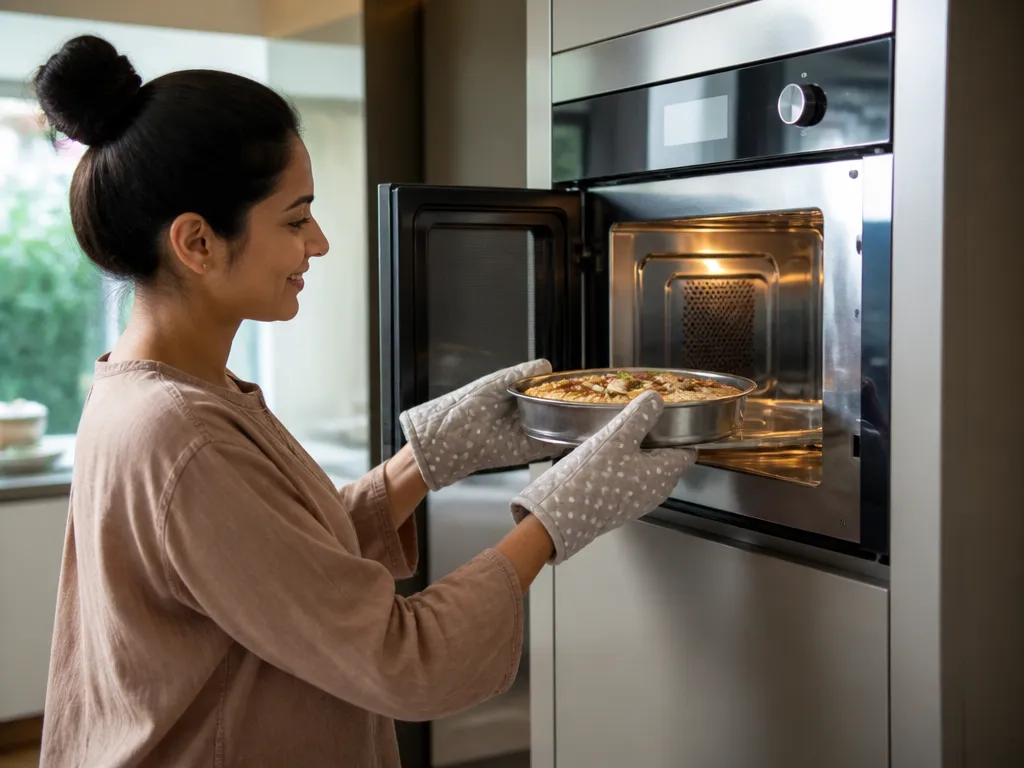
Choose cookware for both microwave safety and heat tolerance.
Reliable choices include:
- Glass dishes labeled microwave-safe and oven-safe
- Glazed ceramic bakeware labeled oven-safe
- Metal pans rated for oven temperatures, when your model supports metal
- Silicone explicitly rated for oven or convection heat
Avoid these common problem materials:
- Plastic wrap and unvented plastic containers in convection mode, because they can warp.
- Paper products near heating elements, because they can scorch or ignite.
- Foil unless the oven instructions permit it and you use it carefully; foil can create hot spots.
Check the space around the cookware, too. If the oven has a rotating glass plate, choose a dish that sits flat and does not block rotation. If it uses a rack, make sure the dish fits securely without tipping.
Combo mode can heat cookware faster than expected because convection heat combines with microwave energy. Use mitts even when the food looks cool, and let the dish rest for a minute before handling it.
Starting Times and Power Settings for Common Foods
Convection and combo modes change cooking times, and exact settings vary by model. Start conservatively, then adjust according to the food’s appearance and internal temperature.
Use a thermometer when food safety matters. For casseroles and leftovers, make sure the center is piping hot, then stir and let the food stand for a minute if it contains liquid.
These ranges are starting points. Food size, starting temperature, and moisture level can change the result.
| Food | Suggested Mode | Starting Temp/Power | Starting Time Range | Check For |
|---|---|---|---|---|
| Frozen pizza slice | Convection or combo | Convection near baking temp | 8-12 min | Crispy bottom, melted cheese |
| Chicken tenders | Combo | Mid convection temp | 12-18 min | 165 F internal |
| Roast vegetables (broccoli, peppers) | Convection | Moderate convection temp | 10-18 min | Browning edges, tender-crisp |
| Reheating leftovers | Combo | Medium convection temp | 5-10 min | Hot center, no cold spots |
| Salmon fillet | Convection | Lower-to-mid convection temp | 8-14 min | Flakes easily, moist center |
| French fries (reheating or crisping) | Convection | Higher convection temp | 7-12 min | Crisp exterior, hot interior |
Microwave power and convection temperature do different jobs. In combo mode, use medium microwave power for foods that can dry out, such as fish and reheated meals. Use higher microwave power for dense, cold foods such as stuffed pasta and leftover casseroles. For surface browning, convection temperature usually matters more than microwave power.
Check halfway through anything thicker than about 1 inch or anything containing sauce.
Converting Conventional-Oven Recipes to Convection
Change the cooking time first, then watch how the food responds to the temperature. Circulating hot air browns surfaces faster, and the interior may finish earlier than it would in a conventional oven.
For a recipe written at 350 F in a conventional oven, start with the same convection temperature rather than lowering it immediately. Reduce the cooking time by about 10-25%, then check the food early and extend the time in small increments if needed.
Moisture and covering also affect the result. An uncovered dish can brown before the center is done, so reduce the time, lower the temperature slightly, or tent the food with foil during the first part of cooking if the top darkens too quickly.
Use this conversion process:
- Set the convection temperature to the recipe’s conventional temperature for the first attempt.
- Reduce the bake time by 10-25%.
- Check early, starting a few minutes before the reduced time ends.
- Add time in small increments instead of restarting with a much longer cook.
- Let the food rest when the recipe calls for it, especially breaded or stuffed foods.
Converting to microwave-convection mode is less predictable because microwave energy changes how quickly the food heats. You will usually still reduce the cooking time, but by less than you would for convection-only cooking. For baking-style results, convection-only is generally easier to control. Use combo mode when you want to reheat or finish food quickly.
Fixing Uneven Browning, Dryness, and Undercooking
Uneven browning usually results from rack position, limited airflow, or overcrowding. If one side is darker, rotate the tray or rearrange the food. Leave space between pieces and avoid stacking food directly on top of itself so hot air can circulate.
Dry food usually means the temperature is too high, the cooking time is too long, or the food is too exposed. If the outside is brown but the inside is dry, lower the temperature slightly and cover the food loosely with foil for part of the cooking time. In combo mode, reduce the microwave component if your model allows you to adjust the mix level.
Undercooking usually means the food needs more time, the pieces are too thick, or the food started cold. Extend cooking in short increments, check the internal temperature, and cut pieces to a more consistent size if some finish before others.
Match the adjustment to the symptom:
- Dark edges, pale center: Lower the temperature or shorten the time, then add time only if needed.
- Dry all the way through: Reduce the total time by 5-10 minutes on the next attempt, or lower the convection temperature.
- Bald spots with no browning: Preheat more reliably and avoid food that is excessively wet or heavily sauced.
- Cold spots in leftovers: Stir or rearrange halfway through, then let the food stand for 1-2 minutes after cooking.
For first attempts, inspect the surface before extending the cook and decide whether the adjustment should involve temperature, time, or mode. This is more effective than adding time blindly and overcooking the edges.
Use automatic programs as starting points rather than guarantees. Brands calibrate differently, and portion size can change the result substantially.
FAQ
Can I use plastic containers in a microwave convection oven?
Only when the container is explicitly labeled for the selected mode and temperature. Otherwise, choose glass or ceramic bakeware.
How long should I preheat a microwave convection oven?
Preheat time depends on the oven and target temperature, so use the oven’s ready signal when it has one. If the unit does not signal, allow a short preheat similar to a countertop oven and start cooking as soon as the hot-air circulation begins. Preheating is useful for crisping, but you can skip it for gentle reheating.
What is the safest way to check whether food is done?
Use a food thermometer for meat and thick foods. For leftovers and casseroles, make sure the center is piping hot, then stir and let the food stand for about 1 minute so the temperature can even out.
How do I stop convection from drying out my food?
Lower the convection temperature and reduce the cooking time, then check the food early. Add a loose foil tent during the first part of cooking if the surface browns too fast. In combo mode, use less microwave power if your oven allows that adjustment, and let the food rest after cooking.
What is the most common mistake people make with microwave convection ovens?
Using cookware that is safe for microwaves but not for high heat is the most common mistake. Plastic and other non-heat-safe materials can melt or warp in convection mode. Overcrowding the cavity is another frequent problem because it blocks airflow and causes uneven browning.