Silicone Baking Mat vs Parchment Paper: Which Is Better?
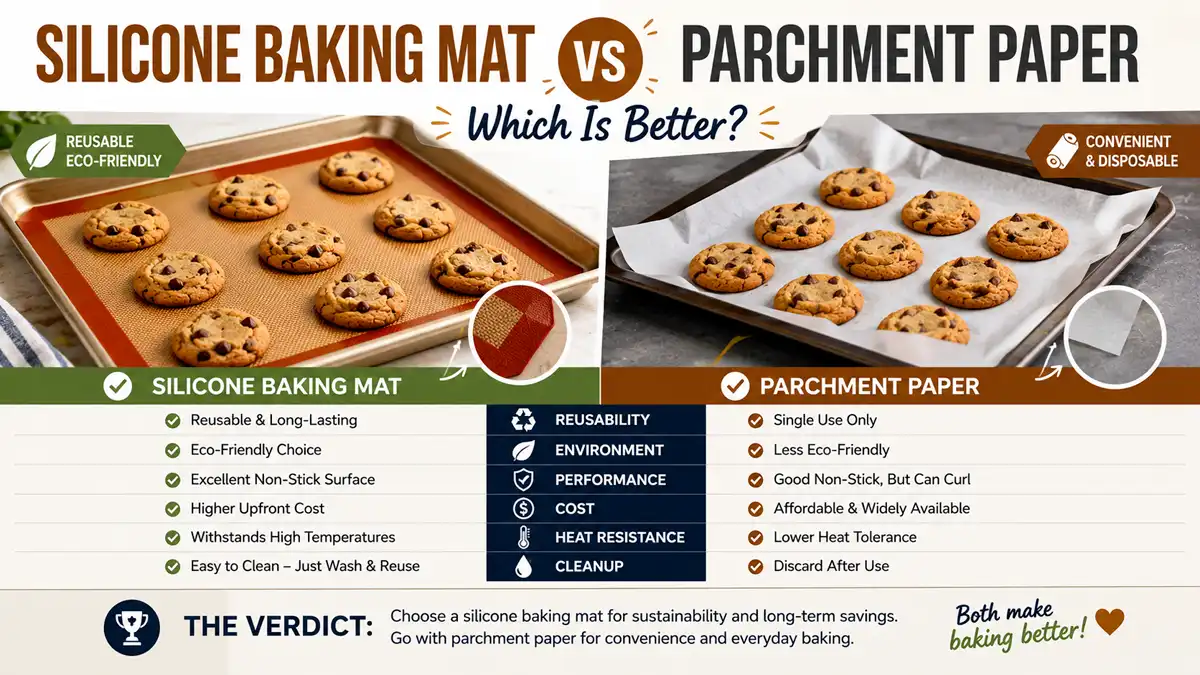
Deciding between a silicone baking mat and parchment paper is a classic kitchen dilemma. While both promise to keep your pans clean and prevent your cookies from sticking, they serve different types of cooks. I find that this choice usually comes down to whether you prefer a sustainable, long-term tool or a low-friction, disposable solution. This breakdown should clarify which one belongs in your drawer.
List of Silicone Baking Mat Vs Parchment Paper
⚡ Quick Verdict
If you are a regular baker who hates the constant waste of paper rolls, the Amazon Basics silicone mat is a smart, one-time purchase. However, if you want a fuss-free experience where you can simply toss the mess away after roasting, parchment paper remains the ultimate convenience tool.
Analysis: Amazon Basics Silicone Baking Mat
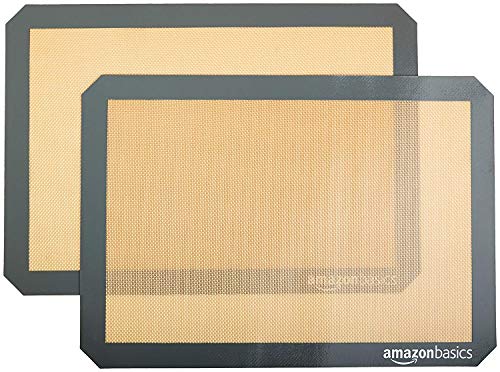
This mat is geared toward the frequent home cook who wants a reliable, non-stick surface ready at a moment’s notice. It is essentially a permanent upgrade that eliminates the need to buy roll after roll of paper.
The Amazon Basics silicone mat creates a naturally non-stick surface, meaning you can skip the cooking sprays or extra oils. Because it is flexible and food-safe, it sits flat on your tray and releases everything from delicate pastries to roasted vegetables without any resistance.
I appreciate the durability here; these mats are built to last through years of heat and scrubbing. Since they are dishwasher-safe, you just rinse them off and you are ready for the next batch, which feels much more efficient than constantly unrolling and cutting paper.
Build Quality & Design
The silicone is heat-resistant and flexible, so it handles high temperatures without warping. It feels sturdy enough to stay put on your baking sheet, but it is thin enough to roll up tightly when you need to stash it away in a crowded cabinet.
Performance & Speed
These mats handle heat up to 480 degrees Fahrenheit, which is more than enough for everyday roasting or cookie baking. The heat distribution is quite uniform, helping prevent those dreaded burnt bottoms on your baked goods.
Features & Functionality
The primary feature is the reusable nature of the silicone material, which serves as a permanent replacement for disposable liners. It is food-safe and easy to sanitize in the dishwasher, saving time on cleanup. The flexibility allows for easy handling, and the heat resistance makes it safe for a wide variety of oven-based cooking tasks.
User Experience
Using these is incredibly simple: lay them down, bake, and wipe. You do not have to worry about sizing or trimming, and they provide a stable, grippy base that prevents your dough from sliding around.
Value for Money
While it costs more upfront than a single roll, the math is simple. If you bake even a few times a month, the cost-per-use quickly drops to pennies, making this a much more economical choice over the long haul.
✅ Advantages
❌ Disadvantages
Analysis: Amazon Basics Parchment Paper

Parchment paper is the ultimate ‘grab and go’ option for the kitchen. It is perfect if you want to avoid scrubbing altogether or if you need a liner that can be cut and shaped to fit any pan you own.
With 90 square feet of paper, this roll is a kitchen workhorse. The 15-inch width is a standard size that fits most pans perfectly, acting as a foolproof barrier between your food and your cookware.
It is rated for up to 425 degrees, which is plenty for almost all home baking tasks. I find it especially useful for messy jobs like roasting glazed veggies or baking sticky treats where cleanup would otherwise be a nightmare.
Build Quality & Design
The roll format is great because you can tear off exactly what you need. Whether you are lining a square pan or a round cake tin, you can fold and crease the paper to fit perfectly.
Performance & Speed
It prevents sticking effectively and, more importantly, keeps your pans pristine. When the timer goes off, you just peel the paper off and toss it, no scrubbing or soaking required.
Features & Functionality
The convenience is unmatched. You can use it as a makeshift funnel, a wrapper for steam-cooking, or a liner for your pans. Plus, you never have to worry about cleaning it; you just throw it away.
User Experience
If you are the type of person who hates washing up, this is your best friend. It is incredibly lightweight, flexible, and requires zero maintenance or storage space beyond the roll itself.
Value for Money
At a low price point, it is a very accessible tool. It is an ideal pick if you only bake occasionally and do not want to commit to storing bulky mats.
✅ Advantages
❌ Disadvantages
Major Factors to Consider
Before you choose, think about your own baking habits. Are you a weekend warrior who bakes every Saturday, or a casual cook who only pulls out the oven mitts during the holidays? Your answer will reveal whether a permanent mat or a disposable roll is the smarter fit.
Performance
Performance depends on how well the material prevents sticking. Silicone mats provide a consistently flat surface, while parchment paper allows for more flexibility in pan coverage. Both perform excellently for standard cookies and roasting, but silicone offers a more stable base that does not shift or fold during the baking process.
Speed & Efficiency
Parchment paper wins in terms of speed because cleanup involves simply throwing the paper away. Silicone mats require washing and drying before they can be stored. If you prioritize saving time after your baking is done, disposable paper is the clear winner for efficiency in a busy home kitchen environment.
Price & Value
Silicone mats offer better long-term value because they are reusable for years. Parchment paper is cheaper upfront but incurs recurring costs every time you run out. For frequent bakers, the initial investment in silicone pays for itself, while parchment is more economical for those who only bake once or twice yearly.
Build Quality
Silicone mats are built to last, featuring durable materials that withstand repeated heating and cleaning. Parchment paper is designed as a single-use consumable product with lower durability. If you want a tool that maintains its form over hundreds of uses, the robust build of a silicone mat is the better choice.
Design & Aesthetics
Design matters when you need specific shapes or sizes for your pans. Parchment paper is highly adaptable, as you can cut it to fit any container. Silicone mats have a fixed rectangular size, which may not fit every single pan perfectly. Choose the product that matches your existing bakeware collection best.
Durability
Durability is the defining difference between these two products. A silicone mat is a permanent kitchen fixture that resists heat and wear. Parchment paper is fragile and strictly for single-use applications. If you want a product that remains a part of your kitchen for years, choose the reusable silicone baking mat.
Feature Comparison
This table highlights the key functional differences between silicone mats and parchment paper to help you make an informed purchase decision.
| Feature | Amazon Basics Silicone Baking Mat | Amazon Basics Parchment Paper |
|---|---|---|
| Reusable | ✓ | ✗ |
| Dishwasher Safe | ✓ | ✗ |
| Disposable | ✗ | ✓ |
| Customizable Size | ✗ | ✓ |
| Heat Resistant | ✓ | ✓ |
| Non-Stick Surface | ✓ | ✓ |
| Eco-Friendly | ✓ | ✗ |
| No Cleanup Required | ✗ | ✓ |
| Food Safe | ✓ | ✓ |
| Flexible | ✓ | ✓ |
Specifications Comparison
Review these technical specifications to understand the physical differences between the two products and how they align with your needs.
| Specification | Amazon Basics Silicone Baking Mat | Amazon Basics Parchment Paper |
|---|---|---|
| Material | Food-Grade Silicone | Coated Paper |
| Reuse Potential | Hundreds of times | Single-use |
| Max Temperature | 480 F | 425 F |
| Dimensions | 16.5 x 11.6 inches | 15 inches x 24 yards |
| Cleaning Method | Dishwasher or Hand wash | Discard |
| Storage | Flat or Rolled | Roll |
| Best For | Daily Baking | Quick Tasks |
| Sustainability | High | Low |
🏆 Winner: Amazon Basics Silicone Baking Mat
Score Breakdown
9.0/10
9.5/10
8.5/10
9.5/10
9.5/10
8.0/10
For most people who bake regularly, I recommend the Amazon Basics silicone baking mat. Its ability to last for hundreds of uses and its superior heat resistance make it the most sustainable and efficient choice for a busy kitchen.
Choose Amazon Basics Parchment Paper If…
Budget-Conscious Buyers
Choose parchment paper if you need a low upfront cost solution for your kitchen. It is perfect if you only bake occasionally and do not want to invest in permanent equipment. This option is highly affordable for students or anyone setting up a kitchen on a very limited initial budget.
Specific Use Case
Select parchment paper if you are working with extremely sticky ingredients or need to wrap food for steaming. Its ability to be cut to custom shapes makes it ideal for lining circular cake pans or odd-shaped roasting dishes where a standard rectangular silicone mat simply will not fit correctly.
Preference Scenario
Choose parchment paper if your highest priority is avoiding any cleanup after cooking. If you find washing greasy mats to be a major chore, the simplicity of throwing away the used paper will significantly improve your baking experience. It is the best choice for those who dislike kitchen maintenance.
Value Seekers
Choose parchment paper if you value the flexibility of having a disposable tool that does not require storage space. Once the roll is finished, you can simply recycle the cardboard core. It is excellent for those who prefer to keep their kitchen cabinets clear of extra, non-essential reusable baking tools.
🎯 Final Recommendation
If you bake often, get the silicone mats; they will save you money and reduce your waste. If you bake rarely or value ultimate convenience above all else, stick with the parchment paper. Both will make your time in the kitchen easier, but they do it in very different ways. Choose based on your routine, not the hype.
Summary
- Silicone mats are the eco-friendly, long-term choice for frequent bakers.
- Parchment paper is the ultimate convenience, making cleanup practically instant.
- Silicone withstands higher temperatures, making it more robust for intense baking tasks.
- Parchment paper is more flexible and can be trimmed to fit any pan.
- Silicone mats offer better long-term value by eliminating recurring costs.
- Choose based on your cleanup tolerance: wash the mat or toss the paper.
Frequently Asked Questions
Which product is better overall?
The silicone mat is generally better for frequent bakers due to its durability and reusability. Parchment paper is only better if you prioritize extreme convenience.
Is the price difference worth it?
Yes, the price difference is worth it because the silicone mat pays for itself through repeated use. You will eventually stop buying rolls of parchment paper, saving money in the long run. The durability of the silicone mat justifies the higher initial investment.
Which has better build quality?
The silicone baking mat features significantly better build quality than parchment paper. It is constructed from thick, food-safe materials designed to last for hundreds of uses. Parchment paper is a fragile, single-use consumable product that cannot compare in terms of physical durability.
Which is better for beginners?
Parchment paper is slightly better for beginners because it is very forgiving and requires no maintenance. You do not have to worry about washing or storing it correctly between uses. It allows new bakers to focus on their recipes without extra kitchen chores.
Which offers better value for money?
The silicone baking mat offers better value for money for any frequent baker. The cost per use drops significantly as you reuse the mat over time. Parchment paper is only better value for those who bake very rarely, such as once or twice a year.
What are the main differences?
The main differences are reusability, cleanup requirements, and material durability. Silicone mats are permanent, washable, and eco-friendly, while parchment paper is disposable, convenient, and adaptable. You must choose based on your preference for sustainability versus ease of use.