
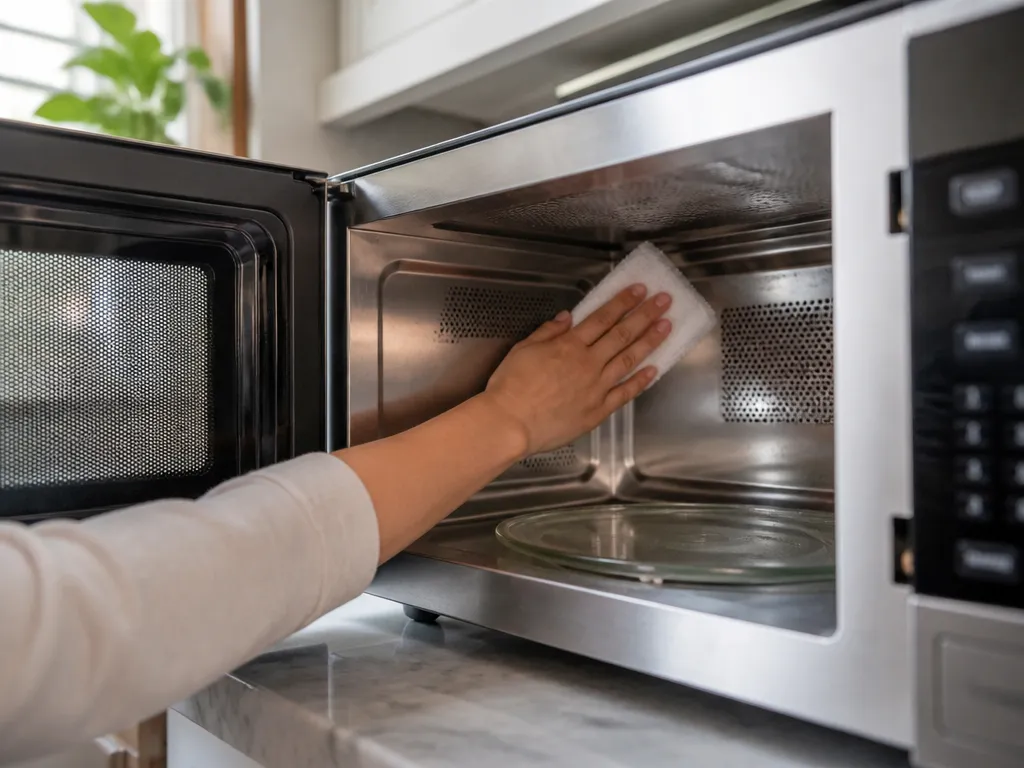
How To Clean A Microwave Without Harsh Chemicals
Wipe-down microwave messes get harder when you rely on “strong” cleaners that smell, sting, or leave residue. You can clean a typical microwave with water, vinegar, lemon, and baking soda while still removing grease film, stuck-on splatters, and lingering odors. Steam loosens the mess; a baking soda paste handles the spots that remain.
Use a microwave-safe bowl, heat in short bursts, and wipe with a soft cloth. For odors, use lemon steam or leave baking soda inside overnight.
Key Takeaways
- Start with the microwave cool and powered off. Unplug it or switch off the breaker before wiping inside.
- Use steam for grease. Water and vinegar loosen splatter without harsh fumes.
- Spot-treat stains gently. Baking soda paste lifts stuck-on food with minimal risk to glass.
- Clean edges and vents carefully. Grease collects around the door frame, vent area, and corners.
- Deodorize after cleaning. Lemon steam or baking soda handles odors that remain.
- Skip abrasive tools. Scouring pads and harsh cleaners can scratch or damage the finish.
How To Clean A Microwave Without Harsh Chemicals
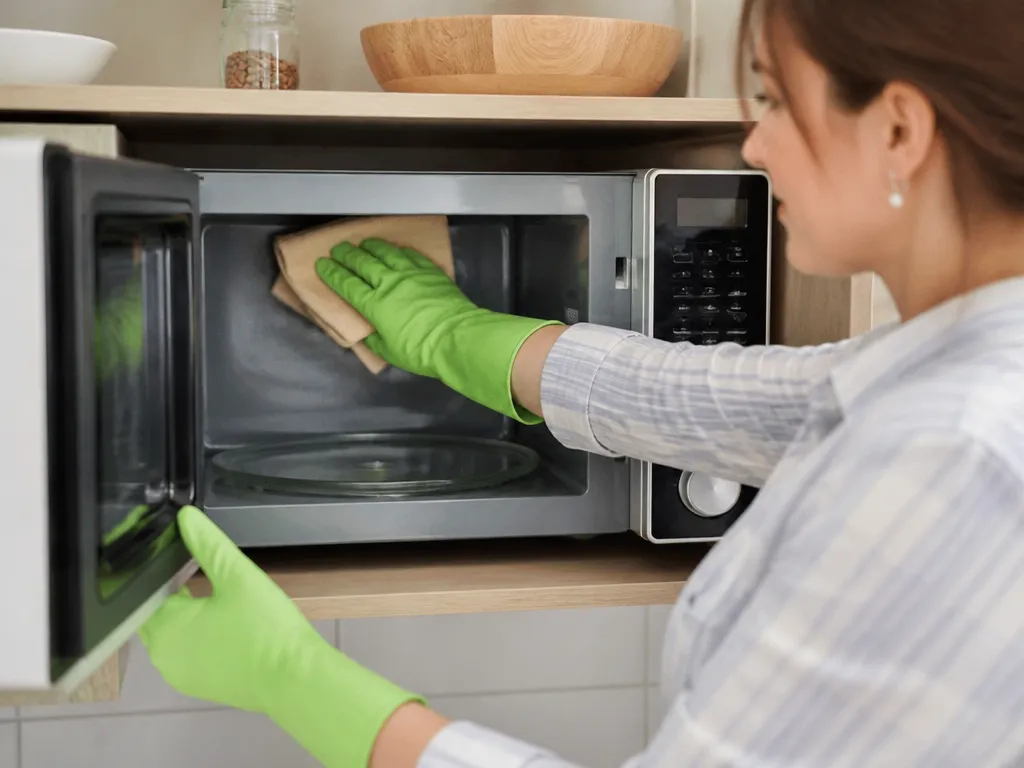
A clean microwave starts with loosening baked-on food, then wiping it away while the residue is still hydrated. Steam from plain water or water mixed with vinegar softens grease and food film without aggressive fumes. It also reduces the chance of chemical residue being heated the next time you cook.
Gather a microwave-safe bowl, water, white vinegar, baking soda, a soft sponge or microfiber cloth, and paper towels. If heavy splatter covers the ceiling or back wall, use a silicone spatula or plastic scraper to lift softened residue without scratching the surface. Heat and gentle abrasion do most of the work.
The Safest Microwave Cleaning Solutions
Water, white vinegar, baking soda, and lemon cover most microwave cleaning jobs without strong fumes or residue that can transfer to food.
- Plain water steam: Use it for light splatter or a mild smell.
- Water and white vinegar steam: Use it for greasy spots and cloudy film that resists a normal wipe.
- Baking soda paste: Mix baking soda with a little water for stubborn stains.
- Lemon steam: Use it for lingering smells from fish, popcorn, or reheated leftovers.
Use vinegar and baking soda separately. Both work well, but combining them creates fizz without improving their cleaning power, and the reaction makes the paste harder to apply where you need it.
Remove Microwave Grease With Water And Vinegar Steam
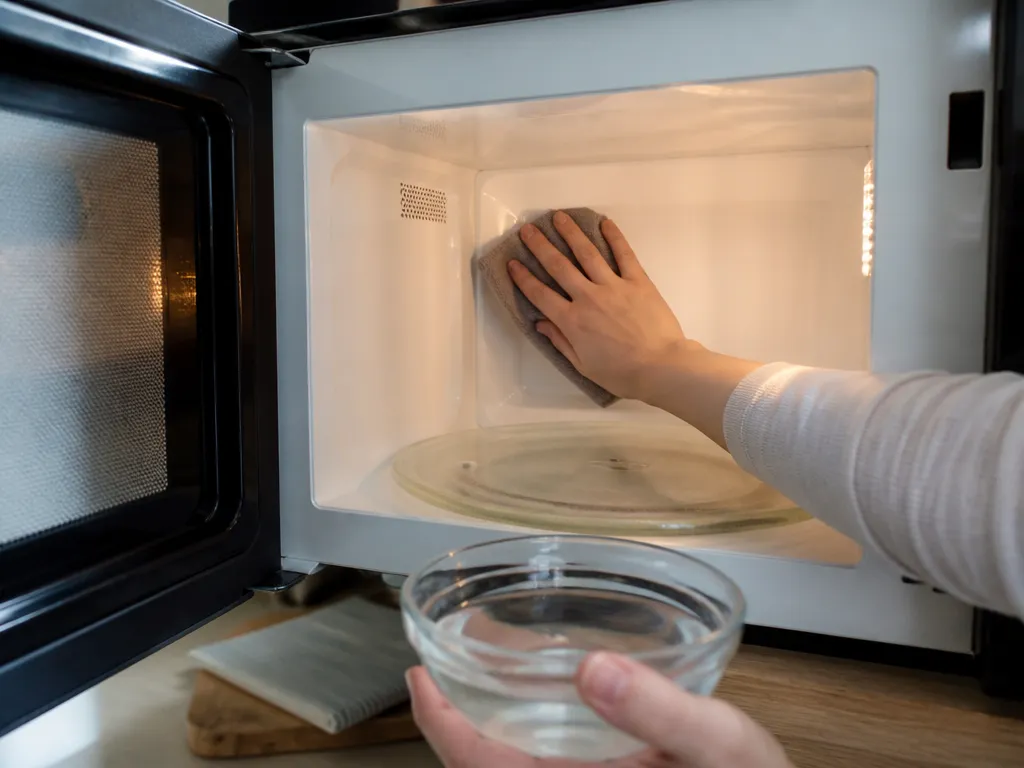
Steam is the best first step because it turns stuck-on grease into residue you can wipe away. Add water and white vinegar to a microwave-safe bowl, heat it until the interior becomes steamy, and leave the door closed briefly so the condensation can soften the film.
- Place the bowl inside the microwave, then heat it according to the method below.
- Remove the turntable if it is removable, so you can clean the base underneath.
- Make the steam solution in a microwave-safe bowl with water and white vinegar.
- Heat in short bursts until the bowl steams and condensation forms on the interior walls.
- Wait 2-5 minutes with the door closed while the grease loosens.
- Power off and wipe thoroughly with a damp microfiber cloth, then dry with a clean cloth.
Sticky specks from saucy meals usually lift in one or two passes after steaming. If greasy streaks remain, repeat the steam step once before using baking soda.
Remove Tough Microwave Spills Without Scratching Glass
Dry food can feel welded to the glass, but aggressive scraping is rarely necessary. Rehydrate the spill with steam, then use a baking soda paste to soften what remains. Scraping dry food or grinding it with an abrasive pad can leave micro-scratches.
- Steam first. Use plain water or water-and-vinegar steam to loosen the spill.
- Apply baking soda paste. Mix baking soda with a little water, spread a thin layer over the stain, and let it sit for a few minutes.
- Wipe gently. Use a soft cloth, sponge, or non-scratch sponge instead of pressing hard.
- Remove the residue. Wipe with a damp cloth, then dry the surface.
Let the paste sit longer if the crust remains rather than increasing pressure. If you need to lift the food, use a plastic scraper held flat against the softened surface. Avoid metal tools and rough scouring pads.
Fixes For Common Cleaning Problems
- The spot smears instead of lifting: The residue is still oily. Steam it again before wiping.
- The paste dries hard: Add a few drops of water, soften the paste, and wipe it away.
- The glass looks cloudy: Leftover residue is probably causing the haze. Make a final damp wipe, then dry with a clean cloth.
Clean The Turntable, Ring, And Crusty Edges
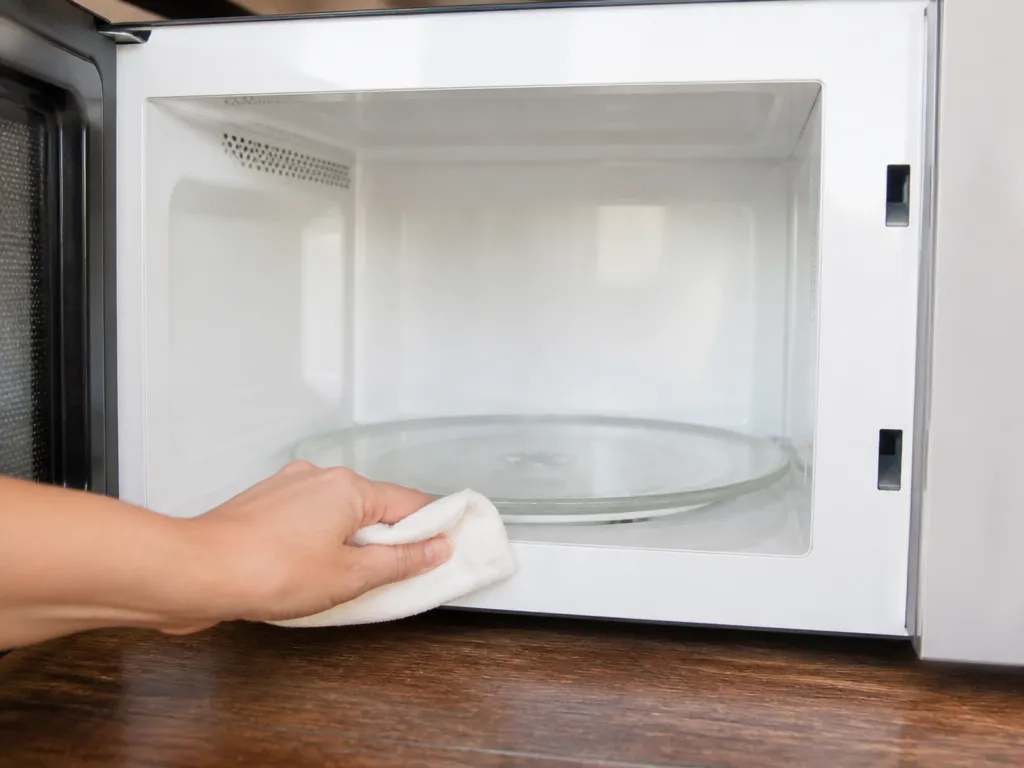
The turntable and support ring trap grease in places a quick interior wipe misses. The dirty ring can transfer residue back onto the microwave base and contribute to recurring smells. Clean the base as well as the removable parts.
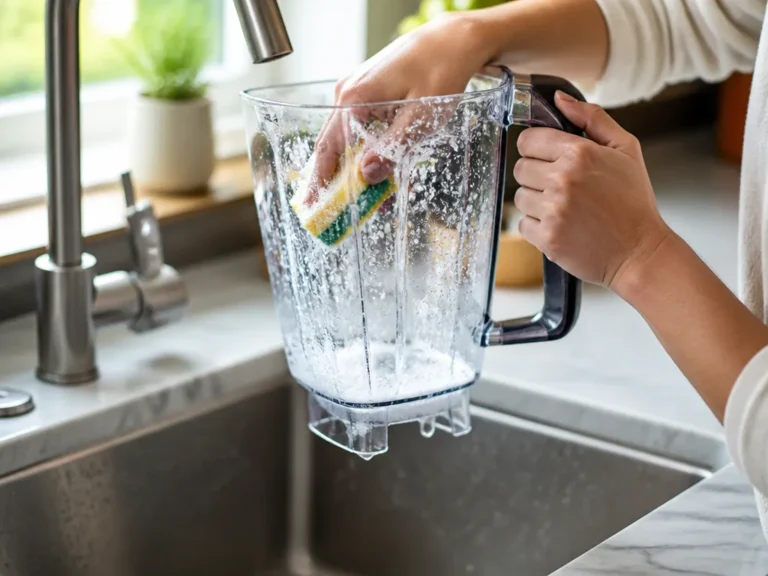
- Turntable: Wash it with warm water and dish soap, rinse, and dry completely before reinstalling it.
- Ring: Remove it carefully, wipe it with a damp cloth, and dry it. If your manual says it is dishwasher-safe, you can use the dishwasher, but dry it thoroughly afterward.
- Crusty edges: Wipe visible buildup with a damp cloth, then steam the microwave again to loosen the hardened line where the door meets the cavity.
Repeated splatter and heat turn residue along the edges into a grease seal that traps future messes. After steaming, wrap a soft cloth around your finger to reach corners. Use a plastic scraper only on softened areas that still resist wiping.
When Popcorn Smell Keeps Coming Back
Popcorn odors can linger after quick wipes because food film and grease trap smells. Clean those surfaces thoroughly before using one of the deodorizing methods below.
Deodorize Microwave Odors With Lemon Or Baking Soda
Food film and grease trap odors, so clean the surfaces before deodorizing. Otherwise, lemon or baking soda may mask the smell temporarily while the residue keeps producing it whenever the microwave heats up.
Lemon Steam Method
Add water and lemon or lemon slices to a microwave-safe bowl. Heat it for a short time, then leave it inside briefly before wiping away the condensation. The steam freshens the interior and loosens residue that the first cleaning pass missed.
Baking Soda Method
For persistent smells, place a small bowl of baking soda inside the dry microwave, close the door, and leave it overnight. Baking soda absorbs odors without requiring more heat.
Make sure the microwave is dry before adding the baking soda. Moisture can make it clump and reduce its effectiveness.
Keep Your Microwave Clean With Simple Habits
You can avoid frequent deep cleaning by stopping splatter from hardening in the first place. Greasy vapor settles on the walls and bakes onto the surface during repeated heating cycles, so small habits make the next cleanup easier.
- Cover wet food: Use a microwave-safe lid or cover to reduce splashes.
- Wipe after messy cooking: Clean the interior while the residue is warm instead of waiting for it to dry.
- Use shorter reheating times: Overheating boils food and increases splatter.
- Wipe fresh spills promptly: Remove softened residue before it hardens.
- Clean the ring and base regularly: These easy-to-miss areas often cause recurring smells.
For a one-minute routine, wipe visible splatter with warm water on a cloth. If anything feels sticky, run a quick plain-water steam pass and wipe again. That routine keeps the microwave from needing harsh chemical shortcuts.
FAQ
Is vinegar safe to use inside a microwave?
Yes. Vinegar is safe when diluted with water for steam cleaning and wiped out thoroughly afterward. Do not spray undiluted vinegar directly into vents. Finish with a damp wipe and a dry cloth so residue is not heated the next time you use the microwave.
How often should I clean a microwave without harsh chemicals?
Aim for a light wipe after messy cooking and a deeper steam clean about once every 1 to 4 weeks, depending on how often you use the microwave. If you frequently reheat saucy food or notice strong odors, clean the interior and ring more often.
What’s the fastest way to clean a microwave full of splatters?
Use the water-and-vinegar steam method above, then wipe the surfaces. Apply baking soda paste to any spots that remain.
Can baking soda scratch a microwave?
Baking soda paste is usually safe for glass when you apply it gently with a soft cloth or non-scratch sponge. Avoid abrasive scrubbing pads, and do not press hard, especially on textured surfaces or older plastic trim.
What should you do if the microwave still smells after cleaning?
Clean the microwave first, then deodorize it with lemon steam or a bowl of baking soda left inside overnight. If the smell persists, repeat the surface-cleaning step before deodorizing again.


One Comment