How To Get Rid Of Mold Under Kitchen Sink: How To Get Rid
Mold under a kitchen sink usually develops when moisture stays trapped behind pipes, cabinet walls, or the toe-kick area. Remove the growth, dry the cabinet completely, and fix the leak or condensation source so it does not return.
Begin by stopping any active water, emptying and drying the cabinet, scrubbing visible mold, treating remaining staining, and keeping air moving until the area stays dry – usually overnight.
Key Takeaways
- Fix the cause. Without repairing the leak or condensation, mold can return within weeks.
- Contain spores first. Cover the work area and keep the cabinet closed while you clean.
- Match the cleaner to the surface. Non-porous materials tolerate stronger cleaning agents than wood or drywall.
- Dry everything completely. Fans and dehumidification help prevent regrowth.
- Treat porous materials carefully. Saturated wood or drywall may need replacement rather than cleaning.
- Know when to call for help. Widespread growth, hidden moisture, or recurring leaks may require professional remediation.
How to Get Rid of Mold Under a Kitchen Sink
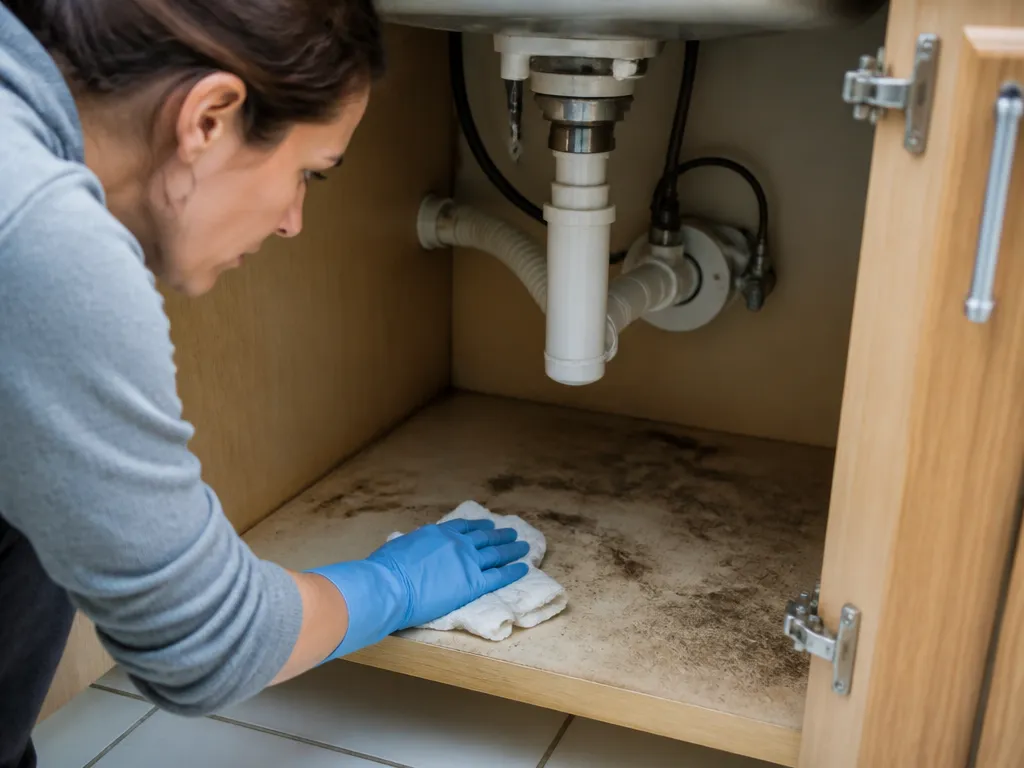
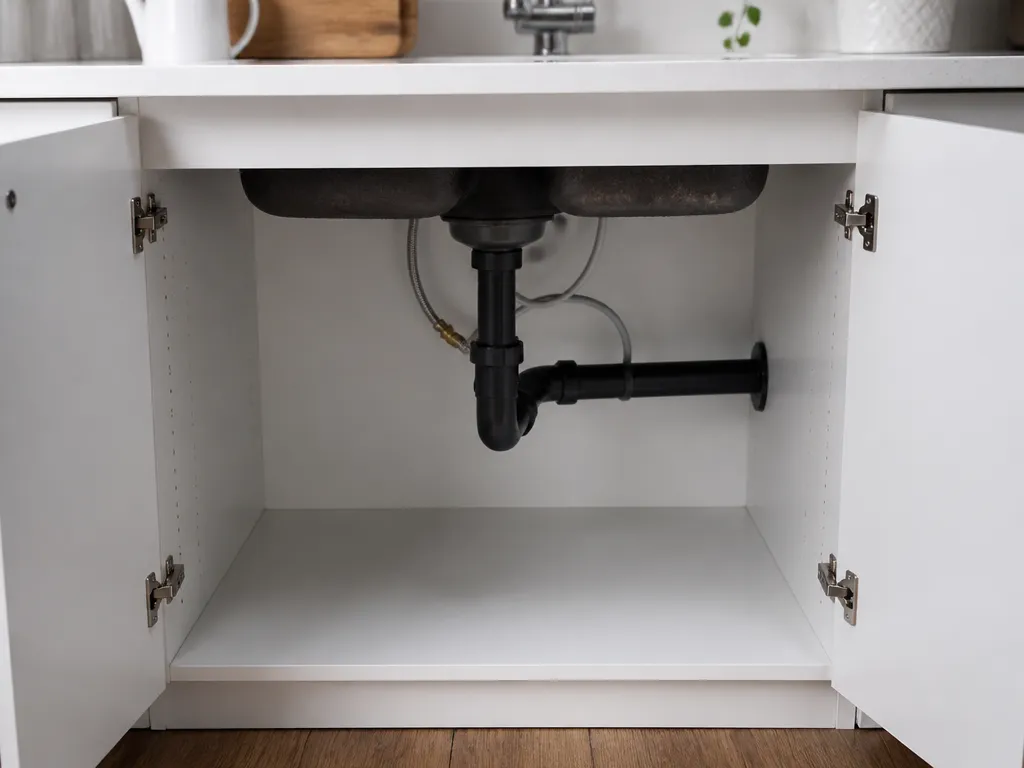
Empty the cabinet, inspect the plumbing and surrounding walls, and confirm that the leak is no longer active before you start scrubbing.
Gather your supplies first so you do not keep opening the cabinet while spores are airborne. Set up a clear work area, prepare a way to seal contaminated waste, and arrange ventilation. If the cabinet is cramped or you have asthma, run a nearby bathroom fan and crack a window if possible.
Why Mold Grows Under Kitchen Sinks
Sink cabinets are warm, poorly ventilated, and often humid after a leak or plumbing condensation. Common sources include slow drips from supply lines, a wet drain trap, a leaking dishwasher line, or a sink drain that is not sealed tightly.
Condensation is another common cause, especially in colder climates or around older plumbing. If the cabinet feels damp after the dishwasher runs or after hot water use, cold pipes may be sweating. They can keep the cabinet humid even when you never see a puddle.
Small hidden moisture points can spread mold beyond the visible area. A hairline leak behind the kick plate, a failed trap gasket, or water trapped in cabinet seams can feed growth in drywall backing, plywood, or the underside of the countertop lip.
Protect Yourself and Contain Mold Spores
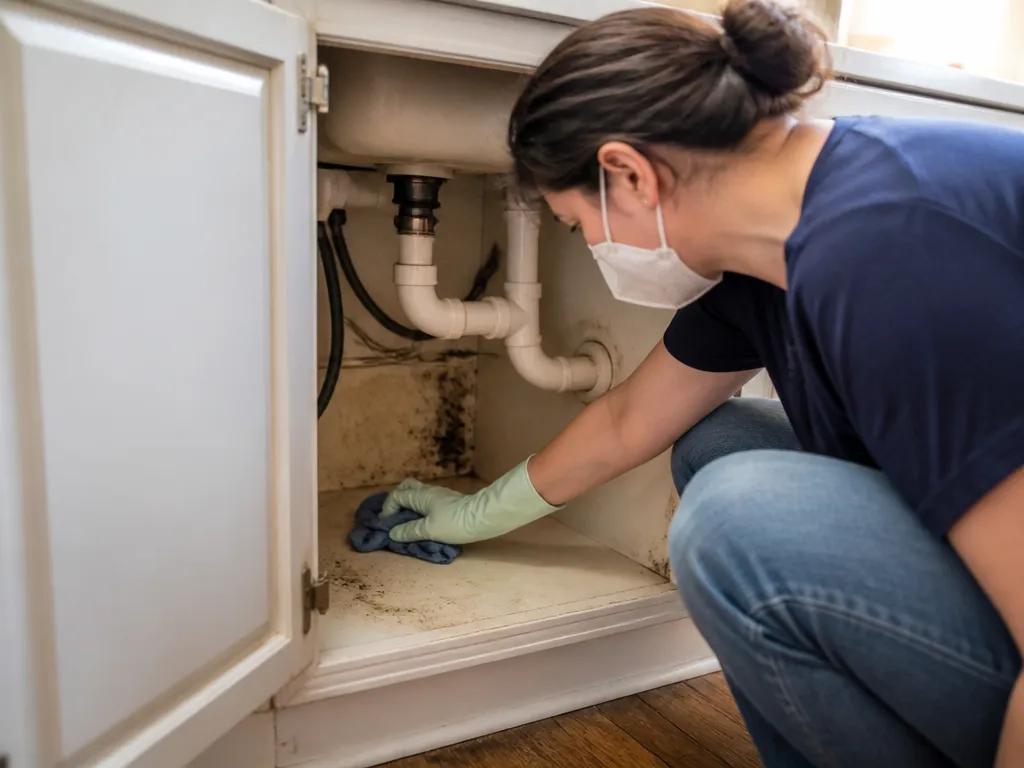
Wear gloves that cover your wrists, eye protection, and a particulate-rated mask such as an N95. Heavy growth or personal sensitivity may call for a higher-level respirator and more extensive containment.
Keep the cabinet closed as much as possible and prevent spores from drifting through the kitchen. Lay plastic sheeting or a disposable drop cloth under and inside the cabinet, then tape it to nearby surfaces to create a barrier. If possible, place a box fan with a furnace filter or use a bathroom-style exhaust fan near the cabinet so air moves out rather than around the kitchen.
Seal moldy paper towels, rags, and disposable liners in a plastic bag before taking them out of the work area. When cleanup is finished, wipe the nearby floor and cabinet exterior, wash your hands, and change into clean clothes.
Clean Mold From Cabinet Surfaces
Remove everything from the cabinet and check for active moisture before cleaning. If you find standing water, soak it up with towels, run fans, and confirm that the leak has stopped. Scrubbing while water is still entering the cabinet only spreads the problem.
Painted metal, laminate, and many sealed plastics are non-porous and can usually be scrubbed thoroughly with a mold cleaner or detergent solution, followed by a disinfecting step. Use a stiff brush in corners and seams, and keep wiping until the cloth comes up clean. Remaining stains are common, but the surface should be free of organic residue and completely dry before you put items back.
Use this cleaning sequence for most under-sink cabinet walls and shelves:
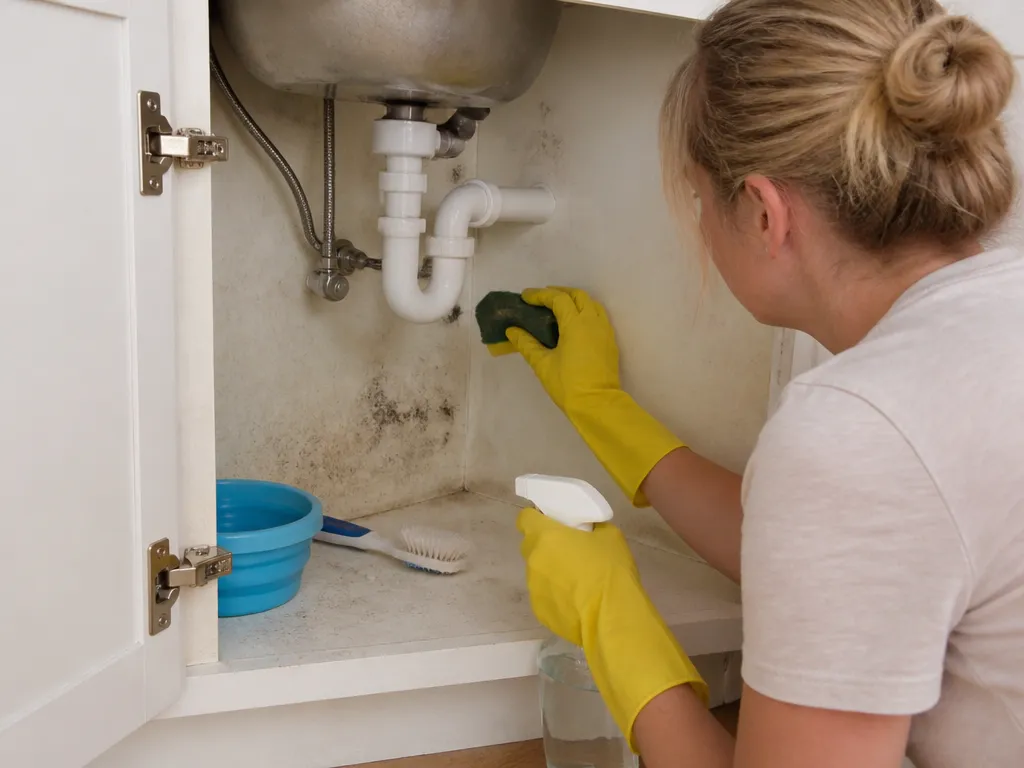
- Remove all items. Take out bottles, paper goods, cleaning supplies, and anything made of cardboard.
- Dry the cabinet. Use towels, then run a fan for 1-2 hours before scrubbing.
- Scrub with detergent. Use hot water and dish soap to loosen grime and surface mold.
- Treat remaining growth. Apply a mold-rated cleaner and let it sit for the time stated on the label.
- Scrub and wipe again. Repeat treatment where growth remains, then wipe the surface dry.
- Ventilate overnight. Keep air moving until the cabinet is fully dry.
Treat “wipe dry” as mandatory. A slightly damp cabinet can grow mold again quickly, even after thorough scrubbing.
Remove Mold From Wood, Drywall, and Caulk
Porous materials absorb water, allowing mold to spread below the surface. Some wood can be cleaned and salvaged when it remains firm and is not saturated, but drywall or extensively damaged wood often needs to be removed.
For wood:
- If the wood is sealed and has only light surface staining, scrub it, dry it thoroughly, and monitor it for recurrence.
- If it is swollen, soft, or persistently damp-smelling, cleaning is unlikely to be enough. Cutting out the affected section is often the better fix.
For drywall:
- If mold is on the exposed face and the drywall backing is damp, replacement is usually necessary.
- Mold on drywall often points to moisture behind the panel. Cleaning the front without drying the cavity rarely solves the problem.
For caulk:
- Mold inside a caulk line usually means the caulk itself is contaminated. Remove it, clean the surface underneath, and apply new moisture-resistant caulk.
- Spraying over moldy caulk leaves contaminated material behind and can allow new growth.
Remove porous materials carefully to limit spore spread. Cut out affected sections, bag the debris immediately, and wipe nearby framing with a cleaner suitable for that surface. Dry the cavity completely before installing replacement material.
Salvage or Replace Mold-Damaged Material?
- Salvage if it is dry and firm. Stains on a hard, dry surface may respond to scrubbing and thorough drying.
- Replace if it stays damp. Soft, crumbly, swollen, or repeatedly wet material usually needs to be removed.
Fix Leaks and Stop Condensation
Inspect the cabinet while the sink is running and again after it shuts off. Use a flashlight to check supply lines, drain trap connections, rubber gaskets, and the cabinet floor.
Check the dishwasher line and drain connection if they run through the cabinet. Inspect the fittings and braided hose connections. Moisture that appears mainly after dishwasher use points toward a supply line, drain hose, or connection.
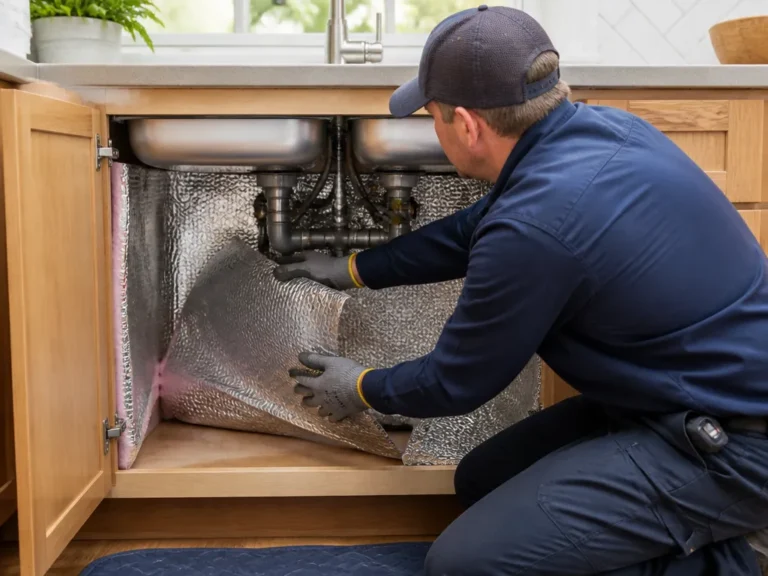
If you find no leak, condensation may be the cause. Keep cold pipes from sweating and give the cabinet enough airflow to dry:
- Insulate cold pipes with pipe foam insulation for supply lines, if appropriate.
- Improve cabinet ventilation so the space can dry instead of remaining airtight.
- Run a small fan or dehumidifier briefly after dishwashing periods.
Inspect the sink drain assembly as well. A worn or poorly seated gasket can create tiny drips that are easy to miss. Wipe the plumbing dry, run the water, and check again after 15-30 minutes.
When to Call a Mold Remediation Professional
Call a professional if the mold is widespread, keeps returning, or extends into areas you cannot access. Growth larger than a small patch, suspected mold behind walls, or mold under flooring requires more containment than a typical cabinet cleanup.
Get help when you cannot locate recurring moisture. Mold may be hiding behind drywall backing or inside a wall cavity, and repeated surface cleanings will not solve the problem if water continues to enter.
Health concerns also justify professional help. If someone in the home has asthma, is immunocompromised, or is highly sensitive to mold, reduce exposure by bringing in certified help when growth is heavy or difficult to contain.
You should also call a professional if an active leak involves major plumbing components or you are not confident making the repair. The goal is a dry cabinet, and stopping a DIY cleanup before it becomes a repeating cycle is sometimes the best decision.
FAQ
How do I get rid of mold under a kitchen sink without using bleach?
Start with a detergent wash, then use a mold-rated cleaner that is appropriate for the surface, such as laminate, sealed wood, or metal. For porous materials, scrub as needed, dry them completely, and remove damaged drywall or soft wood.
How long does it take to remove mold from a kitchen sink cabinet?
Limited surface growth may take 2-6 hours to clean, followed by several hours to overnight drying once the moisture source is fixed. Replacing porous or damaged materials can extend the job to 1-3 days, depending on how wet the cabinet was. If the area is still damp after overnight drying, do not put everything back.
Is mold under the kitchen sink dangerous?
Minor growth from a small leak is usually manageable, but mold can irritate the respiratory system. Minimize exposure during cleanup, especially if the growth is heavy or someone in the home has asthma or another sensitivity. Persistent musty odor or an unknown moisture source is a reason to consider professional remediation.
What is the fastest way to stop mold from coming back?
Repair leaks at supply lines and drain connections, insulate sweating pipes when appropriate, and run a fan to keep air moving. Wipe every surface completely dry and leave the cabinet ventilated overnight.
Can I clean a small mold patch and ignore the leak?
No. A small patch may be growing because of a slow or hidden leak, and leftover moisture can restart growth within weeks. Dry the cabinet, run water, check for drips, and return items only after the area remains dry.
Inspect the cabinet again 24 hours later. If it is still damp or the mold returns, stop cleaning and troubleshoot the leak or condensation source.