How To Use A Vegetable Chopper
A vegetable chopper can cut dicing time from “knife-and-bored” to a few minutes, but consistent results depend on proper setup and steady pressure. Use the right blade, cut produce to fit the chute or hopper, and chop in short, controlled cycles. These habits produce safer, faster, cleaner cuts with pull-chop, manual lever, and bowl-style choppers.
Dry, firm produce works best. The piece size, batch size, blade direction, and chopping rhythm determine the texture. If pieces come out uneven, you are usually underfilling, overloading, misaligning the produce, or chopping too slowly.
Key Takeaways
- Choose the right blade. Use the blade type your chopper came with for dicing, mincing, or slicing if it includes interchangeable discs.
- Prep to reduce jams. Cut produce into chunks sized for the hopper or chute opening.
- Keep it steady. Use even pressure and avoid forcing the lid or pusher.
- Clean after each use. Wash blades right away, especially after chopping onions or leafy greens.
- Fix uneven results quickly. Use smaller batches, redistribute pieces, and chop in short bursts.
- Protect your hands. Keep fingers away from the feed path and use the included pusher or handle every time.
Set Up Your Vegetable Chopper Safely
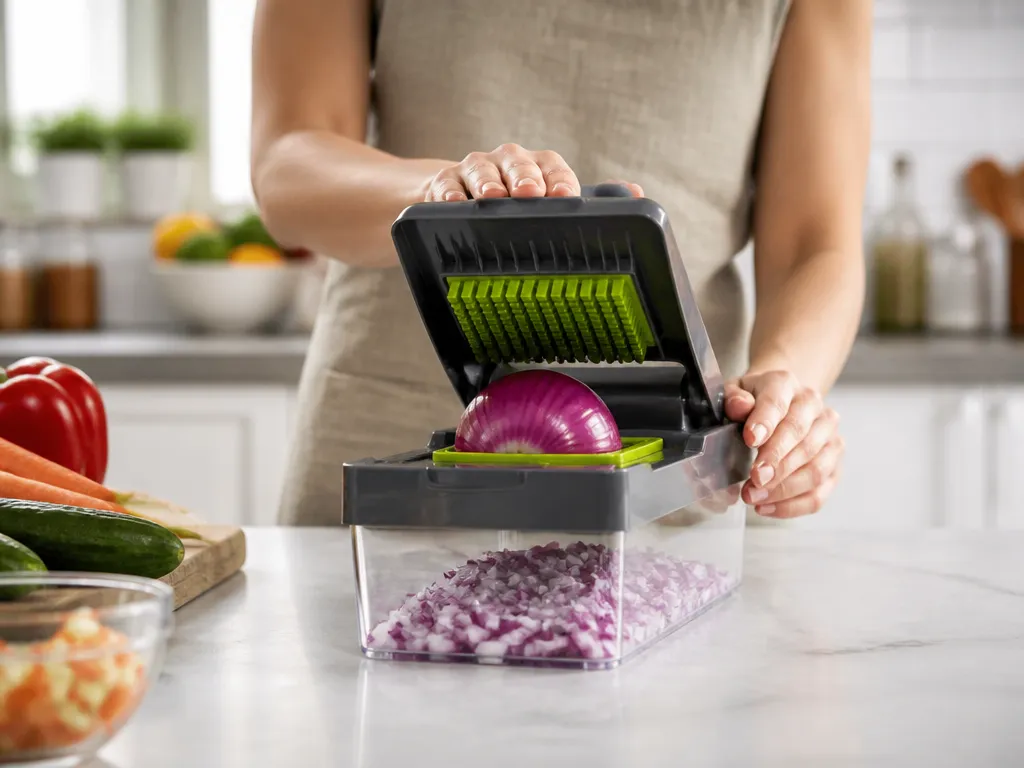
A vegetable chopper produces consistent pieces when the hopper controls the cut size and the blade moves freely through the food. Skipping the initial chunking step or overloading the bowl leads to uneven dice, compacted food, and stuck produce.
Set the chopper on a stable counter or table. Assemble the bowl, lid, and blade, then lock each part into place before adding food. Keep a separate container nearby for the chopped vegetables. If the chopper is dishwasher-safe, check the manual before placing any part in the dishwasher. Wash blades and other sharp components by hand immediately when possible.
If you are unfamiliar with the mechanism, do a dry run with no food. Assemble the bowl and lid, confirm that the blade spins or stays in place as designed, and practice closing and opening the unit without touching the blade edge.
What You Need on Your Counter
- The chopper base and bowl, with the blade installed correctly
- A lid or pusher component, depending on the model
- A stable surface that does not wobble
- Produce that has been washed and patted dry
- A container for the chopped food
Safety Setup in 30 Seconds
- Clear the counter so your hands stay in a consistent position.
- Keep the blade area covered when moving the unit.
- Use the included pusher for food that enters through a chute or feed tube.
Match Your Technique to the Chopper Type
Most vegetable choppers use the same basic process: load produce into a hopper or bowl, move the blade through it, and repeat until the pieces reach the desired texture. The mechanism determines how quickly and firmly you should work.
Manual lever and pull-chop models usually work best with short, controlled strokes. Slowly riding the lever can compress the food before releasing it unevenly, leaving large chunks beside small pieces. With chute-style choppers, the most important factor is cutting the produce to fit the opening.
Blade direction and installation also affect the result. Many choppers include a slicing disc and a dicing or mincing blade, or they use interchangeable blades. A blade mounted backward or left loose may still move, but it can churn and bruise produce instead of making clean cuts.
Common Chopper Types
- Pull-chop models, often with a crank or pull handle. Use quick, consistent pulls.
- Manual lever models, including press-down or squeeze levers. Use repeated lever cycles rather than slow, sustained pressure.
- Chopper bowls with a blade and lid. Use for batches, stopping to stir between chopping cycles.
- Chute-feed slicers and dicers, sometimes with discs. Cut pieces to fit the chute before feeding them through.
Control Texture With Rhythm and Batch Size
Use smaller batches and more cycles for smaller, more even pieces. For rougher dice, fill the hopper within its safe limit and use fewer cycles. The ideal combination depends on the produce, but short, repeatable cycles make the result easier to control.

Helpful pick
Mueller The Real Original Pro Vegetable Chopper & Mandoline Slicer, 10-in-1
This 10-in-1 tool offers versatile blade options, allowing you to match your specific chopping technique to the texture requirements of your favorite recipes.
Step-by-Step Vegetable Chopper Instructions
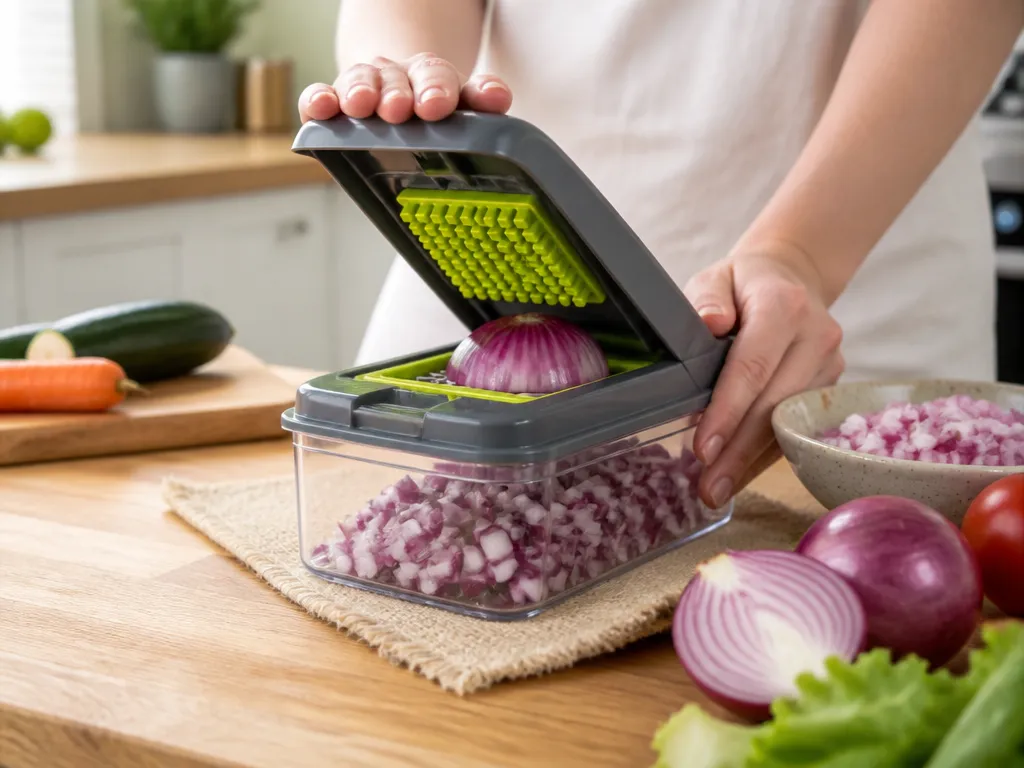
Start with clean, dry produce and follow the same sequence each time.
- Install the blade correctly. Seat it on the spindle, lock it into place, and confirm that it sits flat in the bowl or mount.
- Cut vegetables into chute-friendly chunks. Cut carrots, peppers, onions, cucumbers, or zucchini into pieces that fit the feed opening without forcing them.
- Add a safe amount. Load enough food for the blade to work efficiently, but leave room for pieces to move.
- Close the lid and prepare the pusher. Keep your hands away from the blade path.
- Chop in short, controlled cycles. Use quick pulls or repeated lever cycles, stopping when the pieces look right.
- Check, redistribute, and repeat. Stir or shake gently if the design allows, then chop for a few more cycles if necessary.
Dice Onions With Less Clumping
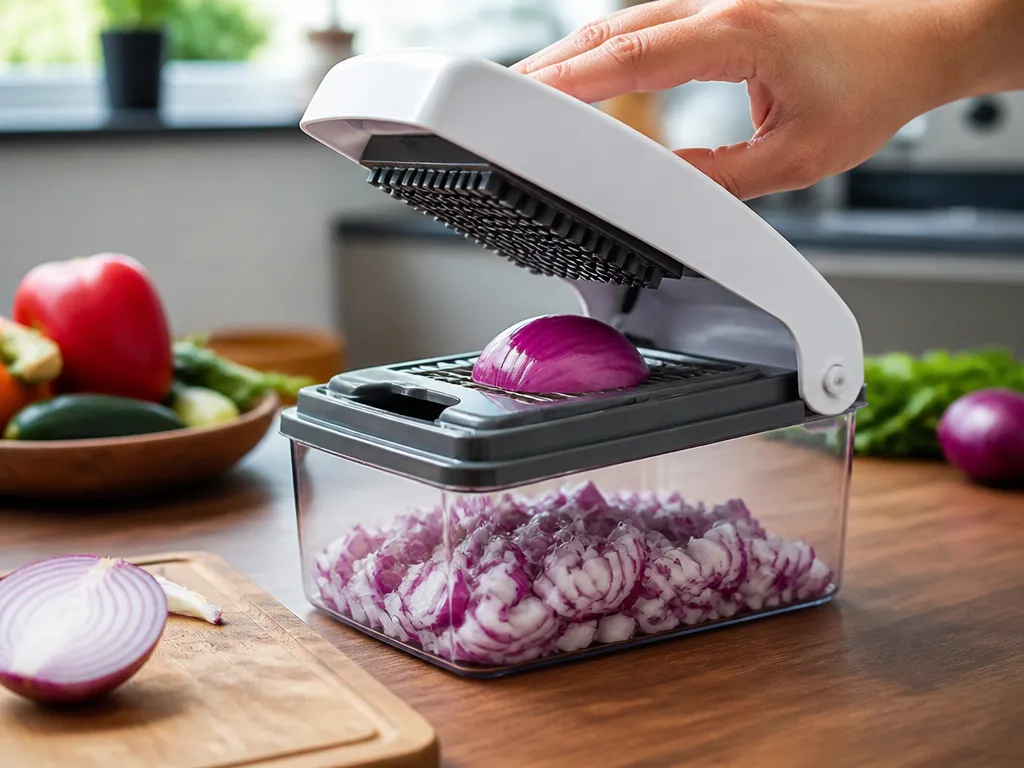
Cut the onion into 4–8 segments so each piece fits the chute or hopper without bending. Load a small batch, chop in short bursts, and check the bowl after 5–8 cycles. If large pieces remain, redistribute the contents and continue for a few more cycles.
Onions are slippery, and their watery layers can clump together. Pat the onion dry after washing, and avoid overfilling because the layers tend to stack.
Slice Cucumbers for Salads
Choose firm cucumbers and cut them into lengths that match the chute height. If your model uses a pusher, apply even pressure so the slices stay consistent. If one side produces thicker slices, reduce the batch size and align the pieces before chopping.
Chop Carrots for Stir-Fry
Peel the carrots if you prefer, then cut them into short, finger-length chunks. That size helps the blade grab the pieces evenly. If the output is inconsistent, run fewer cycles per batch so the center does not compact, then repeat with a second, smaller batch.
💡 The OXO Good Grips chopper features an ergonomic design that makes following your step-by-step prep instructions comfortable and highly efficient for every meal. OXO Good Grips Vegetable Chopper with Easy-Grip Handle for Meal Prep.
Control Piece Size, Batch Size, and Rhythm
Piece size, batch size, and chopping rhythm have the greatest effect on texture. Adjust one of these variables when the result is wrong, and you can usually correct the problem without changing the entire process.
Watch for compacting. Some choppers compress food as the lid comes down or the blade cycles. A paste-like center with chunkier pieces around the edges usually means the batch is too large or has been chopped too long.
Alignment matters most with chute slicers and dicers. Skewed pieces can produce angled cuts or slices that are thicker on one side. Use the pusher to keep food straight instead of trying to correct it while the blade is moving.
Technique
- Stop at the desired texture. Too many cycles can turn dice into mince.
Chop Leafy Greens Without Making Mush
Leafy greens are soft and water-rich, so they need smaller batches, thorough drying, and fewer cycles. Use a blade intended for mincing if your chopper includes one. Do not push leafy bundles forcefully into the feed path.
Build a Faster, Cleaner Chopping Workflow
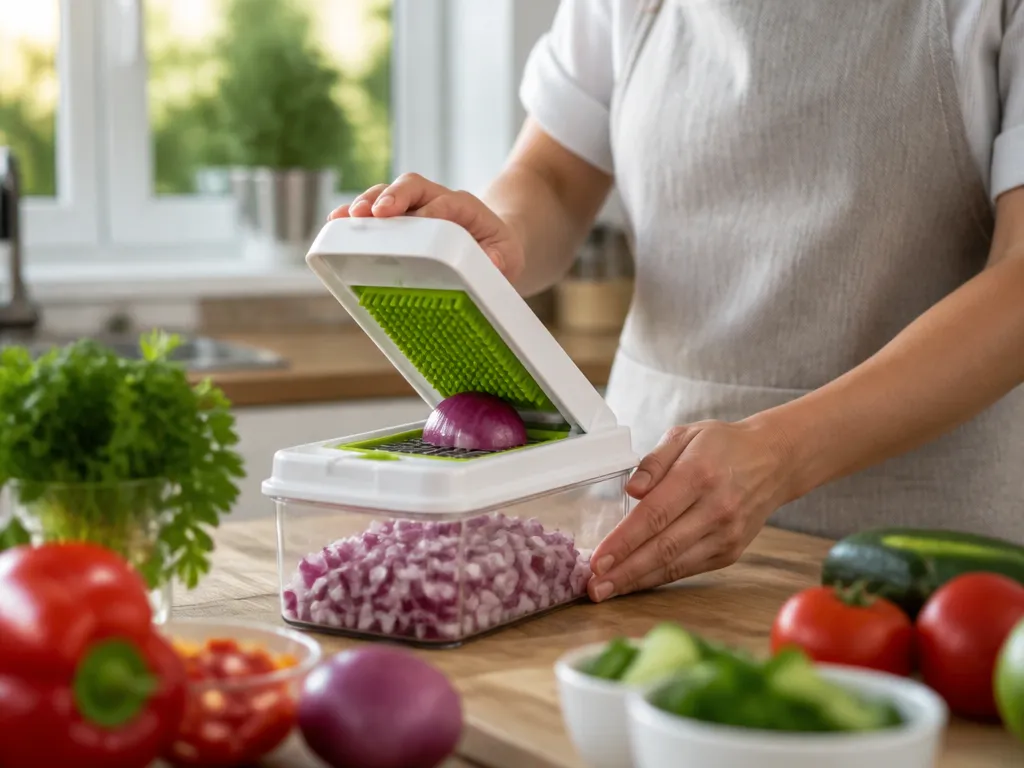
Treat the chopper as a tool that needs the right load, not as a dump-and-grind machine. Overloading produces jams and uneven results, while a planned sequence reduces cleanup and keeps softer ingredients from getting bruised.
Chop ingredients in an order that fits the recipe. Onions and peppers can go first, followed by carrots, with herbs added at the end to preserve their texture and reduce browning. Wash the blade promptly after use. Food left on the blade becomes harder to remove and can affect the next batch.
A Practical Workflow
- Prepare recipe bowls first. Use separate bowls for different dice sizes when the recipe calls for them.
- Chop firm vegetables first. Carrots and cucumbers are easier to process before softer produce.
- Save herbs for last. They bruise and become wet when chopped too early.
- Rinse and wash promptly. Do not let chopped onion or citrus sit on the blades.
Cleaning Best Practices
- Handle blades carefully. Treat them like a chef’s knife.
- Rinse immediately after use. Sticky residue becomes harder to remove as it dries.
- Dry every part fully before storage. Moisture can cause odors or corrosion on metal components.

Helpful pick
Fullstar Pro XL Vegetable Chopper & Mandoline Slicer w Pull-Out Catch Tray
With its pull-out catch tray, this XL chopper helps you build a faster, cleaner workflow by minimizing mess and keeping your workspace organized.
Avoid Jams, Uneven Cuts, and Blade Stress
Most chopper problems begin with incorrect loading. Overfilling, forcing oversized pieces, and skipping the sizing step lead to jams, uneven cuts, and extra strain on the blade.
Wet vegetables can also clump near the blade path. Pat produce dry after washing, especially when working with slippery onions or soft vegetables. Never push food beyond the point intended for the pusher. The design limits how far your hands should reach, and forcing food deeper can press it against the blade mount or misalign the lid.
The Biggest Failure Modes
- Overfilling the hopper. Food compacts and develops an inconsistent texture.
- Forcing oversized pieces. Produce jams and puts stress on the blade.
- Chopping too slowly. Compression builds and can turn dice into mush.
- Ignoring blade installation. A slightly incorrect mount produces ragged pieces.
- Using one method for every ingredient. Leafy greens need a different rhythm and batch size from firm vegetables.
💡 The Fullstar Pro Original includes specialized blades that help you avoid jams and ensure smooth, clean cuts every time you use it. Fullstar Pro Original Vegetable Chopper & Spiralizer, Kitchen Prep Tool.
Improve Consistency With These Simple Adjustments
When the pieces are similar, batches behave more predictably, requiring fewer cycles and less redistribution.
Use a stop-and-check cadence rather than running the chopper until the food looks finished. Check after a small number of cycles. Stop if the pieces are ready; continue with a brief burst if they are still too large.
Match the blade to the desired texture. Use a slicing disc for consistent rounds or matchsticks, and use a mincing or dicing blade for smaller pieces in sauces and quick sautés.
Quality Upgrades You Can Apply Today
- Use the right blade for the texture. Slicing discs create even cuts.
- Redistribute for uniformity. This is especially useful with bowl-style choppers.
- Dry soft produce well. Less moisture means less clumping and cleaner cuts.
Quick Troubleshooting Guide
If you see:
- Jams: Reduce the batch size, cut smaller chunks, and avoid forcing the lid.
- Large chunks mixed with tiny bits: Use shorter bursts, redistribute the food, and continue chopping.
- Paste or mush: Use fewer cycles per batch and dry soft vegetables more thoroughly.
- Uneven slice thickness: Align the pieces before feeding them and use smaller batches.

Helpful pick
Mueller Pro-Series All-in-One, 12 Blade Mandoline Slicer for Kitchen
Featuring 12 interchangeable blades, this all-in-one set provides the precision needed to improve consistency and achieve uniform results across every single batch.
FAQ
What can I chop in a vegetable chopper?
Most vegetable choppers handle firm produce such as onions, carrots, cucumbers, peppers, zucchini, and tomatoes if the model allows them. Pre-cut vegetables to fit the feed opening and work in small batches. Leafy greens can also work, but use smaller batches and fewer cycles to keep them from turning into paste.
How long does it take to learn how to use a vegetable chopper?
You can usually get decent results on the first try by using the correct prep size, small batches, and short bursts. A dry run followed by one familiar ingredient, such as an onion, should help you produce consistent pieces within a few attempts.
Is a vegetable chopper faster than using a knife?
For diced vegetables, a chopper is often faster because it repeats the same cutting motion once the pieces fit the hopper. The trade-off is the time needed to pre-cut vegetables into chute-friendly chunks and clean the blades afterward.
How do I stop my vegetable chopper from jamming?
Jams usually come from overloaded batches or oversized pieces. Cut vegetables into smaller, chute-friendly chunks, reduce the amount in each load, and use short cycles. If the design includes a pusher, keep your fingers away from the blade and press only as much as the mechanism requires.
What is a common mistake people make with vegetable choppers?
A common mistake is chopping wet vegetables immediately after washing them. Moisture makes produce clump and stick near the blade path. Pat the vegetables dry and check the texture after a few cycles instead of running the chopper continuously.