
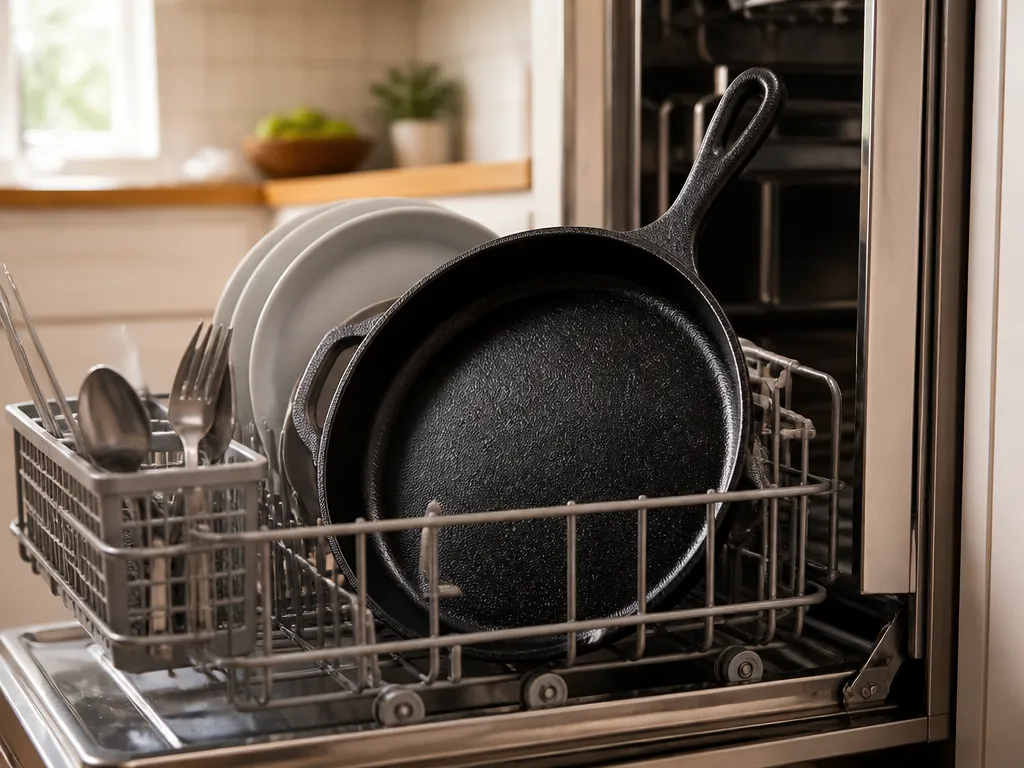
Can Cast Iron Skillet Go In Dishwasher?
Uncoated cast iron skillets should not go in the dishwasher. Dishwasher detergent, heat, and prolonged moisture can strip the seasoning – the dark, oil-based layer that protects the iron and helps food release. Once that layer thins, the exposed metal can rust quickly.
If you ran your skillet through the dishwasher once, you can usually save it. Dry it thoroughly, remove any rust, and re-season it with a thin layer of oil baked onto the surface.
The Short Answer
- Skip the dishwasher. Detergent can strip seasoning, while prolonged moisture promotes rust.
- Hand-wash instead. Use hot water and a brush or scraper, then dry the skillet immediately.
- Drying is critical. Water left in pores, edges, or around the handle can cause rust within hours.
- Enameled cast iron is different. Many porcelain-glazed pieces are dishwasher safe if the manufacturer’s label says so.
- Re-season when needed. Food sticking or dull gray patches usually mean the protective layer needs attention.
- Dry fast after cleaning. Heat the skillet on the stovetop for a minute if you are in a hurry.
Why Uncoated Cast Iron Does Not Belong in the Dishwasher
An uncoated cast iron skillet combines bare iron with a seasoned cooking surface. A dishwasher cycle uses hot water, strong detergent, and a long wet period – exactly the conditions that weaken seasoning.
Seasoning is a protective oil layer that helps food release and keeps moisture away from the iron. When detergent strips that layer and the skillet stays warm and damp, the exposed metal can oxidize quickly, especially around the edges and rough spots.
A skillet may not look ruined after one dishwasher cycle, but it can lose some of its nonstick performance. You may get away with the cycle initially, then notice more sticking and more maintenance afterward.
💡 This ergonomic scrubber safely cleans cast iron without damaging the seasoning layer, avoiding the harsh dishwasher cycle. 316 Upgraded Chainmail Scrubber with Silicone Handle Cast Iron Cleaner for Cast Iron Grill Pan Skillet Wok Bakeware Ergonomic to Hold Easy to Use Dishwasher Safe, Scrubber + Scraper + Towel (Black).
The Main Damage: Lost Seasoning and Rust
Seasoning removal is usually the first problem; rust is the follow-on problem. Dishwashers work well for stainless steel and ceramic cookware that can tolerate repeated detergent exposure. Cast iron needs more control over water, soap, and drying.
The skillet may still be damp or humid when the drying phase ends. Water can remain in the surface texture, around the handle, or along the edges, where rust may begin even if you remove the pan immediately.
Running it through once may not destroy the pan, but it can reduce a seasoning layer built up over years of cooking.
💡 This stainless steel skillet is dishwasher-safe and can help prevent rust and seasoning loss. Tramontina Signature Tri-Ply Clad Stainless Steel 12-Inch Large Frying Pan | Induction-Ready Skillet, Dishwasher-Safe, NSF-Certified.
How to Clean Cast Iron by Hand
Hand-washing keeps the cleaning process simple and controlled. Start with hot water and use a stiff brush or plastic scrubber to lift food bits. Remove what you can without soaking the skillet for a long time.
Use dish soap sparingly. A little soap is fine when you need to cut through stuck-on grease, but heavy scrubbing with lots of detergent every time can gradually thin the seasoning.
Dry the skillet immediately and thoroughly. Wipe it with a towel, then heat it on the stovetop for a minute or two until no moisture remains. Pay special attention to the handle, edges, and crevices.
Once the skillet is fully dry, rub it with a thin layer of cooking oil before storing it. The coating helps maintain the seasoning and keeps the next cooking session from starting with a dry, sticky surface.

Helpful pick
Lodge Pre-Seasoned Cast Iron Deep Skillet, 5 Quart | Cast Iron Deep Skillet with Signature & Assist Handle, for Use in the Oven, on the Stove, Grill or Campfire
A deep cast iron skillet that responds well to hot water and a stiff brush for hand-cleaning.
Why Hand-Washing Saves Maintenance
That cured oil layer is what gives cast iron its “nonstick-ish” cooking surface.
Hand-washing also reduces rust risk without requiring extra repair work. Rust forms when moisture meets exposed iron, so avoiding a hot, detergent-heavy, wet environment removes one of the easiest ways for corrosion to start.
A well-maintained skillet generally releases food better and needs less re-seasoning. Re-seasoning is manageable, but preventing damage is faster than restoring the pan after repeated dishwasher cycles.
What to Do After a Dishwasher Cycle
If you accidentally put cast iron in the dishwasher, inspect it for dull gray patches, sticky areas, or visible rust. You can usually restore the skillet rather than replace it.
First, wash away any remaining residue and dry the pan aggressively. Then apply a thin layer of oil and re-season it. You can use an oven or stovetop, although oven re-seasoning typically rebuilds the coating more evenly.
Small areas of surface rust usually clean up. Scrub the rust away with a brush or pad, wash the skillet, dry it completely, and re-season it to restore the protective layer.
Enameled cast iron is a separate case. Follow the manufacturer’s instructions for the specific skillet instead of assuming every enameled piece has the same rating.
The Safest Routine for Stuck-On Food
Do not soak the skillet overnight; prolonged moisture increases rust risk and makes the seasoning harder to maintain.
For stuck-on food, heat the skillet briefly to loosen the residue, then scrub it away. If food keeps sticking, rebuild the seasoning gradually by cooking with a light oil layer instead of trying to remove the problem with harsh chemicals or excessive detergent.
If dishwasher convenience is essential, choose cookware designed for it. Enameled cast iron with a manufacturer-stated dishwasher-safe rating is the closest alternative.

Helpful pick
Lodge Pre-Seasoned Cast Iron Skillet, PFAS-Free, Made in the USA, 5.5 Inch | Non-Toxic Cast Iron Tamagoyaki Skillet Made in the USA for Japanese Egg Rolls, Omelets & Rolled Eggs
A small pre-seasoned cast iron skillet lets you heat and scrub stuck-on bits without soaking.
What Dishwasher Damage Looks Like
An uncoated skillet used after grilling may come out of the dishwasher looking slightly lighter in color. Eggs may stick more than usual during the next meal. That combination usually indicates thinner seasoning and greater exposure to moisture, even if orange rust has not appeared yet.
A practical recovery routine is straightforward: scrub off residue, rinse quickly, dry the skillet immediately on the stovetop, then apply a thin oil film and bake it if you can. After one proper re-seasoning, most skillets return close to their previous nonstick behavior.
With enameled cast iron labeled dishwasher safe, the glaze forms the exposed cooking surface. Dish detergent and moisture are less likely to cause the same damage because bare iron is not directly exposed.

Helpful pick
Lodge Pre-Seasoned Cast Iron Oval Fajita Pan, PFAS-Free, 10 x 7.5 Inches | Signature Handle Cast Iron Fajita Skillet for Oven, Stove, Grill & Campfire, Serves Directly at Table
A pre-seasoned cast iron pan that resists dishwasher damage and helps maintain seasoning for better cooking.
FAQ
Can a cast iron skillet go in the dishwasher at all?
For an uncoated cast iron skillet, dishwasher exposure can strip seasoning and leave the iron vulnerable to rust. An enameled skillet may be dishwasher safe when the manufacturer says so.
What happens if I accidentally ran my cast iron in the dishwasher once?
You may see dullness, increased sticking, or early rust spots within hours. Clean the skillet promptly, dry it thoroughly – including with heat on the stovetop – and re-season it with a light coat of oil. One cycle often damages the seasoning more than it ruins the pan, so re-seasoning is usually enough.
How do I clean cast iron if I do not use dish soap?
Scrape off food residue, then wash the skillet with hot water and a brush. If grease remains, use a small amount of mild soap rather than soaking the pan in detergent. Drying immediately is essential; apply a thin oil layer before storing the skillet.
Will seasoning come back after dishwasher damage?
Usually, yes. Re-seasoning rebuilds the protective oil layer once the skillet is completely clean and dry. If rust developed, scrub it away before re-seasoning, then bake on a thin oil layer for the best coverage.
What is the biggest mistake people make with cast iron after cleaning?
Leaving it wet or storing it damp is the biggest mistake. Moisture trapped in the surface texture or near the handle can cause flash rust. Dry the skillet immediately, heat it briefly if needed, and store it with a light oil coating.





Comments are closed.