
Can Kitchen Scale Measure Liquids?
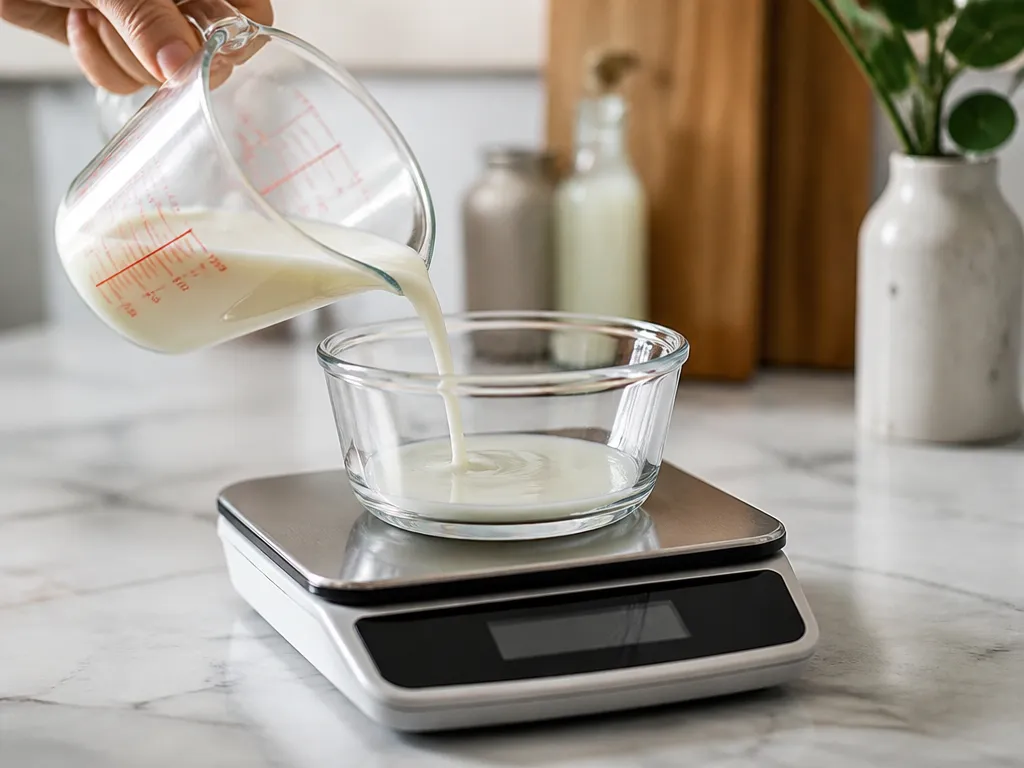
A kitchen scale can measure liquids accurately by weight. Pour the liquid into a container, press tare to remove the container’s weight, and stop when the display reaches the target number in grams or ounces. Converting between grams and milliliters requires the liquid’s density: water weighs 1.00 g/mL, milk 1.03 g/mL, olive oil 0.92 g/mL, and honey 1.42 g/mL.
Key Takeaways
- Yes, by weight. Most digital kitchen scales measure liquids in grams or ounces, not milliliters.
- Use tare. Tare removes the container’s weight so only the liquid counts.
- Match the liquid. Use density for conversions because honey and olive oil weigh differently per mL.
- Choose enough precision. Many cooks benefit from 1 g or 0.1 oz resolution for small amounts.
- Check unit labels. Recipes that say “fl oz” mean fluid ounces by volume, which can differ from weight ounces.
- Keep the scale stable. Place it on a flat surface and wait for the display to settle.
How a Kitchen Scale Measures Liquids
A kitchen scale measures a liquid’s mass, usually in grams or ounces, rather than its volume in milliliters or fluid ounces. Gravity turns the liquid’s mass into a reading the scale can display. The scale does not automatically know whether the liquid is water, milk, oil, or honey, so it cannot reliably convert every liquid to volume without the correct density.
The process is simple: choose a target weight and pour until the display reaches it. If a recipe gives a volume such as “1/2 cup,” convert that amount to weight using the liquid’s density or use a measuring cup for that step.
Water is easiest because its density is 1.00 g/mL, so 100 mL weighs 100 grams. Milk and olive oil are close enough to water for some casual recipes, but they do not weigh exactly the same. Honey is significantly denser, with a density of 1.42 g/mL.
Tare, Units, and Liquid Density
Tare is what makes a scale practical for liquids. Place a bowl, cup, or measuring pitcher on the platform, press tare, and the display returns to zero. The scale then shows only the liquid’s weight.
Units create the next common problem. In the U.S., recipes often use fluid ounces, written as “fl oz,” to indicate volume. A scale’s “oz” setting usually measures weight ounces. Those numbers are not always interchangeable, especially with thicker liquids.
Density means how many grams a liquid weighs per milliliter. These common values make scale measurements easier:
| Liquid | Density (g/mL) | Weight (grams) in 100 mL |
|---|---|---|
| Water | 1.00 | 100 |
| Milk | 1.03 | 103 |
| Olive Oil | 0.92 | 92 |
| Honey | 1.42 | 142 |
Once you know the density of the liquids you use most, such as water, milk, oil, and honey, you can pour to a weight instead of estimating by eye.
How to Weigh Liquids Without Overpouring
Pour in stages until you reach the target. Adding about 80 to 90% of the amount first gives you room to top off slowly once the display settles.
A scale with unit switching between grams and ounces is convenient, but resolution matters more for small amounts. If you frequently measure 1 to 2 tablespoons, at least 1 g or 0.1 oz precision makes results more repeatable.
Sticky liquids are especially well suited to weighing. A measuring cup can retain honey or syrup on its sides, while a scale measures exactly what reaches the bowl. You can also pour directly into the mixing container, which reduces both cleanup and wasted ingredients.

Helpful pick
Food Scale, 33lbs Digital Food Kitchen Scale Weight Grams and oz for Cooking Baking, Meal Prep and Weight Loss, 7 Units LCD Display Tare Function, 1g/0.1oz Precise Graduation, Easy Clean
With 1g precision and a 33lb capacity, this scale helps you pour liquids in stages without overpouring.
Use this workflow for most recipes:
- Place the empty container on the scale.
- Wait for the reading to settle.
- Press tare to zero out the container.
- Pour until you reach the target weight.
- Stop and check the display again before mixing.
Why Weigh Liquids Instead of Using Measuring Cups?
Accuracy is the main benefit, particularly in baking, where small differences can change texture and rise. Measuring cups vary according to how they are filled, how the liquid settles, and whether the measurement is level. A scale measures the ingredient directly by weight.
Consistency is another advantage. Once you weigh a liquid to the same target number each time, your results are less affected by pouring technique. This is also useful for nutrition tracking because food labels often correspond more naturally to measured ingredient weights.
For example, 100 mL of milk weighs 103 grams when milk has a density of 1.03 g/mL. That difference turns an approximate measurement into a repeatable one.
A scale also makes multi-ingredient recipes faster. You can tare between ingredients in the same bowl instead of transferring ingredients among several measuring cups, which saves time and reduces cleanup.
Three Ways to Measure Liquids in the Kitchen
You have three practical options, depending on the recipe and the level of precision you need.
Option 1: Weigh by grams using tare. This is the best all-around method for cooking and baking. It works for water, oil, milk, honey, and most other liquids when you have a trusted weight target or can convert using density.
Option 2: Use an mL mode cautiously. Some kitchen scales offer volume units and may assume water density. That can work for water, but it may give misleading results for honey or thick oils unless the scale uses the correct liquid tables.
Option 3: Use measuring cups for volume-first recipes. If a recipe uses cups and fl oz and the dish is forgiving, measuring cups may be sufficient. For repeatable results, especially in baking, converting the recipe to grams is usually better.
My simple rule is this: weigh by grams when the recipe involves baking, nutrition tracking, or tight tolerances. Use volume tools for flexible foods such as soups, many sauces, and casual cooking.

Helpful pick
OEBUAFI Digital Measuring Cup Scale 1000g 0.1g Detachable | Kitchen Food Scale with LCD Display, PC+ABS Material, 600ml Liquid Capacity, Gram Ml Cup Lb Units, Auto Shutdown, CR2032
This digital measuring cup scale combines a 600ml cup with gram accuracy, offering a versatile option for liquid measurements.
Choosing a Kitchen Scale for Liquid Ingredients
A digital kitchen scale with a tare function is the most useful choice. It lets you ignore the bowl or pitcher and measure only the liquid.
You do not need a scale marketed specifically for liquids. Any accurate kitchen scale can weigh liquid mass. Look for stable readings, clear display updates, and the ability to switch between grams and ounces if your recipes use both.
Pay close attention to “fluid ounces” versus “weight ounces.” If a recipe calls for 8 fl oz and your scale displays ounces by weight, do not assume the numbers match. The difference becomes more significant with dense liquids such as honey.
Liquid density also shifts slightly with temperature. For ordinary cooking, that change is usually too small to worry about. When precision matters, measure ingredients at consistent temperatures so your results stay consistent from one batch to the next.
Liquid-Measurement
Weighing liquids becomes especially useful in a few common kitchen situations.
For baking muffins, you can replace “1/2 cup milk” with a weight target. If milk has a density of 1.03 g/mL and your 1/2 cup contains about 118 mL, the target is 121.54 grams:
118 mL x 1.03 g/mL = 121.54 grams
You do not need to repeat the calculation every time. Write down your favorite conversions for the volumes you use most often.
Oil-based dressings show why liquid density matters. Olive oil has a density of 0.92 g/mL, so 100 mL weighs 92 grams. Treating olive oil like water and converting fluid ounces directly can create larger errors over multiple batches.
Honey is another good candidate for weighing. Its density is 1.42 g/mL, and its stickiness means some can remain on the sides of a measuring cup. If a recipe calls for 50 mL of honey, the target is 71 grams:
50 mL x 1.42 g/mL = 71 grams
For nutrition tracking, weighing removes ambiguity. If your plan says to track 30 grams of honey, placing the container on the scale and pouring until it reaches 30 grams is more consistent than estimating how full a tablespoon is.
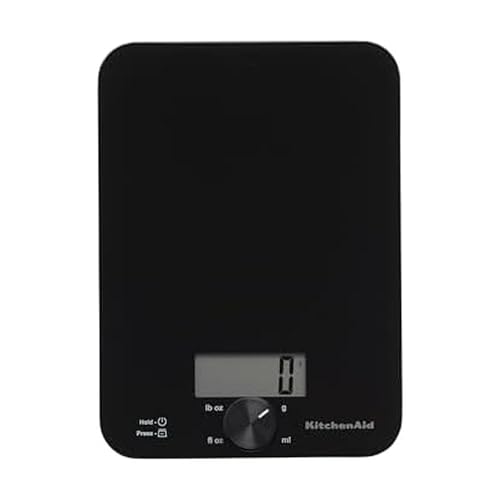
Helpful pick
KitchenAid KQ914BA Digital Glass Top Kitchen and Food Scale, 11 lb Capacity, Measures Liquid & Dry Ingredients, Rotating Knob, Precise Results for Baking, Cooking, Keto and Meal Prep, Tare, Black
The KitchenAid KQ914BA measures both liquid and dry ingredients with a rotating knob, ideal for baking recipes needing precise liquid weights.
FAQ
Can a kitchen scale measure liquids in milliliters (mL)?
Most kitchen scales measure mass, so they display grams or ounces. Some offer an mL mode, but many assume water density. For reliable results, measure in grams and convert to mL using the liquid’s density, such as water at 1.00 g/mL.
What is the easiest way to weigh liquids without a mess?
Put a bowl or measuring pitcher on the platform, press tare to zero it, and pour slowly until you reach the target weight. For sticky liquids such as honey, pour directly into the bowl and stop when the display reaches the correct number.
How long does it take to measure a liquid with a scale?
Typically under a minute for a single ingredient. The main time cost is waiting for the display to settle after taring and after pouring. Small amounts may take a few extra seconds because you need to top off slowly.
Is measuring liquids by weight safer than using measuring cups?
It is more consistent for recipes where small differences matter, such as baking or precise nutrition tracking. Measuring cups can vary based on how they are filled and leveled. A scale measures the ingredient directly, so results repeat more reliably between batches.
What is the most common mistake with liquid scale measurements?
Confusing fluid ounces, written as “fl oz,” with weight ounces, written as “oz.” If a recipe gives fluid ounces but you treat them as scale ounces, the amount may be wrong because liquids have different densities. Convert the amount or set the recipe target in grams.

Comments are closed.