
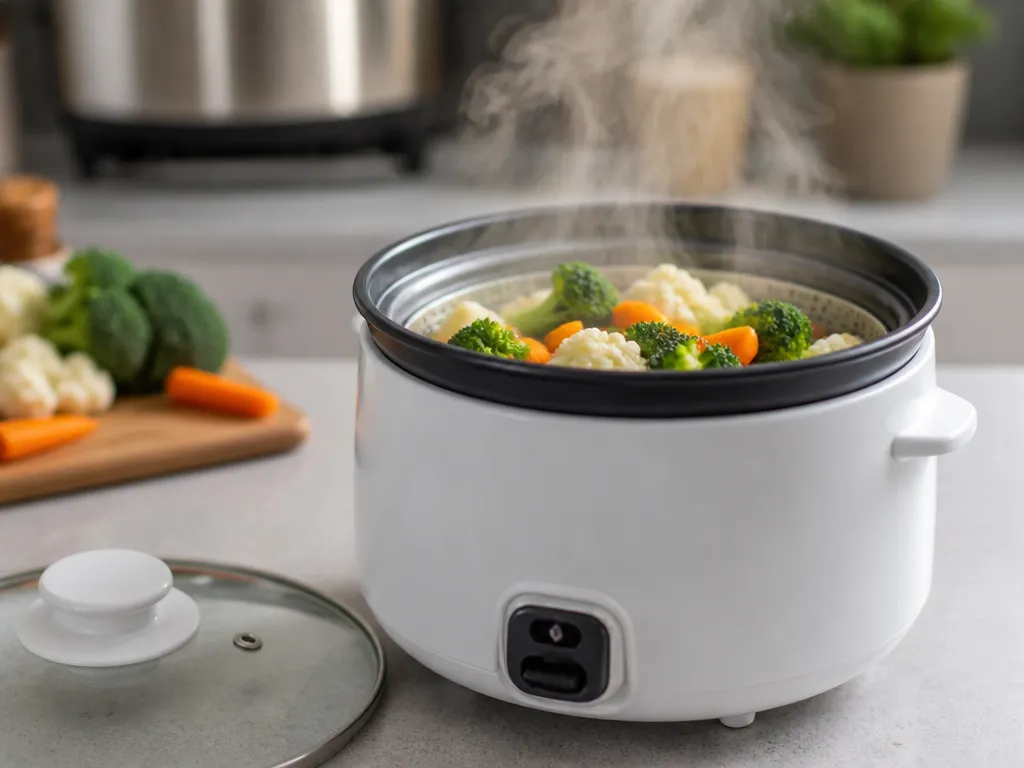
Can Rice Cooker Steam Vegetables?
Yes, a rice cooker can steam vegetables. The cooker heats water in the inner pot, and the resulting steam cooks vegetables held above the water in a basket or tray. Add about 1 cup of water, place the vegetables in a single layer, close the lid, and press Cook. Most vegetables finish in about 5 to 18 minutes after the water boils.
Check tenderness by piercing a piece with a fork. If the vegetables need more time, add a splash of water and press Cook again. The main causes of soggy or uneven vegetables are overcrowding, inconsistent cuts, too much time on Warm, and repeatedly lifting the lid.
Key Takeaways
- Yes, steaming works. Most rice cookers can steam vegetables with a basket or tray positioned above the water.
- Use about 1 cup of water. Larger cookers may need a little more, but avoid overfilling the pot.
- Expect 5 to 18 minutes. Most vegetables finish within this window after the water boils.
- Keep vegetables in a single layer. This gives steam room to circulate.
- Check with a fork. Texture, not the button or timer, tells you when vegetables are done.
- Keep the lid closed. Opening the lid releases steam and extends the cooking time.
- Remove vegetables promptly. Sitting on Warm can turn tender-crisp vegetables soft.

Helpful pick
Aroma Housewares ARC-363-1NGB 3 Uncooked/6 Cups Cooked Rice Cooker, Steamer, Multicooker, 2-6 cups, Black
Aroma’s 3-cup rice cooker includes a steamer function, ideal for quick vegetable steaming with about 1 cup water.
How a Rice Cooker Steams Vegetables
A rice cooker steams vegetables by heating water below the food. The vegetables should sit above the water line in a steamer basket, steaming tray, or compatible heat-safe insert. The lid traps the steam so it can cook the vegetables without submerging them.
Keeping vegetables out of the water helps prevent the waterlogged texture that comes from boiling. It also gives you more control over doneness, especially when you check the vegetables as they cook and remove them as soon as they become tender-crisp.
Cut size has a major effect on cooking time. Small broccoli florets and thin carrot slices cook quickly, while thick chunks of potato need a longer steaming period. Cut pieces as uniformly as possible so they finish together.
A simple starting setup is:
- Add about 1 cup of water to the inner pot.
- Place the steamer basket or tray above the water.
- Add vegetables in a single layer.
- Close the lid and press Cook.
- Start checking once the water boils and the vegetables have steamed for several minutes.
If your rice cooker does not include a steamer basket, use a suitable heat-safe insert that keeps the vegetables elevated. The insert should fit securely and leave enough room for steam to circulate. Do not let the vegetables sit directly in the water, and do not block the steam vent.
Basic Vegetable Steaming Times
The following times begin after the water boils:
- Broccoli, small florets: 5 to 8 minutes
- Carrots, 1/4 inch slices: 8 to 12 minutes
- Green beans, whole and trimmed: 6 to 10 minutes
- Potatoes, 1 inch cubes: 12 to 18 minutes
These times are starting points rather than guarantees. Rice cookers vary, and the size and density of the vegetables make a noticeable difference. Vegetables should look bright and feel fork-tender without collapsing.
If the vegetables are mushy, they may have been cut too small, packed too tightly, or left on Warm after they finished.
The Three Things That Control the Result
Good rice cooker steaming depends on water, placement, and a closed lid. The cooker cycle itself is less reliable as a timing guide because different models heat and switch to Warm at different points.
1. Water
Start with about 1 cup of water in the inner pot. The water must last long enough to create steam throughout the cooking window, but you do not need to fill the pot enough to boil the vegetables.
Use more water only when the size of the cooker or the length of the steaming session requires it.
2. Vegetable Placement
Spread the vegetables in a single layer whenever possible. A crowded basket prevents steam from reaching every piece evenly, which can leave some pieces firm while others become soft.
When steaming several vegetables together, group items with similar cooking times. Broccoli florets, green beans, and thin carrot slices can work well together. Potatoes and thick carrot pieces need longer, so either cut them smaller, add them first, or steam them separately.
3. The Lid
Keep the lid closed while the vegetables cook. Each time you lift it, steam escapes and the cooking temperature drops. A quick check is fine, but close the lid immediately afterward.
Do not block the steam vent. Rice cookers rely on the vent to manage steam and pressure, and a blocked vent can interfere with the cooker’s normal heating behavior.

Helpful pick
AROMA Digital Rice Cooker, 4-Cup (Uncooked) / 8-Cup (Cooked), Steamer, Grain Cooker, Multicooker, 2 Qt, Stainless Steel Exterior, ARC-914SBD
This digital Aroma rice cooker offers consistent heating and a steamer tray for reliable vegetable results.
Steaming Vegetables While Cooking Rice
You can steam vegetables above rice during the rice cooker’s normal cycle. Start the rice as usual, then add the vegetables for the last 10 to 15 minutes of the cook cycle. Keep the lid closed and make sure the basket or tray does not block the steam vent.
This method works best with vegetables that cook relatively quickly, such as thin carrot slices, broccoli florets, and green beans. Match the vegetable cut to the remaining rice-cooking time. Thick potato chunks may not become tender before the rice finishes.
Steaming vegetables with rice is convenient, but it gives you less control than steaming them in a separate cycle. The rice cooker decides when to switch modes, and the vegetables may sit on Warm if you do not remove them promptly. For precise texture, steam the vegetables separately. For a simple one-pot meal, use the final 10 to 15 minutes of the rice cycle and check them early.
Rice Cooker Steaming Tips That Prevent Soggy Vegetables
Uniform cuts are the best defense against uneven cooking. Slice or chop the vegetables to roughly the same thickness, then spread them across the basket rather than piling them in the center.
Use the lower end of the timing range as your first checkpoint. You can always steam vegetables longer, but you cannot restore a crisp texture after they become mushy.
Frozen vegetables can go directly into the steamer basket. Plan on 1 to 2 extra minutes for even heating, then check them before extending the cooking time. Leafy greens and delicate florets soften quickly, so check them a minute or two earlier than denser vegetables.
Dense vegetables need special handling. Potatoes and thick carrot slices take longer than green beans or broccoli. Cut them smaller, add them to the basket first, or steam them in two rounds instead of expecting every vegetable to finish together.
Remove the vegetables as soon as they reach the texture you want. The residual heat inside the covered cooker can continue softening them, and leaving them on Warm for too long often turns tender-crisp vegetables soft.
Season after steaming with olive oil, salt, lemon, or a light sauce. Adding heavy sauces during steaming can make the vegetables wet and makes it harder to judge their texture.
Common Problems and Their Fixes
- Overcrowding: Steam cannot circulate properly. Use a single layer or split the batch.
- Uneven cuts: Small pieces become soft before thick pieces finish. Cut vegetables to similar sizes.
- Too much time on Warm: Remove the vegetables immediately when tender.
- Frequent lid opening: Steam escapes and extends the cooking time. Check quickly and close the lid.
- Blocked steam vent: Rearrange the setup so the vent remains clear.

Helpful pick
Aroma Housewares 20 Cup Cooked (10 cup uncooked) Digital Rice Cooker, Slow Cooker, Food Steamer, SS Exterior (ARC-150SB),Black
Aroma’s 20-cup digital cooker with steamer helps prevent soggy vegetables by even steam distribution.
Why Steam Vegetables in a Rice Cooker?
Rice cooker steaming keeps vegetables above the cooking water, which helps them retain a firmer texture and brighter appearance than vegetables cooked too long in boiling water. You also avoid transferring the vegetables between a pot, colander, and serving dish.
Steaming can reduce the amount of nutrients that move into discarded cooking water because the vegetables are not submerged. It does not guarantee a healthier meal by itself, but it offers a practical way to cook vegetables without soaking them in water.
The cleanup is straightforward. You use one appliance, and many rice cookers already include a steaming basket or tray. Once the vegetables are loaded and the lid is closed, the cooker handles the heating and steam generation without constant stirring.
It also works well for meal prep. You can steam several portions, refrigerate them, and reheat them gently later. Vegetables generally hold their texture better after steaming than after prolonged boiling, especially when you stop cooking as soon as they become tender.
Three Ways to Steam Vegetables in a Rice Cooker
Use the Included Steamer Basket
This is the simplest method. Add water to the inner pot, place the basket above the water, and load the vegetables in a single layer. Close the lid, press Cook, and check for tenderness after the water boils.
A basket works well for a batch of one vegetable or several vegetables cut to similar sizes. If the basket is crowded, divide the food into two rounds.
Use a Compatible Heat-Safe Insert
A rice cooker without a dedicated basket can still steam vegetables with a compatible heat-safe tray or insert. It must fit securely, keep the vegetables above the water, and leave room for steam to circulate.
Avoid any setup that lets vegetables touch the water or sits so high that the lid cannot close properly. The lid should close normally, and the steam vent should remain clear.
Steam Above Cooking Rice
Start the rice normally, then place the vegetables in the basket for the last 10 to 15 minutes of the rice cycle. This saves time and dishes, but it works best with thin or quick-cooking vegetables.
You can also steam dumplings or fish in a rice cooker when the setup allows them to cook safely and fully. Keep their timing separate from delicate vegetables if you need to remove one food before the other. Frozen dumplings take 10 to 15 minutes after the water boils. A fish fillet measuring 1/2 to 1 inch thick may take 8 to 12 minutes, or until it flakes.
Practical Vege
Broccoli
Steam small broccoli florets for 5 to 8 minutes after the water boils. Check near the lower end of that range because broccoli can move from tender-crisp to soft quickly. Season it after steaming with salt, lemon, and a drizzle of olive oil.
Carrots
Slice carrots to about 1/4 inch thick and steam them for 8 to 12 minutes. Check around 8 minutes for a firmer texture and closer to 12 minutes for softer carrots suitable for salads or bowls.
Potatoes
Cut potatoes into 1 inch cubes and steam them for 12 to 18 minutes after boiling begins. Test them with a fork because potato variety and piece size affect the result.
Green Beans
Use whole, trimmed green beans and steam them for 6 to 10 minutes. Stop when they are tender but still have a slight snap. Green beans lose texture quickly in an overcrowded basket because trapped moisture makes them soften.
Frozen Dumplings
Steam frozen dumplings for 10 to 15 minutes after the water boils. Check that they are heated through and tender, then remove them promptly so they do not become chewy.
A Complete Rice Cooker Plate
Cook the rice as usual, then add vegetables for the last 10 to 15 minutes of the rice cycle. Thin carrot slices, broccoli florets, and green beans are good candidates because their cooking times can fit that window. Check the vegetables before the cycle ends and remove them as soon as they reach the desired texture.
FAQ
Can a rice cooker steam vegetables without a steamer basket?
Yes, as long as the vegetables remain above the water level. Use a heat-safe insert or tray that elevates the food so it cooks in steam instead of boiling. Keep the lid closed as much as possible, and make sure the setup does not block the steam vent. If you cannot reliably keep the vegetables above the water, use a basket designed for your cooker.
How long does it take to steam vegetables in a rice cooker?
Most vegetables take about 5 to 18 minutes after the water boils. Exact times depend on the size and density of the pieces. Small broccoli florets usually take 5 to 8 minutes, 1/4 inch carrot slices take 8 to 12 minutes, and 1 inch potato cubes take 12 to 18 minutes. Test with a fork rather than relying only on the cooker cycle.
How much water should I use for steaming?
Start with about 1 cup of water in the inner pot. Larger cookers may need a little more, but avoid overfilling. The goal is enough water to create steam for the full cooking period.
Is steaming vegetables in a rice cooker healthier than boiling?
Steaming keeps vegetables out of boiling water, which can reduce the amount of nutrients lost into discarded cooking liquid. It also tends to preserve color and texture better, so vegetables are less likely to become waterlogged. Boiling can still work well with short cooking times, but steaming is usually the easier route to crisp-tender vegetables.
What is the most common mistake when steaming vegetables?
Overcrowding the steamer basket is the most common mistake. Packed vegetables prevent steam from circulating, which produces uneven cooking, soft pieces, and firm centers. Use a single layer, cut the vegetables to similar sizes, and check them near the lower end of the timing range.

Comments are closed.