
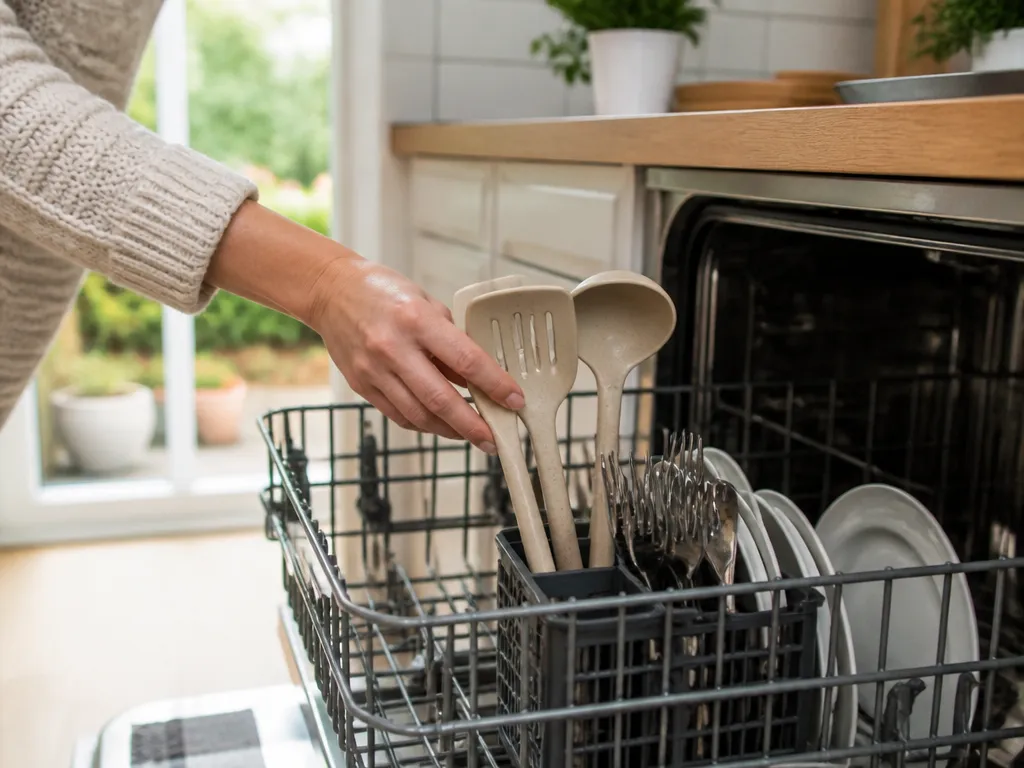
Can Silicone Utensils Go In Dishwasher?
Silicone utensils can usually go in the dishwasher if they are labeled dishwasher-safe. Put them on the upper rack, where they stay away from the heating element. Most dishwasher cycles reach about 140-160°F (60-71°C), while food-grade silicone is stable up to about 428°F (220°C).
The main problems are poor loading, trapped water, and detergent residue. Thin handles can fall through the rack, folded molds can hold water, and heavily scented or excessive detergent can leave silicone tasting or smelling soapy. Utensils with wood, adhesive joints, electronics, or delicate printed markings may need to be hand-washed instead.
Key Takeaways
- Check the label first. The manufacturer’s dishwasher-safe marking matters most, especially for mixed-material tools.
- Secure thin handles. Prevent them from dropping through the rack or interfering with the spray arm.
- Keep molds open and separate. Folding, stacking, or nesting can trap water and detergent.
- Rinse away residue. Rewash items with a bitter taste or soapy film, using an extra-rinse option if available.
- Hand-wash mixed-material items. Wood, adhesive joints, electronics, and delicate printing may not withstand repeated dishwasher cycles.
When Silicone Utensils Are Dishwasher-Safe
Yes, most silicone utensils can go in the dishwasher without special treatment. Silicone tolerates normal dishwasher temperatures, and the machine’s spray and wash action can remove residue that is easy to miss when you wash a utensil quickly by hand.
The silicone itself is rarely the weak point. Problems usually come from how the item is loaded, whether water collects in folds or cavities, or whether the utensil includes materials that do not tolerate dishwasher conditions.
A one-piece silicone spatula with no seams or attached materials is usually an easy dishwasher load. A silicone utensil with a wooden handle, exposed adhesive joint, or printed measurement marks needs more caution, even if the silicone portion can handle the heat.
How Heat and Construction Affect Cleaning
Most dishwasher-safe silicone utensils perform well on a standard residential cycle. Silicone is stable up to about 428°F (220°C), while standard dishwashers reach roughly 140-160°F (60-71°C) during washing and the final rinse. Routine dishwasher heat therefore stays well below silicone’s stated temperature tolerance.
Loading matters more than choosing between ordinary cycles. A flexible edge or thin handle that shifts during washing can move close to the heating area or block the spray arm. A folded mold or lid can hold water and detergent in corners long after the cycle ends.
Odors and unpleasant tastes usually point to rinsing or dishwasher conditions rather than heat damage. Strong perfume smells can come from scented detergent or an excessive dose. A bitter or soapy taste usually indicates detergent film or an incomplete rinse.

Helpful pick
AOTHOD Silicone Kithen Utensils Set – 446°F Heat Resistant Silicone Cooking Utensils,Spatula,Spoon, Kitchen Utensil Sets Gadgets Tools Set for Nonstick Cookware,Dishwasher Safe Bpa Free (Cream White)
AOTHOD’s 446°F heat-resistant silicone set handles dishwasher temperatures and everyday cooking without warping.
How to Load Silicone Utensils
Arrange silicone utensils securely so light or flexible pieces cannot flip, slip through the rack, or fall near the heating area. Space them out enough for water to reach both sides.
Open folds and separate removable parts before starting the cycle. Baby plate bowls, bibs, stretch covers, bottle nipples, valves, and small straws can hold water if they stay folded, nested, or pressed together.

Helpful pick
AOTHOD Silicone Cooking Utensils Set – 446°F Heat Resistant Silicone Kitchen Utensils,Spatula,Spoon, Kitchen Utensil Sets Gadgets Tools Set for Nonstick Cookware,Dishwasher Safe BPA FREE (Multicolor)
This dishwasher-safe silicone utensil set includes multiple pieces you can arrange securely in the rack.
Use these loading habits:
- Secure thin handles so they cannot drop through the rack.
- Angle or separate molds so they do not nest together.
- Keep flexible mats loosely arranged so they do not block the spray arm.
- Position lids and stretch covers so water cannot pool in the center.
- Air-dry difficult parts after the cycle, especially items with folds or cavities.
- Run another rinse if the item tastes or smells like detergent.
When Hand-Washing Is the Better Choice
Hand-wash silicone utensils that include wood, exposed adhesive joints, electronics, or delicate printed markings. Water and heat can loosen glued connections, roughen or fade printed details, and damage materials that are less dishwasher-resistant than silicone.
Use the product’s care instructions when silicone is bonded to another material. A simple rule helps: if the utensil contains anything besides silicone, treat it as a mixed-material item rather than assuming the entire tool is dishwasher-safe.
Dishwasher-safe silicone is convenient for everyday spatulas, spoons, lids, and covers. It also stays gentle on cookware because silicone is less likely than metal to scratch non-stick surfaces. Repeated dishwashing typically does not degrade properly made, dishwasher-safe silicone quickly, but attached materials can wear out sooner.
Choosing the Right Cleaning Method
You have three practical options, depending on the utensil’s construction and shape.
- Dishwasher all-silicone tools – Best for one-piece silicone spatulas, spoons, labeled whisks, silicone lids, and stretch covers.
- Dishwasher with careful loading – Best for silicone baking mats, molds, and items with folds or cavities that need space to drain.
- Strong perfume smell: Switch to an unscented detergent and follow the machine’s dose guidance.
- Bitter or soapy taste: Rewash without detergent, then run another cycle with an extra-rinse option.
- Greasy feel: Wash separately with hot water and a grease-cutting dish soap, then rinse thoroughly.
- Odor in folds or cavities: Open the part, change its loading angle, and dry it completely.
- Odor throughout the load: Clean the dishwasher according to its manual before replacing any utensils.
- Odor that returns when food touches the utensil: Hand-wash and air-dry it; replace the part if the smell remains unacceptable.
| Hand-wash mixed or delicate parts – Best for tools with wood, adhesive joints, electronics, or delicate printing. | Option | What it works best for | Key limitation |
|---|---|---|---|
| Dishwasher (upper rack) | One-piece silicone spatulas/spoons, labeled tools | Poor loading can trap water in folds | |
| Dishwasher with extra rinse | Silicone lids, stretch covers, baby feeding items (labeled) | Detergent film can cause a bitter or soapy taste | |
| Hand-wash only | Wood-handled or adhesive-joint tools | Glued joints can loosen over time | |
| Hand-wash then air-dry | Items that retain odor in cavities | Trapped water can bring smells back quickly |
What to Do About Odor, Grease, and Soap Residue
Check the dishwasher before blaming the silicone. If an entire load smells, the filter, drainage system, or dishwasher interior may need cleaning according to the machine’s manual. If the odor stays in one utensil’s folds or cavities, loading and drying are more likely to be the problem.
Match the fix to the symptom:
Common Silicone Items and Their Dishwasher Limits
A one-piece silicone spatula with no attachments is usually dishwasher-safe. Load it so it cannot collapse, tip, or block the spray.
Silicone baking mats need enough space for water to reach both sides. Place them loosely curved, and keep them away from the heating area and spray arm. Do not fold them tightly.
Silicone baking molds should remain open and separate. Folding or stacking them tightly can trap water and detergent between layers, which slows drying and can leave an odor.
Silicone lids and stretch covers can also retain smells when water pools in the center. Place them in the upper rack between rack tines so they do not sag. After washing, check the creases and let them dry completely.

Helpful pick
Kitchen Utensil Set – 11 Cooking Utensils – Colorful Silicone Kitchen Utensils – Nonstick Cookware with Spatula Set – Colored Best Kitchen Tools Kitchen Gadgets (Khaki)
An 11-piece colorful silicone set gives you spatulas and spoons that are generally dishwasher-safe when loaded properly.
FAQ
Can silicone utensils go in the dishwasher every time?
Yes, when the manufacturer labels them dishwasher-safe. Follow the loading and care guidance above, and hand-wash items made with less-resistant attached materials.
Will dishwasher heat damage silicone spoons and spatulas?
Routine dishwasher heat is within silicone’s tolerance. The greater risks are poor loading that moves an item near the heating area and damage to non-silicone parts attached to the utensil.
Why do my silicone utensils smell after washing in the dishwasher?
Common causes include detergent, trapped water, and a dirty dishwasher. Apply the symptom-specific cleaning steps above, paying particular attention to folds and cavities.
What’s the best way to load silicone utensils for cleaning?
Follow the loading habits above: secure flexible pieces, separate items, and prevent water from pooling in folds or covers.
Are there alternatives to dishwasher cleaning for silicone?
Hand-washing is the practical alternative for mixed-material tools or items that retain odor or grease. Rinse thoroughly and let them air-dry.



Comments are closed.