How To Care For Stainless Steel Pans
Stainless steel pans stay clean, shiny, and easier to use when you wash them before residue hardens, scrub with non-abrasive tools, and dry them completely. For everyday cleanup, use warm water, mild dish soap, and a non-abrasive sponge. Baking soda handles stuck-on food and discoloration without the scratching that steel wool can cause.
Clean the pan soon after cooking, avoid overheating it while dry, and soak burned residue instead of attacking it with a scraper. Those habits prevent most stains, water spots, and stubborn buildup.
Key Takeaways
- Clean promptly. Wash after cooking so residue does not harden into baked-on stains.
- Use gentle tools. A non-abrasive sponge and dish soap remove most mess without scratching.
- Try baking soda. Baking soda helps lift discoloration and stuck-on food more safely than abrasives.
- Avoid steel wool. Steel wool can scratch the surface and make future cleaning harder.
- Dry fully. Drying prevents water spots and helps your pans keep a clean look.
- Heat with control. Using appropriate heat helps reduce discoloration and sticking.
What You Need to Clean Stainless Steel Pans
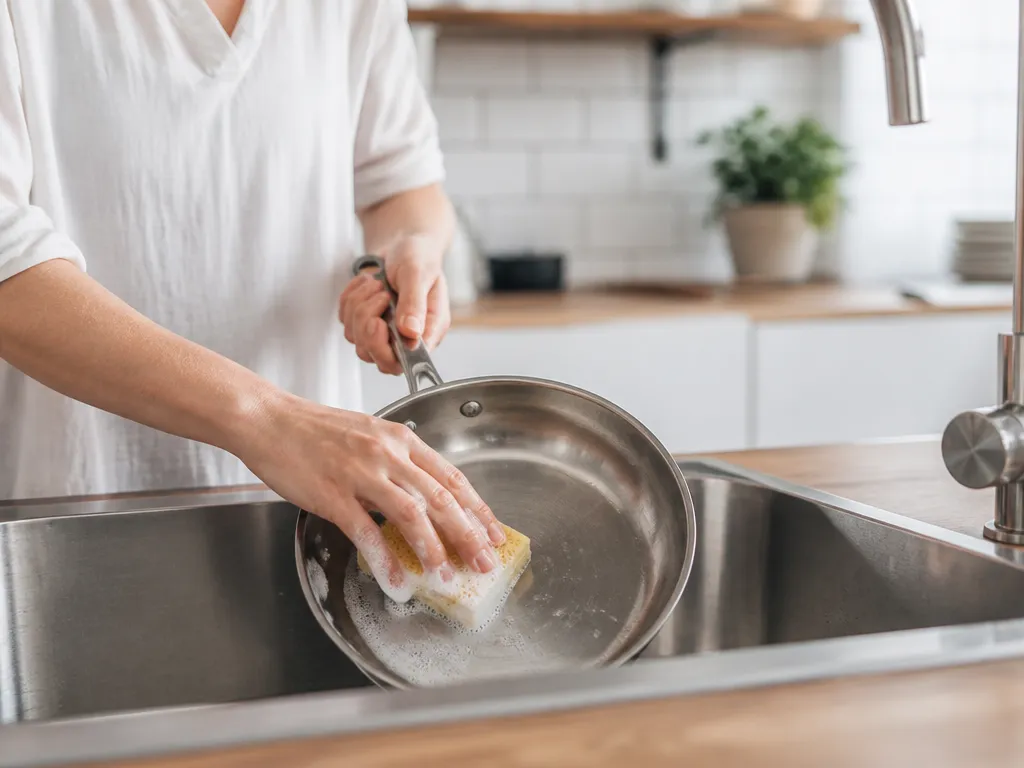
Gather warm water, mild dish soap, a non-abrasive sponge or dishcloth, and baking soda for tougher spots. Keep steel wool away from the pan because it can scratch the surface and leave grooves where grease and food can collect.
Stainless Steel Pan Care Basics
Stainless steel can discolor when a pan runs too hot or food scorches. Most discoloration is cosmetic, and baking soda with gentle scrubbing can remove many marks. Harsh abrasives are rarely necessary.
After cooking, let the pan cool enough to handle safely. Rinse away loose bits, wash with mild dish soap and a soft sponge, then dry the pan thoroughly. With that routine, deep cleaning should be occasional rather than constant.
Helpful pick
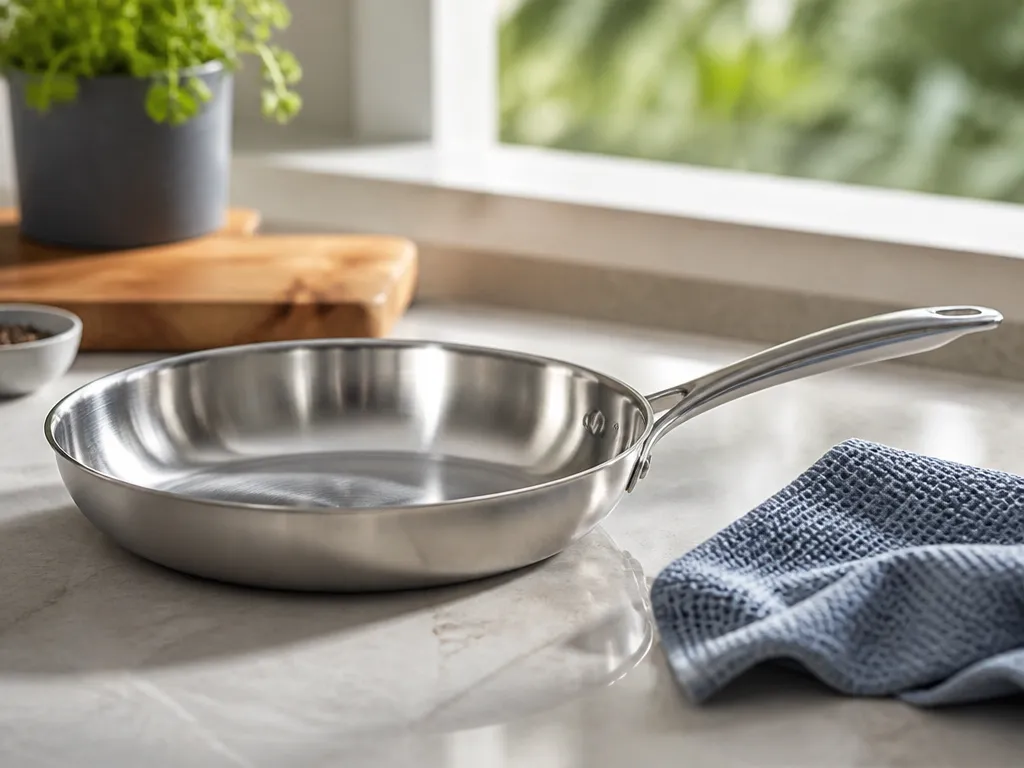
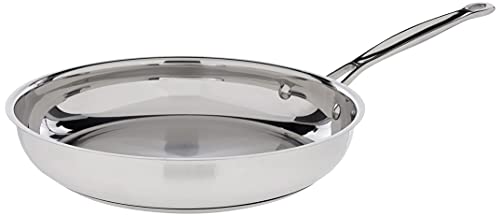
Cuisinart 10-Inch Open Skillet, Stainless Steel Skillet Large Kitchen Pan, Dishwasher Safe, Compatible with Induction, Electric, Gas Cooktops, Oven Safe Saucepan, Cool Grip Handles
This high-quality 10-inch stainless steel skillet is a durable kitchen essential that performs beautifully when maintained with proper care and cleaning.
How to Clean a Stainless Steel Pan Step by
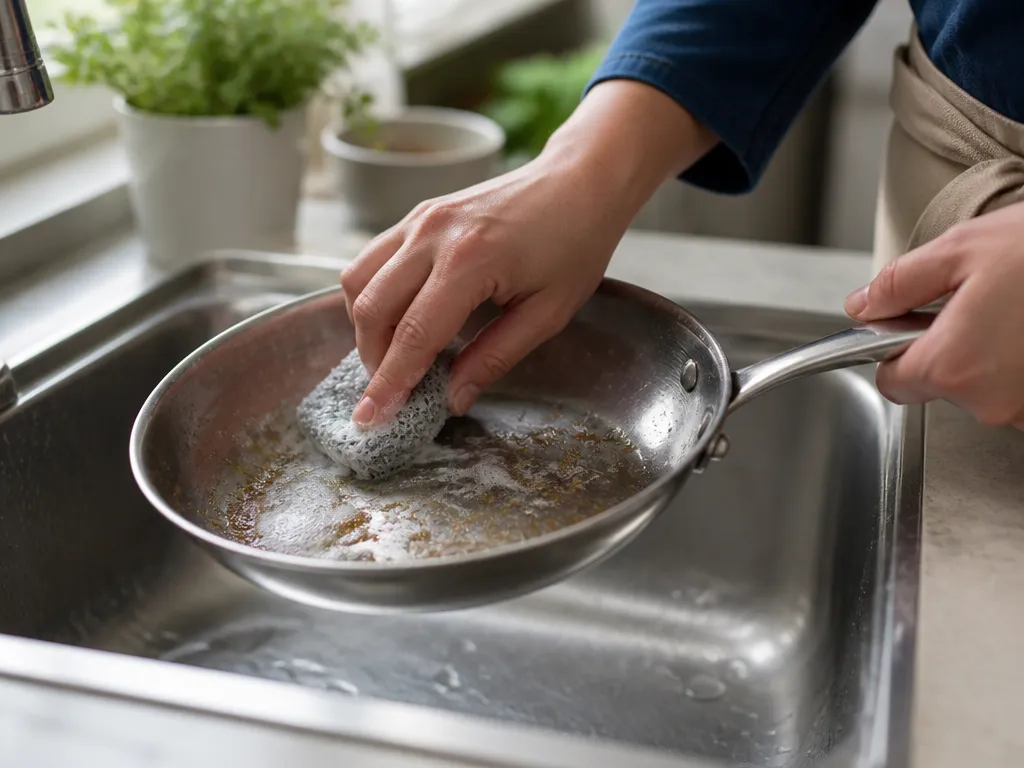
Use this sequence after cooking to prevent burnt residue, stubborn stains, and water spots.
- Cool the pan. Let it cool enough to touch before washing to prevent burns and avoid spreading residue.
- Rinse promptly. Rinse while residue is still soft so you remove loose oils and food particles early.
- Wash with dish soap. Use warm water and mild dish soap with a non-abrasive sponge, scrubbing lightly in circles.
- Treat stuck spots. For discoloration or stuck-on food, make a paste with baking soda and a little water. Work it over the area gently.
- Rinse thoroughly. Remove all baking soda and loosened residue so nothing dries back onto the surface.
- Dry completely. Towel-dry the pan right away, especially around the rim and handles where water can collect.
- Store carefully. Stack pans with care or use pan protectors so the cooking surface does not get scratched.
- Repeat before using more force. If marks remain, repeat the baking soda treatment with lighter pressure instead of switching to harsher abrasives.
- Remove grease buildup. If the pan still feels greasy, wash it a second time with extra attention to the cooking surface.
- Limit abrasion. Skip steel wool and harsh scrapers on stainless steel. They can damage the finish and are usually unnecessary.
Cleaning Common Stainless Steel Pan Messes
Caramelized onion bits usually come off after a rinse followed by a wash with dish soap. If a faint gray or brown tint remains, apply baking soda paste and scrub gently. The pan should return to a clean finish without scratching.
Burned sauce needs more time, not more force. Fill the pan with warm water and a little dish soap, let it sit, and then scrub gently. Soaking softens fused residue and reduces the pressure needed to remove it.
Techniques That Keep Stainless Steel Pans Clean
Heat control prevents much of the cleanup in the first place. A dry stainless steel pan that gets too hot is more likely to scorch food and leave stubborn residue. Moderate, controlled heat makes the pan easier to clean afterward.
Helpful pick
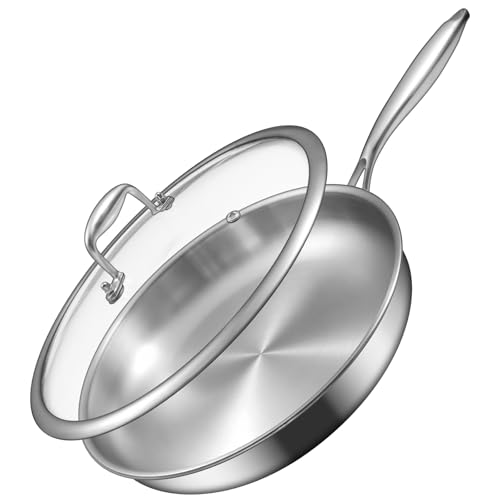
EWFEN 12 Inch Tri-Ply Stainless Steel Frying Pan, Compatible with All Cooktops Up to 600℉, Large Frying Pan with lids, Induction-Ready Skillet, Dishwasher and Oven Safe, Even Heat, 12″ Skillet + Lid
Using a high-quality tri-ply pan with even heat distribution significantly reduces the risk of scorching, making your daily cleanup much faster and easier.
Use this technique ladder:

- Soap and sponge first. Clean while residue is fresh.
- Baking soda for marks. Use gentle scrubbing for discoloration and stuck spots.
- Soak heavy burns. A warm, soapy soak loosens fused residue.
- Stop before scratching. If you feel tempted to press harder, soak the pan, apply baking soda, or repeat the process instead of increasing abrasion.
Which Cleaning Method Fits the Problem?
| Problem | Best Technique | What to Use | What to Avoid |
|---|---|---|---|
| Light residue | Regular wash | Dish soap + non-abrasive sponge | Steel wool |
| Greasy film | Second wash | Dish soap, extra scrubbing on the surface | Harsh chemical degreasers, which are unnecessary |
| Discoloration | Baking soda paste | Baking soda + water, gentle scrubbing | Metal scouring pads |
| Stuck-on food | Soak + gentle scrub | Warm water + dish soap soak, then baking soda if needed | Chipping scrapers on the cooking surface |
| Water spots | Dry immediately | Towel-dry, store dry | Leaving pans wet in stacks |

Helpful pick
STAINLESS STEEL CLEANER & POLISH – Heavy Duty Cleaning Paste for Stove, Oven, Pans, Cookware, Sink | All Purpose Multi-Purpose Household Cleaner | Removes Grease & Stains | with 2 Sponges (500g)
Keep this heavy-duty cleaning paste on hand to quickly address grease and stains, ensuring your pans stay in top condition after every use.
Daily Habits That Prevent Stainless Steel Pan Damage
Make cleanup part of cooking rather than a task you postpone. When residue dries and bakes onto the pan, removal takes more time and more scrubbing, increasing the chance of marring the surface.
Dry the pan after every wash if you care about its appearance. Water spots form when moisture sits on stainless steel, especially around the base and rim. Towel-dry the pan before storing it, and keep it from rubbing against other cookware.
Keep the heat reasonable while cooking. Excessive heat and prolonged dry preheating increase the odds of scorching and stubborn residue. Reduce the heat when food darkens too quickly, and avoid leaving an empty pan over high heat for long stretches.
Cleaning Mistakes That Stain Stainless Steel Pans
Waiting too long to wash is the most common mistake. Dried food residue bonds more tightly to the surface, so mild soap may no longer be enough.
Using abrasive tools too early creates another problem. Steel wool and heavy scouring pads can scratch stainless steel, leaving it duller and more difficult to clean over time.
Power-scrubbing baked-on food is also inefficient. If you are pressing hard with a sponge, soften the residue first. A soak followed by baking soda usually works better and puts less stress on the finish.
Avoid these habits:
- Letting residue cool and harden on the pan. Wash sooner to prevent baked-on buildup.
- Using steel wool. Scratches make future cleanup harder.
- Skipping the drying step. Water spots build up and become more noticeable over time.
- Burning food repeatedly. Each scorch event creates more stuck-on residue to remove later.
- Scrubbing without softening the mess. For heavy burns, soak first and scrub gently afterward.
Ways to Make Stainless Steel Pan Cleanup Easier
Use a two-pass approach when you want both a clean surface and a good-looking finish. The first wash removes grease and food films. The second pass targets any remaining discoloration, so you do not resort to harsh abrasion.
For stubborn spots, try baking soda paste before using a stronger method. Apply the paste, let it sit for a few minutes if the mess is heavy, scrub lightly, then rinse and dry.
Treat drying as the final cleaning step. Towel-dry the pan thoroughly after washing, including the rim and handles, then store it only when the remaining moisture has evaporated. This reduces water spots and keeps closed cabinets from developing a musty smell.
Stainless Steel Pan Troubleshooting
- Food is stuck hard but not blackened. Soak the pan in warm, soapy water, then wash it with a non-abrasive sponge.
- The bottom has gray or brown discoloration. Apply baking soda paste, scrub gently, rinse, and dry.
- Water spots appear after washing. Towel-dry the pan immediately next time.
- The pan looks scratched or dull. Stop using steel wool, rely on soap and baking soda, and handle the pan carefully during storage.
FAQ
How do I clean a stainless steel pan if food burned onto the surface?
Soak the pan in warm water with a few drops of dish soap, then scrub with a non-abrasive sponge. If discoloration or stuck-on residue remains, use baking soda paste and gentle scrubbing. Rinse thoroughly and dry completely to prevent water spots.
Can I put stainless steel pans in the dishwasher?
Hand washing is safer for maintaining the look of stainless steel and avoiding extra wear from harsh dishwasher cycles. Use warm water, mild dish soap, and a non-abrasive sponge. If you use a dishwasher, dry the pan right away to limit water spots.
What is the best way to remove discoloration from stainless steel?
Make a paste with baking soda and a little water, then gently scrub the discolored area with a non-abrasive sponge. Rinse well and dry thoroughly.
How do I prevent stainless steel pans from sticking while cooking?
Avoid high heat with a dry pan. Preheat briefly, use an appropriate temperature, and add enough oil or food moisture before cooking. When possible, clean the pan soon after cooking so thin residue does not harden.
What is the biggest mistake people make when cleaning stainless steel?
Using steel wool or harsh abrasives too often causes the most avoidable damage. Scratches can make stainless steel look dull and allow grease to collect in tiny grooves. Use mild dish soap, a non-abrasive sponge, and baking soda for discoloration and stuck-on food.
Test the routine today on one pan: wash it with mild dish soap and a non-abrasive sponge, then use baking soda paste only on discolored or stuck areas. Once you see how quickly the residue comes off, the process becomes straightforward.