When To Throw Away Kitchen Sponge
Replace a kitchen sponge when it smells sour, feels slimy, has stains or embedded grime that will not scrub out, or has been in service for roughly 2-4 weeks. Replace it sooner if you cannot remove the odor or slime through normal cleaning and sanitizing. A worn-out sponge stops lifting residue and starts spreading it across dishes, counters, and the sink.
For a typical U.S. kitchen, replace sponges regularly even when they look clean. Sponges trap moisture, food particles, grease, and residue in their pores. Raw meat, thick sauces, stuck-on grease, and a constantly wet sink shorten their useful life.
Key Takeaways
- Replace on schedule. Most kitchen sponges need replacement every 2-4 weeks.
- Do not trust visible cleanliness. Odor, slime, and persistent staining are reliable replacement signals.
- Sanitize appropriately. Hot water and a sanitizing method suitable for the sponge can reduce odor and buildup.
- Use the right tool. Sponges work best for light-duty dishes, not raw meat juices or heavy messes.
- Consider alternatives. Dish brushes and disposable scrub pads often stay cleaner longer.
- Keep sponges dry. Air-drying fully between uses slows odor and microbial growth.
The Signs Your Kitchen Sponge Needs Replacing
A sponge needs replacing when cleaning no longer makes it clean. If you wipe a plate and the plate smells like the sponge, or grime reappears after scrubbing, the sponge is contaminated beyond what simple rinsing can fix. Replace it instead of trying to rescue it with more scrubbing.
Watch for these signs:
- Persistent odor: Sour, musty, or lingering food smells remain after washing or sanitizing.
- Slimy texture: A slippery film returns quickly after rinsing.
- Stubborn staining: Dark patches or embedded grime will not come out.
- Poor condition: Frayed fibers, compressed areas, or a sponge that is falling apart make cleaning less effective.
- Slow drying: The sponge stays wet for a long time even after you squeeze it out.
- Residue transfer: Grease, food particles, or odor reappear on dishes after washing.
- Heavy-duty use: The sponge regularly handles raw meat juices, thick grease, or a busy shared sink.
A sponge may look acceptable and still need replacing. Odor, slime, and residue are more useful warning signs than appearance alone.
How Long a Kitchen Sponge Lasts
As a practical baseline for many U.S. households, replace a kitchen sponge every 2-4 weeks. That schedule applies even when the sponge still looks clean because porous material collects moisture and microscopic food residue over time.
Replace it sooner when it handles raw meat, frequent grease, thick sauces, or stuck-on food. A sponge used several times a day in a wet sink will also deteriorate faster than one used lightly and allowed to dry completely.
If the sponge smells sour the day after cleaning, feels slimy, or transfers its odor to dishes, do not wait for the 2-4 week mark. The condition of the sponge matters more than the calendar.
How to Clean and Store a Sponge Between Replacements
Squeeze out the sponge thoroughly after every use and place it somewhere it can air-dry completely. Do not leave it lying in a puddle or sealed inside a container. Drying reduces the moisture that allows microbes and odors to build up.
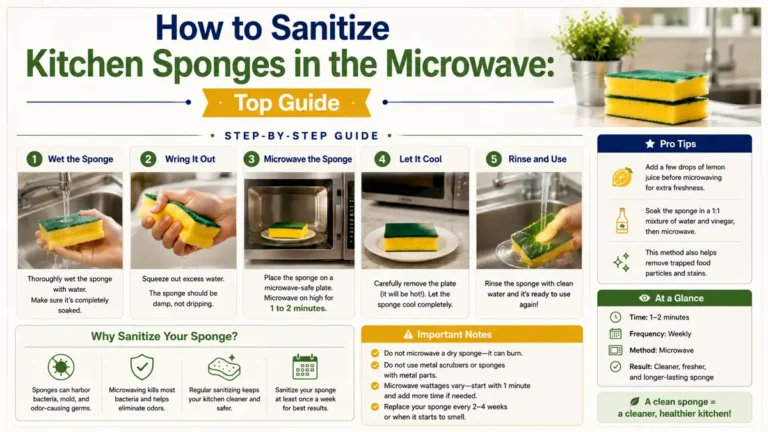
Sanitize the sponge according to the limits of its material. Some sponges can handle heat or microwave-based steps, while others cannot. Scrub away visible food debris before sanitizing, and follow the safety instructions for the sponge type and sanitizing method.
Use this routine:
- Rinse the sponge immediately after each use.
- Remove visible food and grease before sanitizing.
- Sanitize regularly using a method suitable for the sponge.
- Squeeze out the water completely.
- Air-dry the sponge fully before using it again.
Sanitizing can reduce odor and buildup, but it does not make an old sponge permanent. If the smell or slime returns after sanitizing, replace the sponge.
If you clean raw meat often, keep a separate tool for that job. A dedicated meat sponge, brush, or disposable scrub pad prevents the same tool from moving residue to plates, cups, and other dishes.
Why Replacing a Worn Sponge Improves Cleaning
A slimy or smelly sponge stops lifting residue effectively and starts redistributing it. You may spend longer scrubbing while leaving dishes with grease, food particles, or an unpleasant odor.
A fresh sponge has intact fibers and less trapped residue. It releases soap more effectively and provides better friction against food buildup. You may also notice fewer streaks and less fishy or sour odor around the sink.
Scheduled replacement prevents the common “it looks fine, so I will keep using it” mistake. Sanitizing and drying help extend a sponge’s useful life, but every porous sponge eventually absorbs moisture and grime that become difficult to remove.
Safer Alternatives to a Kitchen Sponge
Use different tools for different jobs instead of asking one sponge to handle every mess. Dish brushes with replaceable heads often stay cleaner longer because their bristles dry faster than porous sponge foam. Nylon scrub pads are useful for grease and stuck-on food because they rinse out more easily and can be replaced when they wear down.
A two-tool system works well:
- Use a brush or scrub pad for pots, pans, grease, and stuck-on food.
- Keep a separate sponge for lighter tasks such as plates and cups.
- Use a dedicated tool or disposable pad for raw meat cleanup.
Disposable scrub pads or wipe-style cleaners also make sense for especially grimy jobs. You can discard them after use instead of repeatedly trying to sanitize a heavily soiled sponge.
| Option | Key Spec / Behavior | Best For |
|---|---|---|
| Dish brush (replaceable head) | Bristles dry faster than sponge pores | Everyday dishes, greasy pans |
| Nylon scrub pad | More abrasive, easier to rinse clean | Stuck-on food, cookware |
| Disposable scrub pad | You discard after use | High-gunk days, minimizing odor buildup |
| Microfiber cloth | Washable, often more lint control | Glasses, wiping, lighter cleaning |
| Paper towel for wiping + separate wash tool | Disposable surface wipe | Quick wipe before washing, reducing residue on sponges |
If odor is your main problem, air-drying is usually the biggest improvement. A different tool can help, but keeping the sponge from staying damp is the key storage habit.
When to Replace a Sponge Sooner
Replace a sponge sooner than the normal 2-4 week schedule if it touches raw meat or if the sink routinely stays wet. Those conditions load the sponge with residue and make it harder to clean thoroughly.
Do not wait for visible mold or severe deterioration. Once normal rinsing and appropriate sanitizing stop working, replacement is the practical fix.
Treat the sponge as a consumable rather than a permanent fixture. Regular sanitizing and thorough drying can stretch its useful life, but porous materials eventually wear out and lose their cleaning edge.
Real-Life Sponge Replacement Decisions
If you scrub plates in the evening, rinse the sponge, and it still smells sour the next day, throw it away. Odor that returns after sanitizing indicates that the sponge is retaining residue and buildup.
If you use a sponge to wipe up raw chicken juices and then use it on cups and dishes, discard it rather than continuing to reuse it. Keep a separate tool for meat cleanup going forward.
Replace a sponge that has collapsed, frayed, or developed embedded dark patches that will not scrub out. A compressed sponge can hold moisture in a thicker layer and may not rinse clean, even if it still looks mostly usable.
Use this quick checklist:
- Does it have a persistent odor after sanitizing? Replace it.
- Is it slimy when you run your fingers over it? Replace it.
- Does grease or residue reappear after washing? Replace it.
- Has it been in use longer than 4 weeks? Replace it.
- Does it take an unusually long time to dry? Replace it or switch tools.
- Did it touch raw meat juices? Replace it sooner and use a separate meat tool next time.
FAQ
How often should I throw away a kitchen sponge in a U.S. home?
Most kitchen sponges should be replaced every 2-4 weeks as a practical baseline, even if they look clean. Replace one sooner if it smells sour, feels slimy, or has persistent staining that will not scrub out.
Can I sanitize a kitchen sponge instead of throwing it away?
You can often reduce buildup by sanitizing the sponge and drying it fully between uses. If odor and slime persist after sanitizing, the sponge needs replacing.
What is the fastest way to tell whether a sponge needs replacing?
Check for sour or musty odor, a slippery texture, and dark grime that will not come out. If the sponge transfers its smell to dishes, replace it immediately.
What is the most effective way to prevent sponge odor?
Squeeze out the sponge after every use and let it air-dry completely instead of leaving it damp overnight. Rinse away food debris before sanitizing, and use a dish brush or scrub pad for heavy messes.
Should I replace sponges more often if I clean raw meat with them?
Yes. If a sponge touches raw meat juices, replace it sooner rather than reusing it on other dishes. A separate meat tool or disposable pad is the simplest way to reduce cross-contamination.
Set a replacement date 2-4 weeks from today, and let the sponge air-dry fully between uses. When odor or slime returns, replace it instead of trying to negotiate with a sponge that has already stopped cleaning well.