How To Use A Slow Cooker Properly
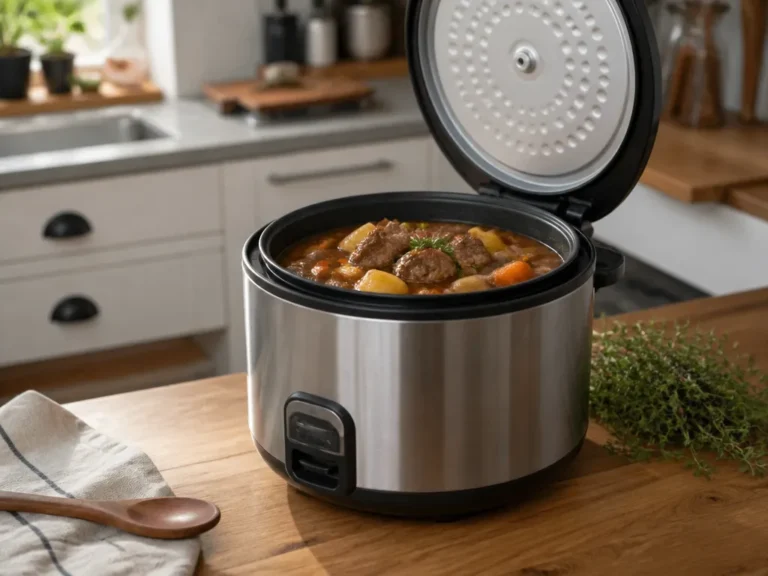
Most slow-cooker failures come down to two things: underfilling the crock so food heats too slowly, or opening the lid and extending the cooking time. A slow cooker cooks at low temperature for hours, so food safety, liquid, timing, and doneness all matter.
Use fresh or thawed meat, fill the crock about 3/4 full, keep the lid closed, and plan for 2-3 hours on high for rice. Follow the recipe’s timing, then check doneness with a thermometer or texture cue rather than relying on smell or guesswork.
Key Takeaways
- Start with thawed food. Never place frozen meat in a slow cooker. It can spend too long in the danger zone while thawing and heating.
- Fill to 3/4 full. This helps heat reach the food evenly without crowding the crock.
- Use enough liquid. Broth, water, or sauce transfers heat, keeps food moist, and helps prevent scorching.
- Choose the right setting. Low suits long, gentle cooking. High speeds things up but still needs enough time for safe doneness and tender texture.
- Keep the lid closed. Opening the cooker releases heat and steam, which extends the cooking time.
- Check real doneness cues. Use internal temperature, tenderness, or texture instead of judging by time alone.
- Cool leftovers promptly. Portion food into shallow containers rather than leaving it to cool in the crock.
How to Use a Slow Cooker Properly, Step by
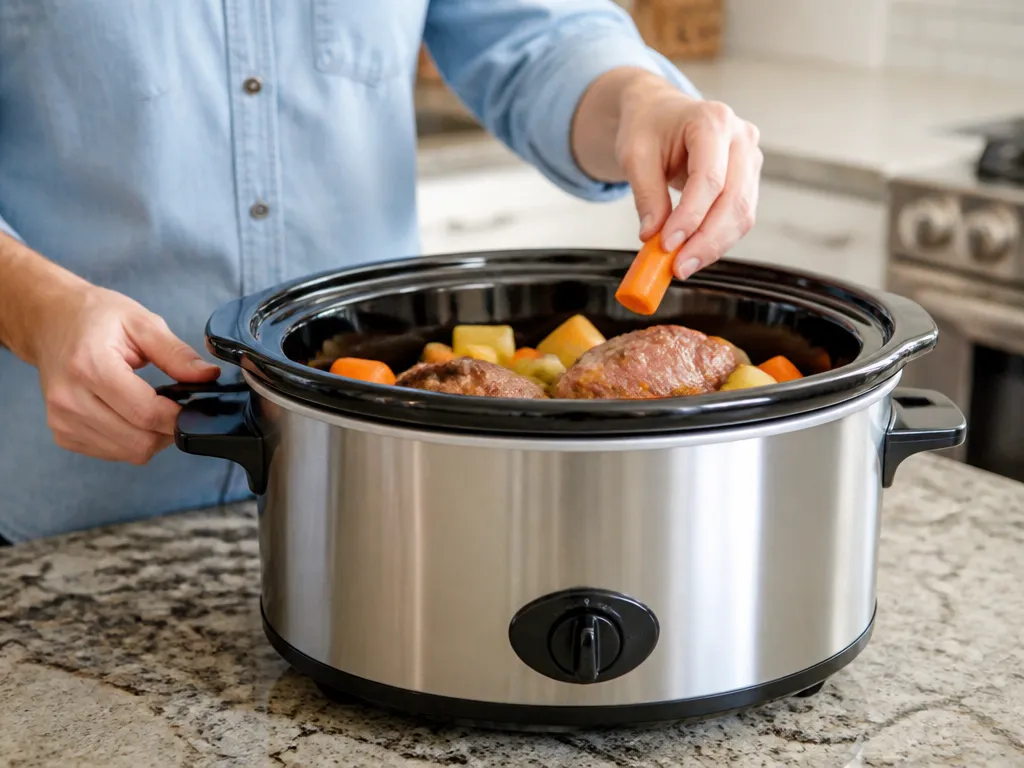
- Prep the ingredients first. Cut vegetables into roughly even pieces so they soften at the same pace. Trim excess fat from meat if the dish tends to become greasy, since fatty cuts release oil into the cooking liquid.
- Set up the cooker. Place the removable insert in the base and make sure the lid fits securely before you start. If the cooker has a warm setting, identify it so you do not mistake it for a cooking setting.
- Layer food for even cooking. Put slowest-cooking ingredients on the bottom and more delicate ingredients higher up, closer to the lid. Dense root vegetables belong on the bottom, while seafood and dairy usually go in later if the recipe calls for them.
- Add the recipe’s liquid. Use broth, water, or sauce as directed. Too little liquid can leave the bottom dry and increase the risk of scorching, especially when the dish contains fat or sugar.
- Set the cooker to low or high and cover it. Keep the lid on throughout the main cooking window. Each lift drops the internal temperature and lengthens the total cook time.
- Check doneness at the recipe’s suggested time. Test the thickest piece of meat or inspect the texture of rice, pasta, and vegetables. If the food needs more time, replace the lid and continue cooking in short increments.
- Store leftovers quickly. Transfer food to shallow containers and refrigerate promptly. Food cools slowly in a covered crock, so do not leave a finished meal sitting on the counter.
Prepare Ingredients, Layer Foods, and Add Enough Liquid
A slow cooker works more like a low-heat oven than a magic dump-and-walk-away appliance. Even cuts and sensible layering help heat reach the food, while liquid carries heat through the dish and keeps the surface from drying out.
Cut ingredients according to how quickly they cook. Dense vegetables such as potatoes and carrots should be cut a bit smaller than they would be for roasting because they soften gradually in gentle heat. Trim tough cuts of meat, season them, and place the thickest pieces where they will cook evenly.
A reliable layer order is:
- Slowest-cooking foods on the bottom.
- Faster-cooking foods above them.
- Ingredients that overcook easily added later, if the recipe allows.
Rice, pasta, and thick vegetables need particular attention. They can change from firm to mushy during a long cook, so follow the recipe’s timing rather than adding them at the beginning automatically.
Liquid keeps the cooker from turning into a scorching hot plate. Many recipes rely on both the added liquid and the steam trapped under the lid.
Match the liquid to the dish. Soup or stew needs enough broth to create a saucy base, while a roast may need less to avoid watery drippings. Too little liquid can burn the bottom; too much can dilute flavor and soften ingredients excessively.
How to Adjust Liquid When You Improvise
- If the dish looks dry through the glass near the end of cooking, add warm broth in small amounts, replace the lid, and cook briefly.
- If the dish looks watery, thicken it after cooking with a slurry or reduce it on the stovetop before serving.
Set Temperature and Time for Safe, Tender Results
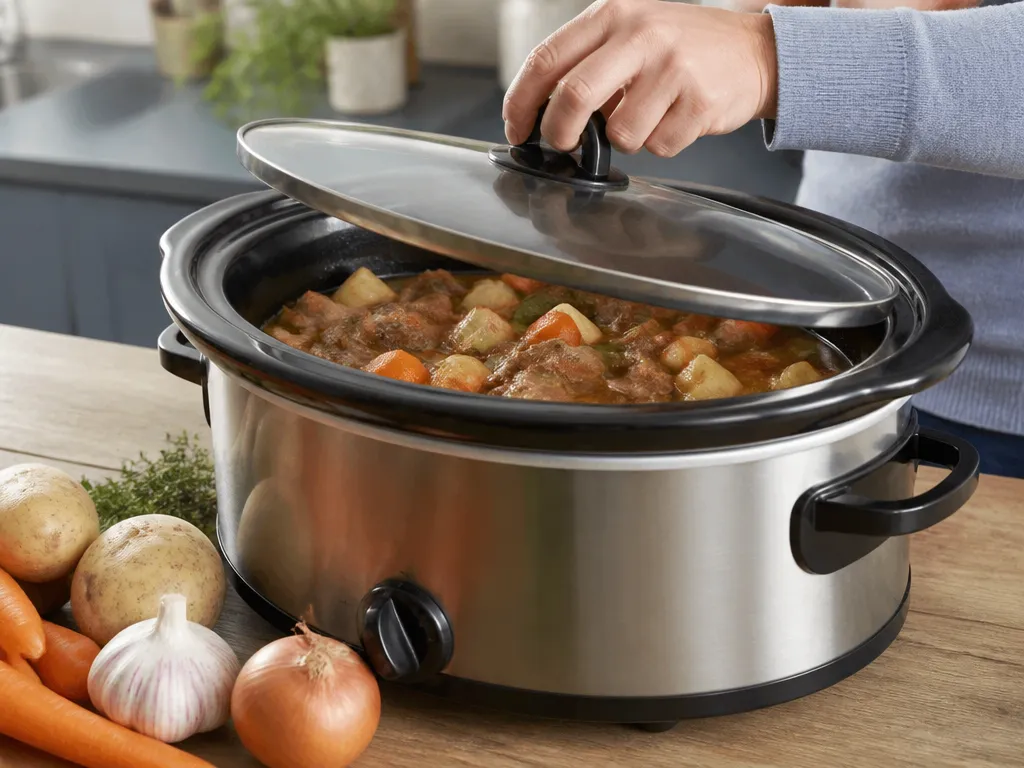
Use low for long, gentle cooking and high when you need a faster result. High still requires enough time for meat to reach safe doneness and for tough collagen to break down.
As a timing anchor, slow-cooker rice takes between 2 and 3 hours to cook on high. If the rice is still firm, keep cooking with the lid on until the grains reach the texture you want. Turning the cooker off will not finish the rice reliably.
Starting temperature and cut thickness affect the result. A thick roast taken from the refrigerator needs longer than thin stew meat, even on the same setting. If you are cooking food straight from the refrigerator, do not shorten the recipe’s time.
Follow the recipe’s timing first, then make small adjustments after the minimum cooking time. This matters most with rice, pasta, and vegetables, which can become overcooked quickly once they reach tenderness.
Temperature Choice Cheat Sheet
- Low + longer time: Best for roasts, beans, and stews that need gradual tenderizing.
- High + shorter time: Useful when dinner needs to be ready sooner, but still allow enough time for safe doneness and the texture you want.
Keep the Lid Closed and Check Doneness at the Right Time
Set a timer for the recipe’s suggested check point. Then use the cue that fits the food:
- Meat: Check internal temperature with a food thermometer or test fork tenderness in the thickest part.
- Stews and braises: Look for meat that is fork-tender and juices that run hot throughout.
- Vegetables: A fork should pierce them easily without making them fall apart.
- Rice: Grains should be fluffy and tender with no hard core.
- Pasta: It should be cooked through without swelling into mush.
- Soups and stews: The contents should be hot throughout, with simmering bubbles near the edges.
If the food needs more time, replace the lid and continue cooking. Check again after a short interval instead of waiting through another full cycle. Small adjustments help prevent overcooking, particularly on high.
Choose the Right Cooker Size and Setting
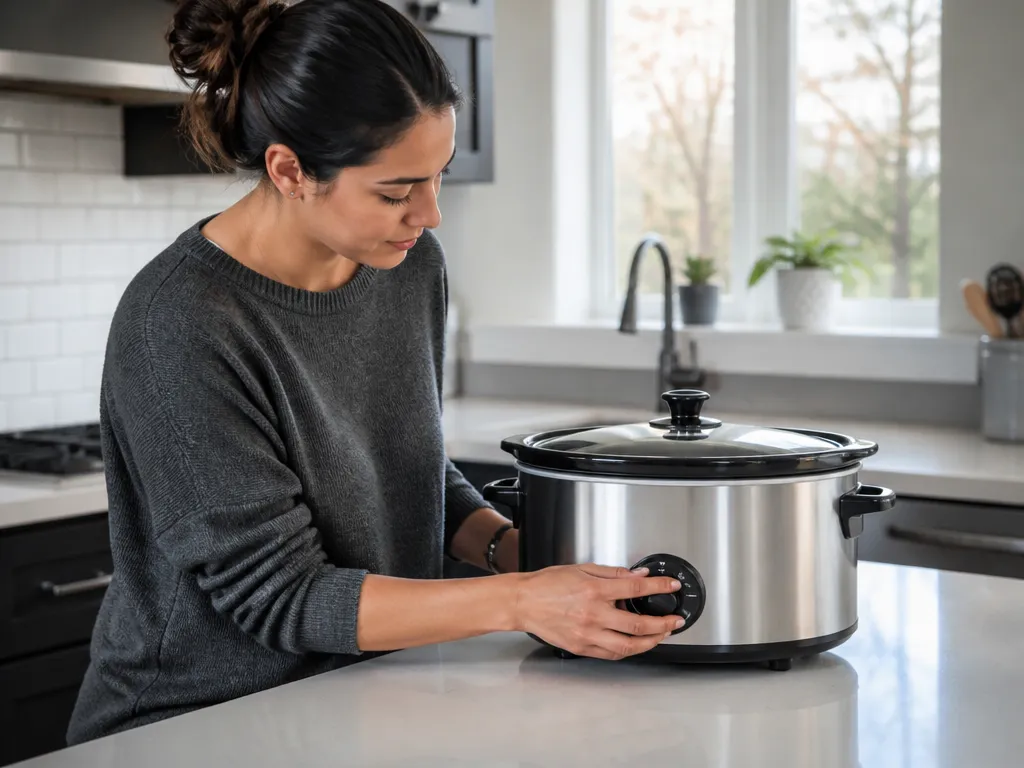
The cooker should be large enough for the recipe but not so large that the food forms a shallow layer and heats slowly. An overfilled crock can crowd the lid and disrupt steam circulation, while an underfilled one may heat unevenly.
Cooker size can change timing. Smaller inserts generally heat their contents faster because there is less mass to warm. Larger inserts may take longer with the same amount of food, so do not assume one recipe time works identically across different brands and sizes.
Most slow cookers have low, high, and warm settings. Warm is for holding fully cooked food for a short window, not for bringing an undercooked meal to a safe serving temperature.
Thick sauces also need enough liquid to transfer heat. They can cling to the sides and bottom and scorch more easily. If you are adapting a stovetop recipe, loosen the sauce before slow cooking rather than starting with a dense paste.
Slow Cooker Sizing
- 3-quart: Often enough for smaller families or smaller batches.
- 5-quart: Commonly sized for about 3 to 4 people.
- 6-quart: Better suited to groups and larger batches.
Clean the Cooker Without Damaging the Insert
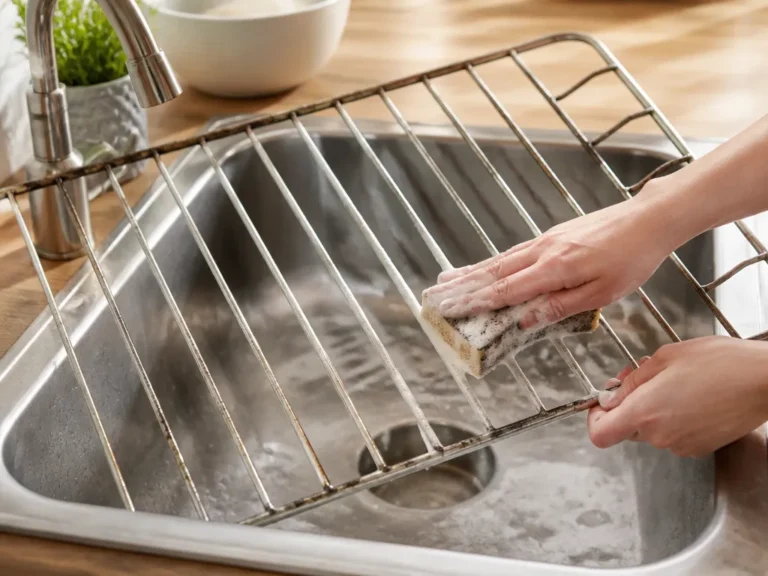
Let the insert cool before washing it. Soak stuck-on food in warm, soapy water instead of scraping aggressively. Sudden temperature changes can stress ceramic, so do not put a hot insert directly into cold water.
Wash the removable insert and lid with warm, soapy water, then dry them thoroughly. Check the manufacturer’s manual if you are unsure whether a particular liner or insert is dishwasher-safe.
Wipe the base gently when sauce spills. Most bases should never be submerged, so keep the electrical section dry and clean only the accessible surface around the heating area.
Before the next meal, check for cracks, warping, or residue that could interfere with contact between the insert and the heating base. Persistent discoloration should be treated according to the manual rather than attacked with harsh scraping, which can scratch ceramic surfaces.
Quick Cleaning Routine
- Cool the insert first.
- Soak stuck food with warm, soapy water.
- Wash the insert and lid.
- Dry all removable parts thoroughly.
- Wipe the base without submerging it.
Fix Burning, Watery Meals, and Undercooked Food
Most slow-cooker problems come from one of three variables: heat exposure, liquid level, or load size. Start with the final symptom, then trace it back to the preparation and settings.
Burning usually means the dish had too little liquid, too much concentrated sugar, or an unsuitable load size. If the bottom is scorched, increase the liquid slightly next time. Sweet or tomato-forward dishes need enough broth or water to prevent thick ingredients from sticking near the heating element. Delay thickening until the slow cooking is finished.
Watery meals usually contain too much liquid or ingredients that release water during a long cook. Simmer the finished dish uncovered on the stovetop, or stir in a slurry and cook until it thickens. Mushrooms and other watery vegetables can add more liquid than expected, so adjust the starting amount next time.
Undercooked meat may need more time at the correct setting, especially if the cut is thick. Undercooked rice or beans can result from too little cooking time, an incorrect liquid ratio, or repeated lid opening. Continue cooking with the lid on and check the texture again after a short interval.
If you accidentally add frozen meat, do not assume the usual cooking schedule will work. Frozen meat may thaw and cook unevenly. The safer fix is to stop and re-plan rather than continue with the original assumptions. Thaw meat before the next meal and use the normal recipe schedule.
Fast Fixes by Symptom
- Burning at the bottom: Add liquid next time and avoid thickening sauces before cooking.
- Watery texture: Reduce the dish after cooking or thicken it on the stovetop.
- Undercooked rice or beans: Continue cooking with the lid on, verify the liquid ratio, and check the texture again.
- Tough meat: Continue cooking at the recipe’s setting until it becomes tender and reaches safe doneness.
- Overcooked pasta or vegetables: Add those ingredients later or shorten their cooking time in the next batch.
FAQ
How long should I cook something in a slow cooker?
Cook time depends on the dish, the setting, the amount of food, and the thickness of the ingredients. As a concrete example, slow-cooker rice takes between 2 and 3 hours on high. For meat and stews, follow the recipe’s time range, then check at the recommended point.
Can I put frozen meat in a slow cooker?
Do not put frozen meat in a slow cooker. It takes longer to thaw and cook, which can leave the center in the danger zone too long. Use fresh or thawed meat, then cook it on low or high according to the recipe.
How full should my slow cooker be?
Use the recipe’s recommended fill level. Filling it much less can slow heating, while filling it too high can interfere with steam and circulation.
Do I need to preheat a slow cooker?
You usually do not need to preheat one. Most recipes are written for loading the ingredients, setting the cooker to low or high, and starting immediately. Correct layering, enough liquid, and a closed lid have a greater effect on the result.
Why is my slow-cooked meal watery even after hours?
The dish probably started with too much liquid, or its ingredients released more water than expected during the long cook. Simmer it uncovered on the stovetop to reduce the liquid, or thicken it with a slurry. Next time, measure the liquid more carefully.