
Can Dutch Oven Go In Oven: Temperature Limits Explained
You can put a Dutch oven in the oven, but the safe temperature depends on the material and the lid hardware. Cast iron is commonly rated up to 500°F, enameled cast iron up to 450°F, and ceramic usually tops out around 375°F to 450°F. The lid knob may have a lower limit, often around 375°F to 400°F, so check the entire pot rather than the body alone.
Most Dutch ovens are oven-safe, but the lowest-rated part sets the limit. A cast iron pot rated to 500°F is not safe at that temperature if its plastic knob is rated only to 375°F. Check the manufacturer’s instructions or the temperature markings before you cook.
Dutch Oven Oven-Safety
- The answer is usually yes. Most Dutch ovens can go in the oven, but the lid and knob may lower the safe temperature.
- Check the material. Cast iron is commonly rated up to 500°F, while enameled cast iron is commonly rated up to 450°F.
- Expect ceramic to have a lower cap. Ceramic Dutch ovens are commonly rated around 375°F to 450°F.
- Inspect the knob. Phenolic or plastic knobs may cap around 375°F to 400°F.
- Avoid thermal shock. Preheat the oven and limit sudden temperature changes, especially with enameled pots.
- Protect the enamel and lid. Do not overheat an empty enameled pot, and verify the rating of any glass lid.
How to Check Whether Your Dutch Oven Is Oven-Safe
A Dutch oven can go in the oven because it is usually built for high, steady heat, especially when it is made from cast iron or enameled cast iron. The safe temperature depends on the entire assembly: pot, lid, knob, handles, and any gasket or silicone parts.
Start with the pot material. Cast iron is commonly rated up to 500°F, enameled cast iron up to 450°F, and ceramic roughly 375°F to 450°F. If your recipe exceeds the pot’s limit, lower the oven temperature or use a different baking dish.
Then check the lid and knob. A cast iron lid may tolerate the same heat as the pot, but phenolic and plastic knobs often have lower limits around 375°F to 400°F. Heating the pot to 450°F when the knob is rated for only 400°F can warp or discolor the knob.
Glass lids need their own rating as well. A glass lid may be suitable for ordinary oven cooking but unsafe under very high heat or a broiler. Remove any gasket or silicone piece unless the manufacturer specifically says it is oven-safe.
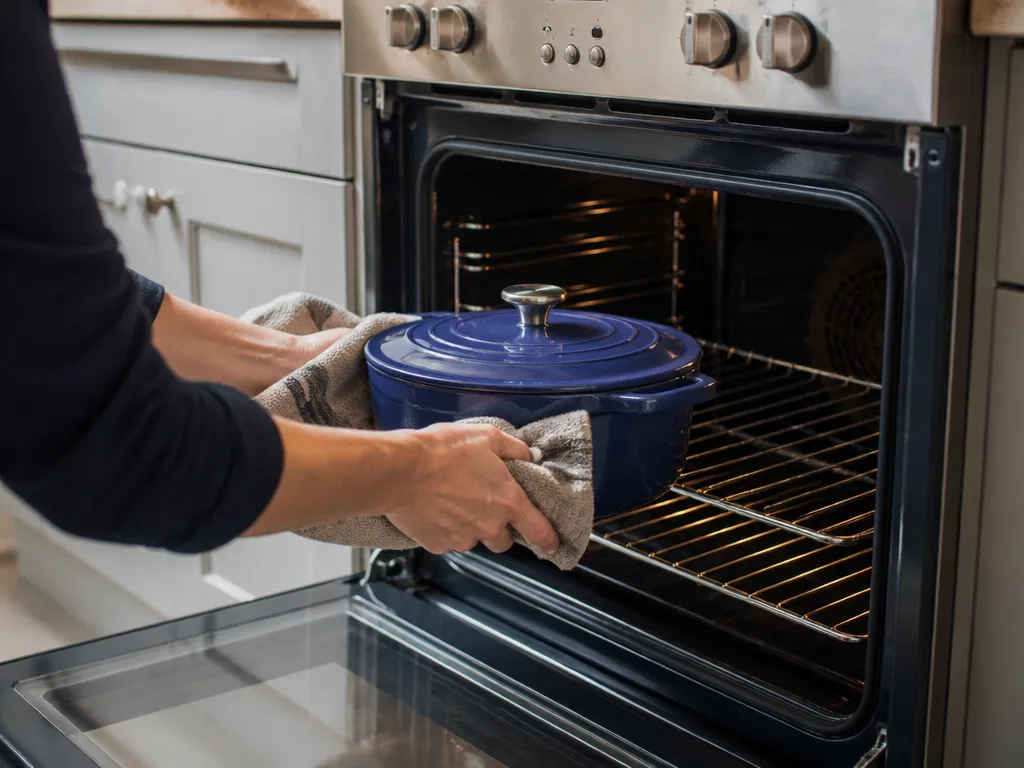
Thermal shock is another concern. Moving a very hot Dutch oven from the stovetop into a cold oven creates a sudden temperature change that can stress enamel and other components. Preheat the oven before transferring the pot whenever possible.

Helpful pick
Enameled Cast Iron Dutch Oven – Umite Chef 5QT Pot with Lid & Cotton Potholders – Heavy-Duty Cookware for Bread Baking, Braising, Stews, Roasting(Cream White)
This enameled cast iron Dutch oven is built for high heat, ideal for oven use up to its rated temperature.
The Temperature Limit Comes From the Lowest-Rated Part
The key number is not the highest temperature the pot can withstand. It is the lowest rating among the pot, lid, knob, and other components.
Cast iron is commonly rated to 500°F, enameled cast iron to 450°F, and ceramic typically to 375°F to 450°F. A glass lid, plastic knob, gasket, or silicone handle cover may have a lower limit than the main body.
If the knob is removable, you may be able to take it off before baking or replace it with a metal knob rated for higher heat. Only do this when the design allows it, and remember that changing the knob does not raise the limit of the pot, lid, or enamel.
Put the Dutch oven on an oven rack rather than directly on the bottom of the oven unless the manual says otherwise. The bottom of the oven can run hotter, and direct contact may expose the pot to more heat than the stated oven setting suggests. Do not place it under a broiler unless the manufacturer specifically approves broiler use.
How to Use a Dutch Oven in the Oven Safely
After searing meat in the pot, wait until the oven is at or close to the target temperature before transferring it. This reduces thermal shock.
Avoid heating an enameled Dutch oven empty over high heat for long periods. The enamel can tolerate high oven temperatures within its rating, but empty heating can create hot spots at the base and lid and stress the coating.
“Oven-safe” does not automatically mean “broiler-safe.” A broiler produces intense, uneven heat from above, which can damage knobs, lids, glass, and enamel even when ordinary oven use is allowed.
Use oven mitts when handling the pot, and remember that the lid, handles, and knob remain dangerously hot after the pot leaves the oven.

Helpful pick
Nuovva Enamelled Cast Iron Dutch Oven Pot with Lid-6.4 Quart Non Stick Casserole Pot-Heavy Duty & Oven Safe up to 500° F for Bread Baking, Braising, Stews, Roasting – 28cm Dark Blue
With a 500°F rating, this Dutch oven resists thermal shock when transferring from stovetop to oven.
Why Dutch Ovens Work Well in the Oven
A Dutch oven provides steady, even heat because its thick walls hold temperature and its lid traps moisture. That combination suits braising, bread baking, roasted chicken, and stews that benefit from long, controlled cooking.
Oven cooking can also reduce scorching compared with stovetop cooking. The covered pot holds steam and distributes heat around the food, so you do not need to stir constantly as you might with a thinner pan.
Cast iron retains heat particularly well. Once heated, it stays hot through a long bake or braise and helps limit temperature swings.
Enameled cast iron offers similar heat retention without the need to season the cooking surface. It is easier to clean, although the enamel can chip if you drop the pot or strike it against a hard surface. Its oven use is still limited by the enamel’s temperature ceiling.
Ceramic Dutch ovens are often lighter and easy to clean, but they generally tolerate less heat. For high-temperature browning, cast iron or enameled cast iron is usually the more practical choice based on the published temperature caps.

Helpful pick
Lodge Essential Enamel Cast Iron Dutch Oven, 6 Quart, Lagoon | Ideal for Bread Baking, Braising, Marinating & Slow Cooking, Features Moisture-Sealing Lid & Dual Handles
Its moisture-sealing lid and even heat retention make it perfect for braising, bread baking, and stews.
Choosing a Dutch Oven by Temperature
The right material depends on the temperature your recipe requires and the limitations of the lid and knob.
| Dutch Oven Type | Maximum Oven Temperature |
|---|---|
| Cast Iron | 500°F |
| Enameled Cast Iron | 450°F |
| Ceramic | 375°F – 450°F |
Cast iron is the most flexible choice for higher-temperature baking because it is commonly rated up to 500°F. If your recipes regularly use 450°F or higher, cast iron avoids some of the knob restrictions found on enameled and ceramic models. You still need to confirm the lid and knob ratings.
Enameled cast iron is a strong middle ground for everyday oven cooking, with a common maximum of 450°F. It offers easier cleanup and good heat retention, but the enamel can chip from impacts and can crack or suffer stress from sudden temperature changes.
Ceramic works well when recipes stay within the 375°F to 450°F range. It is a reasonable choice for gentler cooking, but pushing a ceramic pot toward the top of its rating increases heat-stress and cracking risks.
A removable knob provides another option. Replacing a low-rated knob with a metal one rated for higher heat can raise the practical limit, but only if the pot and lid materials can also handle the recipe temperature.
💡 This enameled cast iron Dutch oven is oven-safe up to 500°F, exceeding the typical 450°F enamel limit. Parmedu 5.5QT Enameled Cast Iron Dutch Oven for Sourdough Bread Red | Non-Stick Slow Cooking & Home Meals Pot, Oven Safe up to 500℉, Easy to Clean, PFAS Free, Beginner-Friendly.
Use the Lowest Component Rating
Before cooking, look for an oven-safe symbol or temperature marking and identify the knob material. If the knob is phenolic or plastic, assume a cap around 375°F to 400°F unless the manual gives a different rating.
If you are uncertain about the rating, stay at or below the lowest known limit. Lowering the oven temperature and extending the cooking time is safer than exceeding a knob or enamel limit.
Dutch Oven Oven-Safety
A 450°F bread recipe works in a cast iron Dutch oven with a common 500°F maximum. You can preheat the Dutch oven in the oven for stronger initial crust development, then load the dough and bake with the lid on. Confirm that the lid knob can also handle 450°F.
A 350°F braise is well within the typical 450°F ceiling of an enameled Dutch oven. The covered pot traps steam and helps keep the meat tender, and the moderate temperature avoids unnecessary stress on the enamel.
A 475°F recipe does not suit a typical enameled Dutch oven. Enameled cast iron is commonly capped at 450°F, and the knob may be limited to 375°F to 400°F, so both the enamel and knob could be exposed to excessive heat.
Ceramic works for Dutch oven chili when the recipe stays within the 375°F to 450°F range. If you want faster thickening at a higher temperature, reduce the heat and cook longer rather than pushing the ceramic beyond its rating.
Knob damage is an easy problem to miss. If the pot itself has handled previous recipes but the lid handle later looks warped or discolored, the knob may have exceeded its limit. Phenolic or plastic knobs are commonly rated around 375°F to 400°F even when the pot body can handle more heat.
FAQ
What Dutch oven materials can go in the oven?
Cast iron, enameled cast iron, and ceramic Dutch ovens can generally go in the oven within their published temperature ranges. The lid and knob must also be safe at the oven temperature you plan to use.
What is the safest oven temperature for a Dutch oven?
Use the manufacturer’s lowest stated limit for the pot, lid, knob, gasket, and handle. If you do not know the knob rating, treat phenolic or plastic knobs as capped around 375°F to 400°F.
Can I put a Dutch oven in a 500°F oven?
A 500°F oven is typically suitable only for a cast iron Dutch oven rated to 500°F, with a lid and knob that can also handle 500°F. Enameled cast iron is commonly capped at 450°F, and ceramic is commonly capped around 375°F to 450°F.
How do I move my Dutch oven from the stove to the oven safely?
Preheat the oven first so the hot pot does not move directly into a cold environment. After searing, transfer the Dutch oven when the oven is already at or near the target temperature.
What is the most common mistake when using a Dutch oven in the oven?
People check the pot material and forget the lid knob. Phenolic or plastic knobs can cap around 375°F to 400°F, so they may warp even when a cast iron pot remains within its higher limit. Verify the knob rating before baking.
Comments are closed.