How To Clean Grease Off Kitchen Walls Step-by-step Routine
Grease on kitchen walls builds when airborne oil settles near the stove and bonds with dust. Plain water usually spreads the oily film instead of removing it. Warm water, dish soap, a microfiber cloth, and a thorough rinse will handle most buildup, while baking soda paste or a kitchen degreaser can tackle stubborn spots.
Start by softening the residue with warm water. Wash with a small amount of dish soap, rinse with clean water, and dry the wall completely. Use the least abrasive cleaner that works for the surface, especially on painted drywall, matte paint, wallpaper, and textured finishes.
Key Takeaways
- Start with warm water. It softens greasy buildup so soap can break it down instead of smearing it.
- Use a dish soap solution. A few drops of dish soap in warm water cuts oil without harsh abrasion.
- Wipe with microfiber. Microfiber cloths reduce streaking and are gentle on painted walls.
- Spot treat stubborn splatter. Baking soda paste works for limited areas, followed by a rinse and thorough drying.
- Match the cleaner to the surface. Painted walls, tile, laminate, and sealed finishes respond differently to vinegar, scrubbing, and abrasives.
- Avoid harsh chemicals. Undiluted bleach can ruin paint or stain nearby surfaces.
How to Clean Grease Off Kitchen Walls Step by
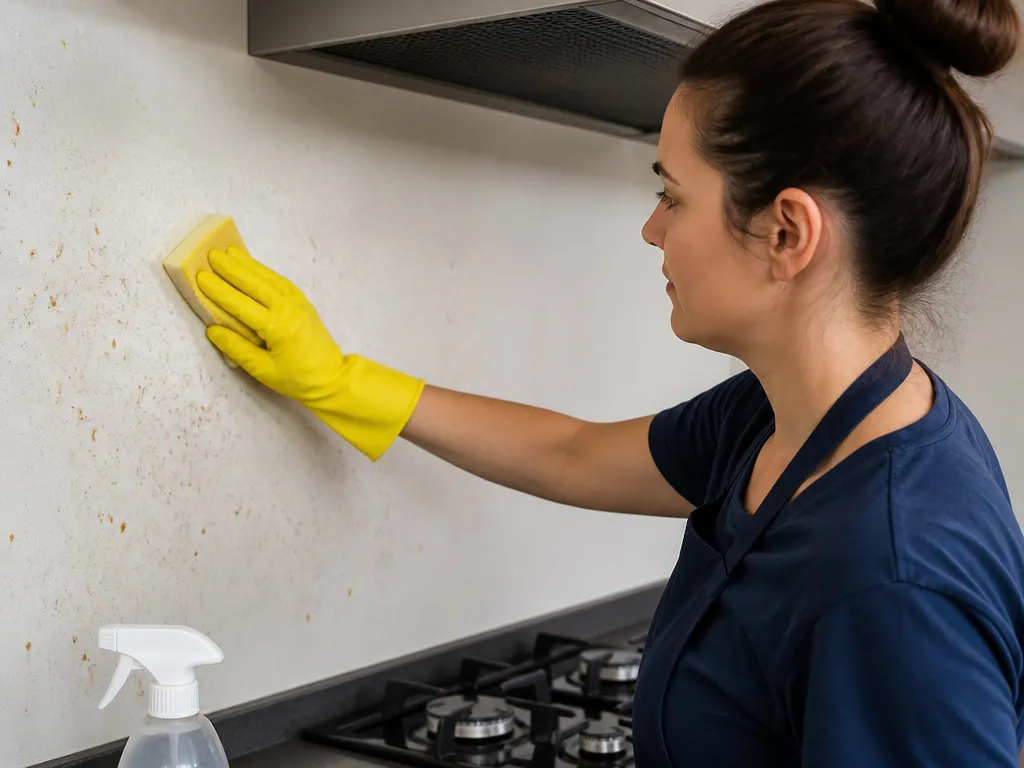
Most kitchen-wall grease comes off with one repeatable routine: soften it with warm water, wash with dish soap, rinse with clean water, and dry. Dish soap emulsifies oil, while rinsing removes the residue that can leave a tacky film behind.
Gather a bucket or bowl, warm water, dish soap, a microfiber cloth or clean dishcloth, and a second clean cloth for rinsing. Keep a soft sponge nearby for resilient surfaces and baking soda for limited spot treatment.
Step-by-step grease wipe routine
- Clear the area. Move papers, plates, decorations, and anything else that could get wet or drip onto the wall. Protect nearby surfaces with towels.
- Pre-wet with warm water. Lightly dampen the greasy area, then wait 1-2 minutes for the film to soften.
- Mix the wash. Add a small amount of dish soap to warm water. The solution should look slightly soapy, not heavily sudsy.
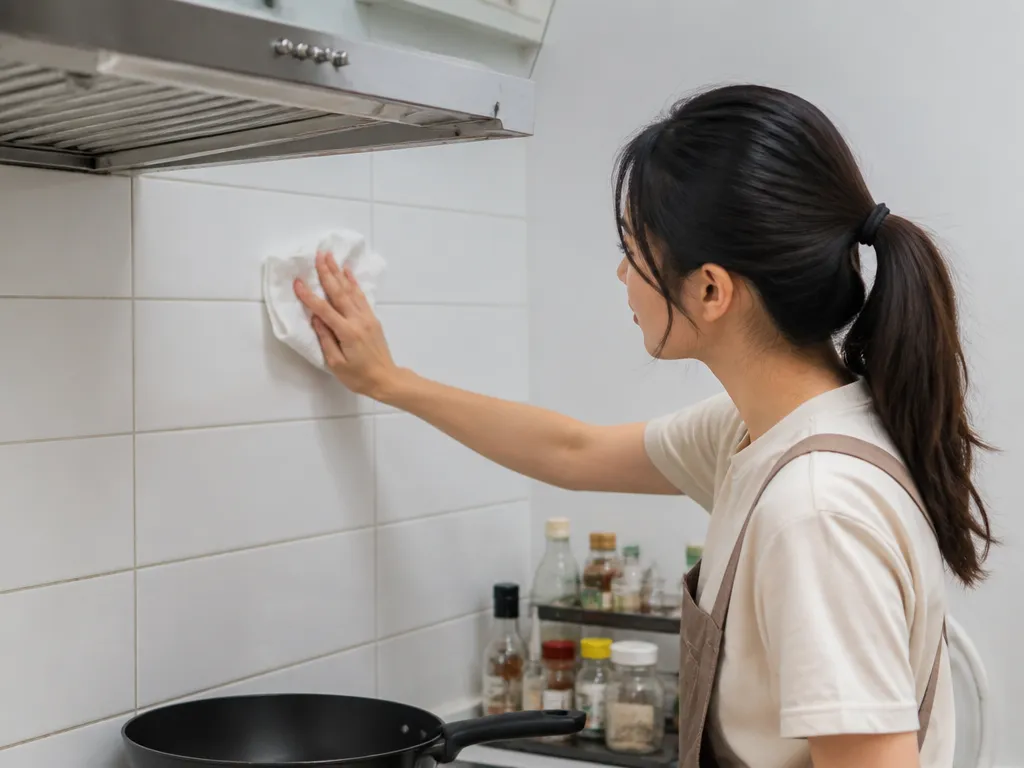
- Wipe gently. Dip a microfiber cloth into the solution, wring it out well, and wipe in steady strokes.
- Rinse the wall. Use a clean cloth dampened with plain warm water to remove soap and loosened grease.
- Dry thoroughly. Pat the wall dry with a clean towel so leftover moisture and residue do not attract more dust.
Heavy buildup near the stove may require repeating steps 2 to 5. Fresh grease or a lightly dulled film often comes off in one pass. Grease that has been sitting for months usually responds better to two light rounds than to one hard scrubbing session, especially on painted walls.
Use less pressure and make more passes
A rough sponge and heavy pressure can leave shiny patches on semi-gloss paint or damage certain finishes. Keep the cloth damp rather than dripping, wipe, rinse, and dry. If the wall still looks grimy, move to a targeted spot treatment instead of immediately reaching for a stronger chemical.
For persistent splatter, mix baking soda with a little water to make a thick paste. Apply it only to the spot, wait a few minutes, then wipe gently and rinse. Do not spread the paste over the entire wall or grind it into the finish.
Why Kitchen Walls Get So Greasy
Sautéing, frying, and searing send tiny oil particles into the air. Those particles settle on nearby vertical surfaces and mix with ordinary kitchen dust. Over time, the mixture becomes a sticky film that attracts more grime and makes the wall look dull.
Heat makes the problem worse. Grease clings more strongly around the stove and range hood, and warm residue feels tackier and becomes harder to remove. Cleaning once a day works better than waiting a month for a thick film to form.
Grease often appears gradually: a few small splatters turn into a wider smudged band. Plain water does not remove the oil, so it may simply spread the film across a larger area.
Cleaning habits can add to the buildup. A cloth carrying soap residue from another task may leave a film behind, and failing to dry the wall can let that residue become tacky again and collect dust.
What You Need for Grease Removal
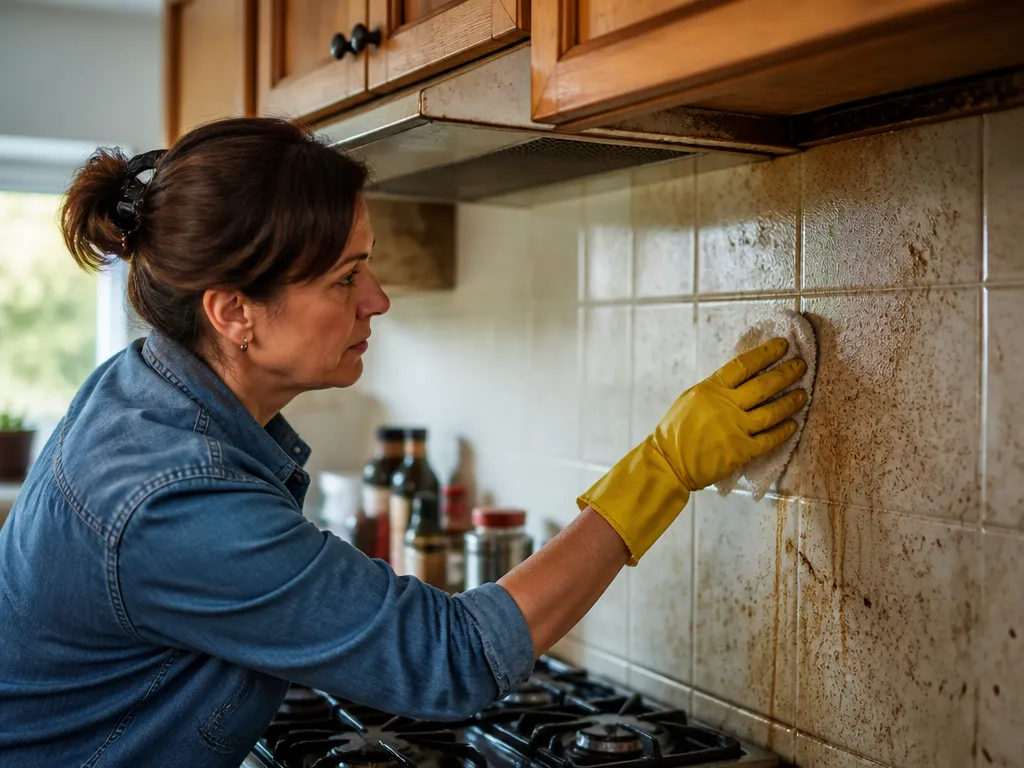
Warm water, dish soap, microfiber cloths, and a drying towel remove most kitchen-wall grease. Add a soft sponge for tougher areas and baking soda for limited spot treatment. Together, these supplies soften the residue, emulsify the oil, and remove it without aggressive scrubbing.
| Item | Best use | Why it helps |
|---|---|---|
| Dish soap | Everyday grease removal | Cuts oil without harsh abrasion |
| Warm water | First-pass softening | Loosens sticky buildup |
| Microfiber cloth | Painted walls | Gentle, low-lint, less streaking |
| Soft sponge | Tougher spots | Adds a little pressure without harsh scrubbing |
| Baking soda paste | Spot treatment only | Helps lift stubborn stuck-on splatters |
| Dry towel | Final step | Prevents residue and streaks |
Wallpaper, textured walls, and older painted surfaces need a lighter touch. Use a microfiber cloth, keep moisture to a minimum, and rely on repeated gentle passes rather than abrasive scrubbing. For most kitchens in the United States, this basic kit is enough for walls and many backsplash-adjacent surfaces.
Choose the Cleaner for the Wall Surface
The safest cleaner depends on the wall coating and whether the surface is porous. Dish soap is the best default for many painted walls because it targets oil without requiring aggressive pressure.
Baking soda paste is a reasonable next step when soap does not lift a stubborn mark. It remains a mild household option, but the granules can be too abrasive for some finishes. Use it only on small areas, wipe gently, and stop if the finish starts to look rough or develops a glossy patch.
Diluted vinegar can help on some non-porous, wipeable surfaces, but it is not a universal solution for painted walls. Test it in an inconspicuous area first, rinse after use, and keep it away from electrical outlets and switches.
Cleaners and techniques that can damage finishes
Do not treat painted kitchen walls like grimy metal. Undiluted bleach can ruin paint or stain nearby surfaces. Baking soda can scratch dull paint, and hard scrubbing can change the sheen of semi-gloss or glossy finishes.
Start with dish soap and warm water, then escalate only when necessary. If you see peeling paint, bubbling, or flaking, stop scrubbing. Grease may be hiding an existing adhesion problem, and heavy wetting can make the damage worse.
The Default Method for Most Grease
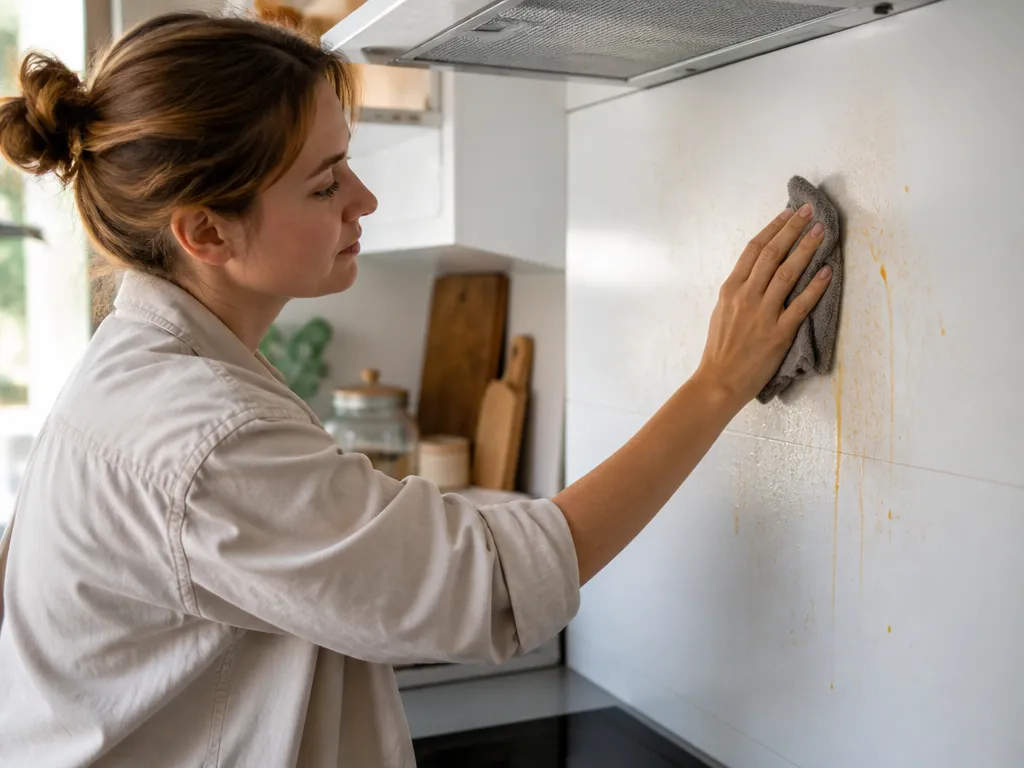
Do not soak the wall. The surface should be damp, not dripping wet. Excess water can seep into textured paint, seams, or trim and contribute to spotting or peeling.
How to tell whether the method is working
After the first wipe, the wall should feel less tacky and show fewer visible smears. If it still looks shiny or oily, the cloth may be redistributing grease rather than lifting it. Rinse the cloth often and switch to a clean section of microfiber so you are not spreading loosened oil back over the wall.
A dull, greasy band near the stove may lose its top oily layer during the first round. A second round with fresh warm water often removes what remains.
A quick timing rule
Wait 1-2 minutes after pre-wetting with warm water. For stubborn splatter, let the soap solution sit gently on the spot for another minute before wiping. This gives the soap time to emulsify the oil without allowing the cleaner to dry on the wall.
Removing Grease From Painted Walls and Other Surfaces
Painted drywall and painted trim need low-lint cloths, gentle pressure, and minimal moisture. The aim is to remove the grease without changing the wall’s color, texture, or sheen.
Microfiber works well on painted walls because it reduces streaking and distributes light pressure evenly. Use a soft sponge only when necessary, and test it on a small area before working across a larger section.
What changes by surface type
- Semi-gloss and glossy paint: Can show shiny cleaning marks if you scrub too hard or let cleaner dry. Use gentle pressure and rinse well.
- Matte paint: Hides smears better but can scratch when baking soda is rubbed over a large area. Spot treat only.
- Texture and popcorn surfaces: Need very little water. Avoid soaking, wipe lightly, and dry quickly.
- Laminate and sealed cabinets: Usually tolerate diluted vinegar and dish soap, but rinse and dry them after cleaning.
A wall can look clean and still feel slightly tacky when soap residue remains. Make an additional rinse pass with a clean, damp cloth, then dry the surface.
When cleaning around outlets, turn off the breaker if you need to work close to the hardware. Do not let cleaner run into gaps, and keep cloths damp rather than wet.
When to Use Degreaser, Baking Soda, Vinegar, or a Magic Eraser
A stronger tool is not always a harsher tool. Degreasers target oil films, baking soda paste helps with stuck-on spots, diluted vinegar can work on some non-porous surfaces, and a magic eraser can remove small marks with little liquid. Melamine foam is abrasive, however, so it can alter the sheen of painted surfaces.
Choose the next cleaner based on what remains after the dish soap method.
Degreaser for residue that soap leaves behind
If dish soap removes some grease but leaves a persistent shadow, use a kitchen degreaser according to the label directions. Keep the contact time short, wipe with a microfiber cloth, and rinse if the product instructions call for it. Dry the wall afterward.
Avoid leaving degreaser on painted walls for long periods, particularly matte finishes. Short contact times reduce the risk of dulling the surface.
Baking soda paste for isolated splatters
Mix baking soda with a little water to form a thick paste. Apply it only to the stubborn spot, wipe gently, and rinse. If the paint becomes rough or changes sheen, stop using baking soda and return to dish soap and warm water.
Diluted vinegar for suitable non-porous surfaces
Use diluted vinegar only on surfaces that can tolerate acidity. Test it in an inconspicuous area, wipe gently, and rinse with a clean, damp cloth. Never mix vinegar with bleach or other cleaners.
Magic eraser for small marks
A magic eraser can lift grime through fine abrasion, making it useful for small smudges. On painted walls, use light pressure and consistent strokes. Stop immediately if the finish changes texture or sheen.
FAQ
What is the fastest way to clean grease off kitchen walls?
Warm water and dish soap are the fastest safe starting point. Dampen the greasy area for 1-2 minutes, wipe with a dish-soap solution and microfiber cloth, rinse with a clean damp cloth, and dry. Most kitchens need one or two rounds, particularly when you clean soon after buildup starts.
Can I use vinegar to remove grease from painted walls?
Use diluted vinegar only on suitable non-porous, wipeable surfaces rather than as a general cleaner for painted walls. Test it first, wipe gently, rinse with clean water, and dry with a towel.
How do I remove greasy streaks after cleaning?
Greasy streaks usually come from soap residue or incomplete drying. Rinse the wall with a clean cloth dampened with plain warm water, then dry it thoroughly with a dry towel. Use a clean section of microfiber during the rinse so you do not spread loosened oil back over the surface.
Is baking soda safe for all wall paint?
No. Baking soda is best for spot treatment rather than full-wall scrubbing. It can scratch dull paint or change the appearance of some finishes when rubbed hard or spread over a large area. If the finish looks rough or glossier, stop and switch to dish soap and warm water.
What if the grease will not come off with any cleaner?
Repeat the warm-water pre-softening and dish-soap wipe, focusing on small areas instead of scrubbing the entire wall harder. For stubborn spots, try baking soda paste or a kitchen degreaser as directed. Avoid undiluted bleach and heavy abrasion, which can damage the paint and make the marks more visible.
Once the wall is clean, give the area a quick warm-water and dish-soap wipe after particularly greasy cooking sessions. Even once a week near the stove can limit buildup.