How To Cook On Stainless Steel Without Sticking
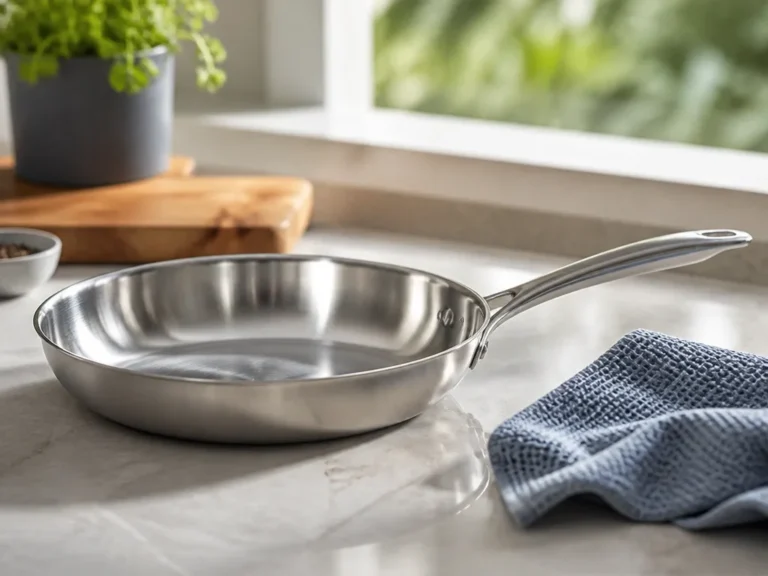
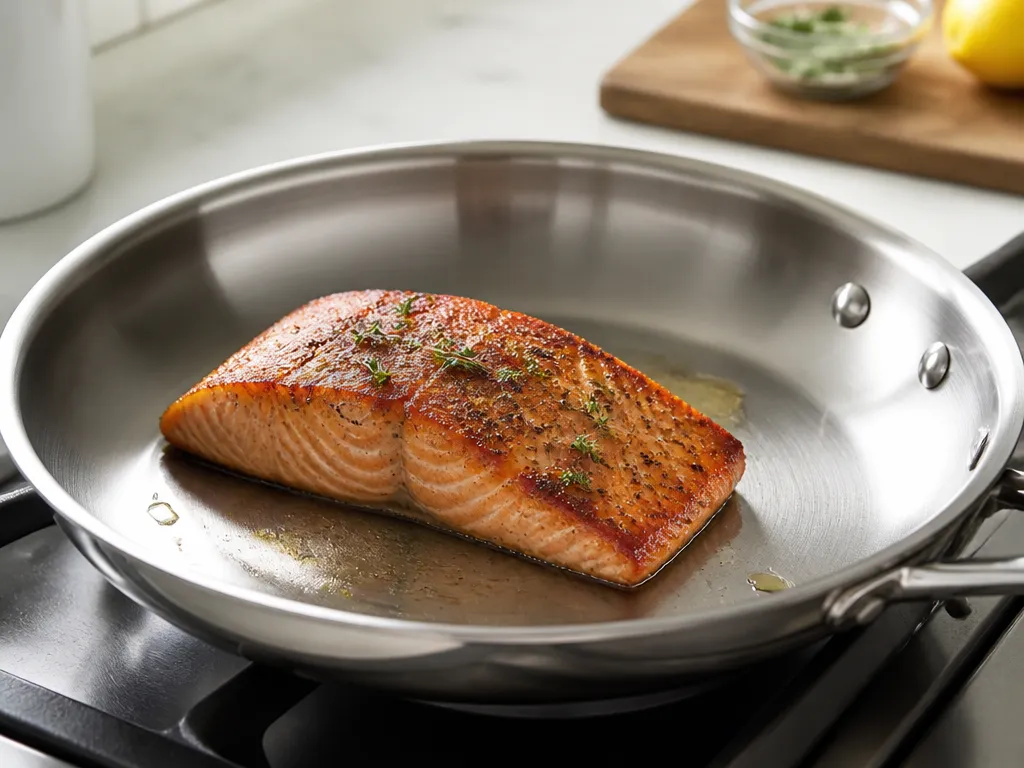
Stainless steel releases food when the pan is evenly hot, the surface has enough oil, and the food stays still long enough to brown. If the pan is too cool or you move food too early, it will grab on – especially eggs, fish, and skin-on meat.
The reliable method is simple: preheat the empty pan, add oil, dry the food, and wait for it to release before flipping. For most proteins, that takes about 3-5 minutes per side, depending on thickness. The surface should look browned, and the food should lift with gentle pressure.
Quick Method for Nonstick-Style Cooking
- Preheat an empty stainless steel skillet over medium-high heat for 2-5 minutes.
- Flick a tiny drop of water into the pan. If it skitters and evaporates quickly, the pan is ready. If it sits, spreads, or steams slowly, keep heating.
- Add 1-2 teaspoons of neutral oil for a small skillet, or more for a larger pan. Tilt and swirl to coat the surface.
- Pat the food dry, especially protein skin and recently washed vegetables.
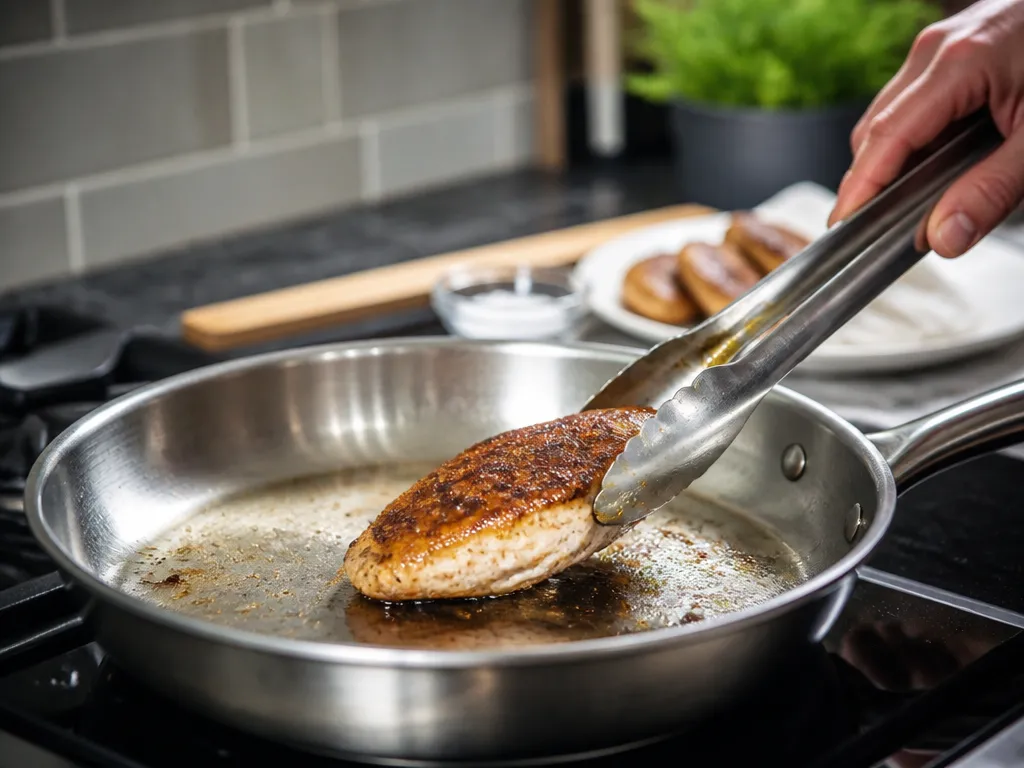
- Place the food in the pan and leave it alone for the first few minutes.
- Test one edge with a thin spatula. If the food lifts easily, flip it. If it resists, wait 30-60 seconds and test again.
- Lower the heat if the outside browns before the center cooks. Raise it slightly if the sizzle stops completely.
- Rest meat off the pan before serving so the crust stays crisp and the juices redistribute.
What You Need
- A stainless steel sauté pan or skillet
- Neutral oil with a decent smoke point, such as canola, grapeseed, or sunflower oil
- Tongs or a thin fish spatula
- A timer
- Hot water or stock for deglazing
- A chainmail scrubber or stainless-safe scrub pad
Why Food Sticks to Stainless Steel
Stainless steel does not naturally behave like a nonstick pan. Food sticks when the pan is too cool, the food is wet, the pan is crowded, or the food is moved before its browned surface has set.
A cool pan allows moisture to escape slowly. Instead of browning, the food steams against the steel, creating a wet layer that encourages adhesion. Moving the food too soon tears the developing crust before it can separate from the pan.
The pan should be hot before the oil goes in, and the food should sizzle as soon as it touches the surface. A steady sizzle is what you want. Aggressive smoking means the pan or oil is too hot; no sizzle means the pan needs more heat.
- Heat: Medium-high is a good starting point for most proteins.
- Oil: Use enough to slick the surface without creating a deep-frying layer.
- Crowding: Cook in batches so the pan stays hot.
- Timing: Do not check every 30 seconds. Give the food time to form a crust.
Step-by-Step Stainless Steel Cooking Method
1. Preheat the Pan
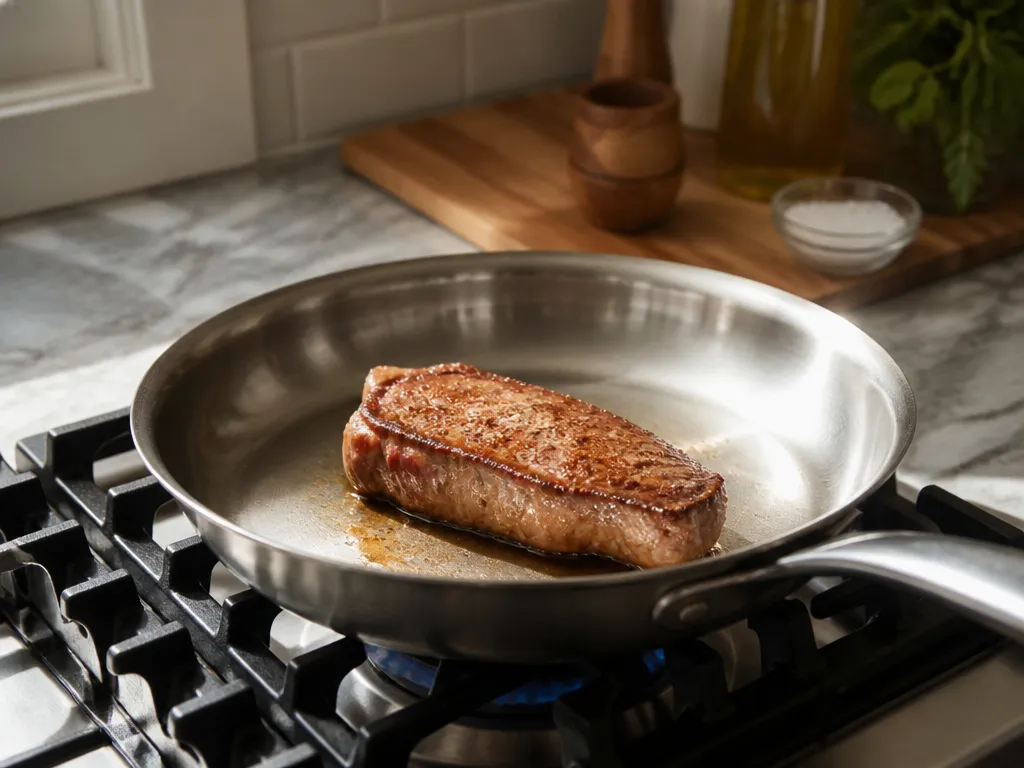
Set the empty skillet over medium-high heat for 2-5 minutes. The entire cooking surface should heat evenly before you add oil.
Test it with a tiny drop of water. A ready pan makes the droplet bead up and skitter across the surface before evaporating. If the water simply spreads and steams, the pan is still too cool.
2. Add Oil After Preheating
Pour in 1-2 teaspoons of oil for a small skillet and more for a larger one. Swirl the pan until the bottom has a thin, even coat.
Adding oil after preheating helps you judge the pan temperature. The oil should look fluid and shimmer lightly, but it should not smoke aggressively.
3. Dry the Food
Pat meat, fish, tofu, and vegetables dry before they go into the pan. Excess surface water lowers the pan temperature and creates steam instead of browning.
Drying matters most for skin-on chicken, salmon, tofu, and vegetables that were recently washed.
4. Place the Food and Leave It Alone
Lay food into the pan away from you to reduce splattering. Do not press it down repeatedly, and do not slide it around immediately after placing it.
The first few minutes are when the browned surface forms. Constant stirring or flipping interrupts that process and makes sticking more likely.
5. Use Release Instead of Guesswork
Slide a thin spatula under one edge. If the food lifts with little resistance, flip it. If it feels attached, do not force it. Wait 30-60 seconds and test again.
Food that resists is usually still developing its crust. Prying it up tears the crust and leaves more of it behind on the pan.
6. Adjust Heat as the Food Cooks
Start medium-high to create browning, then lower the heat once the food has color. This is especially important for thick chicken thighs, pork chops, and steaks.
If the outside is darkening before the center cooks, lower the heat and finish gently. If the sizzle dies completely, raise the heat slightly.
7. Rest Meat Before Serving
Move cooked meat to a plate and let it rest off the pan. This keeps the crust from continuing to cook against the hot steel and gives the juices time to redistribute.
Doneness Cues for Common Foods
The release test works across many foods, but each one has additional signs that it is ready to flip or remove.
- Chicken thighs: The skin should be crisp, deeply browned, and easy to lift at the edge.
- Steak: A browned crust should form and release from the pan. Cook to your preferred internal temperature, using a thermometer if you can.
- Fish: The flesh should whiten around the edges, and the fillet should lift cleanly with a thin spatula.
- Tofu: Press it well before cooking, use moderate heat, and flip it once the surface is deeply browned.
- Eggs: Use slightly lower heat and more butter or oil. Remove them a little before they reach your ideal doneness because they continue setting off the heat.

Helpful pick
TeamFar Stainless Steel Cooking Utensils Set, 7 Pcs Metal Kitchen Utensils
Use these durable stainless steel utensils to easily flip your chicken or steak once they have developed a perfect, non-stick crust.
Heat, Oil, and Crowding
Use a Two-Stage Heat Strategy
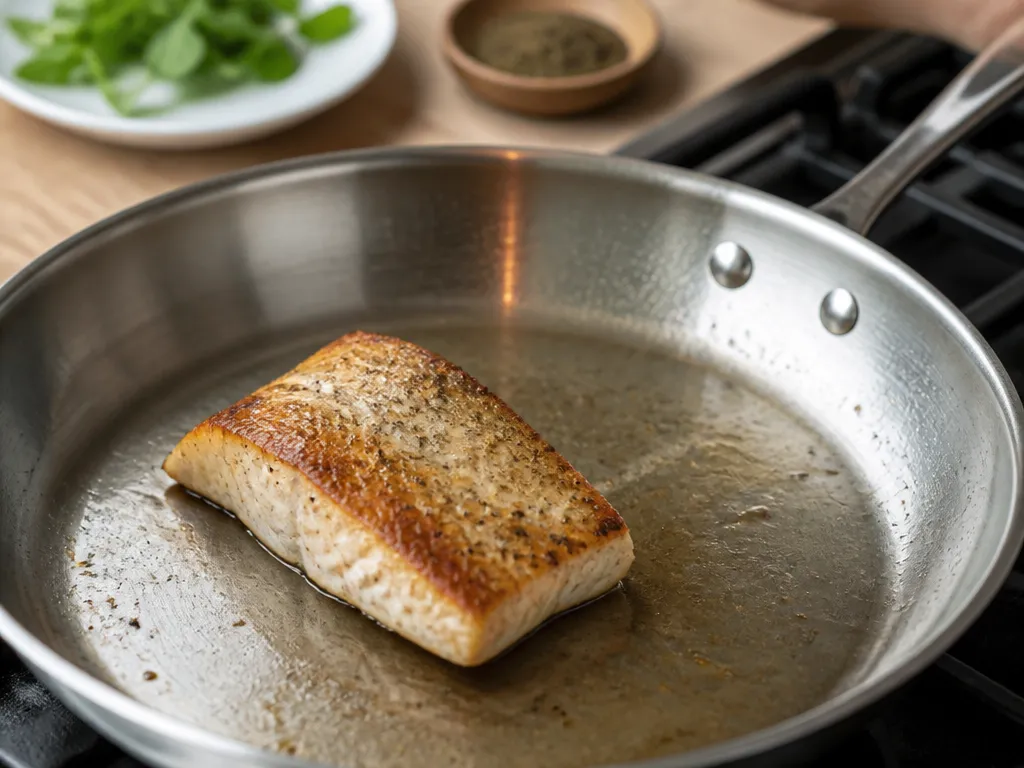
Most sticking problems come from a pan that is either too cool or too hot. Too little heat prevents browning. Too much heat burns the oil and creates hard residue that can fuse to the pan.
Use medium-high heat to start browning, then lower it once the food has color. Keep a steady sizzle rather than letting the oil boil violently.
Do Not Crowd the Pan?
Food cools the steel when it hits the surface. If too many pieces go in at once, the temperature drops and the food steams instead of browning.
If pieces touch, cook in batches. A little extra cooking time is easier than fighting a crowded pan full of stuck food.
Choose the Right Fat
Neutral oils with good smoke tolerance are usually the easiest choice. Canola, grapeseed, and sunflower oils work well for higher-heat cooking.
Olive oil can work, but it may burn faster at higher temperatures. Burned oil leaves sticky, charred residue that can make later cooking more difficult.
For delicate foods such as eggs or fish, use a small amount of butter plus oil. The oil helps keep the butter from burning as quickly, while the butter adds fat for release and flavor.

Helpful pick
CAROTE 30 PCS Tri-Ply Stainless Steel Cookware Set, Pots and Pans Set, Non Toxic Induction Kitchen Cooking Sets, Cookware Collection, Silver
This high-quality tri-ply stainless steel set provides the even heat distribution necessary to master the two-stage heat strategy effectively.
Techniques for Eggs, Fish, Meat, and Tofu
Eggs
Eggs are water-heavy and delicate, so they need gentler heat than most proteins. Preheat the pan, add a thin layer of oil or oil plus butter, then reduce the heat as the eggs begin to set.
For scrambled eggs, use medium-low heat and stir slowly. Moving the eggs constantly can scrape them into a welded layer before the curds have formed.
For fried eggs, let the whites set before trying to move them. Loosen the edges with a silicone spatula, and remove the egg slightly under your preferred doneness.
Fish
Dry the fillet thoroughly and use enough oil to coat the pan. Place the fish skin-side down if it has skin, then leave it alone until the edges turn opaque and the surface browns.
A thin fish spatula is better than a thick, stiff utensil because it slides under the crust with less prying. If the fillet resists, wait 30-60 seconds and test again.
Chicken and Other Meat
Pat the surface dry and season before cooking. Meat can be salted before it goes into the pan; eggs often benefit from being salted right before cooking.
Place the meat in the hot, oiled pan and wait for browning before flipping. For thicker cuts, lower the heat after the first side develops color so the center can cook without burning the exterior.
Tofu
Press tofu well to remove excess moisture. Use moderate heat, a thin coat of oil, and enough space between pieces for the pan to stay hot.
Let the first side brown deeply before flipping. Tofu releases more easily once its surface has formed a firm crust.

Helpful pick
InlinLiv 8-Piece Silicone Spatula Set, 600°F Heat Resistant, Food Grade Silicone Outer Layer, Earth Tone Dominated, Non Stick Utensils for Cooking & Baking
These heat-resistant silicone spatulas are perfect for gently folding delicate scrambled eggs without scratching your stainless steel pan’s surface.
Cleaning Stainless Steel After Food Sticks
Stuck food does not mean the pan is ruined. Burned residue should be loosened with moisture rather than scraped aggressively from a dry surface.
While the pan is still warm, add hot water or stock to deglaze it. Let the liquid loosen the browned bits, then scrub with a chainmail scrubber or stainless-safe scrub pad.
For stubborn residue, soak the pan in hot water for 10-20 minutes and scrub again. Avoid wiping the pan dry before deglazing if caramelized bits are still attached; they can harden and bake onto the steel.
Mistakes That Cause Sticking
Adding Food Before the Pan Is Ready
Food placed in a cold-to-warm pan releases moisture before a crust can form. That moisture encourages the stainless steel to grip the surface.
Stirring or Flipping Constantly
A browned surface needs time to stabilize. Frequent movement breaks that surface apart, even when the food looks partly browned.
Using Too Little Oil
Very lean proteins and some vegetables can stick when there is not enough oil to lubricate the space between the browned surface and the steel.
Overcrowding the Pan
Too much food lowers the pan temperature and turns browning into steaming. Steam increases the chance of sticking.
Flipping Before the Food Releases
Resistance is useful information. If the food does not lift, it probably needs more time.
Troubleshooting Difficult Sticking
The Pan Is Hot, but Food Still Sticks
A pan can feel hot in one spot while remaining cooler elsewhere. Also check for burned residue left from an earlier cook, since rough patches can act as glue points.
The Oil Smokes or the Food Burns
The pan is too hot, or the oil has a lower smoke tolerance than the cooking temperature. Lower the heat and replace heavily burned oil before continuing.
For thicker pieces, brown them over medium-high heat, then lower the heat to finish.
Food Sticks After Browning
Do not scrape it up immediately. Give it another 30-60 seconds and try a thin spatula again. Properly browned food often releases once the crust is fully formed.
If the surface is burning before the food is cooked, lower the heat rather than forcing the release.
Dark Residue Is Burned Onto the Pan
Add a small splash of water or stock while the pan is still warm. Let it steam and loosen the residue, then scrub once the pan is cool enough to handle safely.
FAQ
How do I stop eggs from sticking to stainless steel?
Use lower heat and enough fat. Preheat the pan, add a thin coat of oil or oil plus butter, then add the eggs and reduce the heat once the edges begin to set.
Avoid moving the eggs until the whites are mostly firm. If they stick, loosen the edges with a silicone spatula before lifting or folding them.
What is the best oil for stainless steel?
Neutral oils are usually easiest because they handle higher heat without burning quickly. Canola, grapeseed, and sunflower oils work well.
Olive oil can also work, but keep the heat more moderate so it does not char and leave sticky residue.
How long should I preheat a stainless steel pan?
Most pans need 2-5 minutes over medium-high heat. Test the surface with a tiny drop of water. It should skitter and evaporate quickly. If it spreads slowly and steams, keep preheating before adding oil and food.
Why does food stick even when the pan is hot?
Uneven heat, surface moisture, crowding, or premature movement can all cause sticking.
Is there an alternative to stainless steel if I keep having sticking problems?
Yes. PTFE- or ceramic-coated nonstick pans release food with less technique. Cast iron can also release well once it is seasoned and heated properly.
Stainless steel works best when the pan temperature and release timing remain consistent.
The Stainless Steel Rule That Works
Release – not the timer – tells you when the food is ready to move.
Start with one food you care about, such as salmon or chicken thighs, and commit to one release test before flipping.