
How To Use A Colander
A colander drains liquid while keeping food in place, which gives you cleaner pasta, drier produce, and fewer spills. Set it over a clean, stable sink, pour slowly, and let the food drain fully before moving on. For pasta, save about 1 cup (240 mL) of cooking water before draining, and skip rinsing if you plan to add sauce.
Key Takeaways
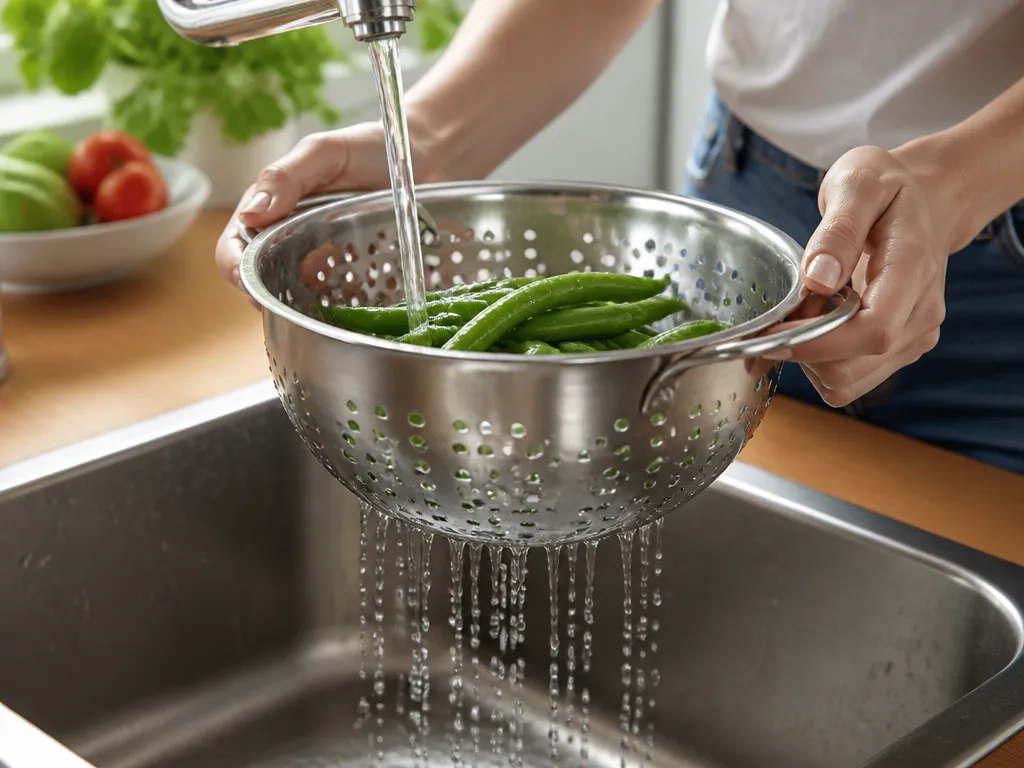
- Drain and rinse. A colander separates liquid from solid food through its perforations.
- Use metal for steaming. A heat-safe metal colander can steam vegetables when set securely over a pot.
- Pour carefully. Slow pouring reduces splashes, especially with hot water.
Set Up Your Colander Before Draining
Choose a colander that fits the job. A large model works best for a full pot of pasta because the food has room to spread without blocking the holes. Smaller holes suit ingredients such as rinsed rice, herbs, or dry flour.
Clear the sink and remove any standing water. Dirty or stagnant sink water can touch the colander and your food, affecting its flavor and cleanliness. If the sink is slick, place the colander on a clean dish towel or nonslip mat so it cannot wobble.
For hot food, make sure you have a clear path from the stove to the sink. Keep your hands away from the pour path, and do not try to move a hot pot around other dishes or clutter.
Material affects how you use the colander. Metal, plastic, and silicone each have different handling and storage characteristics. Check that the colander is heat-safe before using it over a pot.
What a Colander Does
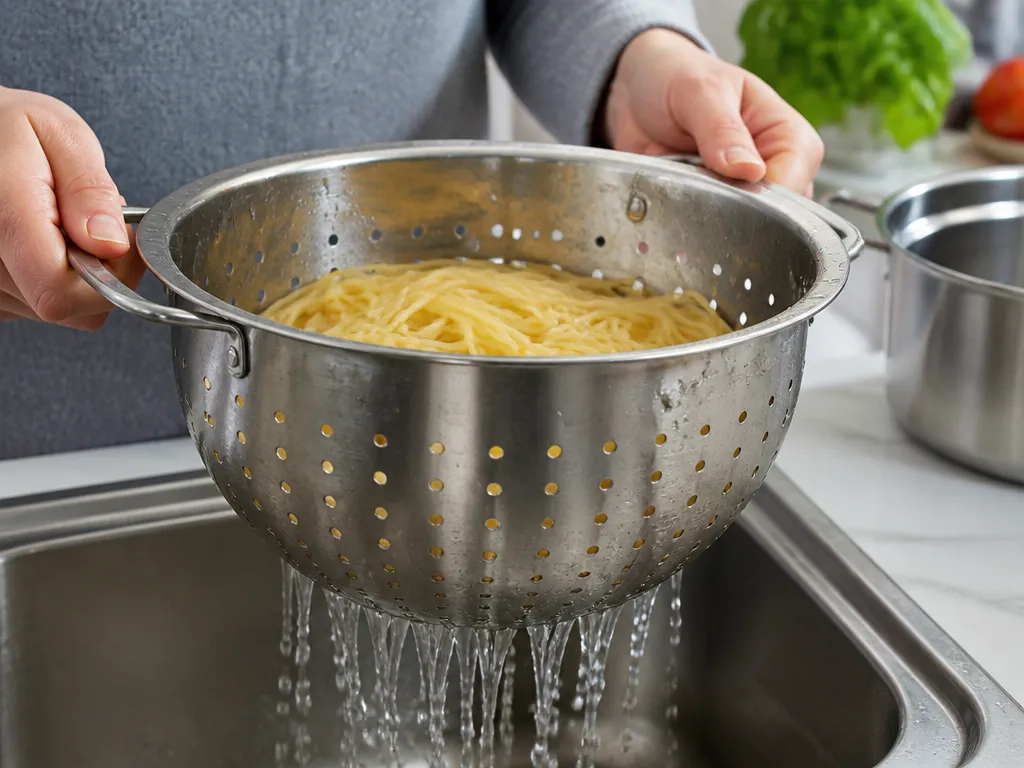
A colander separates solids from liquids. You can use one to drain cooked pasta, rinse fruits and vegetables, strain cooked food from broth, or sift dry ingredients when the holes are small enough.
Place the colander where liquid has a clear path to drain. Food should stay above the water rather than sitting in a filled sink or bowl. If the colander is too small or overloaded, food can pile up, block the perforations, and remain wet.
Treat the colander as a controlled draining tool rather than a bucket. Pour gradually, allow liquid to escape, and shake or toss the food gently when it needs additional draining.
Helpful pick
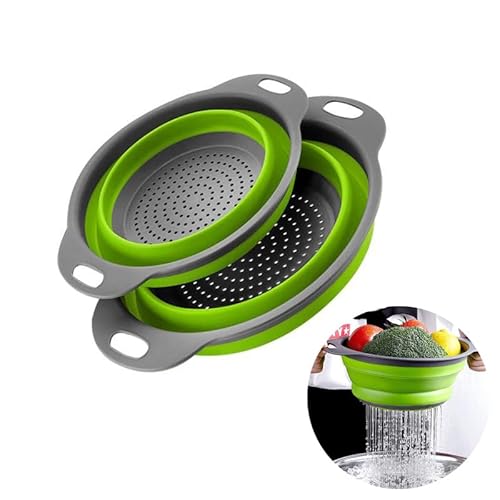
2 Pack Collapsible Colander Set, Emptycolor Foldable Collapsible Strainers for Kitchen, Small Round Colander with Base and Handles for Pasta, Fruit, Vegetables – Space-Saving Kitchen Strainer Baskets
These versatile, collapsible strainers are ideal for rinsing fruits and vegetables, and they fold down easily to save space in your kitchen.
How to Use a Colander Step by
- Choose the right size. Use a colander large enough for the amount of food you are draining. A crowded bowl blocks holes and slows drainage.
- Prepare the sink. Clear the area, remove standing water, and place the colander on a flat, stable surface.
- Rinse or drain carefully. For produce, rinse under running water and shake gently so excess water falls through.
- Reserve pasta water. Before draining pasta, save about 1 cup (240 mL) of the cooking water in a bowl or glass.
- Pour slowly. Carry the pot carefully and pour into the colander in a controlled stream to reduce splashing.
- Let the food drain. Give the colander time to drip, then shake it gently if extra liquid remains.
- Finish the recipe. Add drained pasta to the sauce immediately, using the reserved pasta water when needed.
For weeknight pasta, cook the noodles until al dente – firm but not crunchy. Set the colander in the sink before the pasta is ready so you do not have to handle a hot pot while preparing the draining area.
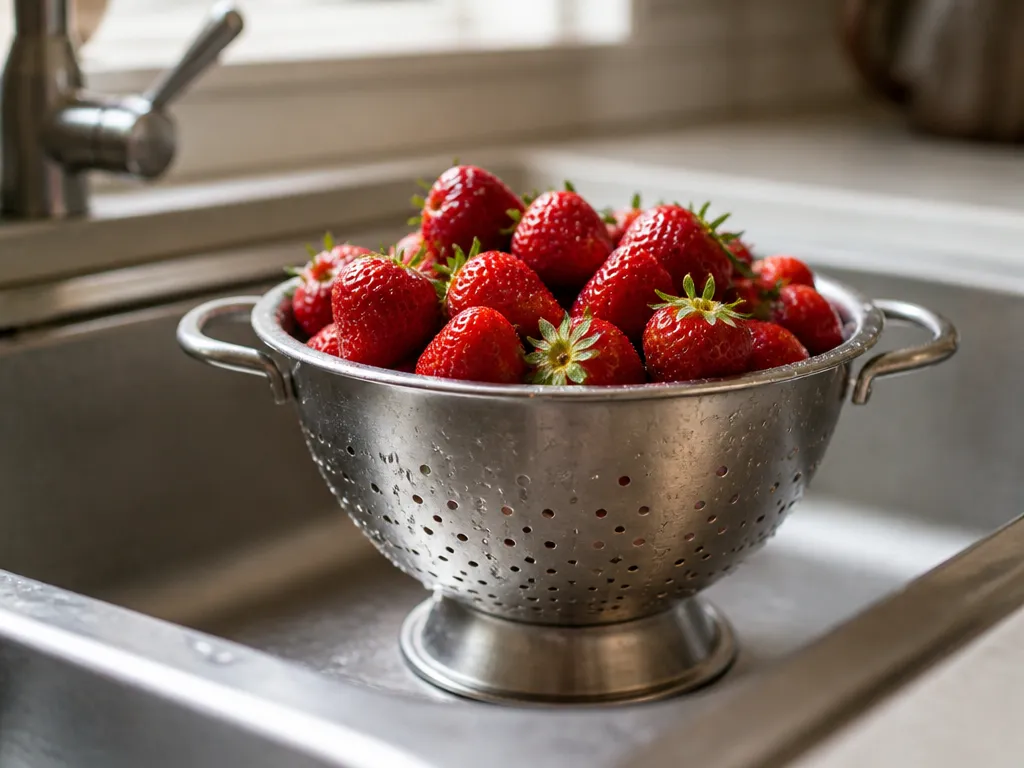
For berries, rinse gently rather than agitating them like a washing machine. Let the water drain completely, then spread or shake the berries lightly so they do not sit in leftover water.
For sauced pasta, rinsing washes away some of the starches that help sauce cling to the noodles. Draining the pasta and loosening the sauce with reserved pasta water usually gives you better coating and texture.
Techniques for Pasta, Produce, and Steaming
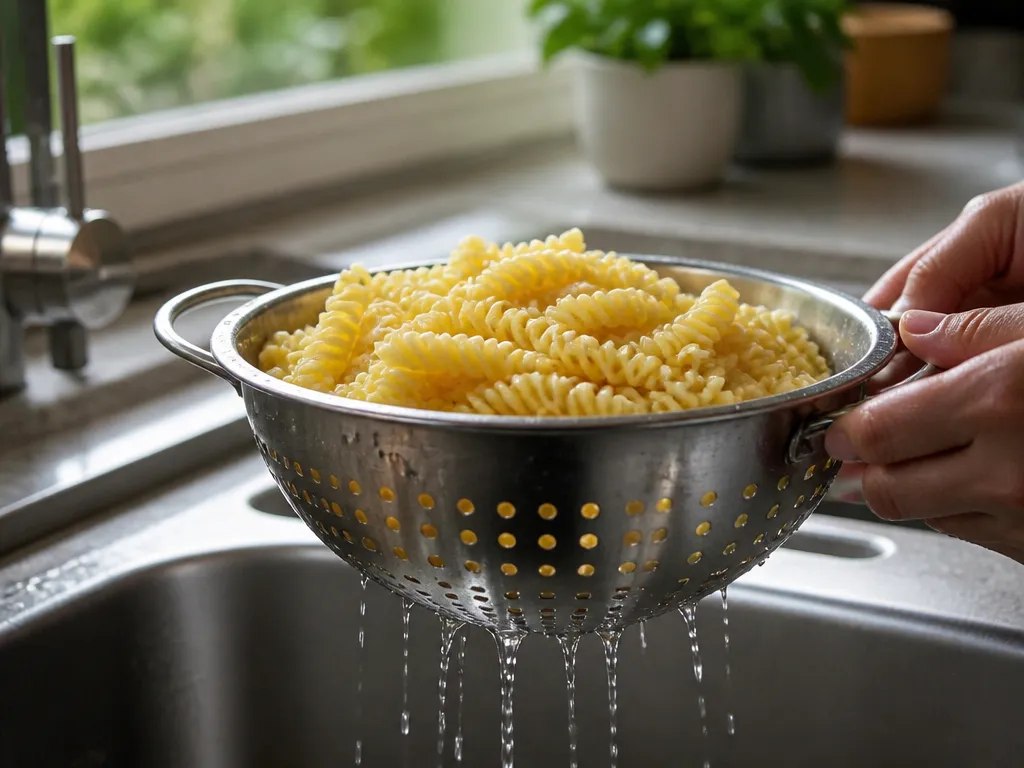
Hot pasta water and steam can splash or burn, so keep your body out of the pour path and move deliberately. The last third of a pot is not a reason to speed up; rushing often causes the worst splashes.
It contains salt and starch from cooking, and it can smooth out a sauce while helping it stick to the noodles. About 1 cup (240 mL) gives you a practical amount to start with.
When draining produce or cooked vegetables, let the colander sit long enough to drip. A light shake clears pooled water without bruising delicate ingredients. Thorough draining also keeps wet greens from watering down dressings and sauces.
A metal colander can substitute for a steamer basket. Place it securely over a pot so steam can circulate through the holes, then cover the pot with a lid. Confirm that the colander is heat-safe and will not slip or fall into the pot. Lift it slowly and keep your hands away from escaping steam.
Pasta vs. Produce: The Right Finishing Move
- Pasta: Drain it and combine it with sauce using reserved pasta water.
- Produce: Rinse it, let it drain fully, and dry or shake it before using or storing.
What works in practice
Keep the sink clean and free of standing water before draining food. The colander may bridge the gap between the sink and your meal, so anything in the sink can become a contamination or flavor problem.
Stability comes first. Set the colander on a flat surface, and use a clean towel or nonslip mat if the sink is slippery. A steady colander keeps your hands available to control the pot and reduces spills.
Carry hot pots carefully, hold them over the center of the colander, and pour slowly. Do not rush the final portion of the pot. A controlled pour is safer and usually drains just as quickly.
Cold pasta salads are one exception because rinsing stops the cooking and cools the noodles.
Clean the colander promptly after draining sticky foods such as sauce, flour, or starch. Rinse the holes before residue dries; removing fresh buildup is much easier than scrubbing crust later.
Helpful pick
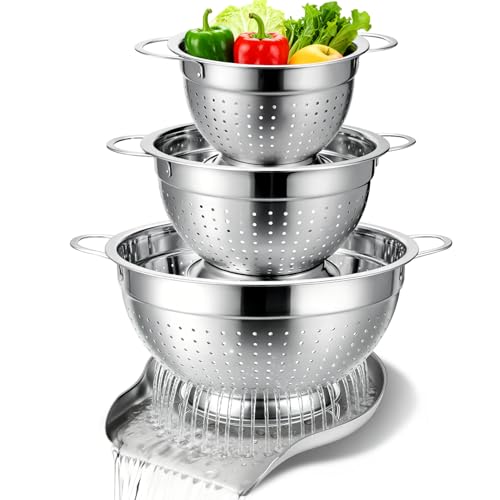
Palksky Stainless Steel Colander Set with Handles & Self-Draining Base, 3 Sizes (7”, 9”, 11”), Heavy Duty Pasta Strainer, Rice & Vegetable Strainer, Countertop Draining System
Maintain a clean, organized workspace with this stainless steel set featuring a self-draining base to keep your food off the sink surface.
Common Colander Problems and Fixes
The colander wobbles. Move it to a flatter part of the sink or place a clean dish towel or nonslip mat underneath it. Do not pour hot liquid into an unstable colander.
Water drains too slowly. The colander may be overloaded, or food may be blocking the holes. Drain in batches and shake the contents gently to open clear paths for the liquid.
Hot water splashes everywhere. Slow the pour and aim for the center of the colander. Make sure the bowl is stable before lifting the pot, and keep your body out of the splash path.
Pasta sauce will not cling. You may have rinsed the pasta or allowed it to sit too long after draining. Add the noodles promptly and loosen the sauce with reserved pasta water.
Produce stays soggy. Let the colander drip longer and shake it gently before using the food. For leafy greens, additional drying may be needed because trapped water can dilute dressings and sauces.
Food falls through the holes. Use a colander with smaller perforations or switch to a fine mesh strainer. This is especially useful for rice, herbs, and very small pasta shapes.

Helpful pick
U.S. Kitchen Supply Stainless Steel Colander Strainer – 6-Quart Collapsible Colander with Expandable Rubber Handles – Rectangular Sieve, Fine Mesh Stainless Steel Strainers and Colanders for Kitchen
If your current colander wobbles, this rectangular, expandable model offers superior stability and fits securely over various sink sizes for safer draining.
Better Ways to Use a Colander
Set up the colander before you need it. This simple step prevents you from juggling a hot pot, wet hands, and an unstable bowl at the same time.
For steaming vegetables without a dedicated basket, use a heat-safe metal colander over a pot with a lid. Make sure it rests securely and leaves enough room for steam to reach the food through the holes.
Match the hole size to the ingredient. Larger holes drain pasta water and rinse produce quickly. Smaller holes work better for sifting flour or holding small ingredients.
Use controlled shaking for herbs and delicate greens. A gentle toss removes water without bruising the leaves as much as aggressive handling.
Preparing the colander first makes the rest of the cooking process easier.
FAQ
What is a colander used for?
A colander drains liquid from solid food while keeping the food in its bowl. It is commonly used for pasta and produce, but it can also strain cooked food from broth and sift dry ingredients when its holes are small enough.
How do I use a colander for pasta?
Place the colander securely over a clean sink. Cook the pasta until al dente, then save about 1 cup (240 mL) of pasta water before draining. Pour the pasta into the colander, let it drain, and mix it with sauce. Add the reserved pasta water as needed to loosen the sauce and help it coat the noodles.
Should I rinse pasta after draining it?
Rinse pasta when a recipe specifically calls for it, such as some cold pasta salads where cooling the noodles matters.
How do I prevent splashing when draining hot food?
Stabilize the colander first, then carry the pot carefully and pour slowly into its center. Keep your hands and body away from the pour path. When steaming, lift and move the colander slowly because escaping steam can burn quickly.
What is a good alternative to a colander?
A fine mesh strainer works for smaller foods and tighter liquid separation, such as rinsing rice or straining small pasta shapes. A sieve can work in a pinch if it fits securely over the sink and will not tip. For pasta, use any strainer that drains well and holds the noodles safely.


One Comment