How Many Scoops Of Coffee For 2 Cups: Ratios Compared
Brewing the perfect pot of coffee often feels like guesswork when you switch between different mugs, scoops, and beans. You want a cup that is bold enough to wake you up but smooth enough to enjoy without reaching for extra creamer. Achieving that consistency every morning starts with understanding the relationship between your coffee grounds and the water you pour over them.
For most standard drip coffee makers, use 2 level tablespoons of coffee grounds for every 6 ounces of water. Since a typical “cup” on a coffee pot scale is 6 ounces, you should use 4 level tablespoons of grounds for 2 cups of water. If you prefer a stronger brew, increase the amount to 5 or 6 tablespoons total.
Key Takeaways
- Standard ratio rule. Use 2 level tablespoons of coffee per 6 ounces of water for a balanced, traditional cup.
- Adjusting for strength. Increase to 3 tablespoons per 6 ounces for a bolder flavor profile or reduce to 1.5 for a milder brew.
- Measure by weight. Using a digital kitchen scale is the most accurate way to ensure consistent coffee strength every single morning.
- Scoop size matters. Most plastic coffee scoops hold exactly 2 tablespoons, but always verify your specific scoop capacity before you start brewing.
- Grind impacts taste. A finer grind extracts flavor faster, while a coarser grind requires more time or more coffee to reach full potency.
How many scoops of coffee for 2 cups based on strength
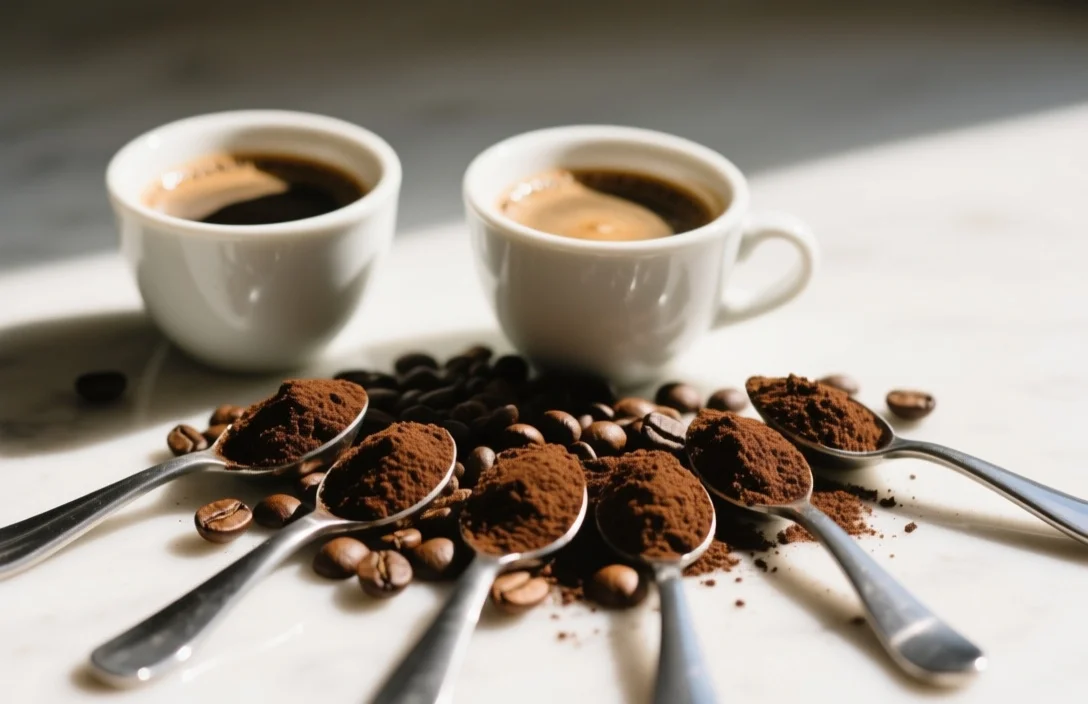
Your ideal coffee strength is a personal preference that dictates how much coffee you need to load into your basket. For a standard, balanced cup, the industry-wide baseline is 2 tablespoons of grounds for every 6 ounces of water. When brewing 2 cups, which equals 12 ounces, you start with 4 tablespoons total.
If you find that standard measurement tastes too weak, bump your ratio up to 2.5 or 3 tablespoons per 6-ounce cup. This results in a total of 5 or 6 tablespoons for your 2-cup brew. Conversely, if you prefer a lighter, tea-like body, drop your measurement down to 1.5 tablespoons per 6 ounces. You will quickly find your “sweet spot” by adjusting these ratios by half-tablespoon increments until the flavor matches your palate.
Standard coffee to water ratios for brewing
Consistency in coffee brewing relies on the golden ratio, which experts generally cite as 1:16 or 1:17. This means for every 1 gram of coffee, you use 16 to 17 grams of water. If you are not using a scale, the 2-tablespoon-per-6-ounce rule serves as a reliable approximation for this ratio in a home kitchen.
| Coffee Strength | Tablespoons per 6oz Cup | Total for 2 Cups (12oz) |
|---|---|---|
| Mild | 1.5 | 3 |
| Balanced (Standard) | 2 | 4 |
| Strong | 3 | 6 |
Keep in mind that coffee beans vary in density. A dark roast is often less dense than a light roast, meaning it takes up more space in the scoop for the same weight. If you switch roast types, you may need to adjust your scoop count slightly to maintain the same flavor intensity.
Measuring coffee grounds with tablespoons versus scoops
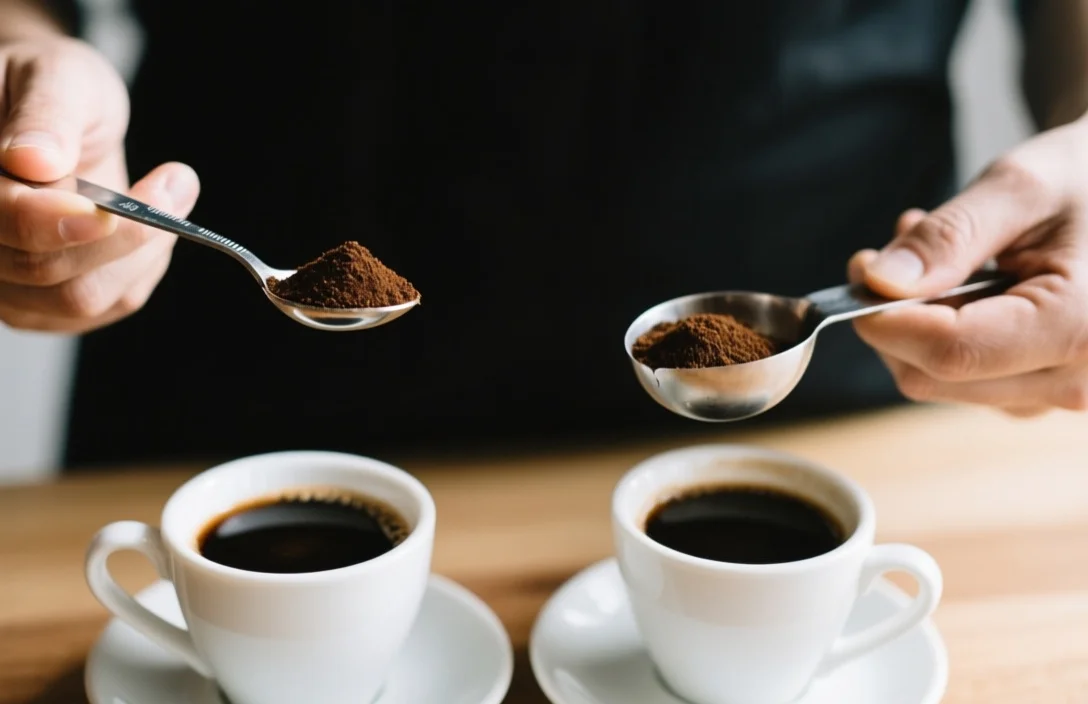
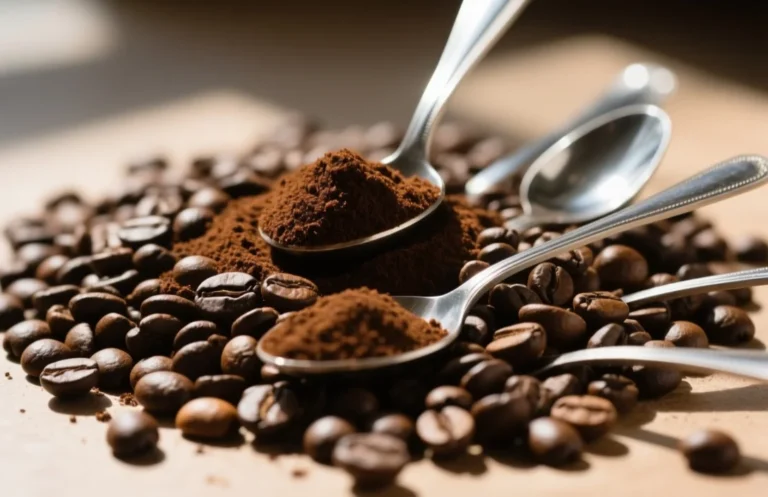
Using a standard tablespoon is the most reliable way to measure coffee because every kitchen has one. A coffee scoop is convenient, but it can be misleading if you do not know its exact volume. Most plastic scoops included with coffee makers are designed to hold 2 tablespoons, but some variations exist, ranging from 1.5 to 3 tablespoons.
To verify your equipment, fill your scoop with water and pour it into a measuring spoon. If your scoop holds 2 tablespoons, you can use it as a direct substitute for the tablespoon measurement. If it holds a different amount, label it or adjust your recipe accordingly to avoid accidental over-extraction or watery, weak coffee.
Impact of grind size on coffee extraction
Grind size changes how fast water pulls flavor from the coffee beans. A fine grind, like table salt, has more surface area and releases flavor quickly, which is why it is used for espresso. A coarse grind, like sea salt, exposes less surface area and is better suited for longer brewing methods like a French press.
If you use a fine grind for a drip machine, the water may move too slowly, leading to a bitter, over-extracted taste. If your grind is too coarse, the water will pass through too quickly, resulting in a sour or thin cup. Always match your grind size to your brewing method to ensure your 2-cup measurements yield the flavor profile you expect.
Adjusting coffee measurements for different brewing methods
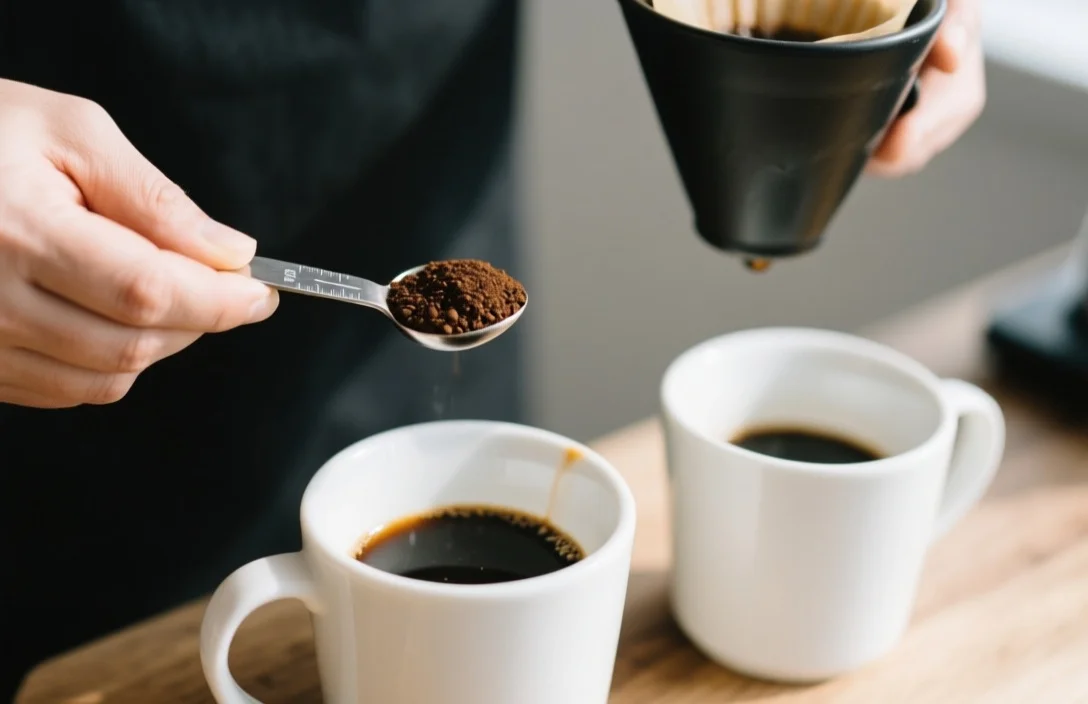
Different machines have different contact times with the water, which changes how much coffee you need. A French press allows for longer steeping, often requiring a slightly coarser grind and a higher coffee-to-water ratio to prevent sediment and bitterness. A pour-over method, however, requires a medium-fine grind and precise pouring to ensure even extraction.
For an AeroPress or a single-serve pod machine, the brewing time is very short. These methods often benefit from a finer grind and a slightly higher concentration of grounds to compensate for the limited contact time. Start with the 2-tablespoon base, but be prepared to tweak your dosage based on the specific mechanics of your brewer.
Tools for achieving consistent coffee strength
A digital kitchen scale is the ultimate tool for coffee consistency. Because volume measurements like tablespoons can change based on how much the grounds are packed, weight is the only way to guarantee the exact same strength every time. A standard “golden ratio” target is roughly 20 to 22 grams of coffee for 12 ounces of water.
If you prefer not to use a scale, invest in a high-quality, fixed-volume scoop. Metal scoops are often more durable and maintain their shape better than the thin plastic ones that come with coffee makers. Keeping your coffee in an airtight container away from light and heat also helps maintain the integrity of the beans, ensuring your measurements provide a consistent result over time.
Factors that influence the flavor of your brewed coffee
Water quality is the most overlooked factor in coffee brewing. Since a cup of coffee is about 98 percent water, the mineral content and impurities in your tap water will directly impact the final taste. If your water tastes like chlorine or has a heavy metallic tang, your coffee will inherit those qualities regardless of how perfectly you measure your grounds.
Temperature also plays a critical role in the extraction process. The ideal brewing temperature is between 195 and 205 degrees Fahrenheit. If the water is too cool, you will not extract the full range of flavors; if it is boiling, you risk scalding the grounds and creating a harsh, burnt profile. Using fresh, filtered water and ensuring your machine hits the correct temperature range will elevate your coffee experience more than any single measurement change.
FAQ
Is there a difference between a coffee scoop and a tablespoon?
Most standard coffee scoops are designed to hold exactly 2 tablespoons, but this is not a universal standard. You should measure your scoop once using a standard measuring spoon to confirm its capacity. If your scoop is larger or smaller than 2 tablespoons, you must adjust your count to maintain your preferred strength.
Why does my coffee taste bitter even when I measure correctly?
Bitterness usually indicates over-extraction, which is often caused by a grind that is too fine for your brewing method. When the grounds are too fine, the water extracts too many tannins and bitter compounds. Try using a slightly coarser grind setting to see if it balances the flavor of your 2-cup brew.
Can I reuse coffee grounds for a second cup?
You should never reuse coffee grounds for a second brew. The first brewing cycle extracts the soluble flavors and oils from the beans, leaving behind only bitter, woody compounds. Re-brewing used grounds will result in a thin, astringent, and unpleasant cup of coffee that lacks the character of fresh beans.
How much coffee should I use for a 12-ounce mug?
A 12-ounce mug is equivalent to two standard 6-ounce coffee pot cups. Using the standard ratio of 2 tablespoons per 6 ounces, you should use 4 level tablespoons of grounds. If you find this too strong or too weak, adjust by half-tablespoon increments until you reach your desired preference.
Does the roast level change how much coffee I need to use?
Yes, dark roast beans are typically less dense and more brittle than light roast beans. Because they occupy more volume for the same weight, a scoop of dark roast might actually contain less coffee mass than a scoop of light roast. If you switch roast levels, you may need to add an extra half-scoop of dark roast to maintain the same flavor intensity.