How To Season A Stainless Steel Pan
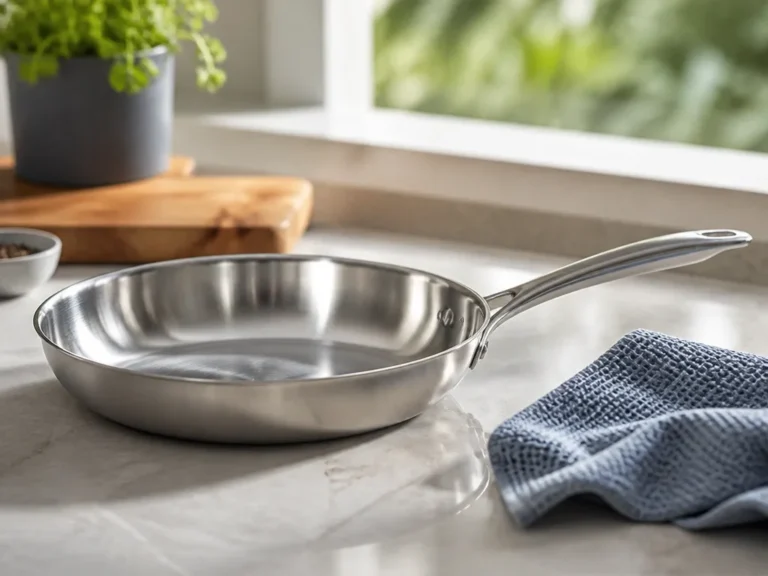
Seasoning a stainless steel pan can reduce sticking, improve browning, and make cleanup easier. The process creates a thin, polymerized oil layer on the surface. It takes about 5-30 minutes of active heating, and you may need to repeat it if the finish looks patchy or feels tacky.
Stainless steel does not have the pores found in cast iron, so seasoning does not create a thick protective patina. It creates a temporary slick film. Use the right oil temperature, wipe away excess oil, and you can improve release without leaving a gummy mess.
Key Takeaways
- Use very little oil. A thin layer polymerizes; excess oil becomes sticky and difficult to remove.
- Heat drives polymerization. Preheat the pan, apply the oil, then heat it briefly.
- Choose a high-smoke-point oil. Avocado, grapeseed, and refined canola oil handle high heat better than extra-virgin olive oil.
- Wipe after applying the oil. The pan should look almost dry before you heat the film.
- Repeat for a smoother result. Two or three light rounds work better than one heavy coating, especially on smooth stainless steel.
- Use baking soda for cleanup. If the finish turns sticky, scrub it off and start again instead of adding more oil.
Set Up the Pan Before Seasoning
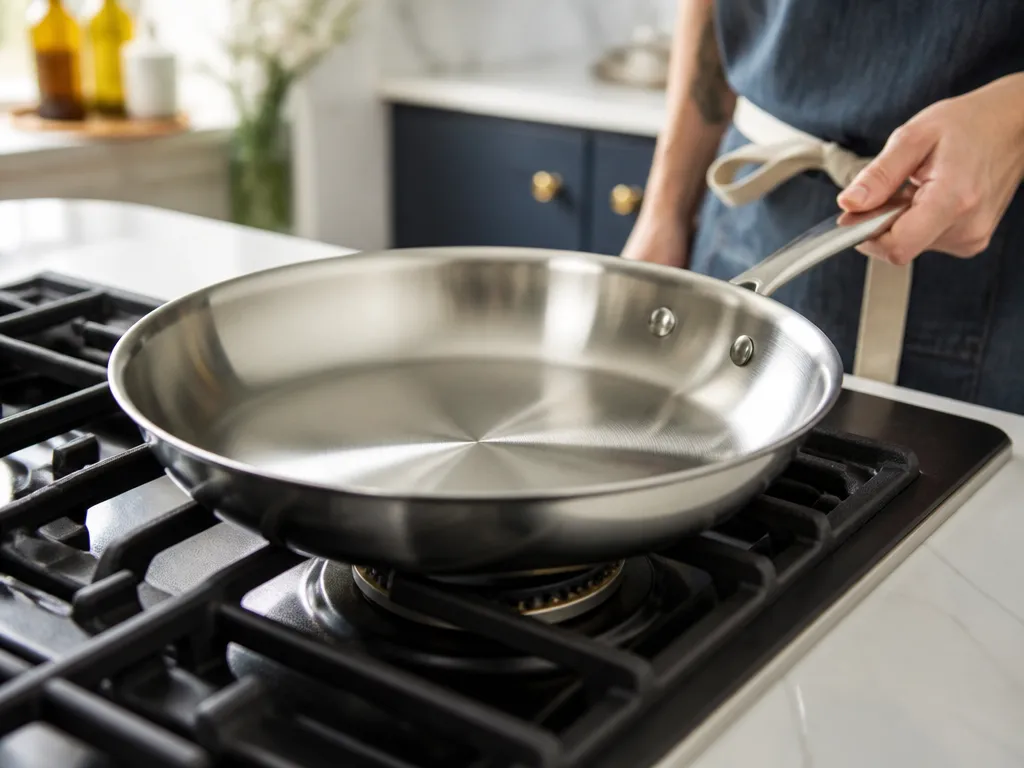
Seasoning works best when you treat the stainless surface as clean and bare. Stainless steel is already non-porous, so the goal is a slick, low-stick film rather than a thick coating.
Wash the pan thoroughly with hot water and dish soap, then rinse until the water sheets across the surface. Dry it completely with a towel. Residue from manufacturing, detergent, or previous cooking can turn into carbon specks and leave the finish patchy.
Clear the area before heating the oil. The process may produce visible smoke, so turn on the range hood and open a window if possible.
How the Oil Film Forms
Heat polymerizes the thin oil layer, changing it from a liquid into a more stable film on the pan. Too little heat leaves an oily layer that washes away easily. Too much oil creates sticky spots and carbon when heated.
Temperature control matters more than an exact temperature reading. Stainless steel heats evenly, but oil can move from warm to smoking quickly, especially on a small burner. Start with a hot pan, apply a very small amount of oil, wipe away nearly all of it, and use only brief heat to set the film.
Tools and Oils That Work
You only need basic kitchen supplies:
- Paper towels for spreading and wiping
- Dish soap for the initial cleaning
- A high-smoke-point cooking oil
Refined avocado oil, refined grapeseed oil, refined canola oil, and other neutral high-smoke-point oils work well. Avoid extra-virgin olive oil for seasoning because it is more likely to break down, smell, or leave sticky residue when overheated.

Helpful pick
DELARLO Tri-Ply Stainless Steel Frying Pan Set with Lids, 8, 10 & 12 inch
With this DELARLO tri-ply stainless steel set, you can practice temperature control across multiple pan sizes to master the perfect oil polymerization.
Step-by-Step Stainless Steel Pan Seasoning
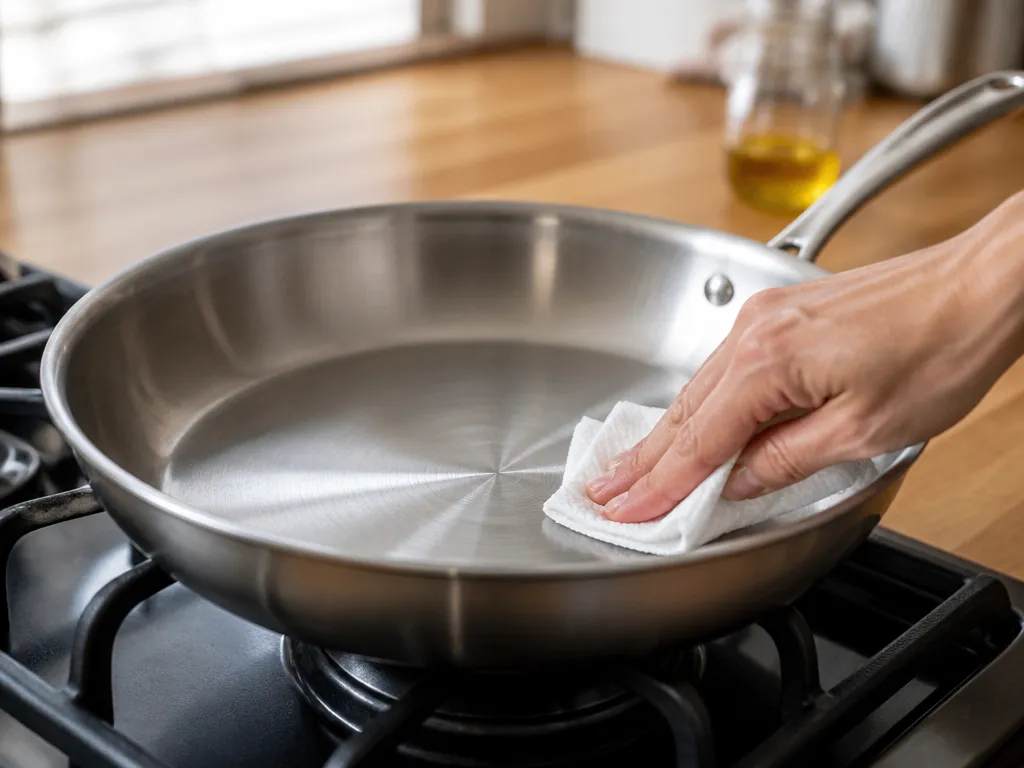
- Wash the pan thoroughly. Use hot water and dish soap, rinse until the water sheets, and dry completely with a towel.
- Preheat the pan. Place it over medium to medium-high heat for 3-5 minutes, until it feels hot and the surface looks lightly shimmering.
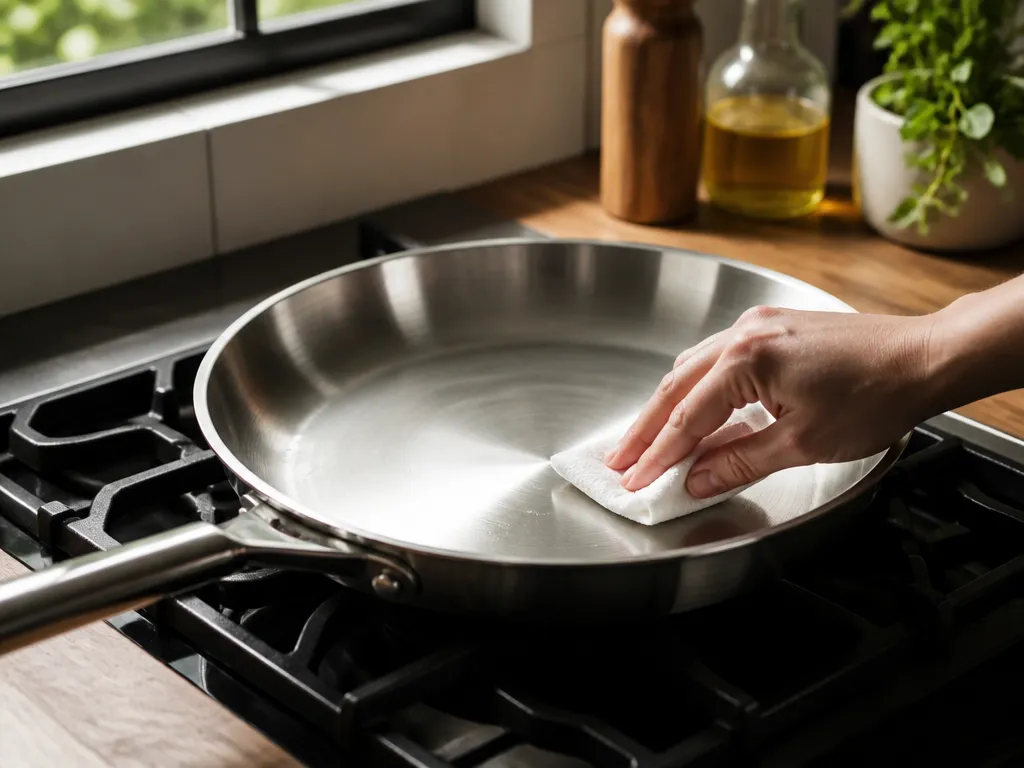
- Apply a small amount of oil. Drizzle 1-2 teaspoons, or less for smaller pans. Spread it with a folded paper towel so it covers the surface in a thin film.
- Wipe the pan nearly dry. Immediately wipe again until you can barely see any oil. The layer should be almost invisible.
- Heat the film briefly. Continue heating for 2-4 minutes, until you see light smoke or the surface takes on a cooked appearance. Stop before the oil turns dark or smells acrid.
- Cool and wipe again. Turn off the heat and let the pan cool enough to handle. Wipe it with a clean paper towel. If the surface feels tacky, scrub it clean and repeat the process with less oil.
Gas burners can create hot spots, so spread the oil carefully and watch the pan closely. Electric coils and induction usually heat more steadily, giving you slightly more time during the brief setting step.
Example: A 10-12 Inch Skillet That Keeps Sticking
For a newer stainless skillet that grabs eggs or delicate fish, follow the steps above and use a light release test. Cook a thin layer of scrambled eggs over medium heat for 1-2 minutes, then adjust the heat during your next attempt.
If the eggs still stick, clean the pan and season it one more time. A thin film helps; a visible layer usually makes the problem worse.
Techniques That Improve the Finish
Drying and preheating also matter. A damp pan can heat unevenly and cause the oil to spread or polymerize inconsistently. Dry the pan completely after washing, then preheat it until the oil spreads smoothly rather than beading across the surface.
Heat Timing Beats an Exact Temperature
Most home cooks do not have an IR thermometer for checking the oil film, so use time and visual cues. The oil should become glossy, then begin to look more set. Stop when you see light smoke.
A burnt smell or dark residue means the pan went too far. Clean the residue away instead of adding another layer over it.
Clean Between Rounds if the Surface Turns Tacky
Do not keep seasoning over a tacky or uneven finish. Scrub the pan with hot water and dish soap. If residue remains, use a gentle abrasive pad to remove it. Dry the pan completely before continuing.
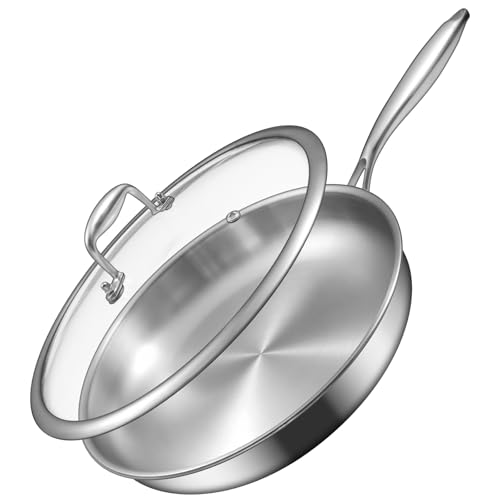
Helpful pick
EWFEN 12 Inch Tri-Ply Stainless Steel Frying Pan, Compatible with All Cooktops Up to 600℉, Large Frying Pan with lids, Induction-Ready Skillet, Dishwasher and Oven Safe, Even Heat, 12″ Skillet + Lid
The EWFEN 12-inch tri-ply stainless steel frying pan provides the high-quality surface needed to ensure your oil film spreads smoothly and evenly.
A Better Seasoning Routine
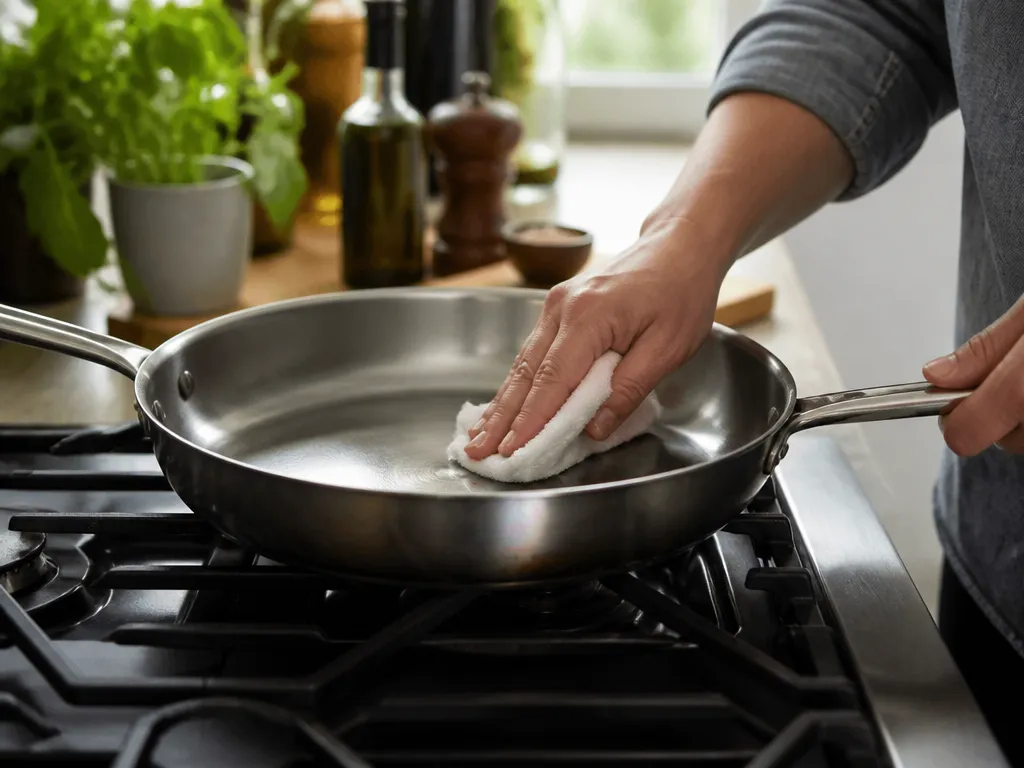
Regular cooking oil is not the same as a controlled seasoning layer, and buildup can make the pan stickier. Keep the room ventilated during the process. Good airflow reduces the smell and helps you judge the amount of smoke. Light smoke means the film is setting; dark smoke and an acrid odor mean the oil is burning.
A Practical Oil-and-Wipe Schedule
Two light rounds are better than one heavy round when seasoning a smooth stainless pan.
- Round 1: Apply a thin layer of oil, wipe hard, and heat briefly.
- Round 2: Repeat with even less oil. If the first round smoked heavily, shorten the heating by 30-60 seconds.
This gradual approach improves the surface without creating the sticky buildup caused by over-seasoning.
Oil Comparison
| Oil (refined) | Best for | What you might notice |
|---|---|---|
| Avocado oil | High-heat seasoning | Neutral smell, easy wipe-down |
| Refined grapeseed | Smooth film | Can smoke quickly if overheated |
| Refined canola | Consistent results | Usually mild and easy to clean |
| Extra-virgin olive oil | Not ideal | Easier to leave odor or residue |
Mistakes That Make Stainless Steel Stickier
Spreading the oil once leaves more behind than you need, and the excess can migrate across the pan as it heats. A second wipe keeps the film thin.
Overheating the Oil Film
If the oil turns dark and smells acrid, it has burned. The resulting layer may look shiny at first, then become blotchy and difficult to cook on.
Remove the residue with hot water, dish soap, and a non-scratch scrub pad. Re-season with less oil and a shorter heating time.
Testing with the Wrong Food
Do not use cheese or sugar-based sauces as your first test. They can bind to any imperfect surface and make the seasoning appear unsuccessful.
Start with eggs, then move to foods such as chicken breast once you understand how the pan releases food. Seasoning helps, but proper cooking technique still matters: preheat the pan, use medium heat, and give proteins time to release before turning them.

Helpful pick
CAROTE 10″ Tri-Ply Stainless Steel Frying Pan, Non-Toxic Egg Pan Omelet Pan, Oven Safe, Induction, Ceramic and Gas Cooktops Compatible, Polished Silver
This CAROTE 10-inch tri-ply stainless steel pan is an excellent choice for those learning to avoid common mistakes like overheating the oil film.
Cooking Habits That Preserve the Film
Use your regular cooking process after seasoning to help maintain the film. Consistent heat can support the oil layer, but high-sugar foods and aggressive deglazing can remove it quickly.
Control the temperature while cooking, not only during seasoning. Adding oil and immediately cooking over high heat can strip a fresh film while causing proteins to bond to the pan.
Troubleshooting Stainless Steel Seasoning
- The film looks streaky or patchy: Wipe more thoroughly during the next round, and make sure the pan is completely dry before applying oil.
- The surface feels tacky: Wash with hot water and dish soap, scrub away the residue, and re-season with less oil.
- The oil flakes off: The layer may have been too thick or may not have heated long enough. Clean the pan and repeat with a thinner film and brief heat.
- The pan has heavy dark spots: The oil overheated. Clean the pan with a non-scratch scrub pad, dry it fully, and use a shorter heating time.
- Food still sticks: Check the cooking heat and the amount of oil. A fresh film that is too thick or overheated can make release worse, not better.
Remove Stubborn Residue with Baking Soda
A baking soda scrub can loosen gray-brown sticky residue. Make a paste with baking soda and water, scrub gently, rinse well, and dry the pan completely.
Do not layer new oil over residue that already feels gummy.
FAQ
How do you season a stainless steel pan for nonstick results?
Follow the step-by-step method above, focusing on proper preheating and cooking technique. Repeat once or twice if eggs still stick.
What oil is best for seasoning stainless steel?
Refined avocado oil, refined grapeseed oil, or refined canola oil are suitable choices. Extra-virgin olive oil is less suitable for high-heat seasoning.
How long does it take to season a stainless steel pan?
Plan for about 15-30 minutes total. Washing and drying usually takes 5-10 minutes. The heating steps typically include 3-5 minutes to preheat and 2-4 minutes to set the film, with cooling between rounds.
Can you season a stainless steel pan in the oven?
Yes. Use a very thin layer of high-smoke-point oil and ventilate the room because the oil may smoke in an enclosed space.
Why is my stainless steel pan still sticking after seasoning?
The film may be uneven, too thick, or burned. Also check the cooking temperature, since high heat can defeat a fresh film.