
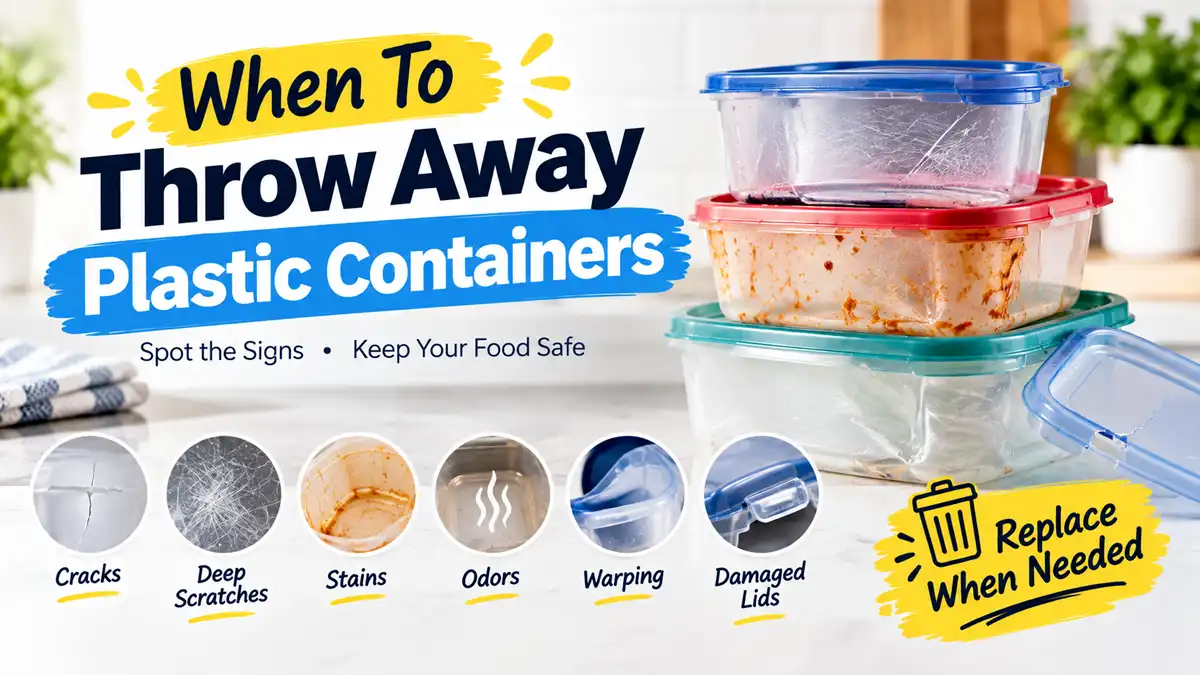
When To Throw Away Plastic Containers
Plastic food containers usually last a long time, but certain defects make replacement the practical choice. Throw one away if it has a crack, deep scratch, permanent cloudiness, heat warping, or an odor that returns after washing. Stains alone may be cosmetic, but staining combined with a rough surface or lingering smell signals that the container is no longer easy to clean.
Heat, oil, and acidic foods speed up wear. Microwaving, hot dishwasher cycles, and storing oily or acidic foods can leave plastic more scratched, warped, cloudy, or odor-retentive. A useful default is to retire any container with permanent surface damage or one that cannot be cleaned thoroughly.
Key Takeaways
- Cracks mean replace. Any crack that catches a fingernail is a throw-away sign because it can trap food residue and bacteria.
- Deep scratches count. If scratches look cloudy or have edges you can feel with your nail, the container is no longer easy to clean.
- Odor that returns means replace. Persistent smells after washing and soaking point to absorbed residues or material damage.
- Heat accelerates wear. Containers exposed frequently to microwaving, hot oil, or high-heat dishwasher cycles may need replacement sooner.
- Stains can be a warning. Yellow or brown film that will not come off may indicate permanent residue or material discoloration.
- Use glass when heat is involved. Glass or food-grade stainless steel is a better choice for hot, oily, or acidic foods.
When to Throw Away Plastic Food Containers
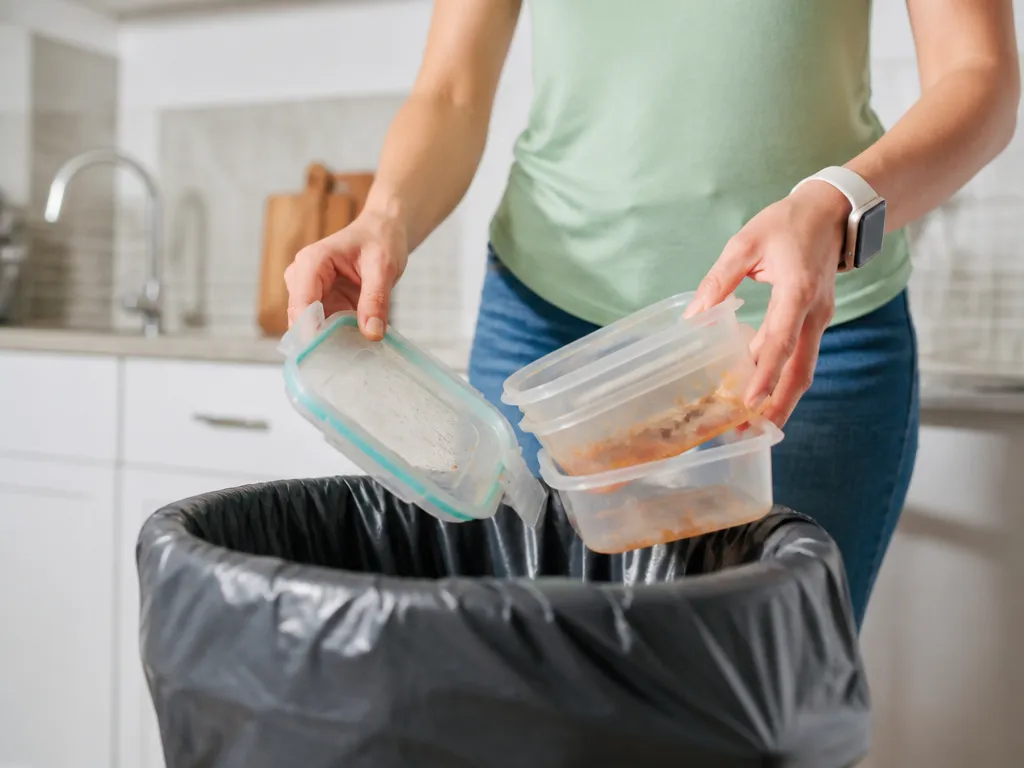
Most plastic containers remain suitable for use when they are intact, used within their temperature rating, and easy to clean. The problem is gradual wear: plastic can develop micro-scratches, lose its shape, trap residues, and hold odors.
Cleaning cannot reliably restore a container that is cracked, heavily scratched, chemically stained, or rough to the touch. Heat and oily or acidic foods can make that wear happen faster.
A Quick Replacement Rule for Plastic Containers
Separate cosmetic wear from damage that affects cleanliness or performance.
- Throw it away immediately if you see cracks, splits, or warping that changes how the lid seals.
- Throw it away if the container is cloudy, rough, or still holds stains and smells after washing.
- Replace it sooner if it has been used frequently for hot food, microwaving, or high-heat dishwasher cycles.
- Keep it only if it remains cleanable. A smooth container that releases food residue and odors during normal cleaning is usually suitable for typical cold storage.
The reason is straightforward: rough and damaged surfaces give food particles and odor-causing compounds more places to cling. Dish soap and scrubbing may not remove everything from those areas.
How to Inspect a Plastic Container in 60 Seconds
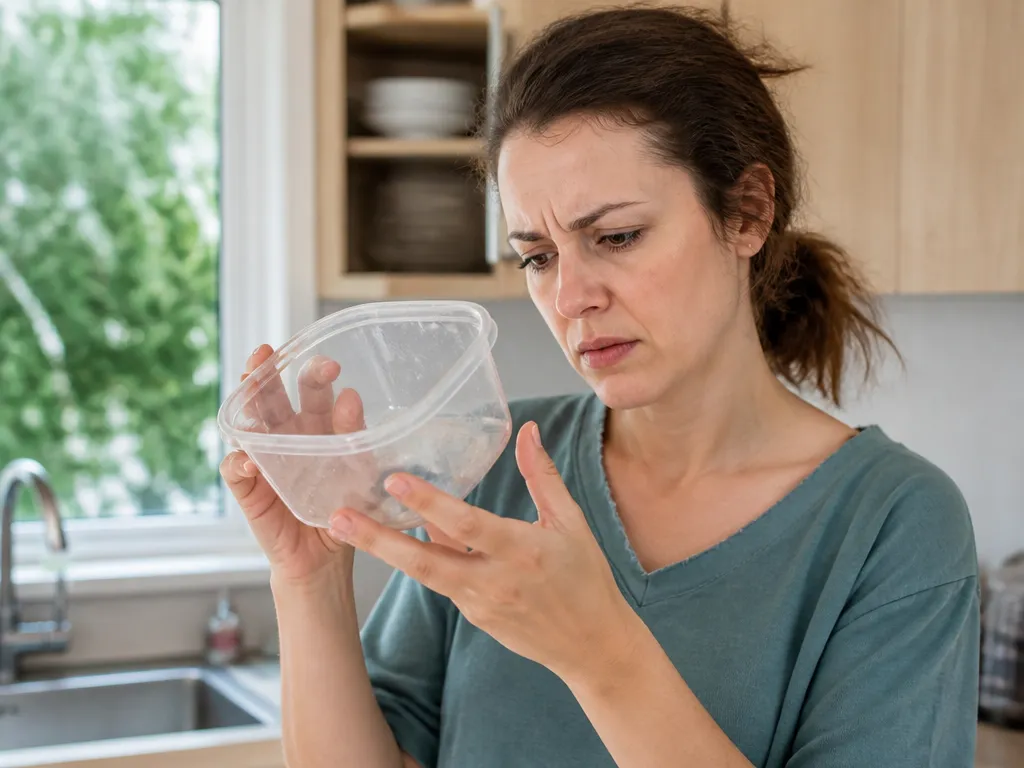
- Look for cracks and crazing. Crazing is the spiderweb pattern that can appear after heat exposure.
- Run your fingernail lightly over the surface. If your nail catches on a scratch, replace the container.
- Check the lid seal. A lid that no longer seals can leak, increasing odor and residue buildup.
- Smell it after washing. If food smells return within hours or after reheating, retire the container.
- Assess cloudiness and haze. Cloudy plastic can indicate heat aging or material breakdown.
- Check for persistent stains. Yellow or brown discoloration that remains after cleaning is a reason to retire it.
Let the Food Type Affect Your Decision
Be stricter with containers used for:
- Oily foods, such as pasta with sauce or fatty leftovers. Oil can penetrate and cling to worn plastic.
- Acidic foods, such as tomato sauce, citrus, or vinegar-based marinades. Acid can increase wear at the surface.
- Hot foods, including microwaved leftovers. Heat can age some plastics faster, especially when the container is not rated for it.
A Simple Plastic Container Replacement Score
Assign points based on the container’s condition:
- 2 points for a crack or visible split
- 2 points for scratches deep enough to catch your fingernail
- 1 point for cloudiness, haze, or warping
- 1 point for odors that return after washing
- 1 point for stains that remain after a normal deep-clean attempt
Use the total as a consistent estimate:
| Score | What to do |
|---|---|
| 0-1 points | Keep it for cold storage if it remains smooth and cleanable. |
| 2-3 points | Replace it now, especially if you store oily or acidic foods in it. |
| 4+ points | Replace it now. |
This is a household decision tool, not a medical lab test. The more points a container has, the less useful it is for storing food.
Why Replacing Worn Plastic Containers Helps
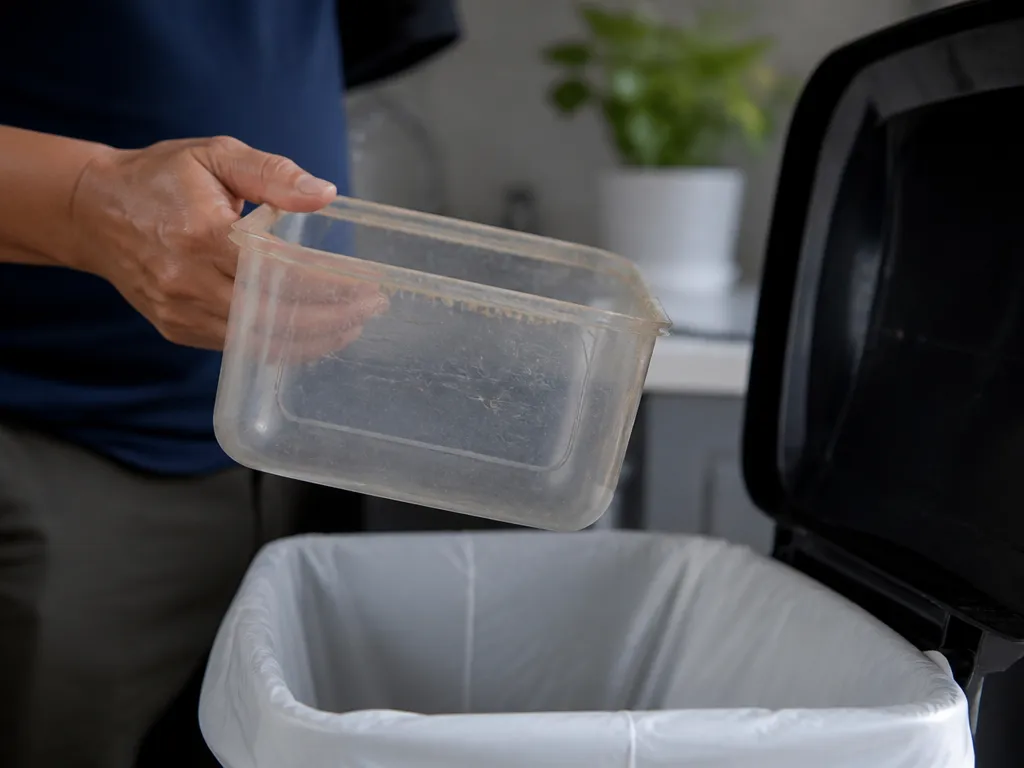
Replacing damaged containers reduces lingering odors, repeated cleaning failures, and leaks. It also keeps worn plastic from being used for long storage or reheating.
Retiring the worst containers can provide:
- Better food freshness. Less odor transfer means leftovers taste closer to how they should, and your refrigerator is less likely to smell like the food inside.
- Less scrubbing. Replacing a container with permanent stains or smells saves time.
- More reliable storage. Warped lids and degraded seals leak, creating messes and transferring odors to other foods.
Practical Alternatives to Worn Plastic Containers
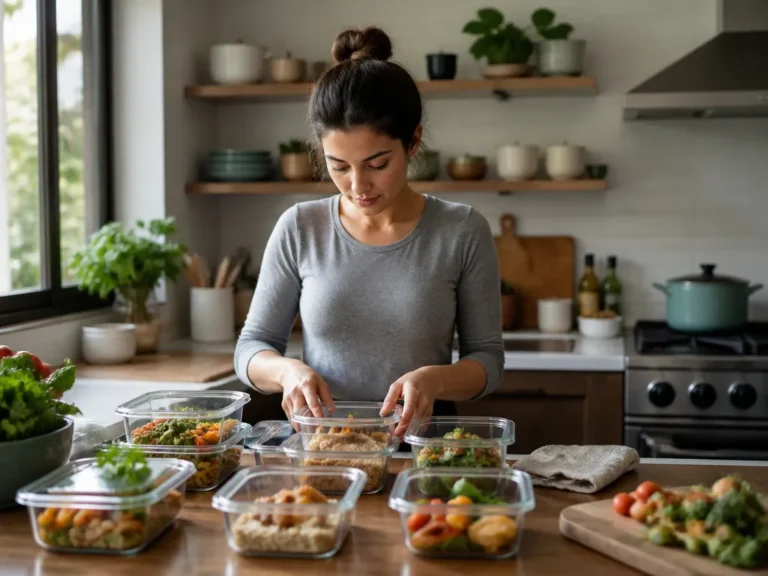
Glass containers are a useful choice for leftovers, meal prep, reheating, and hot or acidic foods. Food-grade stainless steel works well for reusable storage, particularly for longer-term meal preparation. Microwave-safe glass lets you reheat food without repeatedly exposing plastic to high heat. Disposable liners or paper wraps can provide brief, short-term coverage when reusable storage is not practical.
If you want to keep some plastic containers, match them to lower-stress uses:
- Use intact, smooth, clear plastic for cold storage.
- Avoid microwaving and high-heat dishwasher cycles unless the label specifically supports them.
- Reserve the containers in the best condition for foods that are less likely to stain, such as plain cooked grains.
Plastic that already holds smells or stains is often better suited to non-food uses, such as organizing dry items.
How Temperature Ratings Affect Replacement
Follow the manufacturer’s label when it is available. “Plastic” covers many materials, and containers that look alike may have different microwave and dishwasher ratings.
If the label is missing or unreadable, treat repeated heat exposure as a reason to replace the container sooner. The highest-stress uses include:
- microwaving plastic,
- repeated exposure to hot food and steam,
- high-heat dishwasher cycles,
- long-term storage of oily or acidic foods in aging containers.
Match the container’s condition to how you use it. A smooth container that stays easy to clean may continue serving well. One that becomes cloudy, rough, or odor-retentive is ready for retirement, even if it still holds food.
Six Plastic Container Replacement Scenarios
A Crack Near the Corner
A small crack in a takeout container is still a replacement issue. If your fingernail catches on the edge, throw it away. The crack can trap residue and may worsen as the container moves between different temperatures.
Cloudy Plastic After Microwaving
If microwaving leftovers leaves a container hazy or permanently cloudy, retire it, especially if you use it for tomatoes, curry, or oily foods. Cloudiness can indicate that heat has aged the plastic.
Stains That Do Not Come Out
A container used for spaghetti sauce may stay yellow-brown after washing. If normal cleaning does not remove the stain, replace it for food use. The discoloration may mean residue or material changes have become permanent.
An Odor That Returns After Washing
If a thoroughly washed container smells like onions or fish again the next day, replace it. Returning odors suggest that compounds have been absorbed into or trapped by the surface.
Scratches You Can Feel With Your Nail
Fine surface scuffs are different from deep grooves. Run your fingernail across the plastic; if you can feel scratches, especially on the sides or bottom, switch to another container.
A Container With a Failing Lid
The container itself may look fine while its lid no longer seals. If the lid is warped, will not clip into place, or leaks in the refrigerator, replace the container-lid set. Leaks create odor transfer and residue that are difficult to control.
FAQ
How do I know if plastic containers are still safe to use?
Check their condition and intended use. Replace plastic containers with cracks, deep scratches you can feel with a fingernail, permanent cloudiness, warped lids, or odors that return after washing. An intact container that remains smooth and cleanable is generally suitable for cold food storage.
Should I throw away plastic containers after microwaving them?
Retire a plastic container if microwaving causes haze, warping, or persistent smells. If it is labeled microwave-safe and still looks and feels smooth, you can continue using it, but avoid long heating and boiling-hot foods. When the label is missing or unclear, use glass for reheating.
What is the fastest way to decide whether to keep or replace one?
Check for cracks, test the surface with your fingernail, inspect the lid seal, and smell the container after washing. If it has any of the “big three” – cracks, deep scratches, or returning odor – replace it. If it has only light scuffs and cleans easily, keep it for cold storage.
Are stained plastic containers unsafe, or is the problem cosmetic?
Some stains are cosmetic. Persistent stains that remain after cleaning may mean residue has soaked in or the surface has aged. If a stain comes with an odor or rough texture, treat it as a replacement issue, especially when the container holds oily or acidic foods.
What should I use instead of plastic for leftovers?
Glass is the easiest swap for most households in the United States. Use it for reheating and for storing hot or acidic foods. Food-grade stainless steel is another reusable option, particularly for meal prep.

One Comment