How To Organize Kitchen Appliances: 6 Simple Ways
Organizing your kitchen appliances transforms a chaotic countertop into a functional workspace that actually encourages you to cook. Most kitchens suffer from appliance creep, where items you rarely use occupy the most valuable real estate near your stove or prep area. By auditing your collection based on how often you reach for a tool, you can reclaim your counters and make daily meal preparation faster, quieter, and significantly more enjoyable.
The most effective way to organize kitchen appliances is to categorize them by frequency of use while prioritizing vertical space and accessible storage zones. Daily items should live on your counter or in easy-reach cabinets, while seasonal machinery belongs in deep storage or high shelves. This approach reduces physical strain, prevents clutter from accumulating, and keeps your most important tools ready for immediate action at a moment’s notice.
Key Takeaways
- Sort by frequency. Place daily tools like toasters on the counter and seasonal items like waffle makers in high storage.
- Utilize vertical space. Install shelf risers or wall-mounted tracks to double the storage capacity of your existing kitchen cabinets.
- Manage cord tangles. Secure cords with Velcro ties or adhesive clips to keep machines compact and easy to slide into drawers.
- Use pull-out trays. Install sliding shelves for heavy items like stand mixers to eliminate the need for awkward lifting and reaching.
- Repurpose corner space. Use lazy Susans or pull-out blind-corner organizers to make deep, dark cabinets fully functional for bulky appliances.
- Audit your collection. Remove or donate any appliance that has not been used in the last six months to save space.
How to organize kitchen appliances based on daily frequency
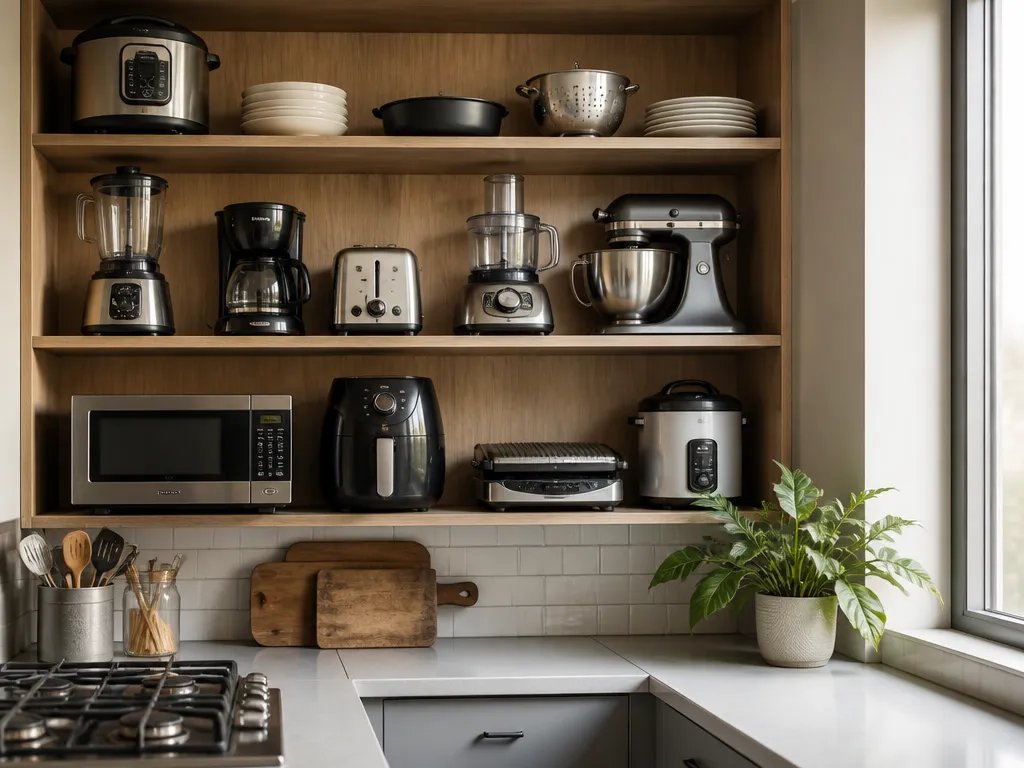
Assign every appliance in your kitchen to one of three specific zones based on your personal cooking habits. Daily appliances, such as your coffee maker, toaster, or electric kettle, require a permanent home on your primary countertop where they are ready for instant use. These machines should be positioned near a dedicated power outlet to avoid the annoyance of constant plugging and unplugging.
Weekly appliances, including blenders, food processors, or hand mixers, belong in the lower cabinets closest to your prep area. They are used often enough that you want them within arm’s reach, but they do not need to take up valuable counter space when idle. If you have to move three things to get to your blender, you will eventually stop using it, so prioritize these items in the most accessible lower cupboards.
Occasional appliances, such as slow cookers, holiday-themed waffle irons, or specialized dehydrators, belong in the “deep storage” category. These items can move to upper cabinets, pantry shelves, or even garage storage if your kitchen footprint is particularly small. Keeping these tools out of your main workflow ensures that your most active kitchen zones remain clear for the tasks you perform every single day.
Selecting the right storage zones for countertop vs cabinet items
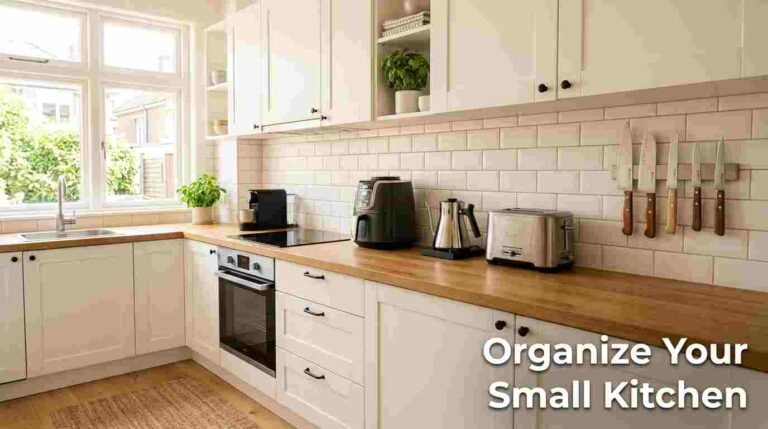
Countertop space is the most expensive real estate in your home, so reserve it only for items you use at least once every twenty-four hours. If you leave a blender on the counter but only use it on Saturdays, it is effectively stealing space that could be used for chopping, mixing, or plating. A clean counter surface is the single biggest factor in making a kitchen feel organized rather than cluttered.
Cabinet storage requires a different logic focused on weight and reachability. Heavy, frequently used items belong in base cabinets, while lighter items can migrate to upper shelves. Always group appliances with similar functions, such as keeping your immersion blender near your mixing bowls or your coffee grinder near your mugs. This “task-based” grouping prevents you from walking across the kitchen to assemble the tools you need for a single recipe.
Utilizing vertical space for bulky small appliances
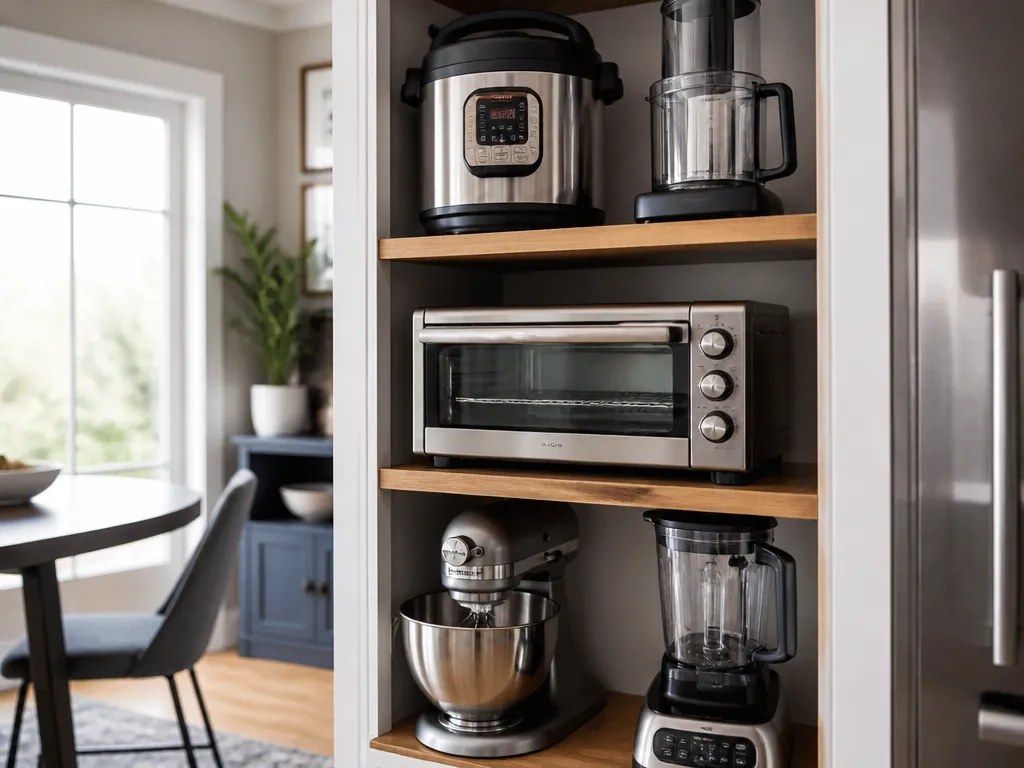
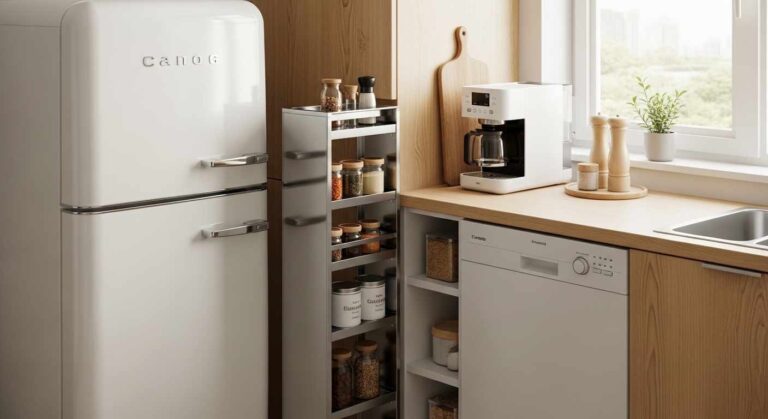
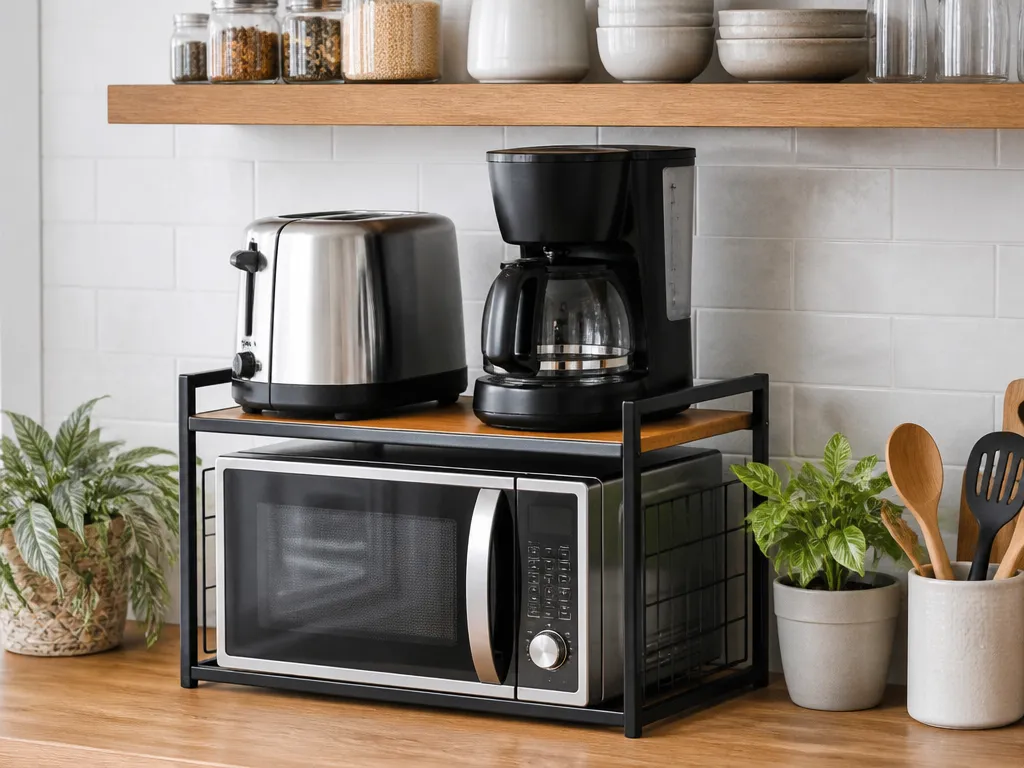
Vertical space is often the most underutilized asset in a kitchen, especially when dealing with bulky items that do not stack well. Adding a tension-mounted shelf riser inside a standard cabinet allows you to store a small appliance on the bottom while placing lighter accessories or attachments on the shelf above. This effectively doubles the footprint of your cabinet without requiring any structural renovations or expensive custom cabinetry.
For items that are too large for standard shelves, consider installing wall-mounted pegboards or heavy-duty wire racks inside a pantry or utility closet. These systems keep appliances off the floor and allow you to see exactly what you have at a glance. When you use vertical wall space, you keep your floor and counter zones open, which creates a visual sense of order even if your kitchen is modest in size.
Managing appliance cords to prevent tangled storage
Tangled cords are the primary reason people avoid putting appliances away, as the mess makes a simple tool feel like a chore to store. Use Velcro cable ties to bundle cords neatly against the body of the machine before placing it into a cabinet or drawer. This simple step ensures that when you pull the appliance out, you are not wrestling with a knotted mess of plastic or risking damage to the plug.
For appliances you keep on the counter, use adhesive cord organizers or clips on the back of the machine to keep the wire flush against the wall. If a cord is exceptionally long, use a cord-shortening reel or a simple twist-tie to take up the slack. Keeping the cord length managed prevents it from getting snagged on other items or accidentally pulling the appliance toward the edge of the counter.
| Appliance Type | Ideal Storage Zone | Cord Management Strategy |
|---|---|---|
| Daily (Coffee Maker) | Countertop | Adhesive cord clip to wall |
| Weekly (Blender) | Lower Cabinet | Velcro tie bundled on base |
| Occasional (Slow Cooker) | Pantry/High Shelf | Wrapped around body, secured |
| Seasonal (Ice Cream Maker) | Garage/Deep Storage | Bagged with cord coiled inside |
Arranging heavy mixers and blenders for easy access
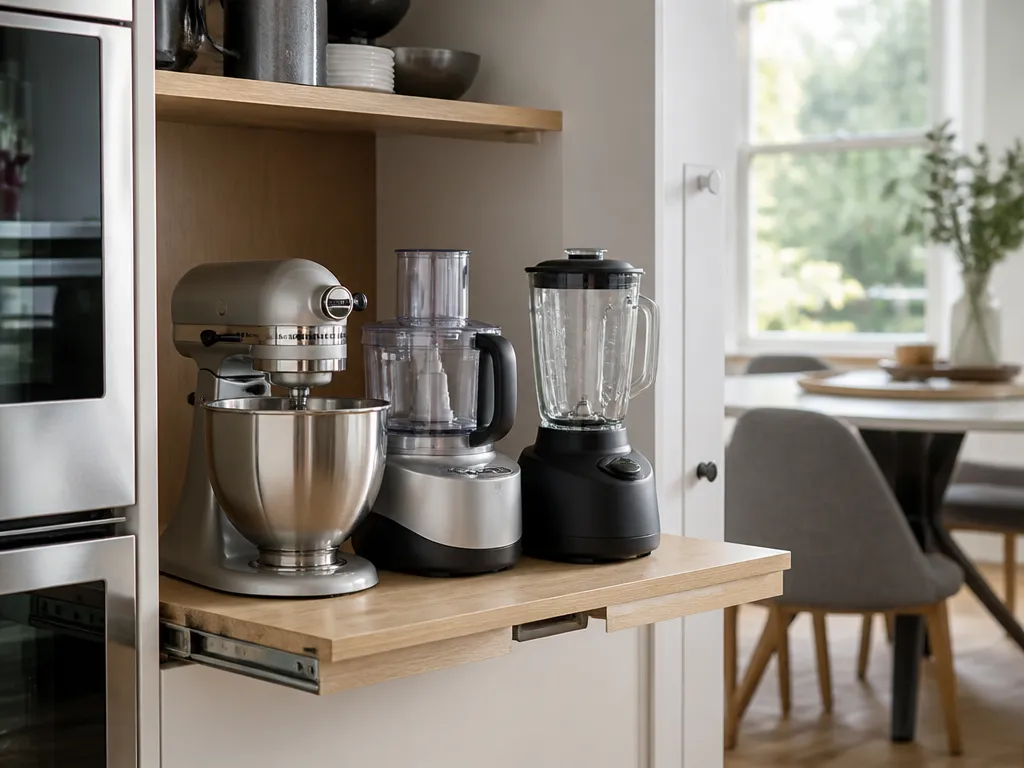
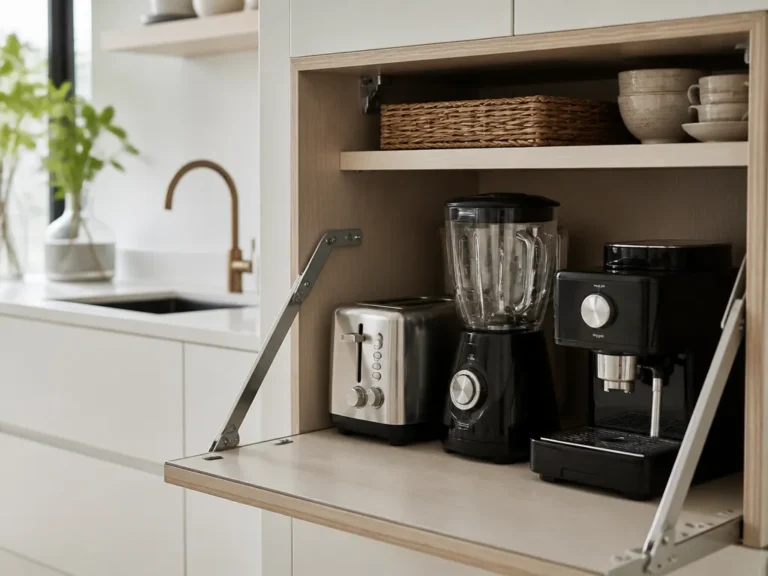
Heavy appliances like stand mixers or high-speed blenders are notoriously difficult to move, which often leads to them staying on the counter permanently even when they are not in use. If you have the space, dedicate a specific “appliance garage” or a sturdy corner of the counter to these items. If they must go into a cabinet, choose a base cabinet that does not require you to lift the item over a lip or across a significant distance.
In practice, the best way to handle a heavy mixer is to place it on a dedicated appliance slider or a simple tray with felt feet. These allow you to slide the heavy machine forward to the edge of the counter when you need it and push it back into a corner when you are done. This saves your back and prevents the heavy machine from scratching your countertops or damaging your cabinet finishes.
Clearing cabinet clutter by repurposing deep corner shelves
Corner cabinets are notorious for becoming “appliance graveyards” where items are pushed to the back and forgotten for years. Installing a circular lazy Susan or a pull-out kidney-shaped shelf transforms this dead space into a rotating display of your most useful tools. Because these organizers spin or pull out, you can access every single inch of the corner without having to remove items that are in your way.
If you cannot install hardware, use clear, stackable bins to group your small appliances in the corner. Labeling these bins allows you to identify what is inside without having to pull the bin all the way out. Always put the heaviest, most-used items on the front-most part of the shelf, and use the deep, dark back corners only for items you use once or twice a year.
Implementing pull-out trays for heavy kitchen machinery
Pull-out trays act as an extension of your counter, providing a stable platform for heavy machinery while keeping the machine tucked away when not in use. You can purchase aftermarket sliding shelves that mount to the bottom of your existing cabinets, allowing you to pull the entire shelf out like a drawer. This is the gold standard for heavy items like food processors, which are often too heavy to lift onto the counter daily.
For a budget-friendly alternative, place heavy appliances on a sturdy cutting board with felt pads attached to the bottom. This allows you to slide the appliance across your counter or shelf with minimal effort and no noise. Whether you choose a professional pull-out installation or a DIY sliding board, the goal remains the same: minimize the physical effort required to deploy your machinery so you are more likely to use it.
FAQ
How do I decide which appliances to keep?
If you have not used an appliance in the last six months, it is likely taking up space you could use for tools you actually need. Perform a “trial run” by moving all your unused appliances to a box in a closet; if you do not find yourself reaching into that box for a specific tool within three months, it is time to donate or sell it.
Is it safe to store appliances on top of the refrigerator?
Storing appliances on top of the refrigerator is generally safe, provided the items are lightweight and not prone to falling. However, this space is often difficult to reach, making it better suited for seasonal items like a holiday turkey roaster or a large party-sized blender. Always ensure the top of the fridge is clean and level before placing heavy items there.
How can I stop cords from fraying?
Cords fray when they are bent at sharp angles or pulled too tightly around the base of an appliance. To prevent this, always leave a small amount of slack near the connection point and use soft Velcro ties instead of hard plastic clips. Avoid wrapping cords tightly around the appliance body, as this can weaken the internal wires over time.
What is the best way to clean appliances before storing them?
Always wipe down the exterior of an appliance with a damp cloth and ensure it is completely dry before placing it in a cabinet. Moisture trapped inside a closed cupboard can lead to mold or rust on metal parts. If you are storing an appliance for an extended period, consider placing a small silica gel packet inside the box to absorb excess humidity.
Can I stack appliances on top of each other?
Stacking is acceptable only if the appliances are lightweight and the base unit is sturdy enough to support the weight. Never stack heavy items like food processors or mixers, as this can damage the motor housing or cause the stack to tip over. Use shelf risers to create separate levels, which prevents direct contact and protects your appliances from scratches.
Organizing your kitchen appliances is a process of matching your tools to your actual cooking habits rather than how you think you should cook. Start by clearing your counters of everything you have not touched this week, then move those items into the cabinets using the vertical and sliding solutions described above. Your kitchen will feel larger and more functional within an hour of reorganizing.