When To Use Bamboo Drawer Dividers
Bamboo drawer dividers are worth using when you want categories that stay put, especially for small items such as utensils, tools, cosmetics, and craft supplies. They make sense when drawer clutter comes from shifting, mixing, or uneven storage space. They are less suitable for drawers exposed to standing water, repeated splashes, or damp conditions.
Use bamboo drawer dividers when you regularly sort small items and need vertical or horizontal separation that will not snag or slide easily. They work well in bathrooms, kitchen drawers, craft organizers, and entryway storage. If your drawer is very wet, poorly sealed, or exposed to standing water, choose a moisture-tolerant material instead.
Key Takeaways
- Use them for small categories. Dividers work best when you store items that roll or migrate, such as utensils, makeup, or screws.
- Choose the right layout. Match the divider orientation to how you use the drawer: horizontal for stacking and vertical for compartments.
- Measure before buying. Drawer depth and width determine whether dividers fit without gaps or binding.
- Protect the finish. A felt or drawer liner can reduce scuffs and friction-related movement.
- Replace cracked dividers. Damage along the edges can spread, so replace pieces that split or separate.
When Bamboo Drawer Dividers Make Sense

Use bamboo drawer dividers when your main storage problem is that items end up in the wrong place. They add compartments rather than more storage space. Bamboo works especially well in daily-access drawers because it is sturdy, has a clean appearance, and handles normal household use better than some thin plastics.
They are also useful when your items vary in size. Dividers let you create zones instead of forcing everything into one large bin. A kitchen drawer, for example, can hold separate areas for cutlery, serving utensils, and gadgets. A bathroom drawer can have zones for daily skincare, spare products, and small tools.
Bamboo is a poor choice when the drawer environment is hard on materials. If products leak, you clean the drawer with a very wet method, or the drawer sits near a sink with frequent splashes, bamboo is more likely to swell or warp over time. Use a moisture-tolerant organizer in those conditions, or add a removable barrier liner.
Match Bamboo to the Drawer and Its Contents
The drawer’s conditions determine whether bamboo is a good fit. The contents and frequency of use also affect whether dividers are worthwhile.
Daily use matters. If you grab items quickly and often, compartments reduce rummaging and keep objects from mixing. If you rarely open the drawer, dividers are less necessary because the clutter problem never has much time to build.
Bamboo dividers suit small to medium accessories, tools, and household goods. They are less appropriate for heavy loads or large, irregular objects that could force them to bow. For heavy items, choose an organizer that locks in place or supports weight more effectively than lightweight compartment inserts.
Set Up Bamboo Dividers So They Stay Put

Measure carefully, then measure again. Drawer dividers need working clearance so they sit flat without making the drawer bind, especially when the tracks are not perfectly aligned. Record the drawer width and depth in inches, then compare those measurements with the divider dimensions before buying.
Add a drawer liner for both friction control and easier cleanup. A thin liner can reduce squeaking and help prevent the divider from sliding as you remove items. It also lets you wipe away crumbs or spills without soaking the bamboo.
Arrange compartments according to how you reach into the drawer, not just according to tidy-sounding categories. If you usually grab items from the front, place the most-used objects in the front-left or front-center zone. If you often reach toward the back, create compartments that keep small items from collecting in the corners.
Avoid an over-tight fit. Press-fit dividers should have a tiny amount of room so the drawer can expand slightly with humidity changes and the divider does not scrape the drawer box. Aim for a fit that is loose enough to adjust but snug enough to stay put.
Give every item a one-touch return location. A useful divider system makes it obvious where each object belongs. If you cannot explain the storage rule in one sentence, the system will probably break down and become clutter.
What Bamboo Dividers Improve
Bamboo drawer dividers reduce mixing, which cuts the time you spend searching and re-sorting. When items stay in their own lanes, the drawer feels reset even if you put things away quickly. The difference is especially noticeable in bathrooms and craft drawers, where many small items lack dedicated homes.
They also improve organization without turning the drawer into a rigid, permanent storage box. You can rearrange the compartments when your storage needs change, which helps as hobbies, supplies, and household routines evolve.
Bamboo dividers are generally easier to wipe than fabric organizers and have a more natural appearance than many plastic inserts. When kept dry, they can maintain their appearance without constant replacement.
Alternatives for Damp, Heavy, or Irregular Storage

Bamboo is one option among several compartmental storage solutions. The right choice depends on whether the drawer stays dry, how often spills occur, and how much adjustability or support you need.
| Organizer material/style | Key spec to check | Best for | Not great for |
|---|---|---|---|
| Bamboo dividers | Fit range for your drawer width/depth | Dry kitchen drawers, bathrooms (dry), craft storage | Areas with frequent splashes or dampness |
| Clear acrylic or poly dividers | Locking/clip mechanism | Damp-tolerant storage, visible organization | When you want a warmer natural look |
| Adjustable metal dividers | Rigidity and corrosion resistance | Heavy tools, garage drawers | Lightweight aesthetics preferences |
| Fabric bins with sewn pockets | Washability | Soft items, quick sorting | Clean wipe-down needs, damp drawers |
| Plastic segmented trays | Smooth, wipeable surfaces | Pantry edges, utility drawers | If bins are too low-profile for your items |
For many US households, a practical approach is to use bamboo in dry rooms and moisture-tolerant organizers near sinks, pet areas, or places where leaks occur. You can keep a cohesive system by using bamboo in dry drawers and another material in drawers with a higher wetness risk.
If the drawer is uneven, choose adjustable dividers instead of fixed-size pieces. Fixed compartments work well when the measurements match, while adjustable systems handle small variations in drawer dimensions and track alignment.
Use Dividers to Build Better Storage Habits
Treat bamboo drawer dividers as a behavior tool as well as a storage tool. If the compartments make it intuitive to return items, the system will work. If the items have no natural homes, the divider becomes extra clutter and eventually gets pushed aside.
Start with drawers that have the biggest mixing problem. Common examples include silverware and gadget drawers, bathroom vanity drawers, and catch-all drawers filled with batteries, chargers, and small accessories. These drawers tend to hold many similar-sized items that migrate when you pull them open quickly.
Do not overload the compartments. Heavy items can make dividers shift or create stress at the edges. Build compartments around typical daily use, then place heavier pieces in a larger bin.
Inspect the dividers every few months. Check for small cracks, peeling finishes, or warped sections. Early damage may be manageable by sanding and reseating the divider with proper padding, but replace it if the damage has compromised the fit.
Where Bamboo Drawer Dividers Work Best
A kitchen gadget drawer is one of the easiest places to use bamboo dividers. Split it into compartments for measuring spoons, spatula accessories, peelers, and small baking tools. The dividers keep round tools from rolling into one another and make it clear where each item belongs after use.
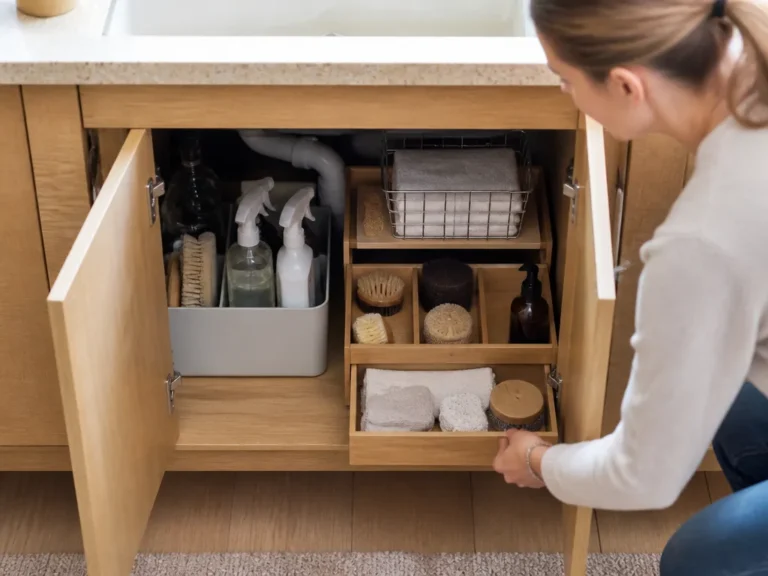
A bathroom drawer is another good option when it is away from direct splashes. Use bamboo dividers to separate skincare tubes from cotton pads and small grooming tools. Add a liner underneath to keep the divider from sliding when you open the drawer one-handed.
Craft and sewing drawers benefit from compartmental zoning, especially when they hold many small supplies. Create sections for thread spools, buttons, tape, needles, and small scissors. Make the compartments deep enough for items that stack, or you will create a pile inside each compartment and lose the benefit of organizing them.
Tool-and-hardware drawers show where bamboo reaches its limits. Bamboo can work for light hardware such as binder clips, small screws, and wall anchors, but bulky tools may press too hard against the compartments. Use bamboo for sorting lighter items and a more rigid organizer for anything heavy.
An entryway catch-all drawer can also benefit from clear lanes for keys, sunglasses, and small mail. Dividers keep keys from knocking into electronics and make quick drop-offs easier. If the drawer is exposed to rain or other moisture, use a moisture-safe organizer instead.
FAQ
When is the best time to use bamboo drawer dividers?
Use bamboo drawer dividers when setting up a drawer for daily use or after noticing that items repeatedly mix. If you sort the drawer once and everything stays put, dividers are unnecessary. If you open the drawer and find everything scattered, dividers can solve the problem quickly.
Are bamboo drawer dividers safe for bathroom drawers?
They are usually suitable for bathroom drawers that stay dry and receive immediate cleanup after spills. Avoid placing them where they encounter repeated dampness from splashes, leaking bottles, or wet wipes left in the drawer. For higher-risk areas, choose sealed plastic or glass-like organizers.
How long do bamboo drawer dividers last?
Bamboo dividers can last a long time in dry indoor conditions, but moisture speeds up wear. Their performance also depends on fit and how often they are bumped. Replace dividers that develop cracking, warping, or separation at the edges instead of forcing them back into place.
How do I install bamboo drawer dividers so they do not slide?
Clean the drawer surface and add a thin liner if the divider does not have its own grip. Dry-fit the divider, then adjust it until it sits flat without twisting. Keep lightweight items in the compartments so heavy loads do not create movement.
What is the most common mistake when using bamboo drawer dividers?
The biggest mistake is choosing a size that is too tight or too loose. A tight divider can make the drawer rub, while a loose one can shift. Another common error is using bamboo in a wet or spill-prone drawer without a protective barrier and a quick-cleanup routine. Measure carefully and keep the storage area dry.