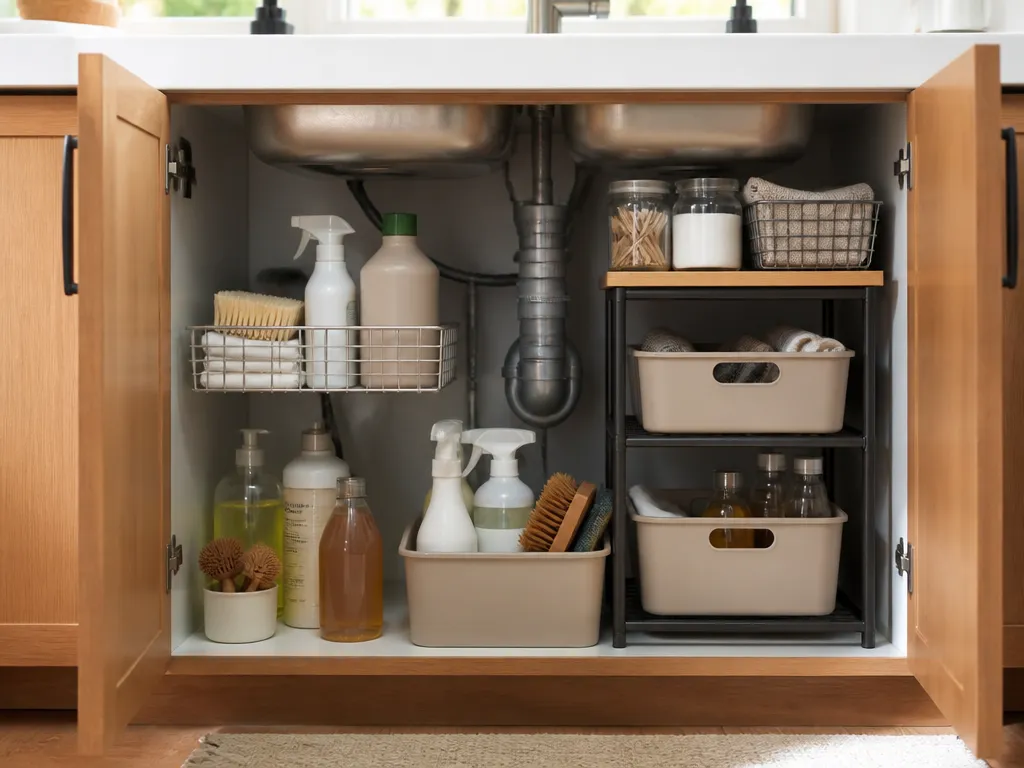
How to Organize Under Kitchen Sink Like a Pro in 5 Steps
An organized under-sink cabinet transforms a chaotic “black hole” into a functional storage zone where every spray bottle, sponge, and scrub brush has a permanent home. By tackling this space with a systematic approach, you stop the cycle of digging for supplies and prevent items from toppling over or leaking into the cabinet floor. This process relies on three pillars: purging unnecessary clutter, measuring your specific footprint, and choosing storage hardware that works around fixed plumbing.
Effective under-sink organization requires a strategic layout that accounts for the bulky garbage disposal, drain pipes, and water lines that occupy the center of the cabinet. A well-organized space uses vertical height and sliding components to ensure items at the back are just as accessible as those in the front. Expect to spend one hour clearing the space and another hour installing your chosen storage solutions to achieve a permanent, maintainable system.
Key Takeaways
- Protect the cabinet floor. Install a waterproof silicone mat or liner to prevent water damage from plumbing leaks or spilled cleaning chemicals.
- Measure before buying. Use a tape measure to record the depth, width, and height of your cabinet, specifically noting the location of pipes.
- Group by category. Sort items into logical clusters like surface cleaners, dishwashing supplies, and paper goods to simplify your daily routine.
- Prioritize vertical storage. Use stackable bins or tiered shelving units to utilize the empty space above your cleaning supplies.
- Choose sliding organizers. Opt for pull-out drawers or trays to eliminate the need to reach into the dark, cramped back of the cabinet.
- Label everything. Apply clear labels to bins and containers to ensure every family member knows exactly where items belong after use.
How to Organize Under Kitchen Sink Cabinets Effectively
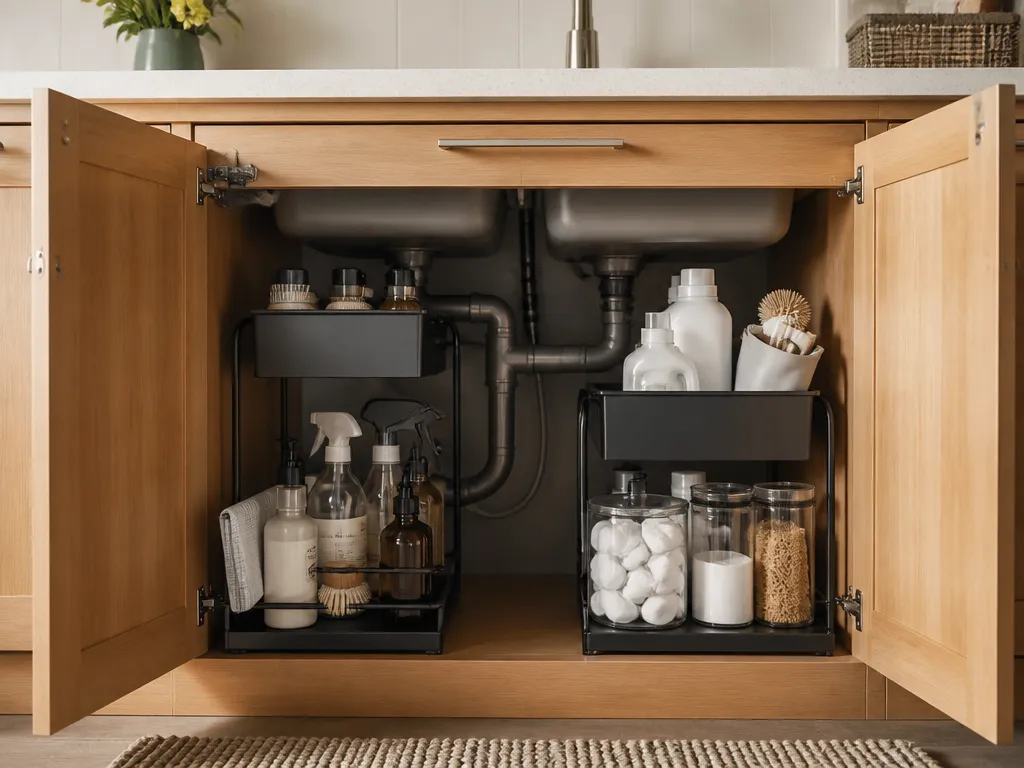
Success in this project depends on your ability to work around the fixed obstacles inside your cabinet. Most under-sink areas feature a central drain pipe and a garbage disposal unit that create a natural divide. Instead of fighting this layout, lean into it by designating the sides for different cleaning tasks or supply categories. This creates a balanced, intuitive flow that keeps your most-used items within immediate reach.
Start by clearing the floor of the cabinet entirely. Wipe down the interior surfaces to remove dust or chemical residue, and inspect the plumbing for any signs of slow leaks or moisture. If you find water damage, address those repairs before installing any permanent storage solutions. A clean, dry, and protected base is the foundation for a system that stays organized for years.
Emptying and Sorting Your Cleaning Supplies
The most common mistake when organizing this space is keeping expired, empty, or duplicate cleaning products that you rarely use. Pull every single item out of the cabinet and place it on your kitchen counter. Group these items into categories such as dish soap, surface sprays, floor cleaners, and spare sponges. If you find three half-empty bottles of the same glass cleaner, combine them into one to save space.
Check the expiration dates on all chemicals and dispose of anything that has separated or solidified. Discard old, frayed sponges or rags that are no longer effective. By reducing your inventory to only the essentials you actually use, you clear valuable real estate for the storage solutions that make your workflow easier. Only return the items you truly need back into the cabinet after you have installed your organization system.
Using Tiered Shelving and Expandable Organizers
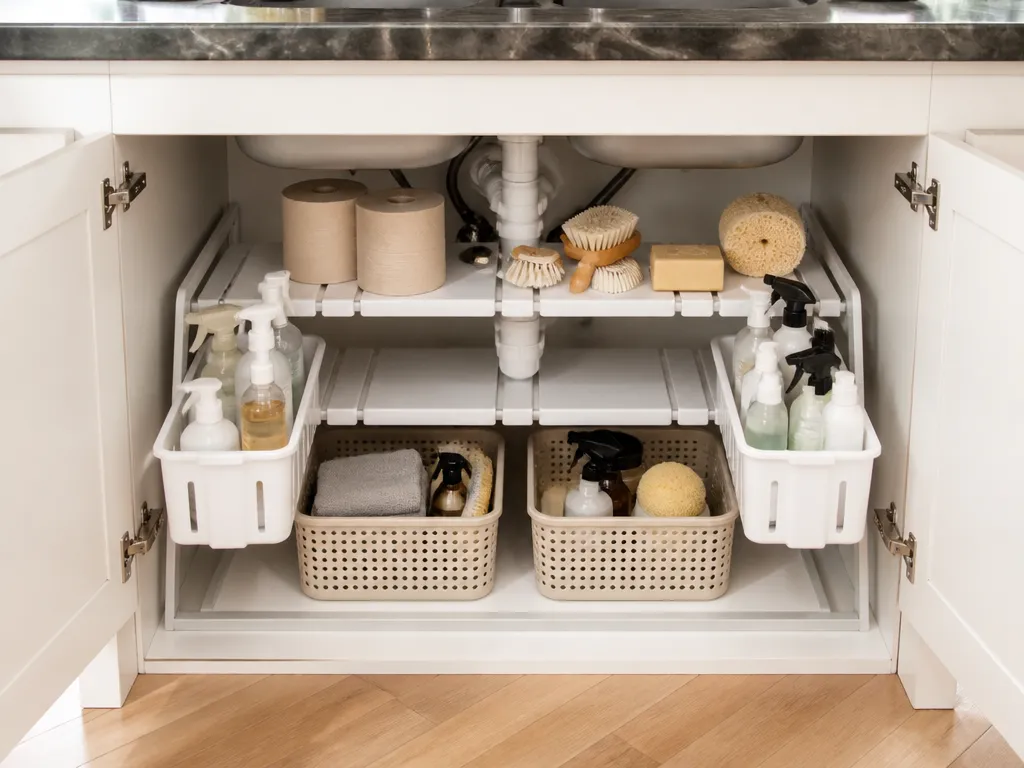
Tiered shelving units allow you to double your storage capacity by utilizing the vertical space between the bottom of the cabinet and the underside of the sink basin. Look for two-tier organizers that feature a narrow footprint, which helps you avoid the main drain pipe. These shelves are ideal for storing smaller items like scrub brushes, dishwasher pods, and microfiber cloths that would otherwise get lost in a large bin.
Adjustable or expandable organizers provide the most flexibility if your sink plumbing is asymmetrical. Many models feature shelves that can slide or shift to accommodate pipes, ensuring you do not waste space around the disposal unit. When selecting these, prioritize heavy-duty plastic or metal materials that can withstand the occasional spill or contact with damp cleaning tools.
Utilizing Clear Bins and Labeling Systems
Clear acrylic or plastic bins act as “drawers” that contain loose items and prevent them from migrating across the cabinet floor. Because these bins are transparent, you can instantly see when your supply of dishwasher tabs is running low or when you are out of trash bags. This visual clarity is the key to maintaining an organized system because it removes the guesswork from your inventory management.
Apply labels to the front of each bin to cement the organizational structure. This step is particularly important if other members of your household help with cleaning or kitchen chores. When every bin has a clear label like “Sponges,” “Surface Cleaners,” or “Laundry,” it becomes significantly easier for everyone to put items back in their correct place, preventing the “drift” that leads back to a messy cabinet.
Maximizing Vertical Space with Pull-Out Drawers
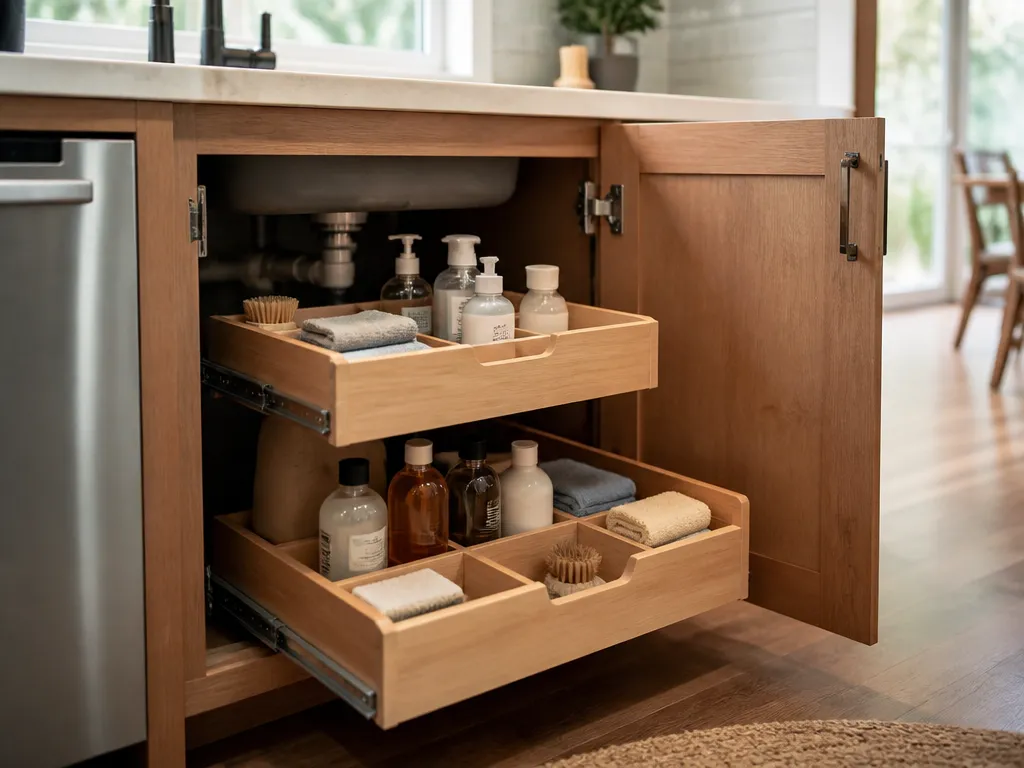
Pull-out drawers are the single most effective way to solve the problem of items being “lost” at the back of the cabinet. By installing a sliding track system, you bring the contents of the cabinet to you, rather than forcing yourself to crawl into the dark, awkward space under the sink. This allows you to stack taller items, such as tall spray bottles or large refill jugs, without worrying about knocking over smaller items when you reach for them.
In practice, choose a drawer width that leaves at least two inches of clearance on either side of your plumbing to avoid snags or mechanical interference. If you have a deep cabinet, a full-extension drawer is worth the investment, as it provides total access to the back corners. Many modern pull-out organizers are designed for DIY installation and can be secured to the cabinet base with just a few screws or heavy-duty adhesive strips.
Adapting Storage for Plumbing and Pipes
Plumbing is a permanent fixture, so your storage setup must be modular enough to work around it. Use the “dead space” directly beneath the sink basin for items that aren’t used daily, while keeping the area immediately under the cabinet doors clear for your most frequent tasks. If a pipe runs through the middle of the cabinet, use that as a visual boundary to separate your “wet” supplies like dish soap from your “dry” supplies like paper towels or spare sponges.
For very tight spaces, consider over-the-door organizers that mount to the inside of the cabinet doors. These are perfect for storing lightweight items like rubber gloves, scrub brushes, or small packets of cleaning supplies. This tactic frees up the precious floor space under the sink for larger bottles and bins, ensuring that you utilize every square inch of the cabinet without creating a cluttered or cramped environment.
FAQ
How do I stop items from leaking and ruining my cabinet floor?
Install a waterproof silicone mat or heavy-duty cabinet liner specifically designed for under-sink use. These mats feature a raised lip that traps spills and leaks, preventing them from warping the wood or particleboard of your cabinet base.
What is the best way to handle a bulky garbage disposal?
Use narrow, tiered shelving or sliding organizers that are specifically designed for low-clearance spaces. By positioning these units to the side of the disposal, you can maximize the remaining floor space while keeping the disposal area clear for maintenance access.
How often should I declutter under the sink?
Aim for a quarterly audit to remove empty bottles, check for leaks, and reorganize items that have migrated. A quick check every three months prevents the “black hole” effect and ensures your cleaning supplies remain accessible and effective.
Are pull-out drawers difficult to install?
Most DIY-friendly pull-out organizers require only a screwdriver and a few minutes to mount to the cabinet base. Always measure your interior width and depth, ensuring you account for the hinges and the pipe placement before finalizing your purchase.
Can I store heavy items under the sink?
Yes, but ensure you place heavy items like large refill jugs or bulk supplies directly on the cabinet floor rather than on elevated shelves. This prevents the weight from bowing your shelves and makes the cabinet more stable during daily use.