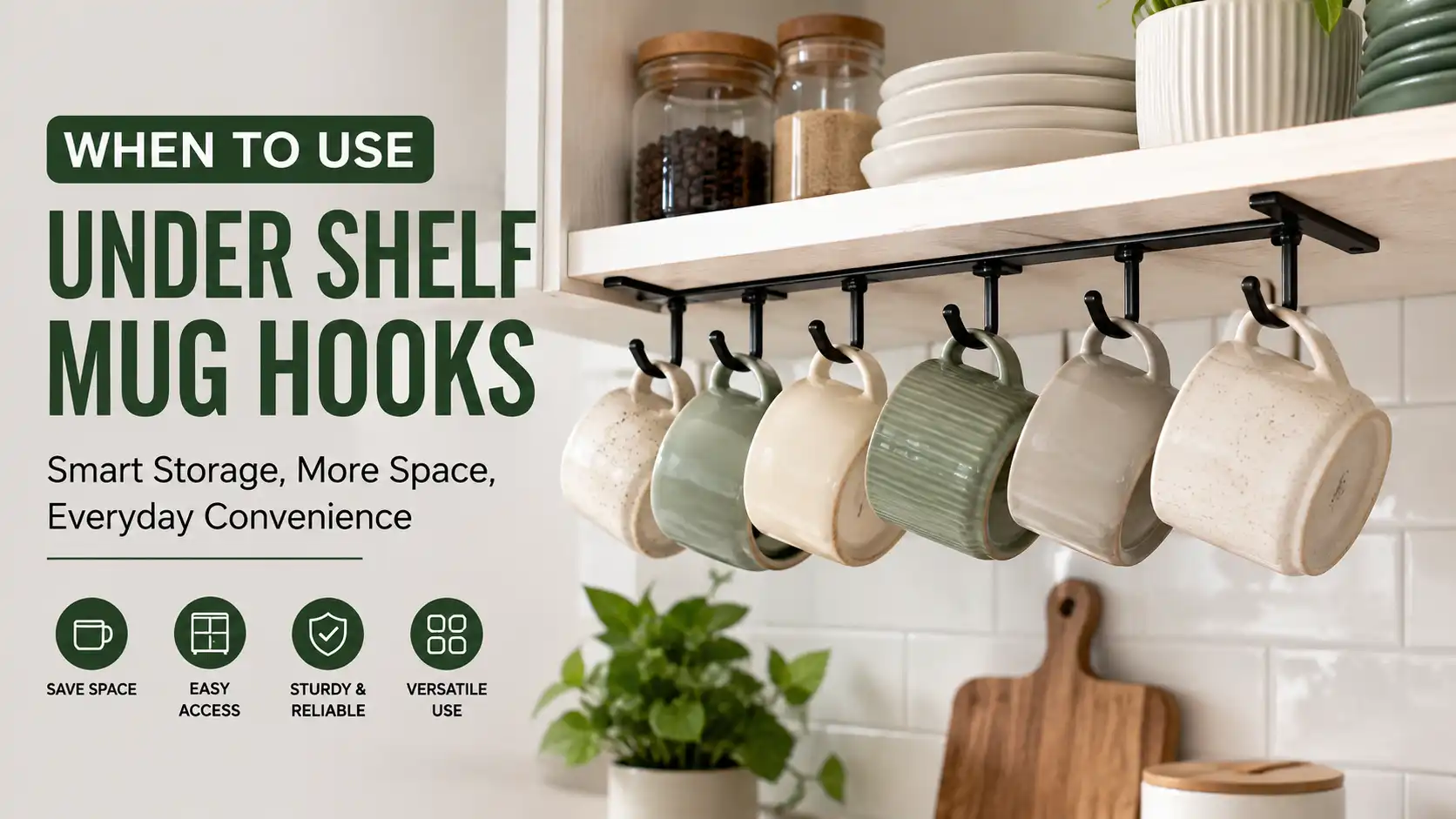
When to Use Under Shelf Mug Hooks: Smart Kitchen Storage Guide
Under-shelf mug hooks work best when you want mugs in an easy reach zone and have a sturdy shelf or cabinet underside for secure mounting. Install them when you can grab a mug without stretching, the handles have several inches of clearance, and the hooks can be fastened into solid wood, plywood, studs, or solid cabinet framing.
Skip them when the shelf is flimsy, hollow, too shallow, or covered by a thin decorative panel. A weak mount will loosen as you lift mugs, while poor clearance can make handles scrape the shelf or knock against one another.
Quick Decision Rules
- Match the height to your routine. The best location is usually around counter-to-eye level in daily use.
- Protect the finish. Soft-coated hooks, felt pads, or silicone bumpers reduce scratches and chips.
- Avoid heat and grease. Do not mount hooks directly above a range, where steam, grease, and heat can damage finishes.
When Under-Shelf Mug Hooks Make Sense
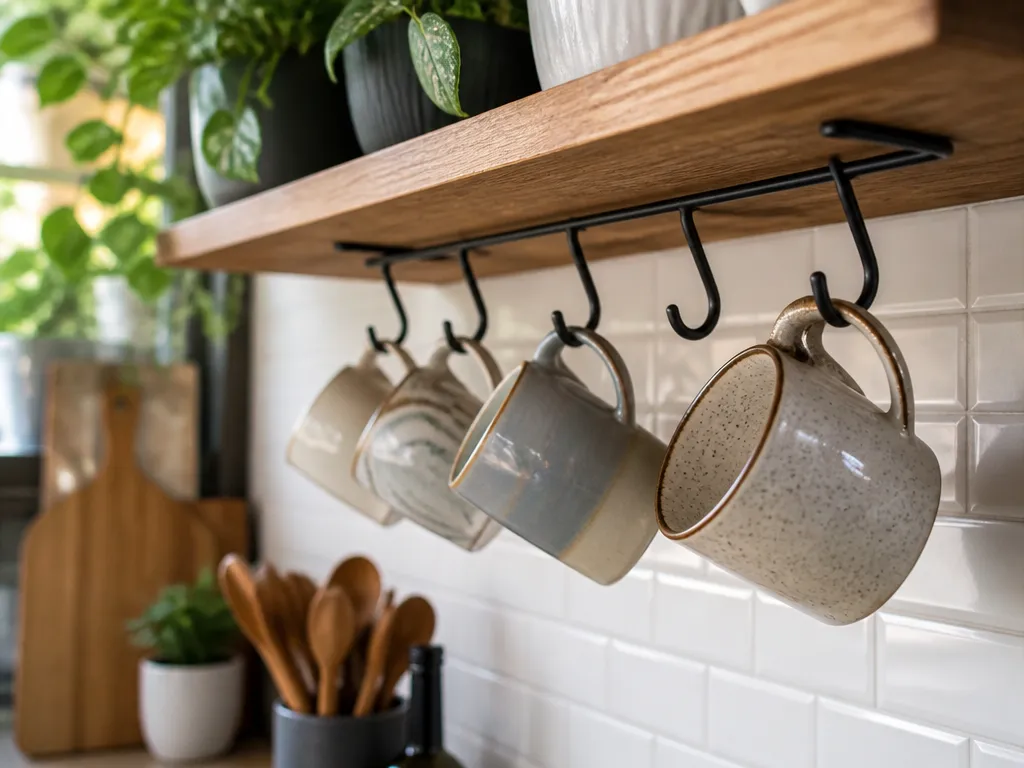
Stand at the counter and hold a mug as you normally would. If your hand can move naturally to the underside of the shelf, the hooks should feel convenient. If you need to reach sideways, twist, or raise your arm too high, the arrangement will become irritating and may go unused.
Check the shelf before drilling. Each mug creates downward force when it hangs, along with a small sideways pull when you lift it from the hook. The underside should be made from solid wood, plywood, or another sturdy material. A thin shelf lip or decorative panel may look suitable but can split, flex, or pull away from its supports.
The surrounding environment matters too. A shelf near a stove or dishwasher vent line will collect more steam, grease, and moisture. That does not automatically rule out mug hooks, but it calls for easier-to-clean hardware and more frequent wiping.
Check Reach, Clearance, and Shelf Strength
Measure the space needed for the mug handles, then account for movement. Handles swing slightly when you lift or replace a mug. Bulky handles and oversized café mugs need more horizontal spacing than small standard mugs. Set two mugs in place and remove one to see whether the remaining mug shifts or gets bumped.
The shelf height should suit the people who use it most. A comfortable mug should come down with a relaxed wrist rather than a high lift or awkward sideways pull. If the shelf is above comfortable reach, a lower storage spot or mug tree may work better.
If studs are not aligned with your preferred hook locations, adjust the spacing to match the framing instead of forcing hardware into weak spots. Drywall anchors alone are a compromise for a rack that will be used repeatedly.
Install the Hooks Without Damaging the Shelf
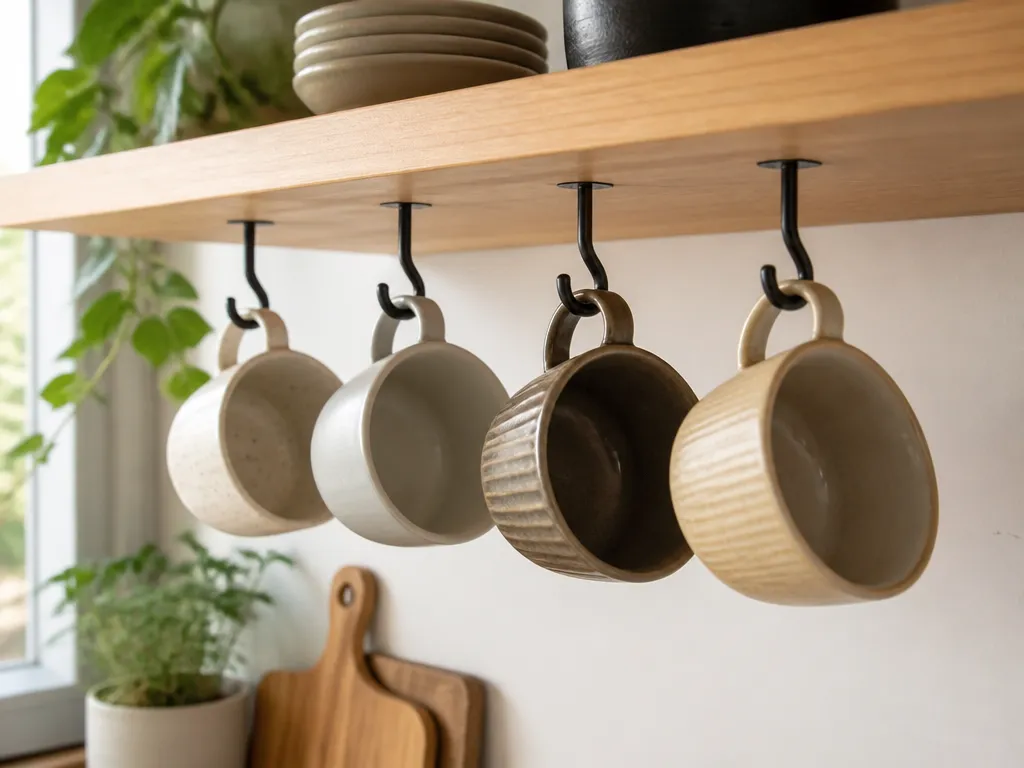
Plan the installation in two passes: placement first, reinforcement second.
For placement, hang one mug and check whether the handle clears the shelf underside without rubbing. Add a second mug and pull the first one free. Watch for collisions between handles, rims, and the shelf. If the mugs bump together, increase the spacing or choose a continuous hanging bar that gives you more control.
Use the correct bit size for the screws, and avoid over-tightening. Excessive force can strip wood or crack lighter shelf materials.
Glossy and painted undersides can show scuffs quickly. Choose coated hooks or add a thin felt pad, silicone bumper, or bumper strip where contact occurs. Test one mug first, load the hooks progressively, and re-check tightness after the first few days of use.
Why Hang Mugs Instead of Stacking Them?
Under-shelf mug hooks free cabinet space and make the mugs you use most accessible. Stacked mugs often force you to remove several pieces to reach one, which increases the chance of chipped rims and knocks.
Hanging mugs also makes organization easier. You can assign different areas to espresso cups, travel mugs, or oversized mugs instead of mixing them in a cabinet. A consistent layout lets everyone know where to reach.
The visibility helps, too. You can see which mug is missing or waiting to be washed without opening a cabinet. That is especially useful during busy mornings, when guests are over, or when you rotate through a large collection.
The trade-off is that hanging mugs remain exposed. They collect more dust and splatter than mugs stored behind a cabinet door, and the hooks need occasional cleaning. If you dislike visible storage or have very delicate mugs, closed cabinet storage may be the better choice.
Alternatives When the Shelf Is a Poor Fit
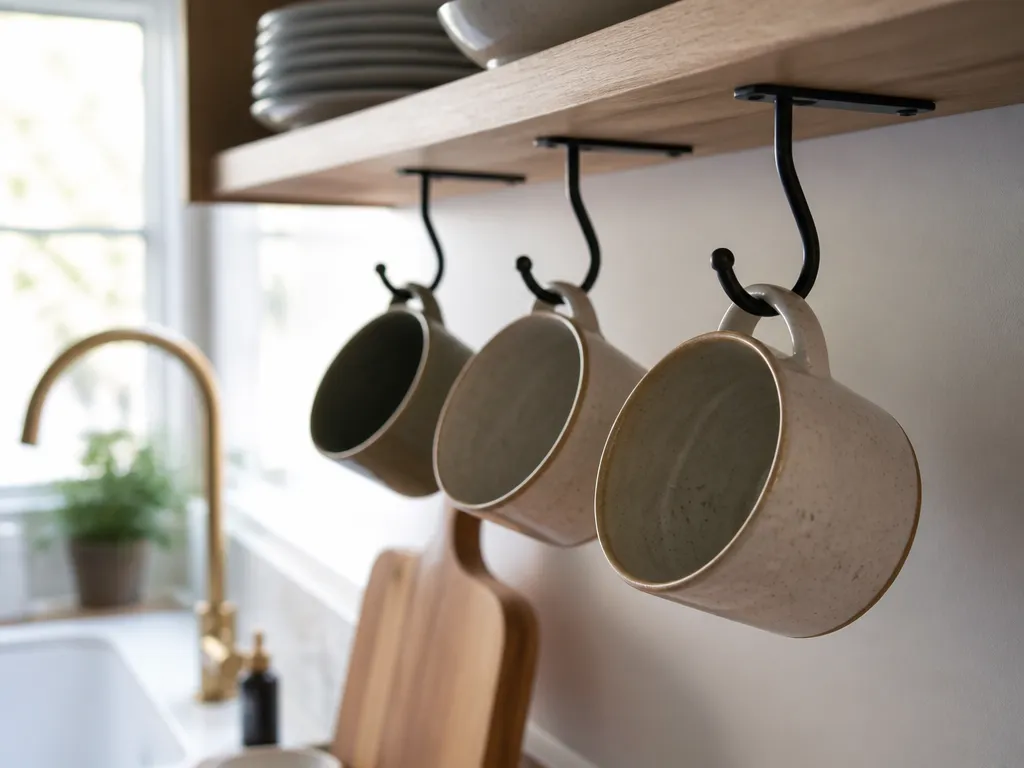
A rail or bar mounted under a cabinet or along the backsplash can offer more stable support and better spacing for a larger mug collection. A continuous bar also reduces the need to position every hook around existing framing.
Hooks on the side of an open shelf or inside a cabinet door may work when the underside is too shallow or weak. These locations can keep mugs out of the way while avoiding an awkward reach beneath the shelf.
A freestanding mug tree is another practical option, especially for renters or anyone who expects to reorganize the kitchen. It uses counter or table space, but it requires no permanent mounting and can be moved easily.
If you prefer under-shelf storage but your shelf is shallow, choose a hook style that keeps mugs closer to vertical and reduces swinging. The goal is storage that fits the space, not hooks in every available location.
Match the Hooks to Your Mugs and Kitchen
For clearance, assume the mugs will move. Leave enough vertical space to prevent handles from dragging against the shelf and enough horizontal space to keep mugs from pressing together. Ceramic may tolerate a few quiet knocks before a rim chips.
For contact points, prevent damage before it starts. Soft-coated hooks and small protective pads reduce scuffs and chips. They are especially useful for vintage mugs, painted ceramic, or mugs with delicate finishes.
Cleaning access matters as well. Under-shelf areas collect dust and occasional splatter, while hooks can trap grime around the points where mugs hang. Choose a design you can wipe without working around narrow, inaccessible gaps.
Practical Kitchen Setups
Under-shelf mug hooks are especially useful near a coffee station beneath an overhead cabinet shelf. Mugs stay close to the coffee maker and can be lifted without opening a cabinet full of stacked dishes.
They can also help in a small kitchen with narrow cabinets. Hanging mugs uses the vertical space beneath a sturdy shelf and leaves cabinet height available for bowls, storage containers, or other items that take up more room when stacked.
The same setup becomes a poor choice when the shelf is really a decorative ledge made from thin material. Repeated pulls can loosen the hardware, leaving the mugs unstable and potentially damaging the shelf.
| Option | Key Spec / Fit | Best For |
|---|---|---|
| Under-shelf mug hooks (individual) | Needs strong underside mount | Small mug collections, targeted placement |
| Under-cabinet rail | Continuous bar, spacing control | Larger mug sets, fewer collisions |
| Backsplash hooks | Mount to wall/stud | When shelf underside is weak or too shallow |
| Mug tree (freestanding) | No permanent mount | Renters, easy relocation, low install risk |
FAQ
What is the best height to install under-shelf mug hooks?
Choose a height where you can pull down a mug with a relaxed wrist. Leave several inches of clearance under the shelf so the handles do not scrape the underside, then adjust the position for your mug sizes.
Can under-shelf mug hooks hold heavy mugs?
The fastening method is usually the limiting factor, not the hook’s decorative design. If the mount is uncertain, begin with one or two mugs and re-check the hardware after a few days.
Are under-shelf mug hooks safe for cabinets and shelves?
The main risks are loose mounting and contact between the mug and shelf, which can cause chips or cracks. Use hardware suited to the shelf material and consider coated hooks or bumpers where ceramic meets metal.
How do I prevent mugs from scratching on the hooks?
Use soft-coated or padded hooks, or add small felt or silicone bumpers where the ceramic touches metal. Space mugs so they do not press together when you remove one. After installation, perform several lift-and-set cycles and inspect the handles and rims for scuffs.
What is a common mistake when using under-shelf mug hooks?
Thin decorative boards and drywall anchors without solid support can loosen under repeated use. Another frequent mistake is installing the hooks too close to the shelf underside, causing handles to scrape when mugs are lifted. Test clearance and spacing with full mugs before installing every hook.
Start with one spot you use daily, such as a coffee station or dish area, then dry-fit the hooks with 2 mugs before committing to the full layout.