How To Use An Air Fryer For Baking
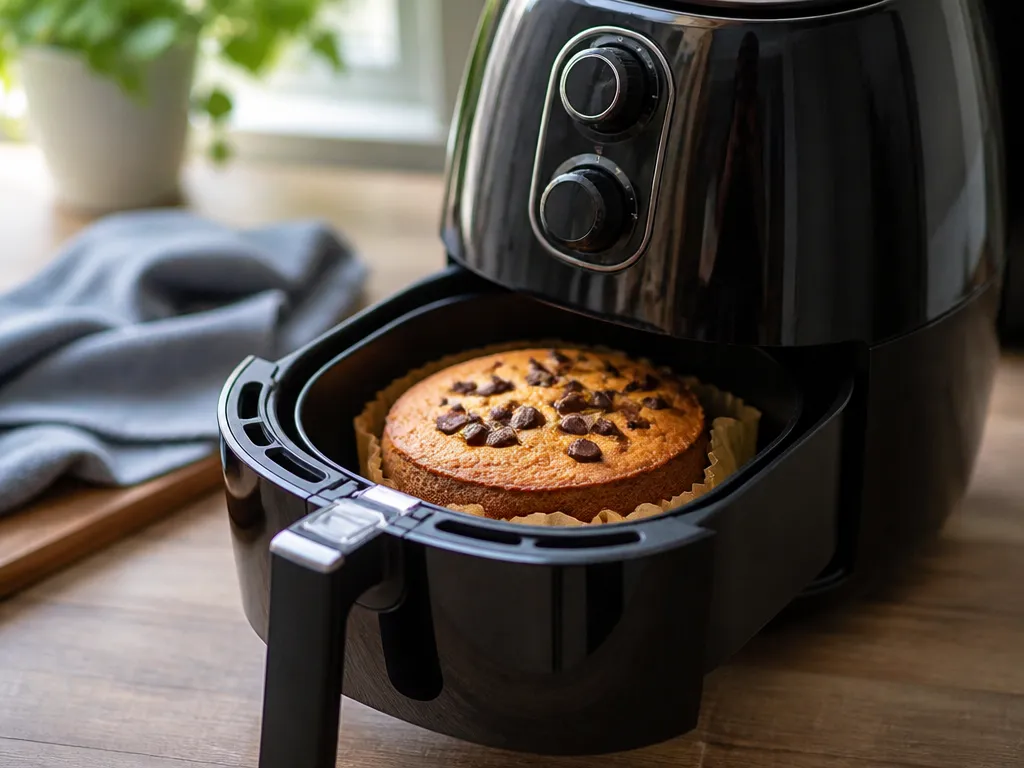
Air fryers are essentially convection ovens with a fan that pushes hot air around food, so baking behaves differently from baking in a standard oven. A cake or cookie recipe written for a 350°F oven may brown too quickly in an air fryer unless you lower the temperature and choose the right pan.
For most baked goods, start at 325°F and check for doneness 3 to 5 minutes earlier than the recipe suggests. Use a pan that fits your basket with space around it, and rotate the pan halfway through if your air fryer develops hot spots.
Key Takeaways
- Lower temperatures work better. Start around 325°F instead of your recipe’s oven temperature for many baked goods.
- Use a sturdy, oven-safe pan. Metal or oven-safe ceramic usually performs better than thin foil placed directly in the basket.
- Fit parchment to the pan. Loose parchment can block airflow or lift toward the heating element.
- Check early. Begin checking 3 to 5 minutes sooner than the oven recipe’s timer suggests.
- Rotate to correct hot spots. Turn the pan halfway through if one side browns faster.
- Leave room for airflow. Avoid overcrowding, and leave headspace above the batter.
The Basic Air Fryer Baking Method
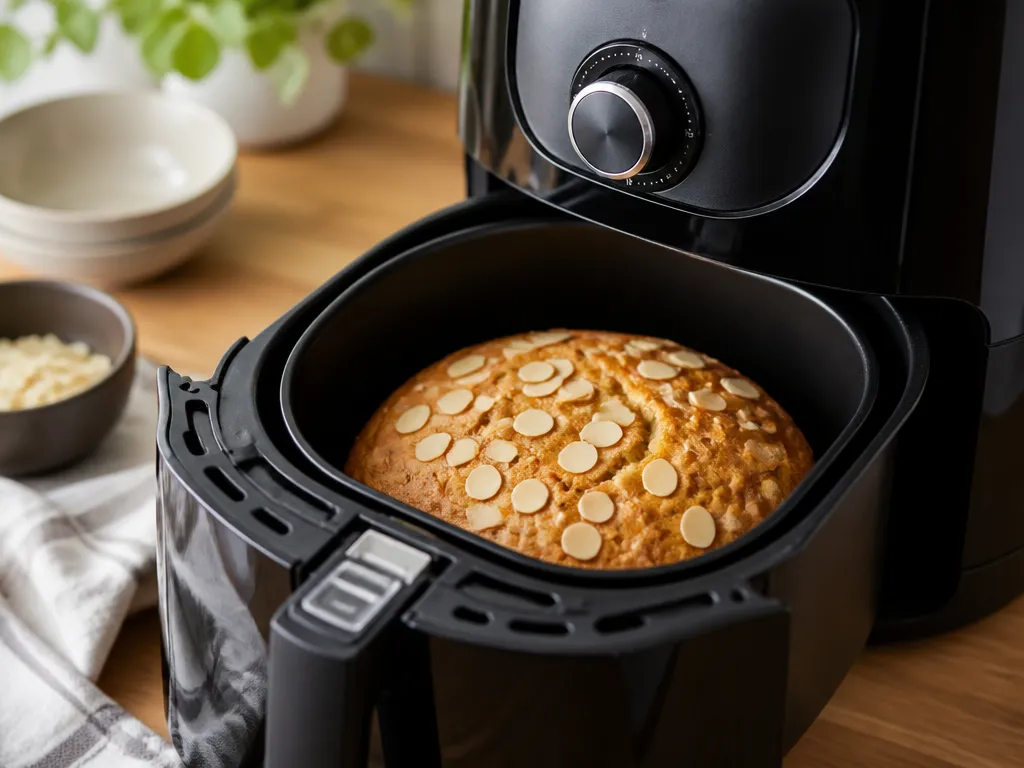
Treat the air fryer as a small convection oven rather than a direct replacement for a conventional oven.
Choose the pan based on the bake. Cookies need room to spread and even airflow around the dough. Cakes and quick breads need a pan that supports a steady rise and allows the center to set before the top becomes too dark. Fill a cake pan no more than about two-thirds full so the batter does not rise into the fan or heating element.
Use this baseline for a first attempt:
- Temperature: Start at 325°F
- Time: Begin checking 3 to 5 minutes early
- Position: Center the pan in the basket
- Rotation: Turn the pan halfway through if your air fryer browns unevenly
Pre-measure the ingredients, mix the batter, and have the pan ready before the air fryer starts. Once the pan is inside, avoid opening the drawer repeatedly. Each opening releases heat and makes the timing less predictable, but plan at least one halfway check for cakes, brownies, muffins, and other thicker bakes.
Quick Starting Points for Common Bakes
Pound cake, cornbread, and other thick batters need more time at 325°F, so rely on the center’s doneness rather than the clock.
Choose a standard bake setting when your model offers one. “Max crisp” can brown the surface before the middle sets.
Air Fryer Settings for Cakes and Cookies
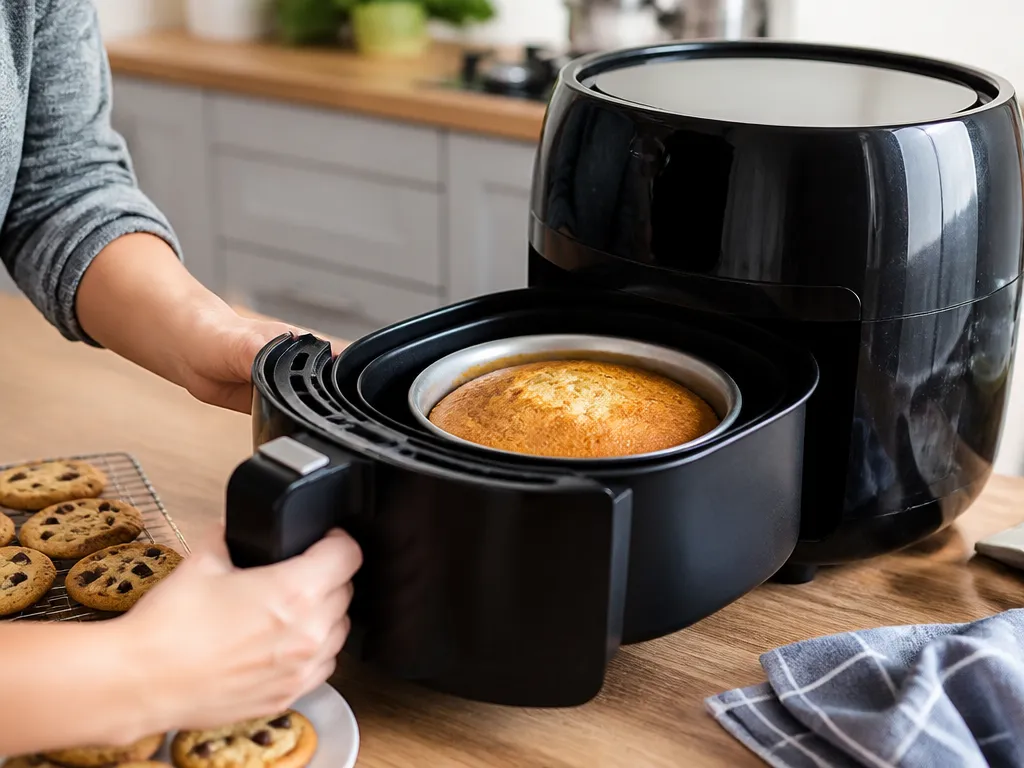
Use a setting with a controllable temperature and steady airflow. If your air fryer has presets, “Bake,” “Air Fry,” or “Convection” settings are usually better choices than “Roast,” which may apply hotter, more aggressive heat.
Cookies need enough heat to brown and set without burning at the edges. Cakes need gentler heat so the batter can rise and firm up before the surface becomes too dark. For thin or medium cookies, you can use 325°F to 340°F, depending on the thickness, sugar content, and desired browning.
A Usable Settings Cheat Sheet
Use these as starting points, then adjust after the first batch:
- Cakes in a small loaf or 6-inch cake pan: 325°F, using normal bake or air-fry airflow
- Thin to medium cookies: 325°F to 340°F, using standard air-fry convection
- Fudgy brownies: 325°F, with an early doneness check to prevent dry edges
- Crumb toppings and streusel: 325°F, since the topping may brown before the center finishes baking
Preheat for anything thicker than cookies if your air fryer has a preheat function. If it only has manual temperature controls, set a shorter timer for the first batch and check early.
Skip Crisp Modes for Cake
Crisp modes are designed for foods such as wings and fries. They can brown or dry a cake’s surface before the interior sets. If the top is becoming overly crisp, switch to a bake-style setting or lower the temperature.
Choosing a Pan for Air Fryer Baking
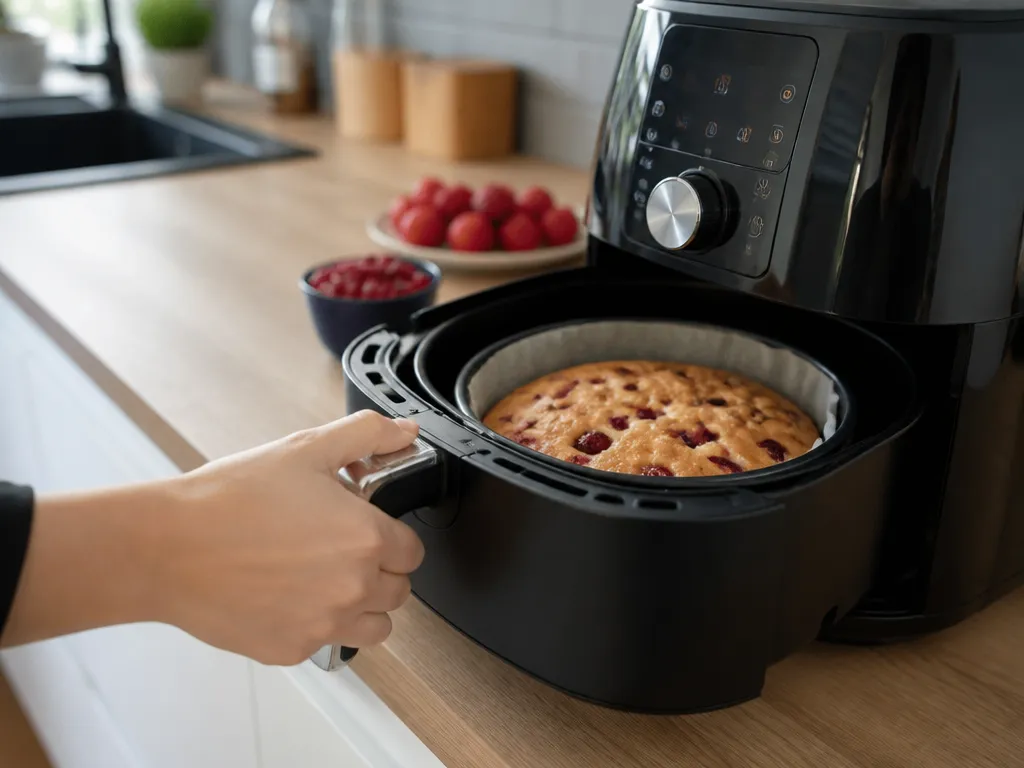
The pan must fit flat in the basket while leaving space for air to circulate. Choose a sturdy pan that is explicitly oven-safe and keep it away from the heating element.
Metal pans are usually the most predictable because they conduct heat efficiently. Silicone molds release baked goods easily, but thicker silicone can insulate the batter and slow or unevenly distribute the heat. Glass can work, although it heats more slowly and may lengthen the baking time, especially for delicate centers.
Avoid thin aluminum pans unless your air fryer manual confirms that they are compatible. Thin pans can warp or tip. Do not use a pan that touches the heating element, nearly reaches the top cover, or blocks most of the basket’s airflow.
Suitable Pan Options
- Metal cake pans, muffin tins, and loaf pans: Provide predictable heat and support.
- Oven-safe ceramic ramekins: Useful for cupcakes and small individual cakes.
- Small oven-safe springform pans: Suitable for cheesecakes and cakes if the seal is tight.
- Oven-safe silicone baking molds: Convenient for muffins and some cookies, but check doneness early.
If the pan nearly touches the top of the air fryer, choose a shorter pan or a different mold. Restricting the space above the batter can interfere with airflow and cause the top to brown too quickly.
Parchment and Liners
Trim parchment to the shape of the pan or place it flat inside a suitable baking dish. Do not leave loose edges hanging into the fan’s airflow, where the paper can lift and approach the heating element.
For cookies, parchment can sit on a flat insert or inside a pan. For cakes, use it to line the bottom of the pan when needed for release, but keep it trimmed to the pan’s footprint.
Air Fryer Baking Temperature and Timing
The timer is a starting point, not a guarantee.
Conventional oven recipes assume slower heat distribution and a larger chamber. An air fryer can brown the edges quickly while the center still needs time to cook. Early checks help you catch that mismatch before the outside dries out or burns.
A Reliable Timing Adjustment
- If the center is still wet, continue baking in 2 to 3 minute bursts.
- If the edges are dark but the center is underdone, reduce the temperature to 300°F for the remaining time.
Smaller batches are easier to control. Baking two trays at once, if your air fryer allows it, can increase unevenness because the airflow does not reach every surface equally.
Practical Starting Time Ranges
These ranges work as starting points for common home recipes using typical pan sizes and batter thicknesses. Use the appearance and texture of the bake as the final authority.
| Item | Start Temp | Start Check Time | Typical Finish Window |
|---|---|---|---|
| Thin cookies (1 to 2 tbsp dough) | 325°F | 6-8 min | 8-12 min |
| Medium cookies | 325°F | 8-10 min | 10-15 min |
| Brownies (8×8 pan, thin to medium) | 325°F | 12-16 min | 16-22 min |
| Muffins (standard) | 325°F | 14-16 min | 16-22 min |
| Small cake or loaf (about 2 inches thick) | 325°F | 22-26 min | 26-38 min |
For a thick bundt cake or deep loaf, begin checking more frequently after the first 25 minutes. Air circulation speeds surface browning, but dense batter still needs time for heat to reach the center.
Preventing Burned Edges and Uneven Browning
Uneven browning usually comes from a hot spot, restricted airflow, or a pan that concentrates heat. Placement and rotation solve many of these problems.
If one side of the cookies or cake browns faster, rotate the pan halfway through. If the top darkens while the center remains loose, lower the temperature or loosely shield the top. If the bottom browns too quickly, use a thicker pan or place the pan higher with a small rack or trivet if your model supports it.
Overcrowding also causes uneven baking. When hot air cannot circulate around the pan or between pieces of dough, some surfaces dry and brown while others stay pale.
The Most Effective Adjustments
- Rotate once: Turn the pan or tray halfway through to correct hot spots.
- Choose the right pan size: Leave space around the pan instead of pushing it against the basket edges.
- Shield the top carefully: If the surface browns too quickly, tent it loosely with foil without blocking the airflow.
For cookies, chill the dough for 15 to 30 minutes to reduce spreading and edge burning. For cakes, avoid opening the drawer too early and do not overmix after adding the flour. A stable batter structure helps the cake set before the surface overbrowns.
When the Surface Looks Fine but the Center Does Not
Dark edges and a raw center require a lower temperature and more time. Reduce the heat and continue baking in short bursts. If the center is cooked but the edges are too dark, lower the temperature on the next batch and begin checking earlier.
Preheating and Testing for Doneness
Preheating gives thicker bakes a consistent starting temperature. Thin cookies can sometimes bake successfully without it, but cakes, muffins, brownies, and quick breads usually benefit from a preheated air fryer.
Use this rule:
- Preheat for cakes, muffins, brownies, and anything thicker than cookies.
- Skip or shorten preheating for very thin cookies unless your air fryer recommends it.
A stable starting temperature helps the batter cook at a more consistent rate from the beginning.
Doneness Cues for Air Fryer Bakes
Look at the center, not only the color of the surface.
- Cookies: The edges look set and slightly darker, while the centers remain soft but not glossy.
- Brownies: A toothpick inserted in the center comes out with moist crumbs rather than wet batter.
- Muffins: The tops spring back lightly, and a toothpick near the center comes out clean or with a few dry crumbs.
- Cakes and loaves: A toothpick inserted in the center comes out clean or with a few moist crumbs for quick breads.
Test one piece first when possible, then use that result to adjust the remaining batch. With thicker pans, test the center rather than a corner because the corners can brown and set first.
Let the pan rest for 5 to 10 minutes after baking. Carryover heat helps finish setting the interior and reduces the chance that a bake will look done but remain undercooked when sliced.
Fixing Air Fryer Baking Problems
Most air fryer baking problems follow a pattern. Identify where the bake failed, then change one variable at a time so you can tell which adjustment worked.
Burning on the Bottoms
- Lower the temperature by 10 to 25°F and start checking earlier.
- Use a thicker pan or a small rack or trivet if your air fryer supports it.
Burning on the Tops
- Tent the top loosely with foil for the last few minutes.
- Lower the temperature and extend the baking time instead of using higher heat.
Raw Centers
- Bake at 300°F to 325°F and add time in 2 to 3 minute increments.
- Use a smaller pan or a thinner layer of batter so heat reaches the center more quickly.
The Outer Edge Is Also Underdone
- Preheat the air fryer next time and keep the pan centered.
- Remove excess parchment and leave space around the pan for airflow.
Cookies Spread Too Much
- Chill the dough for 15 to 30 minutes and bake at 325°F.
- Avoid warm butter or dough that has become too soft.
Cookies Are Too Dry
- Check them earlier and reduce the baking time.
- Lower the temperature slightly if the edges brown before the centers set.
Browning Is Uneven
- Rotate the pan halfway through.
- Use a pan that sits flat and fits the basket correctly.
The Bake Has Soggy Spots
- Do not overfill the pan with wet batter.
- Bake smaller batches and make sure the basket is not overcrowded.
Use a Simple Correction Log
For repeated problems, record the:
- Air fryer model
- Pan type and size
- Temperature
- Total baking time
- Appearance and texture when done
If the top burns while the center is almost ready, shield the top or lower the temperature. If the center is raw throughout, reduce the heat slightly and extend the time. Changing only one variable makes the next batch easier to diagnose.
FAQ
Can I Bake a Cake in an Air Fryer Without Changing the Recipe?
You usually need to change the temperature and timing. If the cake browns while the center still jiggles, lower the temperature to about 300°F and finish in short 2 to 3 minute bursts.
What Air Fryer Temperature Is Best for Cookies?
Thin cookies often finish in 8 to 12 minutes, but check early because the edges can brown quickly. If the cookies become too dark, try 300°F next time.
Are Metal Pans Better Than Silicone for Air Fryer Baking?
Metal pans are usually more predictable because they conduct heat evenly. Silicone works well and releases baked goods easily, but thicker molds may insulate the batter unevenly depending on how they sit in the basket. Check silicone bakes early and consider lowering the temperature slightly.
How Do I Keep Parchment Paper From Burning?
Trim parchment to the pan’s footprint and keep it flat. Do not let loose paper hang into the airflow or float above the food. If the edges brown quickly, lower the temperature and loosely shield the top with foil for the last few minutes.
What Can I Use If I Don’t Have an Air-Fryer-Safe Pan?
Use an oven-safe baking pan or ramekins that fit the basket without touching the heating element. Avoid loose foil sheets that can interfere with airflow. You can also bake smaller portions in a suitable oven-safe metal or ceramic dish, checking for doneness more frequently.