Why Do Tension Drawer Dividers Slip
Tension drawer dividers slip because they rely on friction and compression, and anything that changes the fit – drawer size, surface material, or how you load the divider – can reduce that friction. Most dividers stay put only when the drawer is dry, clean, and close to the divider’s intended width. You can usually fix the problem by changing the divider’s placement, adding a proper grip surface, or switching to a design that locks in place.
The divider slips when its end caps lose enough pressure or grip for drawer vibration and side-to-side forces to overcome friction. Even small gaps caused by humidity, bent rails, uneven drawer walls, or crumbs under the end caps can reduce grip quickly. The divider then slides gradually as you open the drawer or move items across it.
Why Tension Dividers Slip
- It’s mostly friction loss. Dirt, dust, or a smooth finish reduces end-cap grip and lets the divider slide.
- The fit has to be tight. A slight width mismatch or uneven drawer walls prevents consistent compression.
- Loading matters. Heavy items and repeated lateral movement can create more force than friction can hold.
- Moisture changes grip. Humidity can leave surfaces slick, especially on laminate or sealed particleboard.
- Placement affects stability. Pressing the divider higher or lower may help it sit against a stronger, flatter surface.
- Some designs hold better. Locking, screw-mounted, or adjustable dividers remain stable even when friction drops.
How Tension Drawer Dividers Create Holding Power
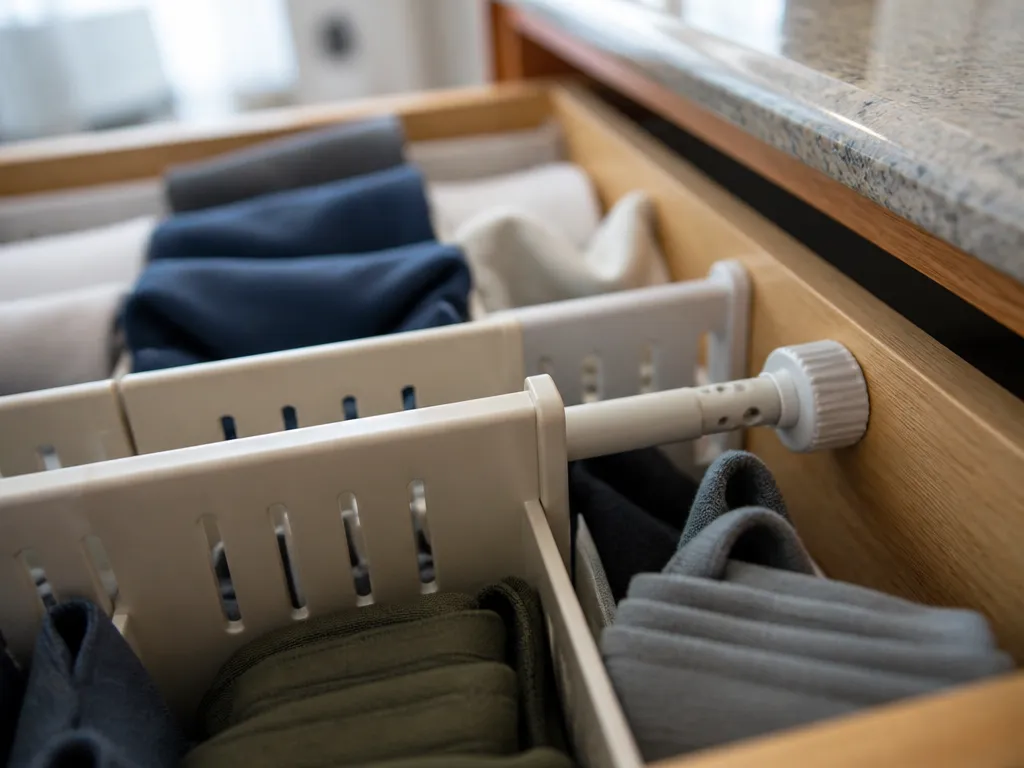
Tension drawer dividers are spring-loaded bars or end caps that stay in place by pressing against the drawer walls. When the system works, that pressure creates enough friction to resist the forces from opening the drawer and moving items.
A slipping divider usually is not failing all at once. It is losing grip gradually because the compression is uneven, the drawer surface is too smooth, or debris prevents the end caps from making full contact.
Compression and Friction
Most tension dividers depend on two things: compression force, or how hard the ends press against the drawer walls, and friction, or how well those contact surfaces resist sliding. If either one drops, the divider becomes more likely to move, especially when items create sideways force.
Dust, crumbs, grease, and slightly glossy drawer walls are common friction killers. Uneven drawer geometry creates the most common compression problems. A drawer may narrow slightly toward the back, or its walls may have subtle warping that prevents both ends from pressing evenly.
The Main Causes of a Sliding Divider
The main causes are listed below.
- Loose compression from a drawer-width mismatch or uneven walls.
- Low-friction surfaces such as polished plastic, slick paint, or sealed laminate.
- Contamination under the end caps from crumbs, dust, or fine grit.
- Edge contact where a cap touches a corner instead of a flat area.
- Overloading with heavy items that increase sideways pull.
- Frequent lateral movement from scooting bins or dragging utensils.
How to Stop a Tension Divider From Sliding
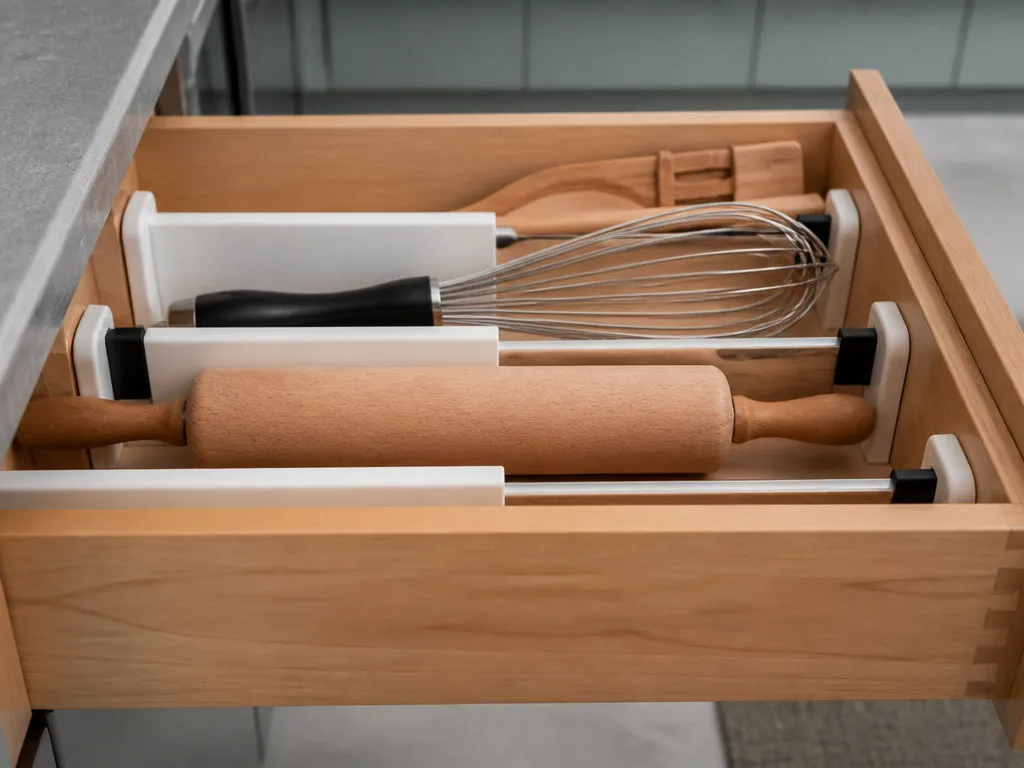
Fixing a slipping tension divider is mostly a matter of improving contact and reducing sideways force. Try these steps in order, from easiest to most effective.
- Clean the contact points. Wipe both drawer walls where the end caps touch. Use a dry microfiber cloth first, then a barely damp cloth if residue remains, and let the surfaces dry fully.
- Reseat the divider for full end-cap contact. Push the divider in, pull it back slightly, and press it into place again so each end cap sits flat instead of riding on a raised edge.
- Reposition it vertically. If the drawer tapers or has different wall textures at different heights, move the divider slightly up or down and test its stability.
- Check the drawer geometry. If the divider sits near the narrow end of a tapered drawer, it may compress weakly. Move it toward the section that feels tightest.
- Add a removable grip layer. Place a thin piece of removable rubber drawer liner or a strip of anti-slip tape on the drawer wall where the end cap sits. This can increase friction without permanently changing the drawer.
- Change how you load the drawer. Keep heavier items nearer the center of the divider span to reduce side-loading. Avoid sliding bins directly across the divider.
- Use two dividers for long spans. A second divider can reduce the lever effect that encourages the first divider to slide.
- Switch to a locking option if the problem continues. If the drawer is consistently uneven or slippery, replacing the divider is often faster than repeating temporary fixes.
A 30-Second Stability Test
After cleaning, fully compress the divider and gently push it sideways with your fingertips. If it moves with minimal force, friction is too low. If it feels tight but slips after you load items, the problem is more likely shear, leverage, or uneven end-cap seating.
Why Stable Drawer Dividers Are Useful
Stable tension dividers create separate storage zones without drilling holes or permanently altering the cabinetry. That makes them useful in kitchens, craft rooms, and rental spaces where storage needs to remain adjustable.
They are also quick to install and easy to rearrange as your mix of utensils, tools, or office supplies changes. You can remove them when you need to clean the drawer thoroughly.
What You Gain When the Divider Holds
A stable divider keeps you from correcting the layout every time you open the drawer. That reduces frustration and wasted time, especially in frequently used drawers for silverware, tools, or office supplies.
If you use dividers to keep items from mixing, movement defeats their purpose. Fixing the contact or fit problem restores the organization the divider was meant to provide.
Alternatives to Friction-Only Tension Dividers
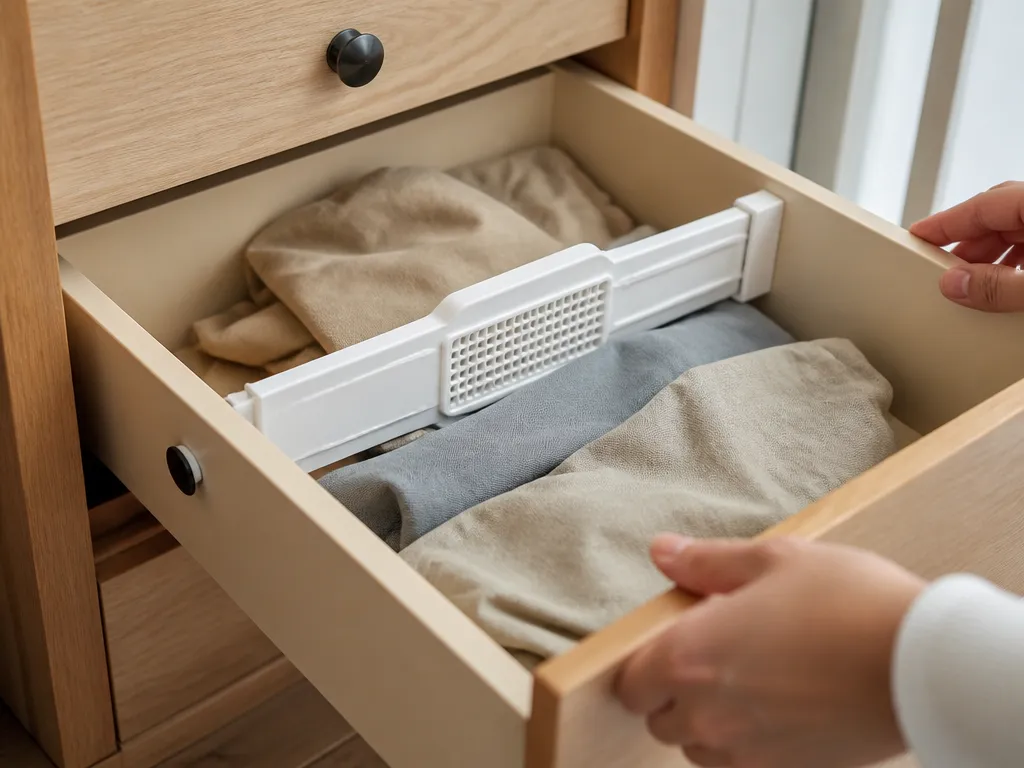
If cleaning, reseating, and adding grip do not solve the problem, choose a design that does not depend entirely on friction. The best option depends on how slippery, uneven, or heavily used the drawer is.
| Option | Key Spec / Detail | Best For |
|---|---|---|
| Rubber-grip tension dividers | End caps include textured rubber or high-friction pads | Slightly slick drawers where standard caps skate |
| Adjustable-width tension dividers with micro-settings | Finer adjustment range reduces fit mismatch | Drawers with unusual dimensions or a small taper |
| Screw-mounted dividers | Small screws anchor to drawer walls or tracks | Heavy-use drawers that must not move |
| Snap-in or locking dividers | A mechanical lock engages with the drawer frame or rails | Rental spaces where you want removable but secure storage |
| Modular bins with a non-slip mat | The bins replace the divider’s guidance with fixed compartments on a mat | When you want stability and easy lifting |
| Drawer inserts with built-in compartments | A one-piece or framed insert fits the drawer | When you want one stable setup instead of frequent reconfiguration |
Friction-only tension dividers struggle on very smooth, painted, or coated drawer walls. In those drawers, anti-slip end caps or an anchored option is usually the better choice.
How to Prevent the Problem From Returning
Tightening the divider further may help, but it can also hide the real issue. If one end cap rests on a corner or high spot, extra compression may not improve stability because the cap still has too little contact area.
Three Checks for a Repeatedly Slipping Divider
Review the contact, drawer geometry, and loading pattern before increasing tension or replacing the divider.
- Check the contact area for flat, unobstructed surfaces.
- Check the drawer geometry for tapering or high spots that weaken compression.
- Check the loading pattern for heavy items or repeated lateral movement.
If you have to repeat these checks, choose a divider designed for the failure mode. Textured or high-friction end pads can help, while a locking or screw-mounted design removes the need for perfect friction.
Avoid Over-Tightening
Over-tightening is tempting, but it can backfire when the drawer wall is uneven. Excessive pressure may cause the end caps to rock against high points, reducing their actual contact area and making small movements more likely during everyday use.
What Slipping Looks Like in Different Drawers
A divider that drifts over several weeks usually has a friction problem combined with repeated sideways force. In a utensil drawer, changing the mix of forks, knives, and spoons can shift the load. Crumbs or a slick contact surface then reduce grip while repeated opening and item movement create shear forces.
A divider that slides only when the drawer is partially open often has a lever-force problem. If the ends sit near an uneven section of the wall, the first movement can break the balance and make the divider “walk” along the surface.
A drawer that tapers toward the back can create uneven compression. The divider may fit tightly at one height but loosen at another. Taller items can also change the divider’s position or distribute the load unevenly, causing one end to lose compression first.
In a drawer used for tools or other heavy items, slipping that starts immediately after installation usually means the divider’s friction is not strong enough for the load. Screw-mounted dividers or fixed compartments are better suited to that use because they do not rely on friction alone.
FAQ
What causes tension drawer dividers to slip right after installation?
The likely causes are a fit mismatch, incomplete end-cap contact, or a slick or dirty drawer surface. These problems can reduce friction immediately, even when the divider appears tight.
Can I stop the slipping without drilling holes?
Yes. A thin, removable grip layer such as rubber drawer liner or anti-slip tape can improve stability without permanently changing the drawer.
Will over-tightening a tension divider prevent slipping?
Sometimes, but it can backfire if the drawer wall is uneven. Over-tightening may increase rocking on high points, reduce the actual contact area, and make micro-sliding more likely. If the divider still moves easily after reseating, use higher-friction end caps or a locking design.
How long should a tension divider stay in place?
A properly fitting, clean, grippy tension divider should stay put during normal drawer opening and gentle item movement without frequent adjustment. If it shifts within days, the fit or surface conditions are probably unsuitable for the divider.
What is the best alternative if my drawer walls are too slippery?
A locking divider or screw-mounted divider is usually the best alternative when a friction-only design keeps failing. If you do not want to drill, choose textured high-friction end caps or modular bins placed on a non-slip mat.