How To Know If A Pan Is Non Stick
A nonstick pan should release food with minimal oil. The fastest way to check is to inspect the surface, try a room-temperature water test, and cook a small egg on low heat.
Water that beads instead of spreading, plus an egg that lifts without scraping, usually indicates that the coating is still working. If water floods across the surface and the egg sticks or tears, the pan is probably worn, damaged, or not nonstick.
Key Takeaways
- Look for a uniform sheen. An even, smooth coating usually signals a nonstick surface.
- Test with room-temperature water. Droplets that stay rounded usually indicate better water resistance.
- Cook an egg with little oil. A usable nonstick pan should release the egg without heavy scraping.
- Check for chips and scratches. Damaged coating often causes food to stick.
- Avoid high heat. Overheating degrades coatings and reduces release.
- Expect wear over time. Many nonstick coatings lose performance after years of use.
Start with a Clean, Cool Pan
You want to know whether the pan releases food with minimal oil instead of grabbing food like bare metal or a worn surface. This matters when you are checking a used pan, evaluating a thrift-store skillet, or trying to understand why a familiar pan has started sticking.
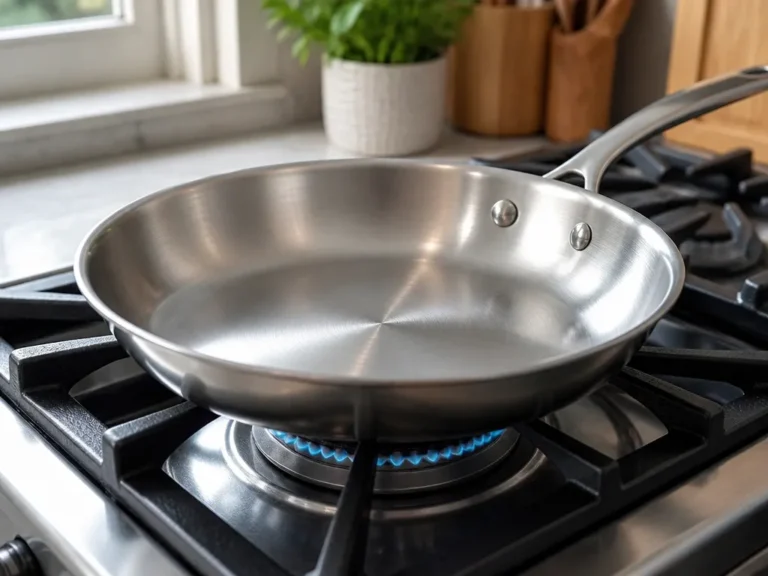
Let the pan cool completely if it was recently heated. Heat spikes can damage some coatings and can also distort the results of your test. Inspect the actual cooking surface, not the handle, rim, or underside.
“Nonstick” describes performance more than one specific material. PTFE coatings, ceramic-style coatings, and other factory-applied finishes behave somewhat differently, so test what the pan does rather than relying on its label.
💡 This professional-grade pan features a reliable nonstick surface that demonstrates exactly how food should release from a properly coated skillet. Tramontina Professional 8-Inch Non Stick Small Frying Pan.
What a Nonstick Surface Looks and Feels Like
A working nonstick pan has a low-adhesion surface. Water may bead on it, and food should separate with gentle movement rather than bonding to the cooking surface.
The coating’s condition is the strongest visual clue. Scratches, chips, peeling, bare metal spots, and patchy dullness can indicate that the finish is worn or compromised. Light surface wear does not always mean the pan has completely failed, but deep damage usually means sticking will become more frequent.
Temperature also affects performance. Overheating can damage a nonstick coating, so test the pan on low to medium heat with minimal oil. A pan that sticks after aggressive preheating may be showing the effects of the test rather than its normal performance.
How to Test a Pan for Nonstick Performance
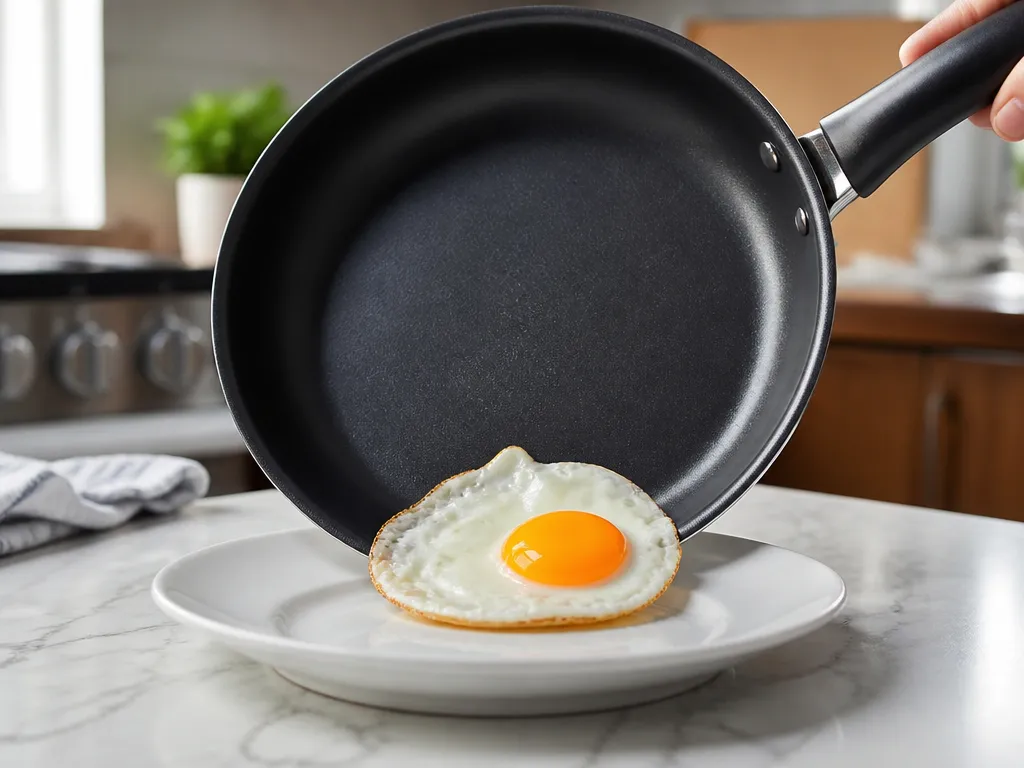
Follow the tests in order. The inspection identifies visible damage, the water test checks the surface’s wetting behavior, and the egg test shows how the pan performs with food.
- Inspect the surface under bright light. Look for chips, scratches, peeling, bare metal spots, and patchy discoloration that suggests the coating has thinned.
- Wash and dry the pan. Grease film can mimic stickiness and distort the water test. Use warm soapy water, rinse well, and dry the surface completely.
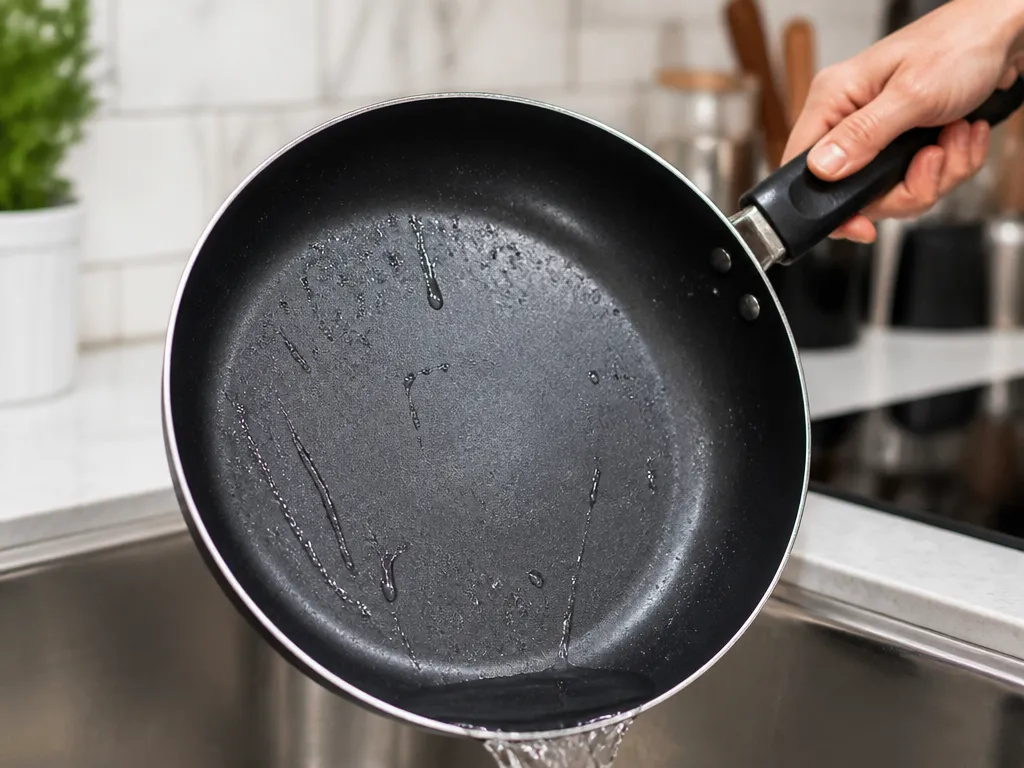
- Do the room-temperature water bead test. Tilt the pan slightly and pour in a few drops. On many nonstick surfaces, the droplets remain rounded instead of immediately flooding across the pan.
- Watch how the water spreads. Gently swirl the pan. After beading, water on a nonstick surface often moves easily as a smooth, mobile film. Bare metal or a worn coating tends to wet quickly and spread flat across the surface.
- Heat the pan on low for 1 to 2 minutes. Do not preheat on high. The goal is to test release without stressing or overheating the coating.
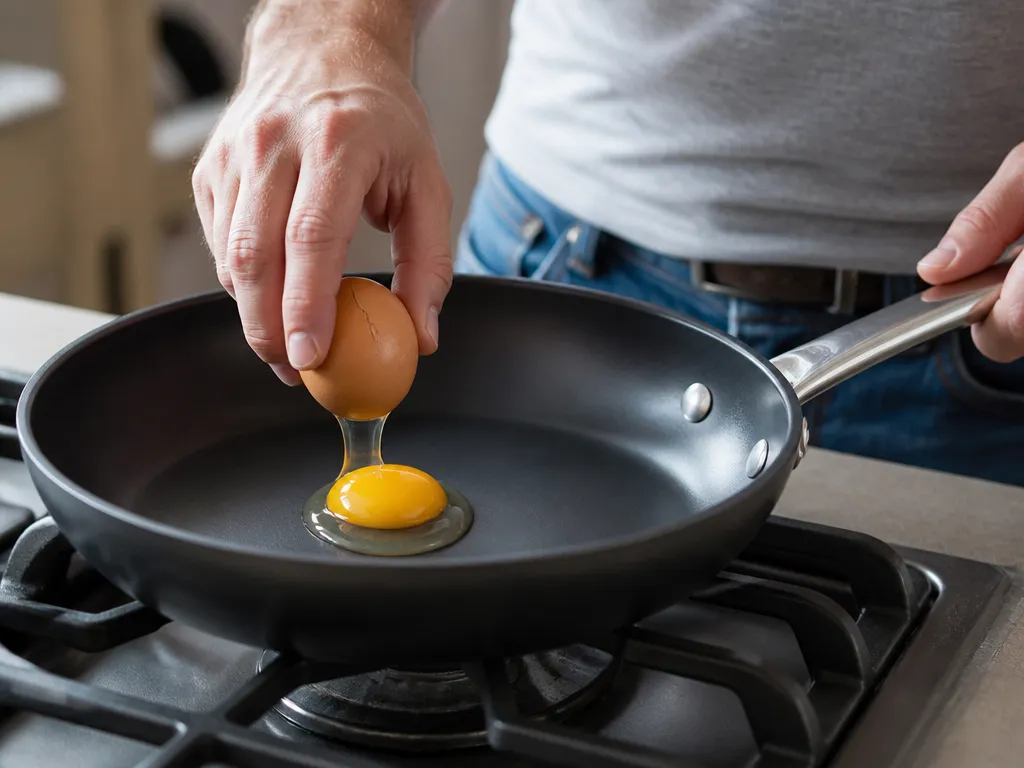
- Cook a small egg with 1 to 2 teaspoons of oil, or no oil if you trust the pan. Let the egg set briefly, then gently loosen the edges. A healthy nonstick pan should release with little or no scraping.
- Check the release and cleanup. If the egg bonds strongly, tears badly, or leaves thick residue, the pan is either not nonstick or its coating has degraded.
If the egg sticks because the pan was too hot or the egg cooked too long, repeat the test at a lower temperature for less time. Even a good nonstick pan can hold onto overcooked egg proteins.
Example: Testing a Thrift-Store Skillet
You find a pan labeled “nonstick,” but the surface looks dull. After washing it, you pour in a few drops of water and see them spread quickly into a thin sheet. You then cook an egg on low heat, and the egg sticks while leaving visible residue.
The likely conclusion is straightforward: the coating is worn, or the pan was never truly nonstick. Either way, its current performance does not justify treating it as a reliable nonstick pan.
💡 If your current pan fails the tests, this durable Swiss granite skillet provides a reliable nonstick surface for your kitchen. SENSARTE Nonstick Frying Pan Skillet, Swiss Granite Coating Omelette Pan, Healthy Stone Cookware Chef’s Pan, PFOA Free (8/9.5/10/11/12.5 Inch) (8 Inch).
The Most Reliable Ways to Judge the Pan
Interpret the results together rather than relying on one clue. A smooth appearance can conceal poor release, while a single sticking incident can result from excessive heat or an overcooked egg.
Control the heat during every test. Aggressive preheating can damage the coating and burn egg proteins onto the pan, creating a false failure. Low heat gives you a cleaner read without adding unnecessary stress.
Egg proteins provide a useful indication of surface condition because they can bond to a cooking surface. Clean release and easy cleanup suggest dependable performance, while forceful scraping indicates that release has declined.
Judge the residue, too. A working nonstick pan should generally need a rinse or gentle wipe after the egg test. A baked-on layer that requires a scrubbing pad is a strong sign that release performance has declined.
| What you observe | Likely cause | What to do next |
|---|---|---|
| Water beads tightly and eggs release cleanly | Coating is intact | Use low/medium heat and avoid metal utensils |
| Water spreads fast and eggs cling | Coating is absent or worn off | Treat it as a regular pan and consider replacing it |
| Water beads sometimes, eggs stick in patches | Coating is uneven or damaged | Inspect for scratches or bare spots |
| Egg releases only with lots of oil | Coating is degraded or the food was overcooked | Reduce heat and shorten cook time |
| Coating appears scratched or peeling | Surface damage | Avoid continued use and replace the pan if release is unreliable |

Helpful pick
T-Fal Ultimate Hard Anodized Nonstick Fry Pan With Lid 12 Inch, Oven Broiler Safe 400F, Lid Safe 350F, Cookware, Pots and Pans, Kitchen Frying Pans, Skillets, Home, Dishwasher Safe, Onyx
This durable hard-anodized skillet serves as a reliable benchmark for testing nonstick performance and heat control in your home kitchen.
How to Keep a Nonstick Pan Working
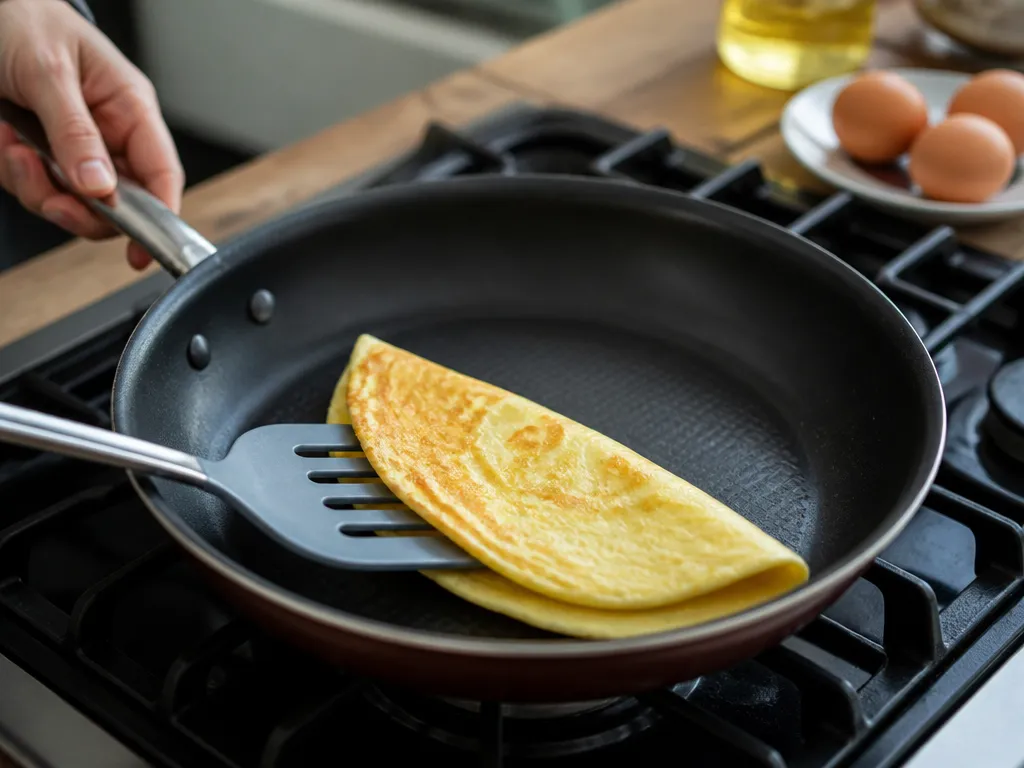
Start every evaluation with a clean surface. Grease buildup, even from one meal, can create uneven wetting and make a good pan appear defective. Wash it thoroughly before doing the water or egg test.
Use low to medium heat after confirming that the pan is nonstick. Many coatings degrade faster at higher temperatures, and excessive heat can make food stick even before the coating has visibly changed. Gentle heat and brief preheating provide more reliable release.
Treat the coating like a finish, not like a surface you can scour. Use silicone, wood, or nylon tools. Avoid metal utensils and abrasive scrubbers, which can wear down the coating and reduce release.
Nonstick coatings are not permanent. When food repeatedly sticks and cleanup requires heavy scrubbing despite correct heat and oil, the pan has probably reached the end of its useful nonstick life.
If you are buying secondhand, choose a pan with a smooth, undamaged cooking surface. A chipped or scratched pan is rarely worth buying in the hope that it will perform normally.

Helpful pick
SENSARTE Nonstick Frying Pan Skillet with Lid, Omelet Pan with Cover, Healthy Egg Pan Chef’s Pan, Kitchen Cooking Pan, PFOA Free (8inch + Glass Lid)
This durable omelet pan features a high-quality nonstick surface that performs best when maintained with proper cleaning and heat management techniques.
Testing Mistakes That Produce False Results
Skipping the wash step leaves cooking oil on the surface. That residue can create uneven water patterns and false stickiness, undermining both tests.
Using high heat can damage the coating during the test and burn egg proteins onto the surface. Start on low heat instead.
Cooking the egg too long increases sticking regardless of coating quality. Stop when the egg is set enough to loosen, and keep the heat low.
Relying on the label alone can lead you to trust an old or worn coating. “Nonstick” can refer to different coating types, and a labeled pan may no longer perform as it once did. Verify the release behavior with an actual cooking task.
Assuming ceramic and PTFE pans behave identically can also cause confusion. Ceramic-style coatings can be nonstick, but they still need gentle heat and may be more sensitive to sudden overheating. The water and egg tests show how your particular pan behaves.

Helpful pick
MICHELANGELO Nonstick Frying Pan – 8-Inch Non Stick Small Frying Pan with Silicone Handle | Easy to Clean, All Stovetops Compatible, Durable for Use
This durable pan features a high-quality coating that remains stable during testing, helping you avoid common errors caused by heat damage.
Small Details That Improve the Test
Watch the water after gently swirling the pan. A good nonstick surface often creates a more uniform, mobile film, while a worn surface may show inconsistent wetting or dry patches.
Use a minimum-effective-oil test. If the pan releases food with 1 teaspoon or less, it may still be performing well. If you need to coat the surface heavily to prevent sticking, the coating is probably failing or the cooking temperature is too high.
Inspect the edges and corners closely. The center may still look smooth while the edges have been scratched by utensils or spatulas. That uneven wear can produce inconsistent cooking results.
Feel the surface lightly with a fingertip after washing and drying it. A gritty or rough texture suggests abrasion. Roughness is a better warning sign than a surface that simply looks acceptable from a distance.
Treat smoke during normal preheating as a warning. The pan may be overheating, or oil residue may be burning. Reduce the heat, clean the surface, and reassess with a cooler test.
Use the same small egg routine each time you compare pans. Consistent heat, oil, and cooking time reduce false alarms caused by technique rather than the pan’s condition.
FAQ
How can I tell if a pan is nonstick without cooking?
Wash and dry the pan, then do a room-temperature water bead test. Pour in a few drops and tilt the pan. A nonstick surface often forms rounded beads instead of letting the water immediately spread into a thin sheet. Use the egg test if you need confirmation.
Why does my nonstick pan still make food stick?
The coating may be worn, scratched, or overheated. Grease film can also reduce release. Wash the pan thoroughly, use lower heat, preheat briefly, and repeat the test with a shorter egg cook.
Are ceramic nonstick pans easier to identify?
Ceramic pans often have a smooth, uniform appearance, but looks can mislead you. Ceramic-style coatings can lose their release properties through wear or overheating just as other finishes can.
What is the safest way to test a used nonstick pan?
Inspect it in good light before using it. If the coating is chipped or peeling, stop testing and treat the pan as unreliable. Avoid abrasive scrubbers, metal utensils, and high preheating.
What common mistake makes people think a pan is nonstick when it is not?
Relying only on the label or the surface color. A pan can look coated while water spreads normally and food sticks during cooking. Verify its current performance rather than assuming the original label still applies.
Repeated sticking and difficult cleanup are practical signs that a pan has lost dependable release. If the coating is also scratched, chipped, or peeling, replacing the pan is the more reliable choice.