How To Make Stainless Steel Pan Non Stick
Hot stainless steel is the key to cleaner food release. Preheat the pan, confirm the temperature with the water test, then add fat and food. You can also build a temporary slick film by heating high-smoke-point oil until it smokes, cooling the pan, and wiping away the excess.
This method works for eggs, fish, meat, and other foods that tend to stick. It does not turn stainless steel into permanently nonstick cookware, but it can make the pan release food with far less scraping.
Key Takeaways
- Preheat is everything. Heat your stainless steel pan for about 3 minutes before adding fat or food.
- Use the water test. Water should bead and jump across the surface – the Leidenfrost effect – when the pan is ready.
- Season with oil. Use a high-smoking-point oil such as canola or vegetable oil, with about 1/8 inch in the pan.
- Watch the smoke timing. The oil should start smoking after about 6 minutes, then cool completely.
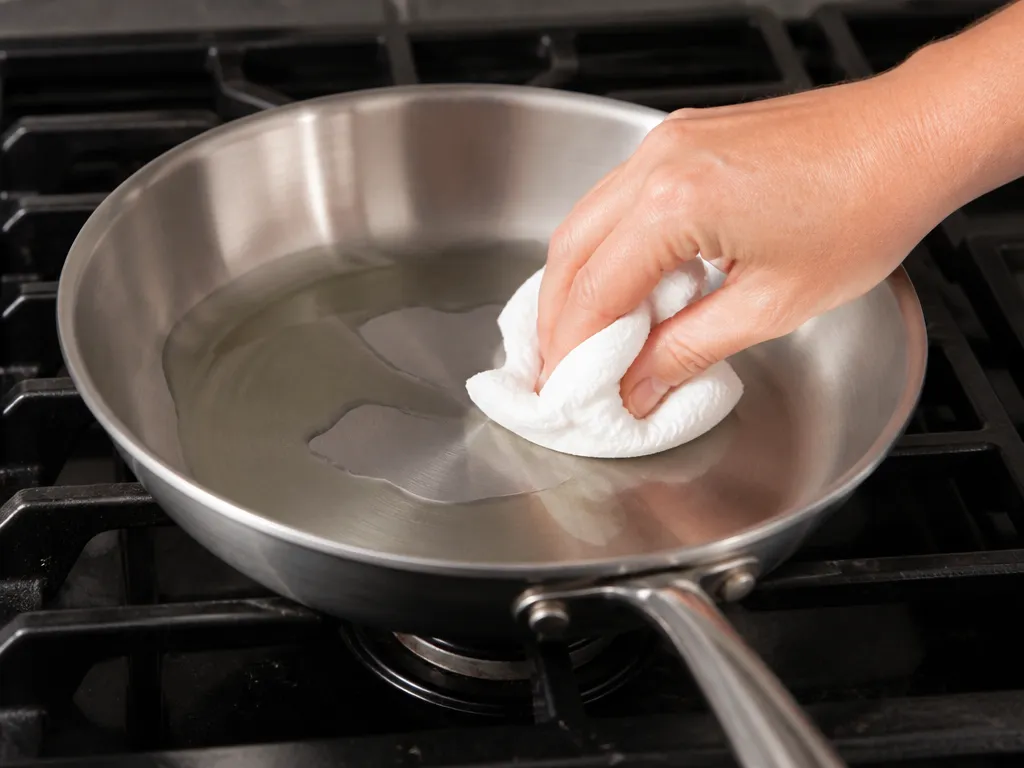
- Remove excess oil. Wipe the pan with a paper towel until only a glossy sheen remains.
- Clean and re-season. Wash with soap and water when the pan gets dirty, then repeat the oil process.
Why Stainless Steel Food Sticks
Stainless steel usually sticks when the pan is too cool. Water evaporates instead of forming a tight bead, and proteins begin cooking before the surface reaches a temperature that helps them release. The result is food bonded to the metal and a crust that takes serious scrubbing to remove.
Heat changes how food interacts with the pan. With the right temperature and enough fat, proteins release more cleanly after they set and develop a slight crust.
Two methods help: preheating and checking the surface with the water test, or creating a temporary oil film by heating oil until it smokes and then wiping the pan nearly dry. Both methods need repeating because normal cooking and cleaning gradually remove the slickness.
What You Need Before You Start
Use a stainless steel pan that is clean and completely dry. Remove detergent residue, grease, and old burnt food before heating it.
Choose a high-smoking-point oil such as canola or vegetable oil. You will need enough fat to coat the cooking surface during normal cooking. For the oil-seasoning method, use about 1/8 inch of oil in the bottom of the pan.
A paper towel is useful for wiping away excess oil after seasoning. Keep a spatula nearby for delicate foods, but do not plan to pry food loose before it has had time to set.
Helpful pick
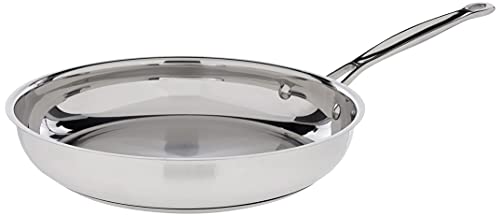
Cuisinart 10-Inch Open Skillet, Stainless Steel Skillet Large Kitchen Pan, Dishwasher Safe, Compatible with Induction, Electric, Gas Cooktops, Oven Safe Saucepan, Cool Grip Handles
This durable stainless steel skillet provides the perfect even-heating surface required to master the technique of making your pan non-stick.
How to Make a Stainless Steel Pan Release Food
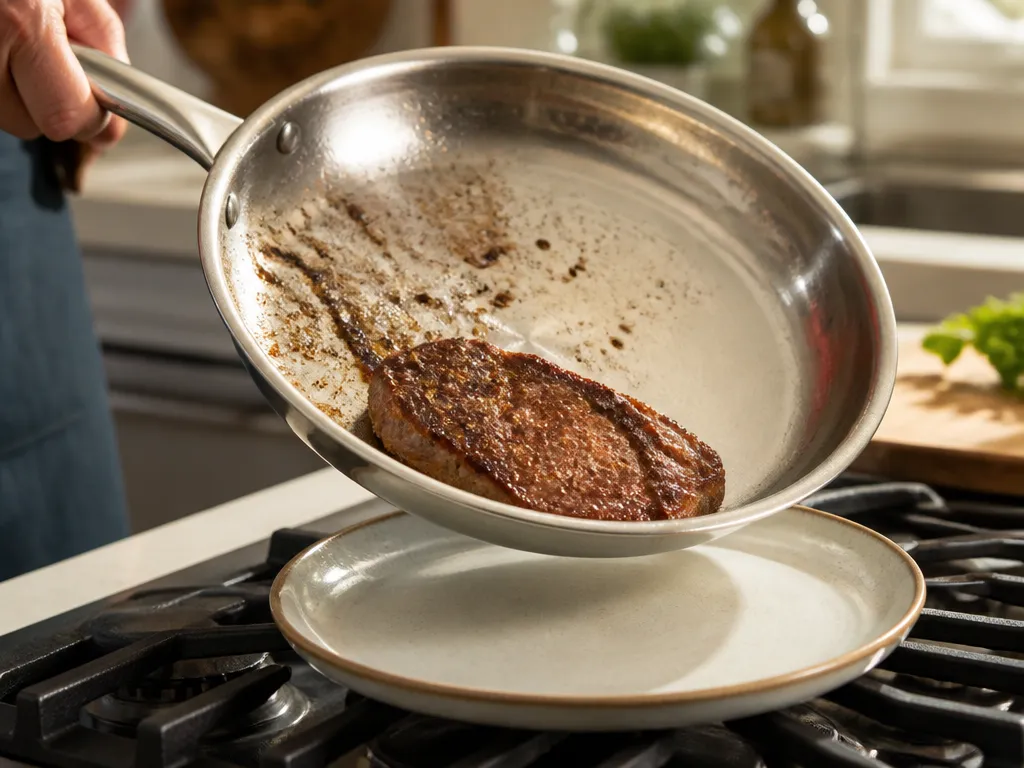
Use this process when you want better release for eggs, fish, meat, and other delicate foods.
1. Start With a Clean, Dry Pan
Wash the pan with soap and water, then dry it completely. Water, grease, and leftover food can interfere with even heating and prevent the oil from forming a smooth film.
2. Preheat Over Medium Heat
Place the empty pan over medium heat for about 3 minutes. The steel needs time to heat evenly across the cooking surface.
Do not rely on the clock alone. Burner strength and pan thickness affect how quickly the surface heats, so use the water test to confirm that the pan is ready.
3. Check the Temperature With Water
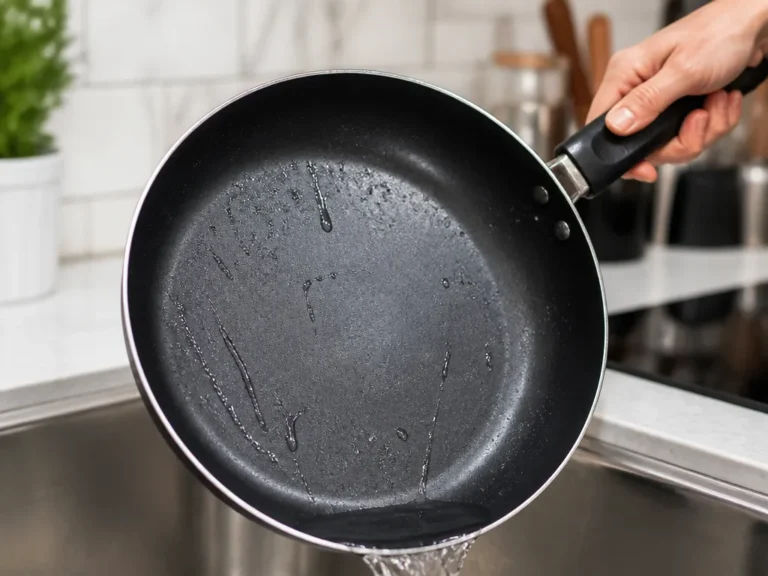
Sprinkle a little water onto the pan.
- If the water beads and jumps around the surface, the pan has reached the Leidenfrost effect and is ready.
- If the water splatters, evaporates, or breaks apart immediately, the pan is not hot enough yet.
Wait until the water forms distinct beads that move across the surface. If the pan is so hot that the water disappears instantly, reduce the heat briefly and let the surface settle.
4. Add Fat, Then Add the Food
Once the water test passes, wipe away the water if needed and add cooking fat. Use enough to coat the area where the food will sit, but do not fill the pan like a deep fryer.
Let the fat heat briefly, then add the food. Adding food immediately after the fat can reduce the pan’s surface temperature and increase sticking.
5. Leave the Food Alone
Do not move eggs, fish, or meat as soon as they hit the pan. Give the food time to cook and form a slight crust. Once that crust develops, slide a spatula underneath and lift gently.
If the food resists, wait rather than forcing it. Scraping too early tears the food and leaves more protein stuck to the steel.
Two Ways to Improve Food Release
Water-Test Preheating
The water-test method is the fastest approach for everyday cooking:
- Preheat the pan for about 3 minutes over medium heat.
- Sprinkle in water and wait for beads that jump across the surface.
- Add cooking fat, then add the food.
- Leave the food undisturbed until it forms a slight crust and releases.
This method works especially well for eggs, fish, and quick meals where you want control without preparing the pan in advance.
Oil Seasoning
Oil seasoning creates a temporary slick film that can improve release over multiple cooks:
- Use a high-smoking-point oil such as canola or vegetable oil.
- Add about 1/8 inch of oil to the bottom of the pan.
- Heat the oil until it starts smoking after about 6 minutes.
- Remove the pan from the heat and let the oil cool completely.
- Wipe away the excess with a paper towel, leaving a glossy sheen.
- Wipe the pan clean between uses when possible.
- When the pan gets too dirty, wash it with soap and water, then repeat the seasoning process.
Do not leave a thick layer of oil in the pan. Excess oil can turn sticky as it cools and creates more residue instead of a smoother cooking surface.

Helpful pick
EWFEN Tri-Ply Stainless Steel Frying Pans Set, 8”/10”/12” Cooking pans, PFOA&PTFE Free Skillet, Induction Cooking Pan, Dishwasher and Oven Safe, Fast & Even Heat, Heavy Duty and Detachable Handle
EWFEN Tri‑Ply set distributes heat evenly, ideal for mastering the water‑test technique and achieving perfect releases.
How to Get Consistent Results
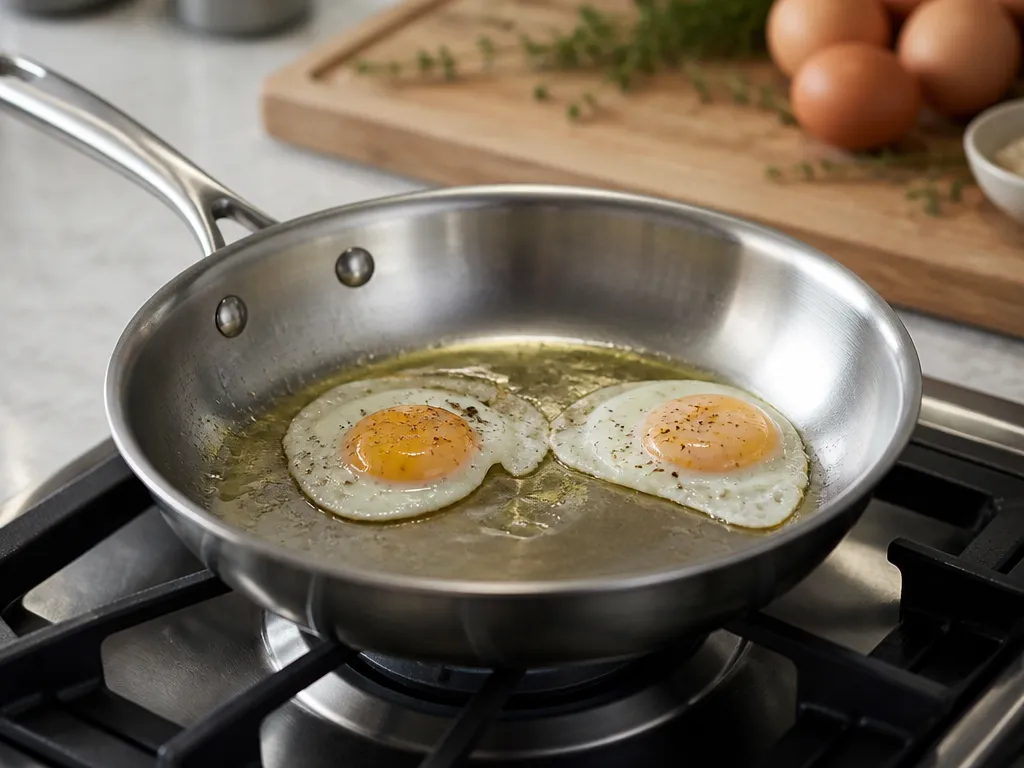
Temperature, oil, and cleaning determine how well stainless steel releases food.
Preheat at the same heat level each time, but confirm the surface with the water test instead of assuming that the pan is ready after exactly 3 minutes. Burner output and pan thickness can change the timing.
Use enough fat to coat the contact area during ordinary cooking. A puddle is unnecessary. During seasoning, use about 1/8 inch of oil because the oil needs to cover the bottom of the pan during the smoking stage.
Clean according to the condition of the pan. Wipe it clean between uses when possible. After heavy sticking, wash it thoroughly with soap and water and re-season it so the next meal does not start on a bare, residue-covered surface.
Water Test vs. Oil Seasoning
| Method | Key Spec / Timing | Best For | What You’ll Notice |
|---|---|---|---|
| Water-test preheat | About 3 minutes preheat, look for Leidenfrost bead-and-jump | Eggs, fish, quick delicate releases | Food slides and releases with less scraping |
| Oil seasoning | About 1/8 inch oil, smoke after about 6 minutes, cool fully, wipe to glossy sheen | When sticking keeps coming back | A slicker base that improves release over multiple cooks |
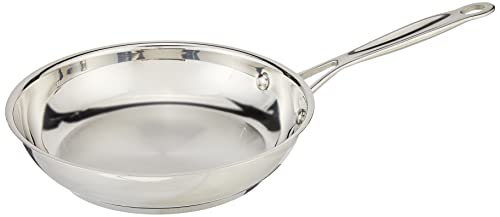
Helpful pick
Cuisinart 8-Inch Open Skillet, Stainless Steel Skillet, Large Kitchen Pan, Dishwasher Safe, Compatible with Induction, Electric, Gas Cooktops, Oven Safe Saucepan, Cool Grip Handles
This high-quality stainless steel skillet provides the even heat distribution necessary to master the water test and achieve consistent non-stick results.
Mistakes That Make Stainless Steel Stick
Skipping preheating is the most common mistake. If food goes into a cool pan, proteins begin bonding to the metal before the surface reaches a release-friendly temperature.
Avoid these problems:
- Adding food before the water test passes. Water that splatters or evaporates immediately indicates that the pan is still too cool.
- Cooking on too low heat. Low heat keeps proteins against the metal longer, which increases bonding and sticking.
- Using low-smoke-point oil for seasoning. The oil method depends on heating the oil until it smokes. An oil with a low smoking point can burn unevenly and leave grime.
- Leaving excess oil after seasoning. A thick layer can become sticky. Wipe the pan until only a glossy sheen remains.
- Scrubbing aggressively after every cook. Heavy cleaning removes the slick film. Clean the pan thoroughly when needed, then re-season it.
Better Results With Eggs and Fish
For eggs, use room-temperature eggs when possible. Cold ingredients lower the surface temperature just as the pan needs to maintain a release-friendly temperature.
For fish, pat the fillets dry before cooking and use enough fat to prevent dry contact with the bare metal. Place the fish in the pan and leave it undisturbed until it releases naturally. Constant scraping makes sticking worse and can break the fillet apart.
If food still sticks after you have used the water test correctly, check how your burner behaves. Some burners cycle their temperature, so the pan may not reach the same surface temperature every day. The water test gives you a more reliable check than timing alone.
Stainless Steel Release
- Start with a clean, dry pan.
- Preheat over medium heat for about 3 minutes.
- Wait for water to bead and jump – the Leidenfrost effect.
- Add fat, then add the food.
- Leave the food alone until a slight crust forms.
- Wash with soap and water when the pan is dirty.
- Re-season after heavy cleaning.
FAQ
How long does it take to make a stainless steel pan nonstick?
For the water-test method, preheat the pan for about 3 minutes over medium heat. Add fat and food only after the water beads and jumps – the Leidenfrost effect.
For oil seasoning, add about 1/8 inch of high-smoking-point oil. Heat it until it starts smoking after about 6 minutes, then remove the pan from the heat, let it cool completely, and wipe away the excess until only a glossy sheen remains.
What oil is best for stainless steel?
Use a high-smoking-point oil such as canola oil or vegetable oil. The seasoning method requires heating the oil until it smokes, so an oil with a higher smoking point is less likely to burn unevenly.
For regular cooking, use enough fat to coat the food’s contact area rather than creating a deep pool of oil.
Why do eggs still stick to my stainless steel pan?
The pan is usually too cool. Use the water test and wait until the water beads and jumps across the surface. Make sure the eggs are not cold, add enough fat, and avoid moving them before a slight crust forms.
How do I fix sticking after I cook?
Stop forcing the food off the pan. Let the pan cool slightly, then wash it with soap and water to remove cooked-on residue.
After cleaning, repeat the oil-seasoning process: use about 1/8 inch of oil, heat it until it smokes after about 6 minutes, let the pan cool completely, and wipe it to a glossy sheen.
Can I make stainless steel nonstick without oil seasoning?
Yes. The preheat method does not require an oil-seasoning step. Heat the empty pan over medium heat for about 3 minutes, confirm with the water test that the water beads and jumps, then add cooking fat and food.
If food still does not release well, use the oil-seasoning method once to create a slicker base.