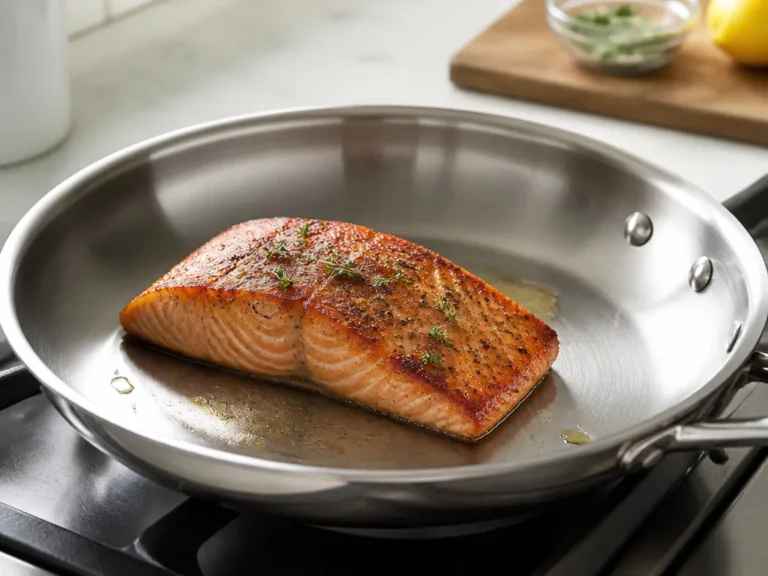
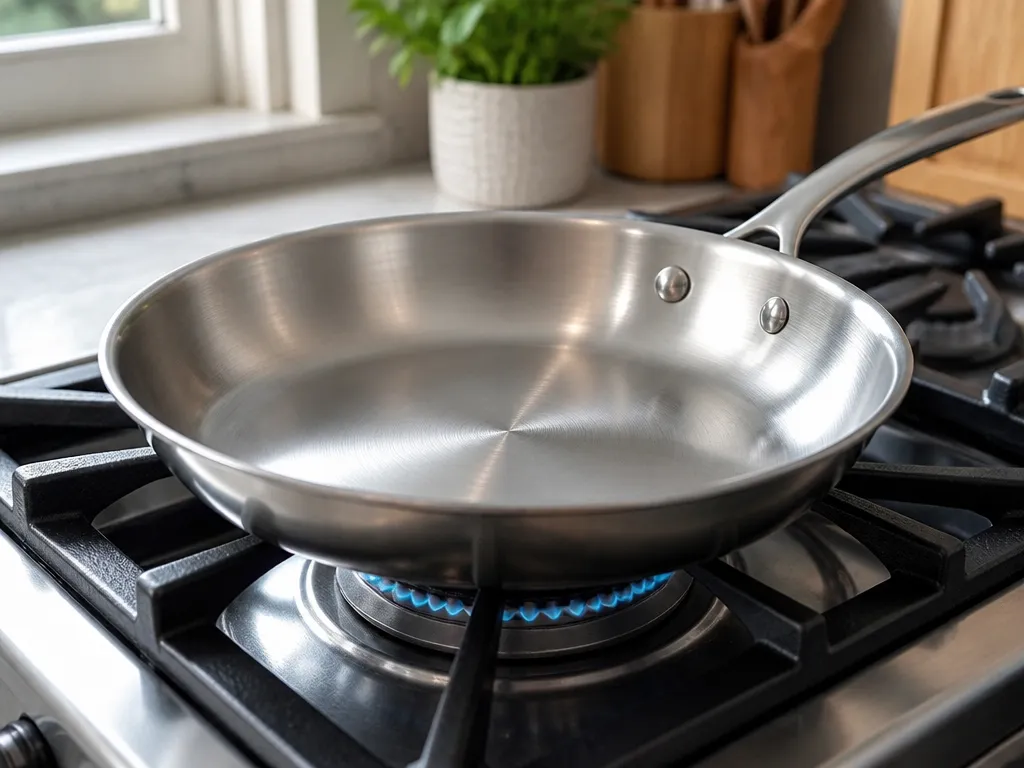
How To Preheat Stainless Steel Pan
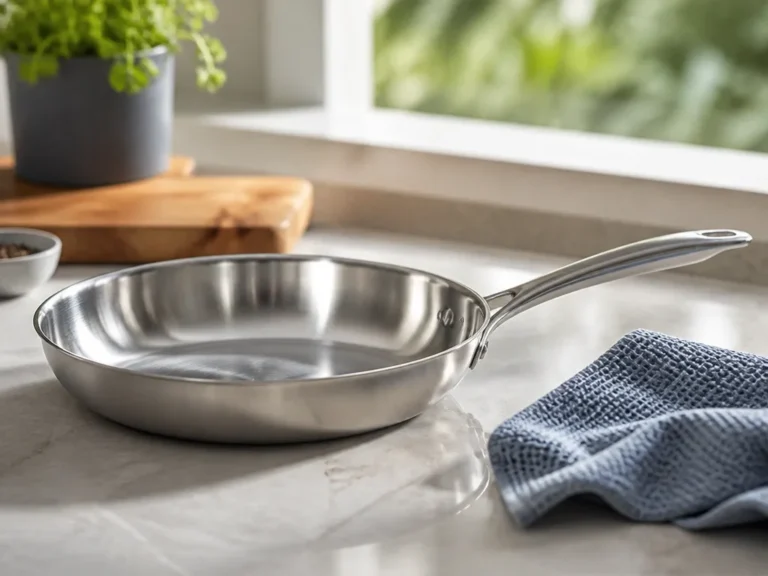
Preheating a stainless steel pan properly gives food a chance to brown and release instead of sticking to the metal. Heat the empty pan for 2 to 5 minutes over medium to medium-high heat, check it with a small drop of water, then add oil and food once the surface is ready. The right timing depends on the pan’s size, thickness, burner power, and what you are cooking.
A drop of water should sizzle and spread across the surface. If it beads and sits, keep heating in 30-second bursts. If it evaporates instantly or creates heavy smoke, turn the heat down.
Key Takeaways
- Preheat time target: Heat an empty pan for 2 to 5 minutes so the cooking surface stabilizes.
- Match burner to pan size: Smaller pans warm faster, so start at the low end of the timing range.
- Control the heat: Turn the burner down before oil starts smoking heavily.
- Reset instead of rescuing: If food sticks badly, clean out the residue and start again. More oil rarely fixes a pan that is too cool.
Why Stainless Steel Pans Need Preheating
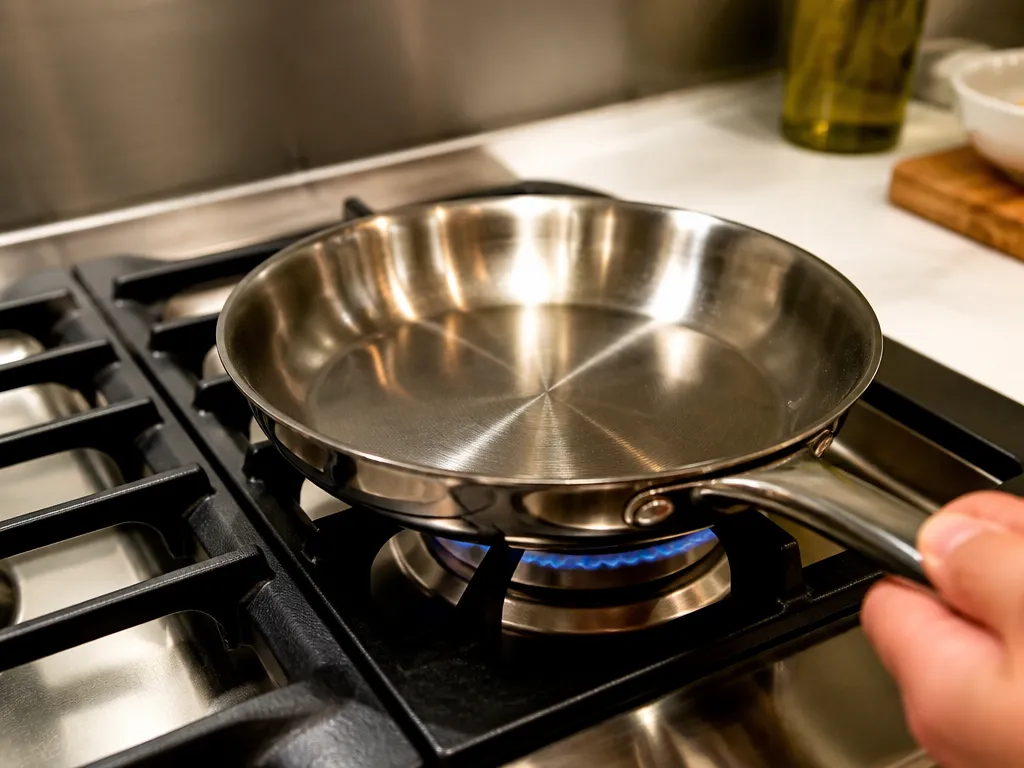
Stainless steel needs time to heat evenly. If you add oil and food to a cold or barely warm pan, the food cools the metal on contact. Proteins and starches then cling to the surface instead of forming a browned crust. That is why eggs stick and burgers tear rather than release cleanly.
Start with a dry, empty pan and a steady burner setting. Test the pan before adding oil so the water does not splatter in hot oil.
The pan must be dry before heating. Water left on the cooking surface creates steam and prevents consistent contact between the food and metal. The result can look uneven even when the burner is set correctly.
How Stainless Steel Heat Behaves
Preheating has two jobs: bring the cooking surface to an even temperature and create enough heat for the oil to spread and coat the pan. Stainless steel has some heat lag, so the handle can feel hot while the cooking surface is still warming. Touch is a poor readiness test.
Medium to medium-high heat works for most stainless steel pans. Thin pans reach temperature quickly, while thick pans take longer but hold their temperature more steadily after food goes in. Pan size and burner power matter too.
Dry food browns better than wet food because excess moisture creates steam and lowers the surface temperature. Avoid crowding the pan for the same reason. Too much food releases moisture at once and cools the cooking surface just when you need it for browning.

Helpful pick
Umite Chef 12 inch 5 Ply Stainless Steel Frying Pan Non-Toxic PFOA&PTFE Free Skillets, Professional Cookware- Oven Safe & Induction Compatible, Fast & Even Heat, Heavy Duty, Cool Grip Handles
With heavy-duty 5-ply construction, this pan manages heat lag effectively, ensuring the cooking surface reaches the optimal temperature for your ingredients.
Step-by-Step: Preheating a Stainless Steel Pan
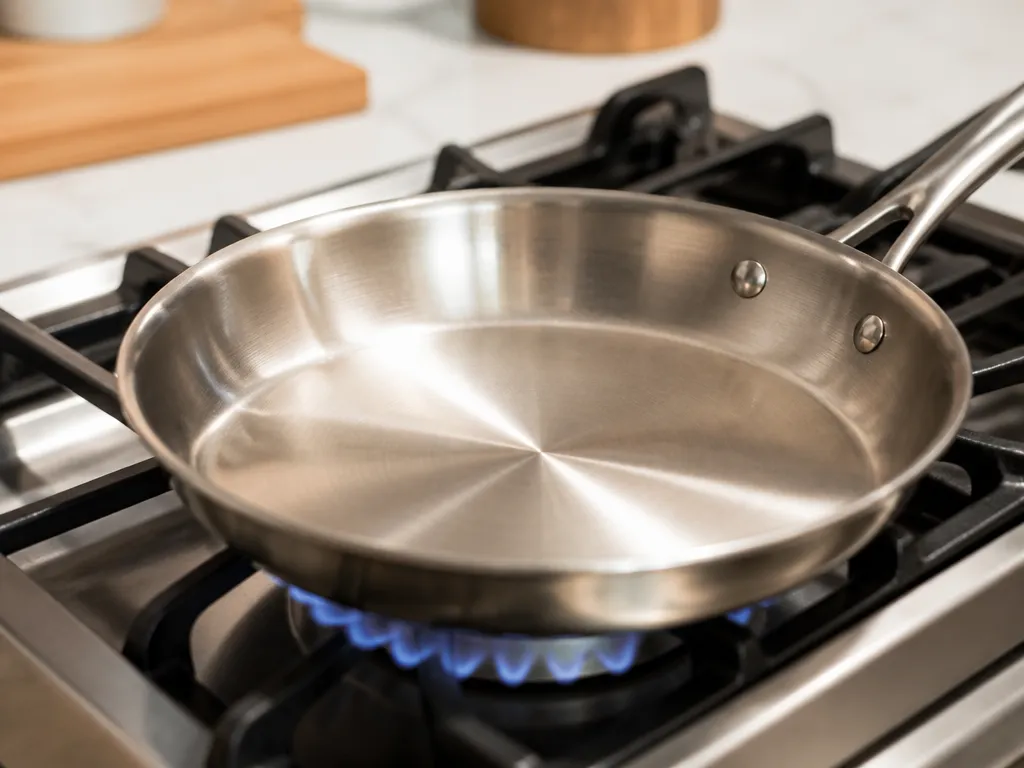
- Place the empty, dry pan on the burner. Start with medium heat for 8-inch pans and medium-high for 10 to 12-inch pans.
- Heat for 2 to 5 minutes. Use the clock as a starting point rather than relying on the smell of a hot pan.
- Check the surface with water. Flick a small drop near the center of the pan. Sizzling and spreading means the pan is ready. If the drop beads and sits, continue heating in 30-second bursts.
- Adjust excessive heat. If the water evaporates instantly or the pan produces heavy smoke, lower the burner slightly and wait for the surface to settle.
- Add 1 to 2 teaspoons of oil. Tilt the pan to spread it across the cooking surface, then wait 15 to 30 seconds for the oil to become fluid and lightly shimmer.
- Add the food. Lay it in the pan away from you and leave it in place for the first minute, or until it releases naturally.
- Adjust the burner as needed. If the oil smokes aggressively, turn the heat down. If the food barely sizzles, increase the heat in small steps.
- Give the food time to cook. Repeatedly lifting, checking, or moving food cools the pan and can tear the surface before it has browned.
For a burger, follow the preheating steps, add the patty, and resist pressing or flipping it immediately. Let the first side form a crust before turning it once for even doneness.
Eggs benefit from a gentler approach. Heat the empty pan for 3 minutes over medium heat, check the surface, add oil, wait 20 seconds, and then add the eggs. If they immediately pool and stick, the pan may need another 30 to 60 seconds of heating.
Signs the Pan Is Ready
A ready stainless steel pan usually gives you two useful cues:
- Oil shimmers and spreads quickly instead of moving in slow blobs.
- Food sizzles within a second or two of touching the pan.
If one of these cues is missing, correct the heat before adding food. Do not pour water into the pan. Use a small flick or drop for the test, then dry the surface if needed before adding oil.
Adjusting Preheat Time for Different Foods
The best heat level depends on the food. Lean proteins and eggs need gentler heat because they stick easily and can overcook quickly. Chicken thighs, burgers, steaks, and chops can handle stronger heat because they need more time to brown.
- Eggs and fish: Use medium heat, preheat for 2 to 4 minutes, and check the surface before adding oil. Their browning window is narrower, so lower heat gives you more control.
- Steaks and chops: Use medium-high heat and preheat for 4 to 5 minutes. Reduce the heat after the crust forms if the outside is browning faster than the inside.
- Stir-fry and quick sears: Preheat closer to 5 minutes and work quickly. The hot surface helps you brown food before it releases enough moisture to steam.
Avoid heating the pan over extremely low heat for too long. It can leave the surface warm but unable to produce effective browning. Avoid blasting the pan with high heat without monitoring it as well. Stainless steel can heat quickly enough to scorch the oil before the food reaches the pan.
A Reliable Stainless Steel Preheat Routine
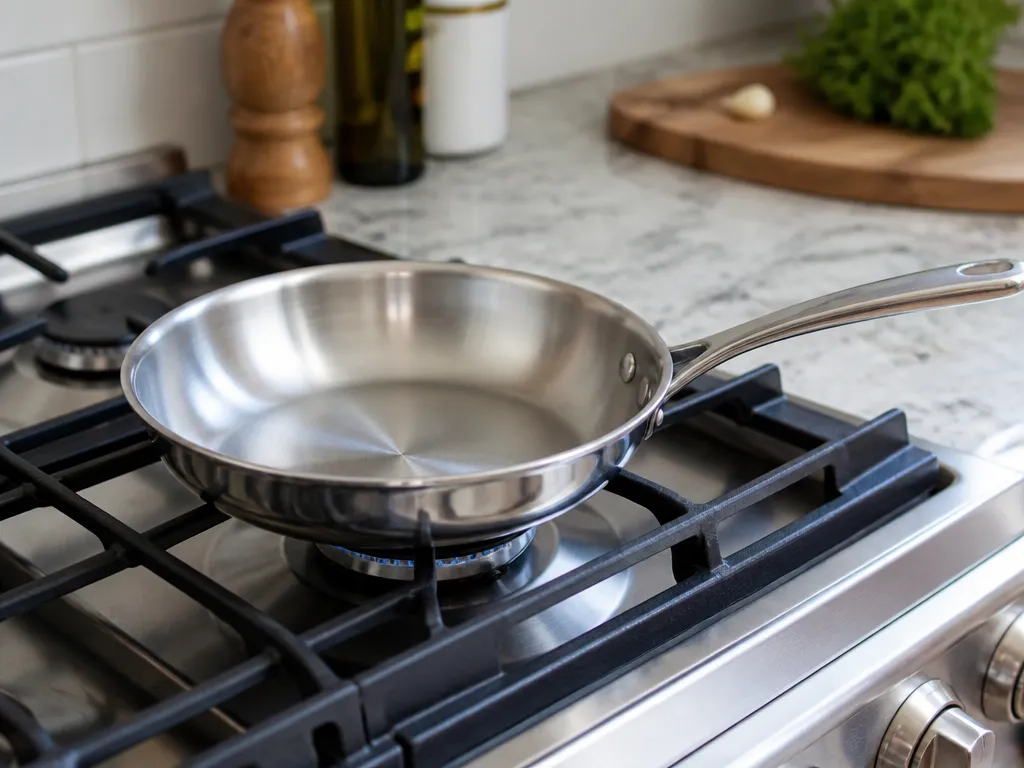
A consistent sequence produces more repeatable results than chasing one exact burner setting:
- Heat the empty pan over medium for 3 minutes.
- Test the surface with a small drop of water.
- Add oil and wait 20 seconds for it to spread and shimmer.
- Add the food and leave it alone until it releases.
Use 1 to 2 teaspoons of oil for most home cooking. Eggs often need 1 to 2 teaspoons, while burgers and chops may need 1 to 2 teaspoons plus the moisture and fat they release naturally. Too little oil can contribute to sticking, but excess oil can fry the food or burn before cooking begins.
Add butter carefully. Butter browns and burns faster than oil, and a hot pan speeds up both processes. For browned-butter flavor, preheat the pan with oil, cook the main surface, and add a small knob of butter near the end.
Preheat Timing by Pan Size
| Pan size | Starting heat | Empty preheat time | Most common mistake |
|---|---|---|---|
| 8-9 inch | Medium | 2 to 3 min | Overheating too soon |
| 10 inch | Medium to medium-high | 3 to 4 min | Adding food before sizzle |
| 12 inch | Medium-high | 4 to 5 min | Crowding and cooling the surface |
If you use the same pan regularly, this table gives you a useful starting point. Adjust by 30 to 60 seconds when switching burners or cooking unusually large amounts of food.

Helpful pick
DELARLO Tri-Ply Stainless Steel Pan,18/10, 12″+Lids
A durable tri-ply pan is essential for a repeatable preheating routine, ensuring your oil shimmers perfectly every time you start cooking.
Stainless Steel Preheating Mistakes
Adding food before the pan is fully heated is the most common mistake. The food cools the surface, begins to steam, and sticks to the metal. Adding more oil or flipping sooner usually makes the problem worse because both actions disturb and cool the cooking surface.
Turning the heat all the way up can create a different set of problems. Excessive heat burns oil, leaves a bitter residue, and produces uneven browning. Stainless steel tolerates high heat, but controlled preheating and a burner adjustment after the oil shimmers give you more control.
Troubleshooting Chart
| What you see | Likely cause | Fix before next batch |
|---|---|---|
| Eggs stick immediately | Pan is too cool or too dry | Preheat 30-60 sec more, use a bit more oil |
| Chicken browns slowly | Heat is too low | Increase heat slightly, give oil 20-30 sec after adding |
| Oil smokes fast | Heat is too high | Turn down 1 step, then add food once shimmer is controlled |
| Food releases late and tears | You moved it too early | Leave it alone until it naturally loosens |
| Patchy browning | Pan not evenly heated | Preheat full 4-5 minutes, avoid crowding |
If a burger sticks even though the oil shimmered, check the amount of food in the pan. Two patties in a 12-inch pan behave differently from four patties squeezed together. Crowded food traps heat and releases moisture at the contact zone, which prevents a crust from forming.
Better Results with Thicker Pans and a Consistent Reset
Thicker pans, such as All-Clad-style pans, take longer to preheat but hold heat better after food is added. That makes them more forgiving during cooking. A thin stainless steel pan needs a shorter preheat window and faster cooking once it reaches temperature.
Stainless steel does not build a long-term nonstick layer through seasoning in the same way cast iron or carbon steel does. Cooking success comes from the combination of proper heat, enough oil, dry food, and patience. Technique matters more than seasoning sprays or other shortcuts.
Use the same sequence each time: heat the empty pan, check the surface, add oil, wait for a shimmer, then add the food. A repeatable ritual reduces guesswork and leaves you free to focus on timing and doneness.
For stubborn sticking, reset the pan instead of trying to save the next batch over burnt residue. Wipe out the debris, rinse quickly if needed, dry the pan, and restart the preheating steps. Burnt bits interfere with contact and act as heat sinks, so they can spoil the next round of cooking.
A Simple 9-Minute Plan
- Minute 1 to 5: Preheat the empty pan over medium to medium-high heat.
- Minute 6: Check the water test if needed, then add oil and let it coat the surface and shimmer.
- Minute 7 to 9: Start cooking.
This routine suits everyday stovetops and typical stainless steel pans. If your burner runs weak or strong, adjust the timing by 30 to 60 seconds while keeping the same sequence.

Helpful pick
Made In Cookware – 12-Inch Stainless Steel Frying Pan – 5 Ply Stainless Clad – Professional Cookware – Crafted in Italy – Induction Compatible
This 5-ply stainless clad pan retains heat exceptionally well, making it a forgiving and reliable choice for consistent, professional-grade cooking results.
FAQ
How long should I preheat a stainless steel pan?
The general target is 2 to 5 minutes, with smaller pans usually closer to the shorter end and larger pans closer to the longer end. After adding oil, wait about 15 to 30 seconds so it spreads and shimmers before adding food.
How do I know when my pan is hot enough?
Use the water and oil cues described above before adding food. If the surface is not ready, adjust the heat and continue preheating in short increments.
Should I preheat with oil or without oil?
Preheat without oil first. An empty pan allows the cooking surface to reach temperature evenly. Add oil once the pan is hot, wait briefly for it to become fluid and shimmer, and then add the food.
What temperature should I use for preheating?
Medium to medium-high heat works for most stainless steel pans. The exact burner setting depends on the stove, pan thickness, and pan size. Use the oil shimmer and water test as behavior cues instead of relying on one exact temperature.
Why does food stick even when I preheat?
Food usually sticks because the pan was still too cool when the food went in, or because the food was moved before it formed a crust and released naturally. Overcrowding adds moisture, prevents browning, and lowers the surface temperature. Preheat for another 30 to 60 seconds, use enough oil, and leave the food undisturbed during the first minute or two.