
When To Use Lazy Susan In Corner Cabinet
A Lazy Susan is worth using in a corner cabinet when the back of the cabinet is difficult to reach and you use the stored items regularly. It works especially well in blind base cabinets, where the cabinet’s internal structure leaves a deep, awkward corner. If you store rarely used items or need room for tall containers, a pull-out rack or fixed shelf may be cheaper and more practical.
Lazy Susans improve access, but they add moving parts and can reduce vertical storage. Measure the cabinet’s interior, door swing, and tray clearance before buying.
Key Takeaways
- Match the tray to the cabinet. Narrow corners may need a smaller tray diameter or a different organizer.
- Prioritize smooth hardware. Quality bearings matter when you load the tray with heavy pots or pantry containers.
- Measure before buying. Confirm inner corner clearance, door swing, and tray space for your specific cabinet.
When a Lazy Susan Makes Sense in a Corner Cabinet
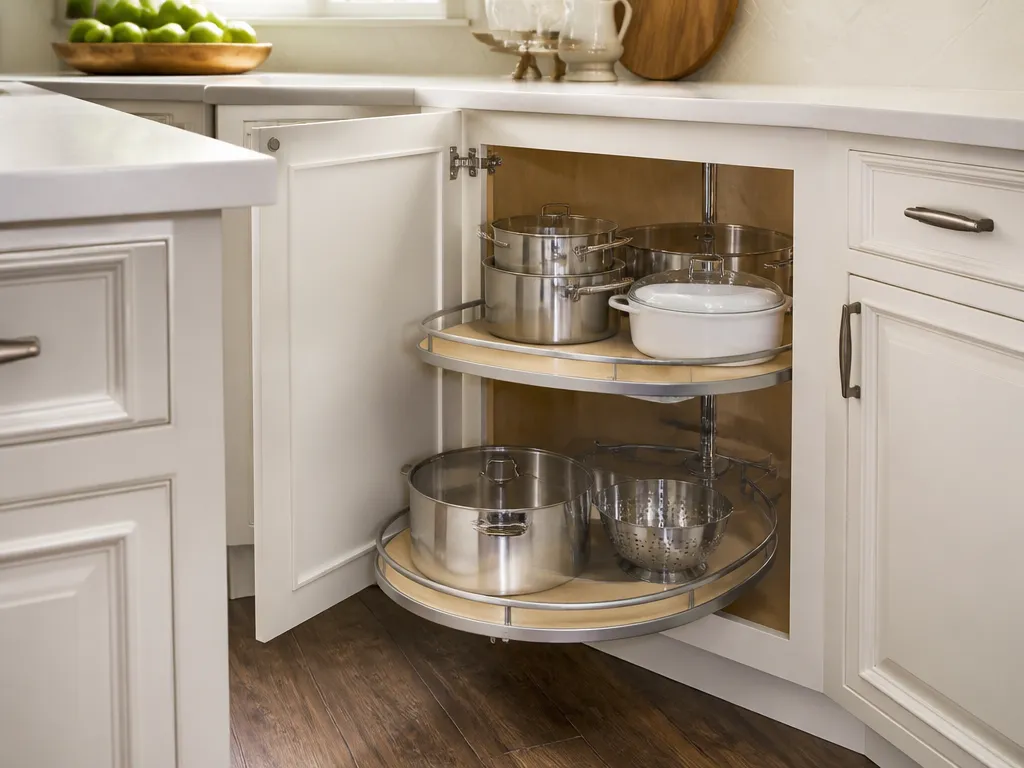
Blind corner base cabinets benefit the most. Their internal structure creates an unreachable area where items pile up and disappear. A rotating tray brings those items around to the opening, so you can reach them without unloading the cabinet or buying duplicates.
Check two constraints before committing: the door opening and the items you plan to store. Tall bottles, stacks of cookware, and upright containers may fit poorly on a rotating tray. The tray can steal vertical space, force items into shorter containers, or strike the cabinet frame and door hardware as it turns.
Decide by Access and Storage Habits
Daily and weekly items usually justify rotating access. A tray can keep oils, sauces, spices, coffee supplies, or frequently used cookware within reach. Seasonal serving pieces and rarely used appliances may not justify the added cost and mechanical parts. A fixed shelf or basic pull-out may handle those items well enough.
Cabinet type also matters. Blind base cabinets commonly have a deep section hidden behind the cabinet opening. Some wall corners and specialty base layouts are more open and may already provide reasonable access. A Lazy Susan works best when its trays can rotate without binding against the frame, hinges, door, or neighboring shelves.
Measure for Rotation, Door Clearance, and Load
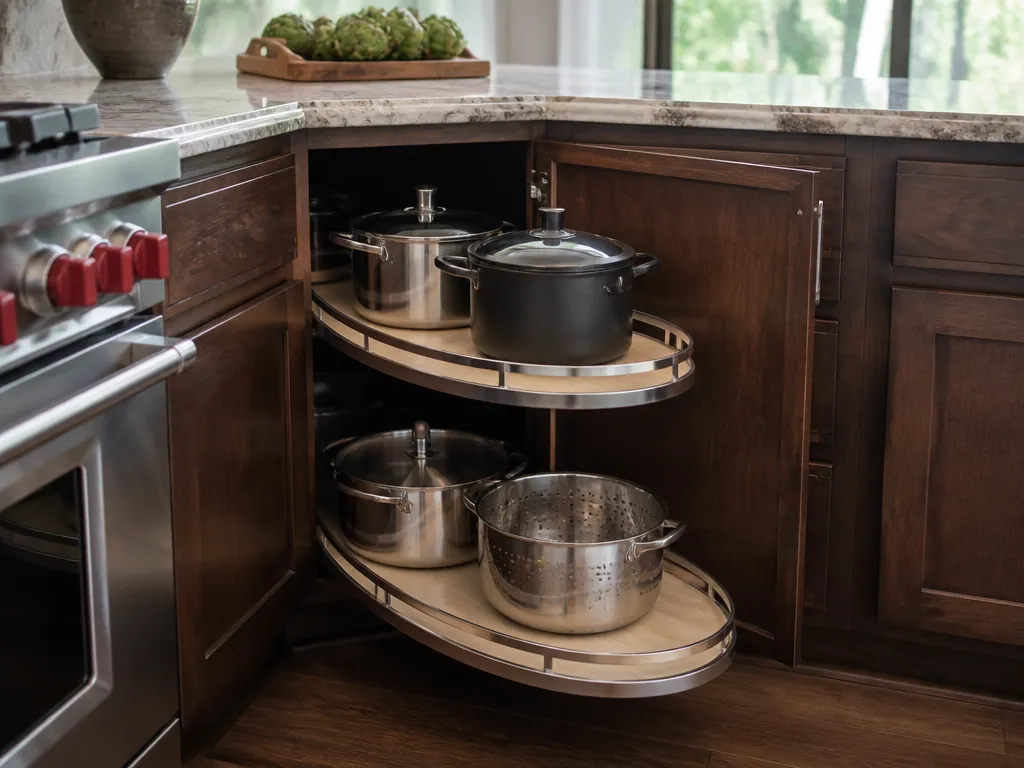
Measure for function, not just diameter. The tray needs enough room to rotate after you add liners, organizers, rims, or stoppers. Check the distance from the tray edge to the cabinet frame and confirm that the door can open without hitting the tray.
Plan the load before choosing the hardware. Heavy cast iron skillets and large pots place more strain on the supports and bearing system than small containers do. Choose smoother-rolling, sturdier hardware for heavy cookware, and keep dense items near the tray’s center so the rotation stays controlled instead of lurching.
A removable liner or easy-to-clean tray surface can also make maintenance simpler. Since a rotating tray lets you bring the back section forward, you can wipe it without reaching deep into a dark gap.
What a Lazy Susan Improves
A Lazy Susan turns a hard-to-reach corner into a reachable rotation. That can mean fewer forgotten items, less restacking, and less digging behind bottles or cookware.
It also makes categories easier to maintain. Bins, small containers, labeled jars, or separate turntables can give each group a consistent position. When the system behaves predictably, everyone in the household is more likely to put items back where they belong.
Better access can reduce overpacking, too. If you can reach the back without pulling everything out, you have less reason to cram items into the cabinet and postpone organizing them. The corner remains usable instead of becoming a storage space for things you have forgotten.
Lazy Susan Alternatives for Corner Cabinets
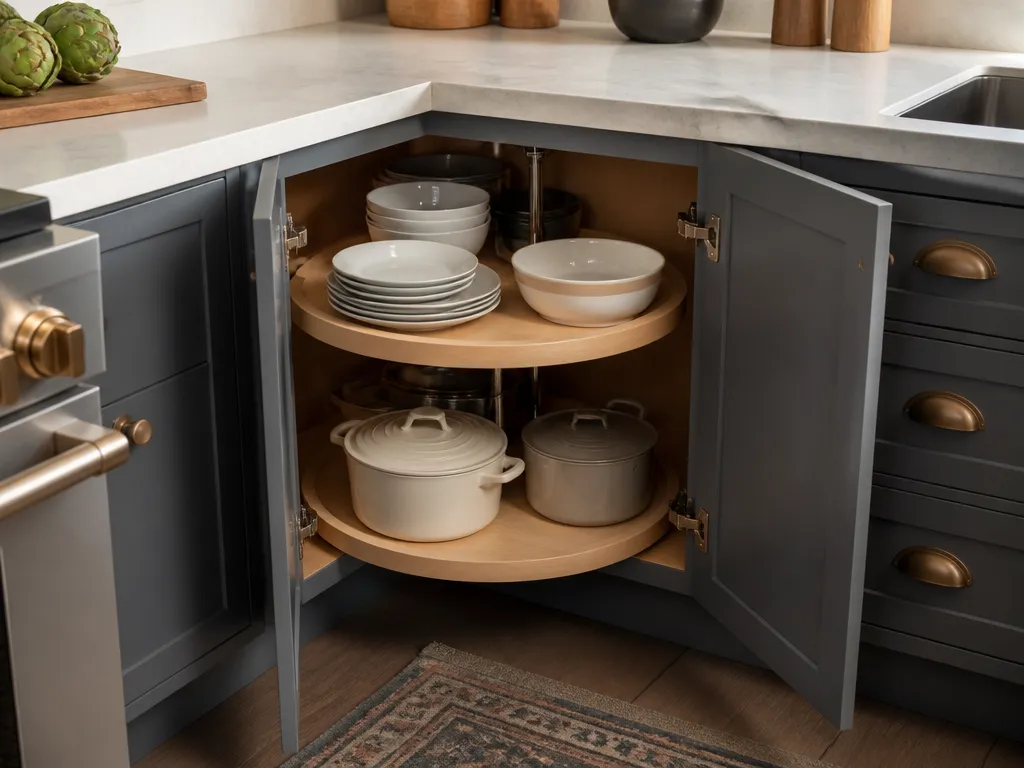
A rotating tray is only one way to improve corner-cabinet access. The best option depends on the cabinet’s clearance and the size, shape, and weight of the items inside.
| Option | Key Spec/Trade-off | Best for |
|---|---|---|
| 2-tier Lazy Susan tray | Often gives two levels, but may reduce height | Condiments, bottles, spices, everyday pantry items |
| Single-tier Lazy Susan | Simpler and usually more height-friendly | Cookware corner storage, taller containers |
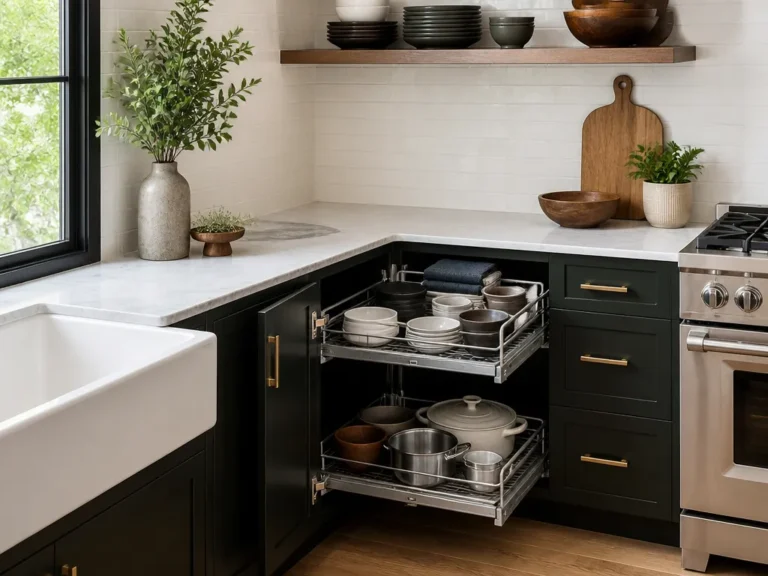
| Pull-out corner rack | No rotation tray; slides out from the corner | Deep blind corners where you want full visibility |
| Kidney-shaped pull-out basket | Curved access near the hinge side | When a straight tray hits obstructions |
| Corner swing-out shelves | Uses pivot shelves instead of a rotating disk | Corner layouts with limited tray clearance |
| Shelf organizers + small Lazy Susan | Mixes fixed shelves with a rotating subsection | When only part of the corner is a dead zone |
Match the Organizer to the Cabinet’s Contents
Base-cabinet corners near the stove are strong candidates for a 2-tier Lazy Susan. One tray can hold cooking oils, vinegar, and spices in small containers, while the other holds everyday baking ingredients or sauce bottles. Rotating the tray brings each group forward without requiring you to move bottles out of the way.
A single-tier Lazy Susan can suit a cookware corner when most items are relatively flat. Frying pans and small skillets stay easier to reach when they are spread across the tray instead of buried in a stack. This setup works particularly well when more than one person uses the kitchen.
Tall pantry items are a different story. Cereal boxes, upright containers, and other bulky goods may force you to sacrifice vertical capacity on a rotating tray. The tray can also create awkward angles that make tall items harder to remove. In that situation, a pull-out corner rack usually gives you better visibility while preserving usable height.
Cleaning products stored in a deep blind corner can also benefit from a pull-out. You can bring heavy bottles forward instead of rotating them around the cabinet, and the shelves remain easy to wipe and organize.
Choose Hardware That Fits Your Tolerance for Moving Parts
Be realistic about maintenance. A Lazy Susan may include trays, supports, bearings, or rollers. Those parts are helpful when they move smoothly, but frustrating when the tray binds, scrapes, wobbles, or needs adjustment. A simpler organizer may be the better choice if you prefer fewer components.
FAQ
Do I need a Lazy Susan for every corner cabinet?
No. Use one when the corner creates a genuine access problem, especially in a blind base cabinet where items at the back are difficult to reach. If the corner holds rarely used items or you can already reach everything by pulling out a shelf, a Lazy Susan is optional.
What’s the biggest mistake people make with Lazy Susans?
They buy based on cabinet width alone. The tray also needs internal clearance, door swing clearance, and enough room for the containers you plan to store. Measure the usable inner corner and check that the tray can spin without hitting the frame, hinges, or tall items.
Are Lazy Susans safe for heavy cookware?
They can be, provided you choose hardware designed for the load. For cast iron and other heavy items, use sturdier trays, keep weight near the center, and avoid overpacking if the tray wobbles or scrapes.
How do I decide between a Lazy Susan and a pull-out corner rack?
Choose a Lazy Susan when you want rotational access and your items are shorter, smaller, or easy to store in bins. Choose a pull-out when you want full visibility or need to store deep, tall, or bulky items that are awkward on a rotating tray.
What’s an alternative if my cabinet door blocks the tray?
If the door limits rotation, choose a different hardware style or organizer format. Pull-out corner racks, kidney-shaped baskets, and pivoting shelves can fit better because they bring items forward instead of requiring a full tray rotation.
Measure the cabinet’s internal clearance, then identify what you store there: tall items, small containers, cookware, or pantry goods. Choose the access style that fits that storage pattern, and use rotation only when it solves a real reach problem.

Comments are closed.