How To Cook With Stainless Steel Pans
Stainless steel pan cooking time swings wildly when you start with cold food or an underheated pan. That is why “why won’t it sear?” is the most common complaint. Reliable results come from preheating properly, drying the food, leaving room around each piece, and waiting for the crust to release before you flip it.
Stainless steel pans stick when the pan is too cool, the food is too wet, or the pan is overcrowded. Let ingredients sit at room temperature for about 15 minutes, pat food dry, and avoid crowding so the surface stays hot enough to sear. Use medium to medium-high heat for most tasks.
The Stainless Steel Method at a Glance
- Preheat first. Let the pan heat properly before adding oil or food. Starting cold makes sticking dramatically worse.
- Use room-temperature food. Let ingredients sit out about 15 minutes to avoid dropping the pan’s surface temperature.
- Dry the surface. Pat food dry to remove excess moisture that causes sticking.
- Leave space between ingredients. Too much food lowers the pan temperature and prevents a proper sear.
- Control the heat. Use medium or medium-high heat for most cooking tasks to prevent burning and sticking.
- Deglaze the pan. The browned bits, or fond, add flavor and make cleanup easier.
Set Up Your Stainless Steel Pan
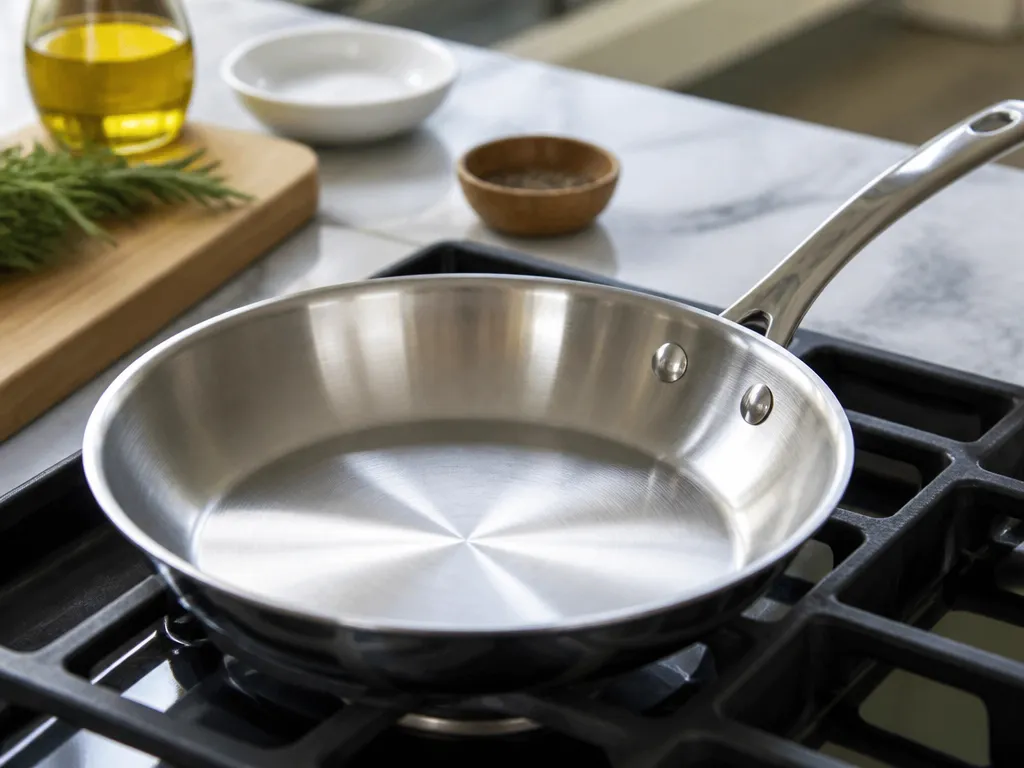
A clean, dry skillet gives you a consistent starting point. Stainless steel has no nonstick coating to protect it from residue, so remove grease and stuck-on food before cooking.
Wash a new skillet with warm water and mild soap, then pat it completely dry before first use. During cooking, use medium or medium-high heat most of the time. Overheating can scorch food and fond, while underheating produces pale browning.
Use stainless steel on any compatible cooktop, but check induction compatibility before buying or using a pan. Induction requires a pan with a magnetic base, and many cheaper 200-series or 300-series stainless pans may not work. On glass cooktops, lift the pan instead of dragging it to avoid scratching the surface.
How Stainless Steel Cooking Works
Stainless steel is not nonstick. Some sticking is normal at first, followed by easier release once the food has browned and the pan reaches the right temperature.
As food browns, its contact with the cooking surface changes and a crust develops. That crust is what allows properly cooked food to move more easily. Moisture and excess food can turn browning into steaming, so use the visual cues rather than trying to force release.
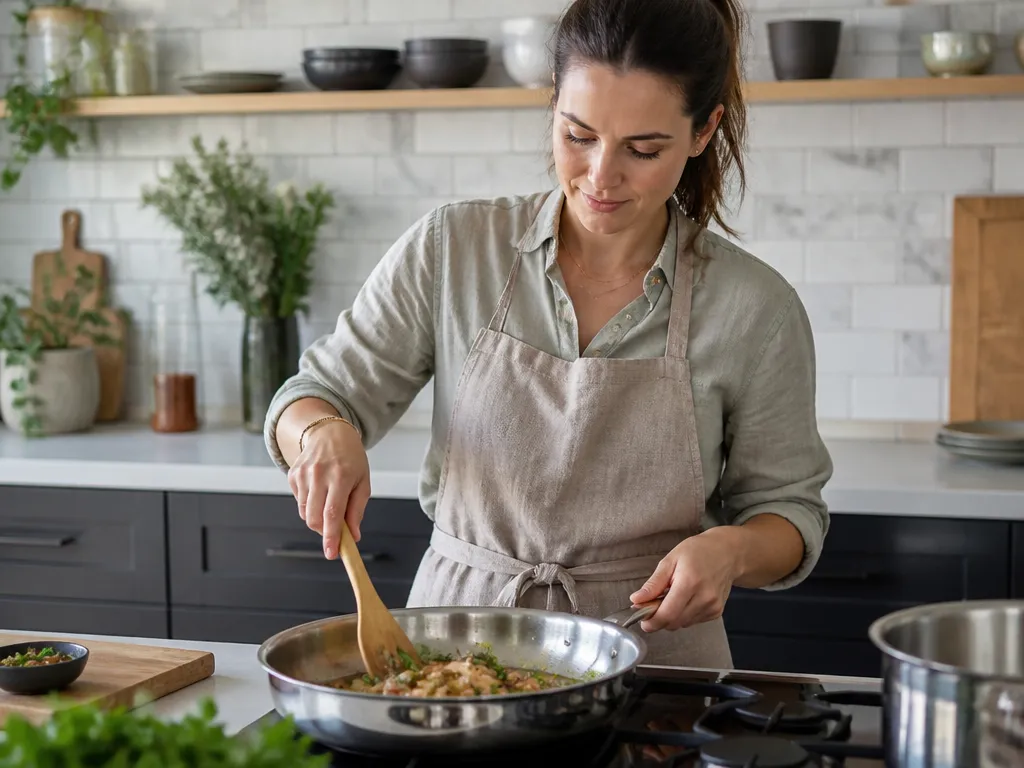
Read doneness through visual and physical cues. Look for browned edges, bubbling juices that slow as proteins set, and food that moves with a gentle nudge. For saucy dishes, a thin layer of fond – the browned bits on the bottom – is useful. Deglaze it after cooking for extra flavor and easier cleanup.

Helpful pick
Umite Chef Stainless Steel Frying Pan Set with Lid, 3Pcs Skillet Set (Includes 8″,10″,12″) – 5 Ply Stainless Clad – Heavy Duty & Professional Cookware Set, Fast & Even Heat, Dishwasher and Oven Safe
Understanding how your cookware works is easier with this 5-ply stainless steel set, providing superior heat retention and precise temperature control.
Step-by-Step Stainless Steel Cooking Method
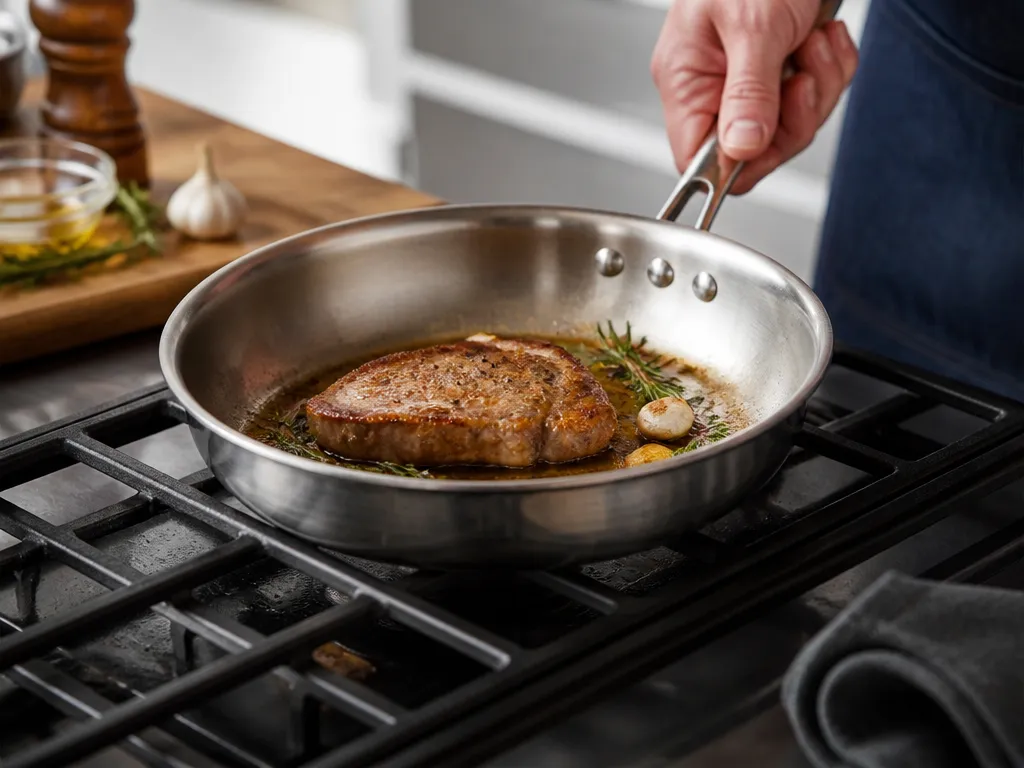
This method works for most stainless steel meals, including chicken, burgers, scallops, fish, vegetables, and tofu.
- Wash and dry the pan. If it is a new skillet, wash it with warm water and mild soap, then pat it completely dry. For daily use, remove residue so you begin with a clean surface.
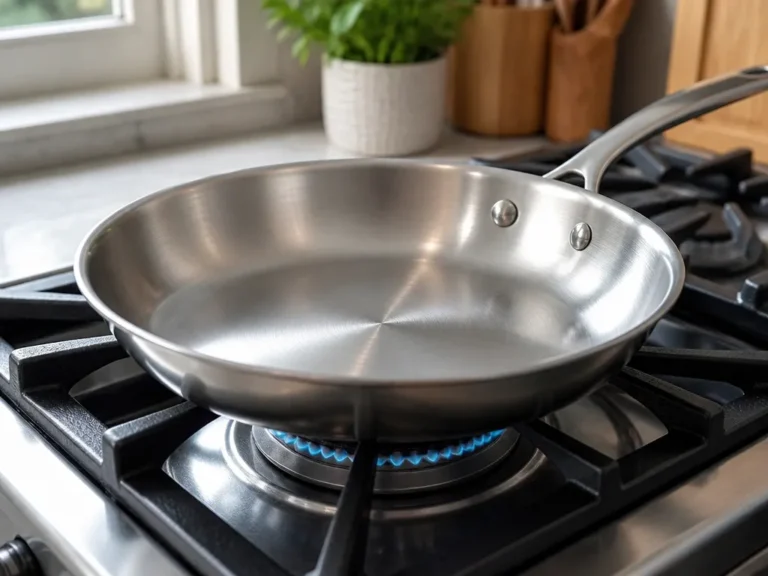
- Preheat the pan. Heat the empty pan until it is ready, then add oil.
- Bring the food closer to room temperature. Let ingredients sit out about 15 minutes before cooking.
- Pat the food dry. Use paper towels to remove surface water, especially from meat, fish, tofu, and vegetables.
- Add oil and leave space. Use enough oil to coat the surface and arrange the food without crowding. Cook in batches when necessary.
- Cook at medium to medium-high heat. Adjust the burner if the oil is smoking heavily or the food is not browning.
- Wait for release. Let the crust develop before flipping or sliding the food. If it does not move with a gentle nudge, it usually needs more time.
- Deglaze and finish. After removing the food, add a splash of water or broth to loosen the fond. Scrape the bottom as the liquid simmers, then reduce it and coat the food.
Simple Timing Guide
Timing depends on thickness, but the stainless steel workflow remains the same: preheat, cook until browned and releasing, then flip or finish. As a rough starting point for planning dinner, many proteins need 3-6 minutes per side, followed by a short finish time. Use doneness cues more than the clock.
Doneness Cues You Can Trust
- Chicken and pork cutlets: Look for a browned crust, clearer juices, and a surface that appears set.
- Steaks and burgers: Look for deep, even crust color and an interior that feels firm to your preferred doneness.
- Fish fillets: The edges should look opaque, the fish should flake gently, and the fillet should release without tearing.
- Vegetables: Look for browned spots, reduced moisture, and less steam fogging the pan.
Techniques That Prevent Sticking
Temperature management and surface dryness determine whether stainless steel feels predictable. When both are right, the pan browns food, builds fond, and releases it at the right moment.
Cooking Acidic Foods in Stainless Steel
Stainless steel is suitable for acidic sauces because it does not have the same reactivity issues as some other metals. Tomato-heavy dishes are a good fit for stainless steel because the pan will not meaningfully react with acids in the way reactive cookware can.
Turn Fond Into a Quick Sauce
Deglazing lifts browned bits into a quick sauce. Add a splash of water or broth after removing the food, scrape the bottom while the liquid simmers, then reduce it until it coats the food. Fond adds concentrated browned flavor while loosening residue that would otherwise stick to the pan.
A Repeatable Stainless Steel Routine
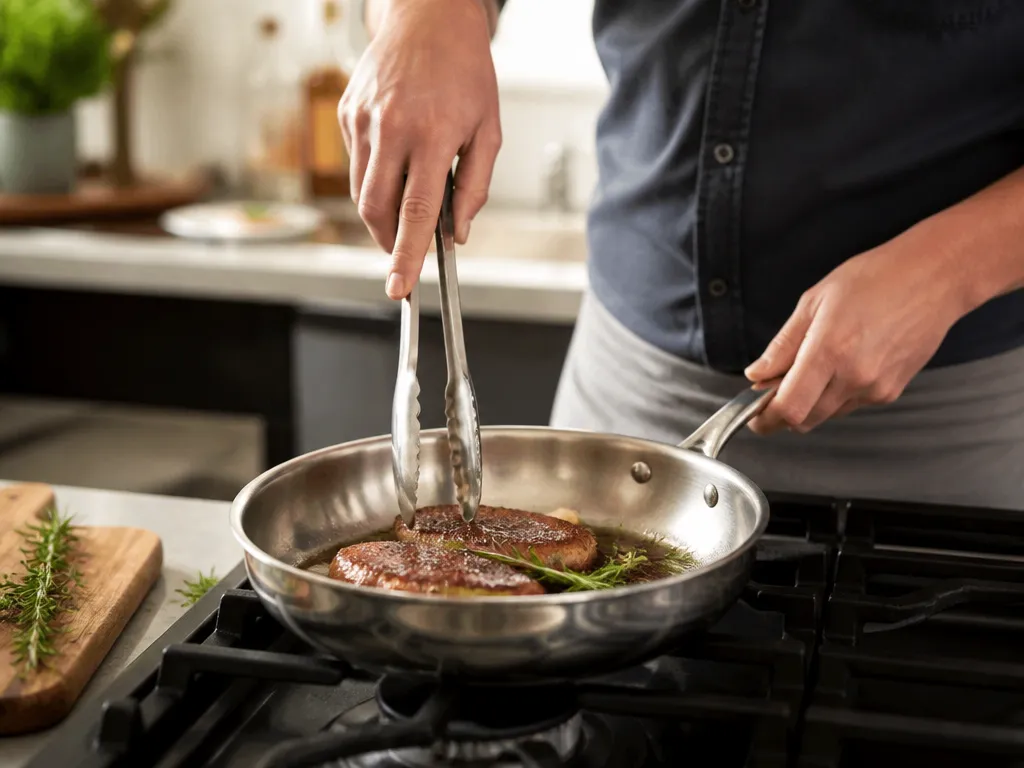
Once the food has browned, monitor the fond so it does not scorch before you are ready to deglaze. Adjust the burner as needed during longer cooking.
Protect the pan temperature by cooking in smaller batches. Packing the pan with food turns searing into steaming, especially when the ingredients contain a lot of moisture.
After deglazing, scrub the pan when it has cooled slightly. For daily care, store the skillet in a dry place and use pot protectors or paper towels between pans to prevent scratches.
Quick Reference: Stainless Steel Do This, Not That
| Step | Best practice | What causes problems |
|---|---|---|
| Preheat | Preheat properly before adding oil or food | Underheated pan, poor sear |
| Food temperature | Let food sit out about 15 minutes | Cold drop in pan surface temperature |
| Surface moisture | Pat food dry | Steam prevents good contact |
| Pan space | Do not overcrowd | Temperature drop, sticking |
| Heat level | Use medium to medium-high | Overheating scorches, underheating steams |
| Cleanup | Deglaze, then scrape the fond | Burned-on residue that needs soaking |
Mistakes That Make Stainless Steel Food Stick
The most damaging mistakes disrupt timing, browning, and the formation of fond. They also make it harder to judge when food is ready to turn or remove.
Skipping the preheat. Food added too early takes longer to set and can produce uneven browning.
Cooking food straight from the refrigerator. Very cold ingredients make timing less predictable, particularly for thick proteins.
Leaving moisture on the food. Water on the surface creates extra steam and can dilute the fond.
Overcrowding the pan. A packed pan makes it difficult to turn individual pieces and encourages uneven cooking.
Using heat that is too high or too low. Excessive heat can scorch the fond, while very low heat extends cooking time and weakens browning.

Helpful pick
EWFEN Tri-Ply Stainless Steel Frying Pans Set, 8”/10”/12” Cooking pans, PFOA&PTFE Free Skillet, Induction Cooking Pan, Dishwasher and Oven Safe, Fast & Even Heat, Heavy Duty and Detachable Handle
Avoid common sticking mistakes by using this premium tri-ply set, which offers a responsive cooking surface that helps you master heat management.
Small Adjustments That Improve Results
Use the water-test idea carefully. Once the pan is hot, place a tiny drop of water in it. You are looking for water that sizzles and skitters rather than instantly evaporating or sitting sluggishly. If it does not react well, preheat the pan for another minute.
Move food only when it is ready. Wait for the crust to form before turning it. Forcing an early flip tears the crust and makes sticking worse.
Deglaze as soon as the food comes out. Fresh fond loosens quickly and turns into a fast pan sauce. You remove residue and add flavor in the same step.
Match the pan to the cooktop. For induction, confirm that the pan has a magnetic base. On glass cooktops, avoid dragging or dropping the pan because rough handling can scratch the surface.
A Quick Protocol for Tonight

Helpful pick
LOLYKITCH 8.5-10-12” Stainless Steel Pans Set with Lid | Detachable Handle
Perfect your preheating technique with these versatile pans, featuring detachable handles that make maneuvering and cleaning your cookware incredibly simple.
Use this sequence for chicken, salmon, pork chops, or tofu:
- Preheat the pan, then add oil.
- Let the protein rest at room temperature for about 15 minutes.
- Pat it dry and place it in the pan without crowding.
- Cook at medium to medium-high heat.
- Flip only when the protein releases.
- Remove the protein, then deglaze the pan to loosen the fond.
FAQ
Do Stainless Steel Pans Need Oil?
Yes. Stainless steel pans are not nonstick, so oil helps with browning and reduces sticking. The timing and dryness matter as much as the amount of oil: preheat the pan, pat the food dry, and avoid overcrowding so the oil and hot surface can do their jobs.
How Long Should I Preheat a Stainless Steel Pan?
Preheat time depends on your burner and the pan’s thickness, so use the pan’s behavior instead of a fixed time. The pan should be properly heated before you add oil or food. If food sticks immediately, the pan was likely not hot enough yet.
What Heat Setting Should I Use for Most Meals?
Use medium or medium-high heat for most cooking tasks. That range balances crust formation with control. If the fond scorches before the food browns, turn the heat down. If the food is not browning, turn it up slightly.
How Do I Stop Eggs From Sticking to Stainless Steel?
Pat the eggs dry if seasoning or another liquid has added moisture. Preheat the pan, add oil, cook at medium or medium-high heat, and avoid putting too many eggs in the pan at once. If residue remains, deglaze or soak the pan briefly before cleaning.
What Is the Most Common Stainless Steel Mistake?
Adding food to a pan that is too cool is the most common mistake. Rushing the preheat or using cold food lowers the surface temperature and encourages sticking. Let ingredients sit out about 15 minutes, pat them dry, and leave enough room in the pan for the surface to stay hot enough to sear.